

Hormiguero Cariblanco vs Hormiguero Gorjirrufo
Gymnopithys leucaspis frente a Gymnopithys rufigula
Juega un quiz con Hormiguero Cariblanco y Hormiguero Gorjirrufo
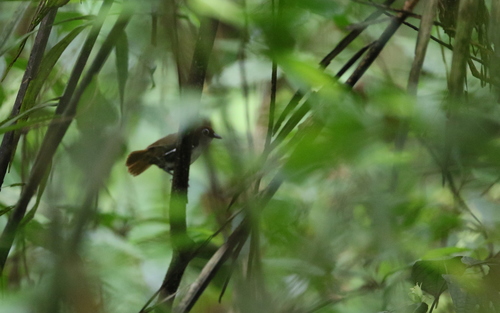 Hormiguero Cariblanco
 Hormiguero Gorjirrufo
En breve
La marca de campo más confiable para separar el Hormiguero Cariblanco del Hormiguero Gorjirrufo es el color de la garganta y la mejilla: el Hormiguero Cariblanco muestra una mejilla y garganta blancas audaces, mientras que el Hormiguero Gorjirrufo tiene una mejilla y parte superior de la garganta de un rico color castaño-rufoso. Ambas especies tienen piel azul desnuda alrededor del ojo y una estructura general similar, pero su coloración en las partes inferiores y la cara son notablemente diferentes en los adultos. Los juveniles son más complicados, ya que el Hormiguero Cariblanco comienza con partes inferiores marrones antes de que aparezca el blanco, pero incluso entonces, la falta de tonos rufosos ayuda. Ambas especies ocurren en el norte de América del Sur, pero sus rangos solo se superponen en Brasil. Concéntrate en el color de la cara y la garganta para la separación más rápida en el campo.
Consejos de identificación
- Color de la cara y la garganta (todas las edades): El Hormiguero Cariblanco siempre muestra una mejilla y garganta blancas nítidas en los adultos; el Hormiguero Gorjirrufo siempre muestra castaño-rufoso en la mejilla y parte superior de la garganta. Esta es la marca más confiable.
- Partes inferiores juveniles: Los Hormigueros Cariblancos inmaduros tienen partes inferiores marrones antes de que aparezca el blanco, pero nunca muestran tonos rufosos en la cara o la garganta. Si ves un juvenil marrón con un indicio de blanco en la mejilla/garganta, favorece al Cariblanco.
- Color de la corona y la nuca: El Hormiguero Cariblanco tiene una corona y nuca de color castaño, mientras que la corona/nuca del Hormiguero Gorjirrufo es de color oliva-marrón. Esto es sutil y se usa mejor con buena luz.
- Máscara y patrón facial: El Hormiguero Cariblanco tiene una máscara negruzca que va desde los lóbulos hasta el ojo y baja por el cuello; el Hormiguero Gorjirrufo tiene una frente/lóbulos de color marrón-negro pero carece de la fuerte máscara negra.
- Color de las partes inferiores: El Hormiguero Cariblanco tiene un pecho blanco y un vientre inferior marrón oscuro; el Hormiguero Gorjirrufo tiene una garganta inferior/corazón superior canela y un vientre oliva-marrón.
- Parche escapular (hembra): La hembra del Hormiguero Cariblanco muestra un parche canela entre los escapulares; la hembra del Hormiguero Gorjirrufo tiene un parche intrascapular canela pero es más apagada y nunca muestra blanco en la cara.
- Partes superiores: El Hormiguero Cariblanco es castaño por encima con algunos bordes rufosos; el Hormiguero Gorjirrufo es oliva-marrón por encima con alas y cola de color marrón amarillento oscuro. Esta es una marca de apoyo.
- Piel azul desnuda alrededor del ojo: Ambas especies tienen esto, por lo que no ayuda para la separación.
- Tamaño y estructura: El Hormiguero Cariblanco es ligeramente más largo pero más ligero; el Hormiguero Gorjirrufo es más corto pero puede ser más pesado. Esta no es una marca de campo confiable.
- Rango: Si estás fuera de Brasil, verifica el país: el Cariblanco está al oeste y al sur (Colombia, Ecuador, Perú), el Gorjirrufo está al noreste (Guayana Francesa, Guyana, Surinam, Venezuela). En Brasil, ambos ocurren—usa el plumaje.
- Bolsas de hormigas ejército: Ambos siguen a las hormigas y pueden ocurrir juntos en bolsas en Brasil; no uses solo el comportamiento.
- Sin patrón de vuelo distintivo: Ninguna de las especies tiene una marca de ala superior o de vuelo única para la separación; concéntrate en el color de la cara y las partes inferiores incluso en breves vistas de vuelo.
- Variación de subespecies: Algunas subespecies del Hormiguero Cariblanco son más oscuras o tienen coberturas de cola más pálidas, pero todas conservan la mejilla/garganta blanca. Las subespecies del Hormiguero Gorjirrufo varían en el tono de la garganta/vientre pero nunca muestran blanco en la cara.
- Trampas de plumaje: Ten cuidado con los Hormigueros Cariblancos inmaduros que aún no han desarrollado completamente la mejilla/garganta blanca—busca la ausencia de tonos rufosos y la aparición de blanco.
- Diferencias sexuales: Las hembras de ambas especies son más apagadas y tienen parches escapulares/intrascapulares canela, pero solo las hembras del Cariblanco muestran alguna vez una mejilla/garganta blanca.
Tamaño
El Hormiguero Cariblanco es ligeramente más grande en longitud (13.5–15 cm) y promedia alrededor de 25 g, mientras que el Hormiguero Gorjirrufo es un poco más corto (11.5–14 cm) pero puede ser más pesado (26–32 g). En el campo, esta diferencia de tamaño es sutil y no es un punto de separación confiable. Ambos son pequeños, compactos y tienen proporciones similares.
Plumaje
- Juveniles: Los juveniles del Hormiguero Cariblanco tienen partes inferiores marrones antes de que aparezcan las plumas blancas de la mejilla y la garganta, mientras que los juveniles del Hormiguero Gorjirrufo no se describen en detalle, pero los adultos carecen de blanco en la cara o la garganta a cualquier edad.
- Machos adultos: Los machos del Hormiguero Cariblanco tienen una corona/nuca de color castaño, mejillas y garganta blancas, una máscara negruzca y partes superiores de color castaño. Los machos del Hormiguero Gorjirrufo tienen una frente/lóbulos de color marrón-negro, corona/nuca oliva-marrón, mejillas y parte superior de la garganta castaño-rufoso, garganta inferior/corazón superior canela y partes inferiores oliva-marrón.
- Hembras adultas: Las hembras de ambas especies son similares a los machos pero más apagadas. Las hembras del Hormiguero Cariblanco añaden un parche canela entre los escapulares; las hembras del Hormiguero Gorjirrufo tienen un parche intrascapular canela y son en general más apagadas que los machos. Ningún sexo del Hormiguero Gorjirrufo muestra alguna vez una mejilla o garganta blanca.
- Ala superior en vuelo: No se describe un patrón de ala superior o de vuelo distintivo específico de la edad para ninguna de las especies; la separación se basa en el color de la cara y las partes inferiores, incluso en vuelo.
Comportamiento
Ambas especies son típicos hormigueros, forrajeando en el sotobosque y a menudo siguiendo a las bolsas de hormigas ejército. Su estilo de forrajeo y comportamiento general son muy similares y no son útiles para la separación en el campo.
Hábitat
El Hormiguero Cariblanco se encuentra en Brasil, Colombia, Ecuador y Perú, mientras que el Hormiguero Gorjirrufo ocurre en Brasil, Guayana Francesa, Guyana, Surinam y Venezuela. Sus rangos solo se superponen en Brasil. Ambos habitan en bosques húmedos de tierras bajas y están asociados con bolsas de hormigas ejército, por lo que el hábitat por sí solo no es diagnóstico excepto a nivel de país.
Hormiguero Cariblanco · Hormiguero Gorjirrufo · Mis aves difíciles