

Motmot

クサビオケンバネハチドリ 対 アオボウシモリハチドリ

Pampa curvipennis 対 Thalurania colombica

クサビオケンバネハチドリとアオボウシモリハチドリのクイズ

クサビオケンバネハチドリ (Pampa curvipennis) クサビオケンバネハチドリ
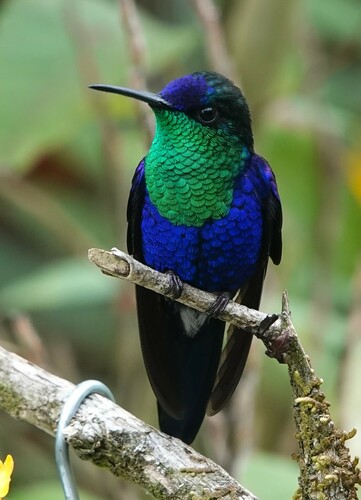
アオボウシモリハチドリ (Thalurania colombica) アオボウシモリハチドリ

メディア

読み込み中…

要点

クサビオケンバネハチドリとアオボウシモリハチドリを区別する最も信頼できるフィールドマークは、成鳥の尾の形と色です:サーベルウィングは金属的な青緑から紫黒のトーンを持つ広いくさび形の尾を持ち、ウッドニンフの尾は深く分岐し、青黒い(雌や幼鳥には白い先端があります)。両種の幼鳥は混乱を招くことがありますが、サーベルウィングはサイズが大きく、太いくちばしと鈍い、より茶色がかった腹部(雌や幼鳥にはシナモンの洗いがかかることが多い)が、ウッドニンフのスリムな体型と淡い灰色の腹部と対照的です。両種は中米の一部で一緒に見られることがあるため、構造と尾に注意を払うことが重要です。鳴き声は異なりますが、フィールドでは常に簡単に聞こえるわけではありません。

識別のコツ

  1. 尾の形と色(全ての年齢): サーベルウィングは広いくさび形の尾を持ち、ウッドニンフは深く分岐した尾を持ちます。雌や幼鳥では、ウッドニンフの尾は外側の羽に白い先端を示し、サーベルウィングには決して存在しません。
  2. サイズと構造: サーベルウィングは大きく、重く、太く、太い長いくちばしを持っています。ウッドニンフは小さく、スリムで、全体的により繊細です。
  3. 冠の色(成鳥): オスのサーベルウィングは明るい紫の冠を示し、オスのウッドニンフは紫(または一部の亜種では輝く緑)の冠と額を持っています。メスのサーベルウィングの冠は鈍い青で、メスのウッドニンフの冠は緑です。
  4. 腹部(全ての年齢): サーベルウィングは下側が茶色がかった灰色で、雌や幼鳥には淡いシナモンの洗いがあります。ウッドニンフの雌や幼鳥は下側が淡い灰色で、成鳥のオスは輝く緑の喉/胸と紫の腹部を示します。
  5. 上面: サーベルウィングの上面は金属的な緑から青銅色の緑です;ウッドニンフのオスは紫の上背と尾羽を持ち、雌は上面が明るい緑です。
  6. 尾羽の先端(雌/幼鳥): ウッドニンフの雌と幼鳥は尾羽の外側の3対に白い先端を持ち、サーベルウィングの外側の尾羽は雌/幼鳥にシナモンの洗いを示すことがありますが、決して鮮明な白い先端はありません。
  7. くちばし: サーベルウィングのくちばしはまっすぐで、やや長く、太いです;ウッドニンフのくちばしはスリムで、わずかに下向きです。
  8. 顔の模様: サーベルウィングは鈍い灰白色から灰色の顔を持ち、目の後ろに白い斑点があります;ウッドニンフにはこの明確な顔のコントラストがありません。
  9. 止まっている姿勢: サーベルウィングはしばしば直立して robustに見え、ウッドニンフはより水平で繊細です。
  10. 飛行スタイル: サーベルウィングの飛行はサイズのために遅く、より力強いです;ウッドニンフはより速く、より敏捷です。
  11. 鳴き声: 聞こえた場合、サーベルウィングを指す大きく、複雑で、ゴロゴロしたさえずりとキュッキュッという音が聞こえます。ウッドニンフの歌はフィールドではあまり特徴的ではありません。
  12. 地理: 両種はベリーズとグアテマラで一緒に見られることがあります;他の場所では、地元の範囲マップを確認してくださいが、場所だけに頼らないでください。
  13. 性別と年齢の落とし穴: 幼いサーベルウィングは成鳥の雌に似ていますが、鈍く、バフの先端の冠羽を持っています;幼いウッドニンフは上側が鈍い緑で、下側が淡い灰色で、若いオスには限られた虹色の輝きがあります。
  14. 亜種の変異: 一部のウッドニンフの亜種は緑の冠や全緑の背中を持っています;確認のために尾の形と腹部の色を常にチェックしてください。
  15. 餌台で: サーベルウィングはサイズのために優位に立ち、両方が存在する場合、ウッドニンフは明らかに小さく、より繊細に見えます。

大きさ

クサビオケンバネハチドリは明らかに大きく、重いです:オスは11.5–13.5 cm(平均6.6 g)、雌は約5.0 gです。アオボウシモリハチドリのオスは9.5–11.5 cm(4–5.5 g)、雌はさらに小さく8.5–9.2 cm(3.5–4.2 g)です。サーベルウィングはより太く、頑丈に見え、太いくちばしと重い体格を持ち、ウッドニンフはより繊細でスリムです。直接比較すると、サーベルウィングのサイズは通常、両方がよく見られる場合に明らかです。

羽色

行動

両種は活発でホバリングするハチドリですが、サーベルウィングの大きなサイズと重い体格は、より遅く、より力強い飛行と餌台や花でのより頑丈な存在感を与えます。サーベルウィングはしばしば下層の露出した止まり木から歌い、小さな群れで見られることがあります。ウッドニンフはより繊細で、しばしば下層でより低く餌を取り、花の間を素早く飛び回ります。止まっているとき、サーベルウィングはしばしばより太く、直立して見え、ウッドニンフはよりスリムで水平に見えます。

生息環境

両種は中米の湿った森林やその周辺に生息し、ベリーズとグアテマラでその範囲が重なります。クサビオケンバネハチドリはメキシコのユカタン半島からベリーズ、北グアテマラ、そしておそらくホンジュラスまで見られ、海面から1,400 mまでの湿った常緑樹林や半落葉樹林を好みます。アオボウシモリハチドリはより広範囲に分布し、ベリーズとグアテマラから南の北ペルーまで、同様の森林生息地で見られます。両種は森林の端、開けた場所、時には餌台で見られることがあるため、生息地だけでは診断的ではありません。

声

クサビオケンバネハチドリの歌は、大きく、長く、ゴロゴロしたさえずりで、キュッキュッという音を伴い、しばしば下層の裸の小枝から発せられます。アオボウシモリハチドリの鳴き声は提供されたメモには詳細が記載されていないため、サーベルウィングの複雑でゴロゴロした歌が明確に聞こえない限り、声は信頼できる区別要因ではありません。

より良い説明を送る

比較と同じ項目を使ってください。文章はすぐに公開されます。

The most reliable field mark to separate Wedge-tailed Sabrewing from Crowned Woodnymph is tail shape and color in adults: the sabrewing has a broad, wedge-shaped tail with metallic bluish green to purplish-black tones, while the woodnymph’s tail is deeply forked and blue-black (with white tips in females and immatures). Immature birds of both species can be confusing, but the sabrewing’s larger size, stouter bill, and duller, more brownish underparts (often with a cinnamon wash in females and immatures) contrast with the woodnymph’s slimmer build and pale gray underparts. Both species can occur together in parts of Central America, so careful attention to structure and tail is critical. Vocalizations differ but are not always easily heard in the field.

  1. Tail shape and color (all ages): Sabrewing has a broad, wedge-shaped tail; woodnymph has a deeply forked tail. In females and immatures, woodnymph’s tail shows white tips on outer feathers, never present in sabrewing.
  2. Size and structure: Sabrewing is larger, heavier, and bulkier with a stouter, longer bill. Woodnymph is smaller, slimmer, and more delicate overall.
  3. Crown color (adults): Male sabrewing shows a bright violet crown; male woodnymph has a violet (or glittering green in some subspecies) crown and forehead. Female sabrewing’s crown is dull blue, while female woodnymph’s is green.
  4. Underparts (all ages): Sabrewing is brownish gray below, with a pale cinnamon wash in females and immatures. Woodnymph females and immatures are pale gray below, with adult males showing glittering green throat/chest and violet belly.
  5. Upperparts: Sabrewing upperparts are metallic green to bronze green; woodnymph males have a violet upper back and rump, females are bright green above.
  6. Tail feather tips (females/immatures): Woodnymph females and immatures have white tips on the outer three pairs of tail feathers; sabrewing’s outer tail feathers may show a buff wash in females/immatures, but never crisp white tips.
  7. Bill: Sabrewing’s bill is straight, longish, and stout; woodnymph’s is slimmer and slightly decurved.
  8. Face pattern: Sabrewing has a dull grayish white to gray face with a white spot behind the eye; woodnymph lacks this distinct facial contrast.
  9. Perched jizz: Sabrewing often appears upright and robust; woodnymph is more horizontal and dainty.
  10. Flight style: Sabrewing’s flight is slower and more powerful due to its size; woodnymph is quicker and more agile.
  11. Vocalization: If heard, a loud, complex, gurgling warble with squeaky chips points to sabrewing. Woodnymph’s song is less distinctive in the field.
  12. Geography: Both can occur together in Belize and Guatemala; elsewhere, check local range maps but do not rely solely on location.
  13. Sex and age pitfalls: Immature sabrewings resemble adult females but are duller with buff-tipped crown feathers; immature woodnymphs are dull green above and pale gray below, with limited iridescence in young males.
  14. Subspecies variation: Some woodnymph subspecies have green crowns or all-green backs; always check tail shape and underpart color for confirmation.
  15. At feeders: Sabrewing will dominate due to size; woodnymph will appear noticeably smaller and more delicate if both are present.

Wedge-tailed Sabrewing is distinctly larger and heavier: males are 11.5–13.5 cm long (avg. 6.6 g), females about 5.0 g. Crowned Woodnymph males are 9.5–11.5 cm (4–5.5 g), females even smaller at 8.5–9.2 cm (3.5–4.2 g). The sabrewing appears bulkier and more robust, with a stouter bill and heavier jizz, while the woodnymph is more delicate and slim. In direct comparison, the sabrewing’s size is usually obvious if both are seen well.

  • Immatures and Females: Immature and female Wedge-tailed Sabrewings are brownish gray below with a pale cinnamon wash, and their crown is dull blue (with buff tips in immatures). Their tail is broad and wedge-shaped, with buffy tips to the outer feathers in females/immatures. Immature Crowned Woodnymphs (both sexes) have pale gray underparts, dull green upperparts, and a deeply forked blue-black tail with white tips on the outer three pairs of feathers (females/immatures only). Immature males may show limited iridescent purple feathers on crown, throat, or underparts but are otherwise dusky.

  • Adult Males: Adult male sabrewings have a bright violet crown, metallic green to bronze green upperparts, and brownish gray underparts. Their tail is broad, wedge-shaped, and metallic bluish green to purplish black. Adult male woodnymphs have a violet forehead, crown, upper back, and belly, with a glittering green throat and chest, and a deeply forked blue-black tail. The woodnymph’s underparts are much more vividly colored and iridescent than the sabrewing’s duller, brownish gray belly.

  • Adult Females: Female sabrewings are similar to males but with a duller blue crown and more cinnamon on the underparts. Female woodnymphs are bright green above, pale gray on the throat and chest, and darker gray on the belly, with a blue-black, deeply forked tail and white tips on the outer tail feathers.

Both species are active, hovering hummingbirds, but the sabrewing’s larger size and heavier build give it a slower, more powerful flight and a more robust presence at feeders or flowers. Sabrewings may sing from exposed perches in the understory, often in small groups. Woodnymphs are more delicate, often feeding lower in the understory and flitting rapidly between flowers. Perched, the sabrewing often looks bulkier and more upright, while the woodnymph appears slimmer and more horizontal.

Both species occur in humid forests and edges in Central America, and their ranges overlap in Belize and Guatemala. Wedge-tailed Sabrewing is found from Mexico’s Yucatán Peninsula through Belize, northern Guatemala, and possibly Honduras, favoring humid evergreen and semi-deciduous forests from sea level up to 1,400 m. Crowned Woodnymph ranges more widely, from Belize and Guatemala south to northern Peru, in similar forested habitats. Both can be seen at forest edges, clearings, and sometimes at feeders, so habitat alone is not diagnostic.

The Wedge-tailed Sabrewing’s song is described as a loud, prolonged, gurgling warble with squeaky chipping notes, often delivered from bare twigs in the understory. The Crowned Woodnymph’s vocalizations are not detailed in the notes provided, so voice is not a reliable separator unless the sabrewing’s complex, gurgling song is clearly heard.

変更を破棄しますか?

保存していない編集があります。今離れると失われます。

クサビオケンバネハチドリ · アオボウシモリハチドリ · 苦手な鳥