

Wedge-tailed Sabrewing vs Crowned Woodnymph
Pampa curvipennis contro Thalurania colombica
Fai un quiz con Wedge-tailed Sabrewing e Crowned Woodnymph
 Wedge-tailed Sabrewing
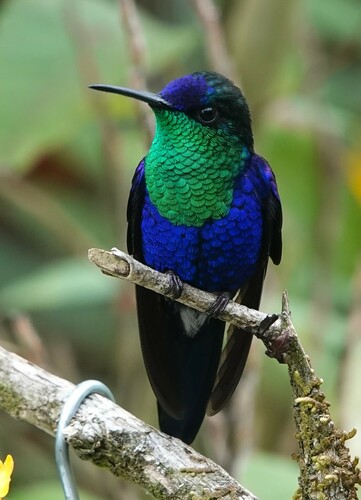 Crowned Woodnymph
In breve
Il segno di campo più affidabile per separare il Wedge-tailed Sabrewing dal Crowned Woodnymph è la forma e il colore della coda negli adulti: il sabrewing ha una coda larga e a forma di cuneo con toni metallici blu-verdi a nero purpureo, mentre la coda del woodnymph è profondamente biforcuta e blu-nera (con punte bianche nelle femmine e nei giovani). Gli uccelli immaturi di entrambe le specie possono essere confusi, ma la dimensione maggiore del sabrewing, il becco più robusto e le parti inferiori più opache e brune (spesso con una sfumatura cannella nelle femmine e nei giovani) contrastano con la struttura più snella e le parti inferiori grigio chiaro del woodnymph. Entrambe le specie possono verificarsi insieme in alcune parti dell'America Centrale, quindi prestare attenzione alla struttura e alla coda è fondamentale. Le vocalizzazioni differiscono ma non sono sempre facilmente udibili sul campo.
Consigli di identificazione
- Tail shape and color (all ages): Il sabrewing ha una coda larga e a forma di cuneo; il woodnymph ha una coda profondamente biforcuta. Nelle femmine e nei giovani, la coda del woodnymph mostra punte bianche sulle piume esterne, mai presenti nel sabrewing.
- Size and structure: Il sabrewing è più grande, più pesante e più robusto con un becco più robusto e lungo. Il woodnymph è più piccolo, più snello e più delicato nel complesso.
- Crown color (adults): Il maschio del sabrewing mostra una corona viola brillante; il maschio del woodnymph ha una corona e una fronte viola (o verde scintillante in alcune sottospecie). La corona della femmina del sabrewing è blu opaca, mentre quella della femmina del woodnymph è verde.
- Underparts (all ages): Il sabrewing è grigio bruno sotto, con una sfumatura cannella nelle femmine e nei giovani. Le femmine e i giovani del woodnymph sono grigio chiaro sotto, con i maschi adulti che mostrano una gola/petto verde scintillante e un ventre viola.
- Upperparts: Le parti superiori del sabrewing sono verdi metalliche a verde bronzo; i maschi del woodnymph hanno una parte superiore della schiena e un sopracciglio viola, le femmine sono di un verde brillante sopra.
- Tail feather tips (females/immatures): Le femmine e i giovani del woodnymph hanno punte bianche sulle tre coppie esterne di piume della coda; le piume esterne della coda del sabrewing possono mostrare una sfumatura buff nelle femmine/immaturi, ma mai punte bianche nette.
- Bill: Il becco del sabrewing è dritto, lungo e robusto; quello del woodnymph è più snello e leggermente ricurvo.
- Face pattern: Il sabrewing ha un volto grigio chiaro a bianco grigiastro con una macchia bianca dietro l'occhio; il woodnymph non ha questo contrasto facciale distintivo.
- Perched jizz: Il sabrewing appare spesso eretto e robusto; il woodnymph è più orizzontale e delicato.
- Flight style: Il volo del sabrewing è più lento e potente a causa della sua dimensione; il woodnymph è più veloce e agile.
- Vocalization: Se udito, un canto forte, complesso e gorgogliante con note squittenti indica il sabrewing. Il canto del woodnymph è meno distintivo sul campo.
- Geography: Entrambi possono verificarsi insieme in Belize e Guatemala; altrove, controlla le mappe di distribuzione locali ma non fare affidamento solo sulla posizione.
- Sex and age pitfalls: I sabrewings immaturi assomigliano alle femmine adulte ma sono più opachi con piume della corona con punte buff; i woodnymph immaturi sono di un verde opaco sopra e grigio chiaro sotto, con iridescenza limitata nei giovani maschi.
- Subspecies variation: Alcune sottospecie di woodnymph hanno corone verdi o schiene completamente verdi; controlla sempre la forma della coda e il colore delle parti inferiori per conferma.
- At feeders: Il sabrewing dominerà a causa della dimensione; il woodnymph apparirà notevolmente più piccolo e più delicato se entrambi sono presenti.
Taglia
Il Wedge-tailed Sabrewing è nettamente più grande e pesante: i maschi misurano 11,5–13,5 cm di lunghezza (avg. 6,6 g), le femmine circa 5,0 g. I maschi del Crowned Woodnymph misurano 9,5–11,5 cm (4–5,5 g), le femmine ancora più piccole a 8,5–9,2 cm (3,5–4,2 g). Il sabrewing appare più robusto e massiccio, con un becco più robusto e una presenza più pesante, mentre il woodnymph è più delicato e snello. In un confronto diretto, la dimensione del sabrewing è solitamente ovvia se entrambi sono visti bene.
Piumaggio
-
Immatures and Females: I Wedge-tailed Sabrewings immaturi e femminili sono grigio bruno sotto con una sfumatura cannella chiara, e la loro corona è blu opaca (con punte buff nei giovani). La loro coda è larga e a forma di cuneo, con punte buff sulle piume esterne nelle femmine/immaturi. I Crowned Woodnymph immaturi (entrambi i sessi) hanno parti inferiori grigio chiaro, parti superiori verdi opache e una coda blu-nera profondamente biforcuta con punte bianche sulle tre coppie esterne di piume (solo femmine/immaturi). I maschi immaturi possono mostrare piume viola iridescenti limitate sulla corona, sulla gola o sulle parti inferiori ma sono altrimenti scuri.
-
Adult Males: I maschi adulti del sabrewing hanno una corona viola brillante, parti superiori verdi metalliche a verde bronzo e parti inferiori grigio bruno. La loro coda è larga, a forma di cuneo e di un blu-verde metallico a nero purpureo. I maschi adulti del woodnymph hanno una fronte, una corona, una parte superiore della schiena e un ventre viola, con una gola e un petto verdi scintillanti, e una coda blu-nera profondamente biforcuta. Le parti inferiori del woodnymph sono molto più vividamente colorate e iridescenti rispetto al ventre più opaco e grigio bruno del sabrewing.
-
Adult Females: Le femmine del sabrewing sono simili ai maschi ma con una corona blu più opaca e più cannella sulle parti inferiori. Le femmine del woodnymph sono di un verde brillante sopra, grigio chiaro sulla gola e sul petto, e grigio più scuro sul ventre, con una coda blu-nera, profondamente biforcuta e punte bianche sulle piume esterne della coda.
Comportamento
Entrambe le specie sono colibrì attivi e in volo stazionario, ma la maggiore dimensione e la costruzione più pesante del sabrewing gli conferiscono un volo più lento e potente e una presenza più robusta ai mangiatoie o ai fiori. I sabrewings possono cantare da posatoi esposti nel sottobosco, spesso in piccoli gruppi. I woodnymphs sono più delicati, spesso si nutrono più in basso nel sottobosco e si muovono rapidamente tra i fiori. Appollaiato, il sabrewing appare spesso più massiccio e eretto, mentre il woodnymph appare più snello e orizzontale.
Habitat
Entrambe le specie si trovano in foreste umide e ai margini in America Centrale, e le loro aree di distribuzione si sovrappongono in Belize e Guatemala. Il Wedge-tailed Sabrewing si trova dalla penisola dello Yucatán in Messico attraverso il Belize, il Guatemala settentrionale e possibilmente l'Honduras, preferendo foreste sempreverdi umide e semi-decidue dal livello del mare fino a 1.400 m. Il Crowned Woodnymph ha una distribuzione più ampia, dal Belize e Guatemala a sud fino al Perù settentrionale, in habitat forestali simili. Entrambi possono essere visti ai margini delle foreste, nelle radure e talvolta ai mangiatoie, quindi l'habitat da solo non è diagnostico.
Voce
Il canto del Wedge-tailed Sabrewing è descritto come un forte, prolungato, gorgogliante con note di schiocchi squittenti, spesso emesso da rametti nudi nel sottobosco. Le vocalizzazioni del Crowned Woodnymph non sono dettagliate nelle note fornite, quindi la voce non è un separatore affidabile a meno che il canto complesso e gorgogliante del sabrewing non venga chiaramente udito.
Wedge-tailed Sabrewing · Crowned Woodnymph · I miei uccelli difficili