

Motmot

アオミツドリ 対 ムラサキミツドリ

Cyanerpes lucidus 対 Cyanerpes caeruleus

アオミツドリとムラサキミツドリのクイズ
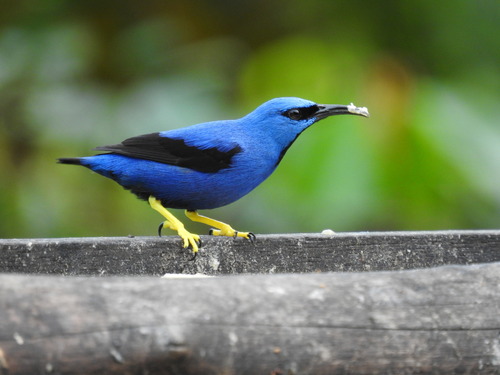
アオミツドリ (Cyanerpes lucidus) アオミツドリ
ムラサキミツドリ (Cyanerpes caeruleus) ムラサキミツドリ

メディア

読み込み中…

要点

シニングハニークリーパーとムラサキミツドリの最も信頼できるフィールドマークは、成鳥のオスの羽色の違いです:シニングハニークリーパーのオスは鮮やかなウルトラマリンブルーで、頭はより明るく、青色がかった色合いですが、ムラサキミツドリのオスは全体的により深いバイオレットブルーから紫がかった色合いです。メスはより難しいです:シニングハニークリーパーのメスは主に草緑色で、青または緑がかった冠を持っていますが、ムラサキミツドリのメスは緑の冠と後頭部を持ち、特徴的なシナモンバフのスーパシリウムと耳の覆いを示し、さらに明るい青のマラーストライプがあります。両種は似たような細長い下向きのくちばしと黄味がかった脚を持っていますが、脚の色と顔の模様の微妙な違いが役立つことがあります。幼鳥は両種の成鳥メスに似ているため、顔の模様と腹部の縞模様に注目してください。分布も強力な手がかりです:シニングハニークリーパーはメキシコ北部からコロンビアにかけて見られ、ムラサキミツドリはパナマ南部から南アメリカのほとんどを通りトリニダードまで分布しています。

識別のコツ

  1. Adult male color: シニングハニークリーパーのオスは鮮やかなウルトラマリンブルーで、より淡い青色がかった頭と小さな黒いマスクを持っています;ムラサキミツドリのオスはより深いバイオレットブルーまたは紫がかった色合いで、わずかに明るい顔と狭い黒いマスクがあります。これは成鳥のオスを確認するための最も迅速なフィールドチェックです。
  2. Head contrast in males: シニングハニークリーパーのオスは体に比べて明らかに明るい青の頭を持っています;ムラサキミツドリのオスはトーンがより均一で、わずかに明るい顔だけです。
  3. Female face pattern: シニングハニークリーパーのメスは草緑色の頭を持ち、青または緑がかった冠/後頭部と薄い白いストライプがあります;ムラサキミツドリのメスは特徴的なシナモンバフのスーパシリウムと耳の覆い、バフ色のロアとアイリング、明るい青のマラーストライプを示します。ムラサキの顔のシナモンバフの色合いを探してください。
  4. Female underparts: シニングハニークリーパーのメスは青の縞模様のある灰緑色の腹部とバフ色の顎/喉を持っています;ムラサキミツドリのメスはバフ色の喉、オフホワイトの胸/脇腹に緑がかったオリーブの縞模様、黄色の腹部、白い尾覆いを持っています。下に黄色と白があることはムラサキミツドリの手がかりです。
  5. Female upperparts: シニングハニークリーパーのメスは上面が鈍い草緑色です;ムラサキミツドリのメスは上面が緑色ですが、より複雑な顔の模様と冠/後頭部の青が少ないです。
  6. Leg color: 両種のオスは明るい黄色の脚を持っています;メスの脚は黄色がかった緑色(シニング)または淡い緑からオリーブイエロー(ムラサキ)です。これは微妙で、良い光の中で使用するのが最適です。
  7. Bill shape: 両方とも細長い下向きの黒いくちばしを持っています;くちばしの長さは亜種によって異なりますが、ほとんどの場合、これらの2種の間で信頼できるフィールドマークではありません。
  8. Juvenile confusion: 幼鳥は両種の成鳥メスに似ています。ムラサキミツドリの場合、幼鳥は胸/脇腹がより地味です。顔の模様と腹部の色を使って区別してください。
  9. Underwing color: シニングハニークリーパーのメスは鈍い黄色の下翼覆いを持っています;ムラサキミツドリのメスは黄色がかった緑のエッジを持つ暗い飛行羽を持っています。これは特定の角度でのみ見えます。
  10. Tail and wing: 両方とも成鳥のオスでは短い尾と黒い翼/尾を持っています;特に飛行パターンの違いは記載されていません。
  11. Range: パナマの北(メキシコからホンジュラス)で見られた場合はシニングハニークリーパーです。パナマの南(トリニダード、ベネズエラ、アマゾニアなど)で見られた場合はムラサキミツドリです。パナマとコロンビア北西部では、両方が見られることがあります。
  12. Habitat: 両方とも湿った森林とその周辺を好み、しばしば樹冠または亜樹冠にいます。生息地は区別要因ではありませんが、文脈(分布、高度)が役立つことがあります。
  13. Behavior: 両方とも活発で、しばしば混合群れに参加し、果物や蜜のためにフィーダーを訪れます。行動の違いは微妙で、区別には信頼できません。
  14. Sexual dimorphism: 両方とも性別による二形性がありますが、メスの顔の模様と腹部の色合いがメスを区別するために最も役立ちます。
  15. Subspecies variation: 一部のムラサキミツドリの亜種はより淡いまたは紫がかった色合いで、くちばしの長さは異なりますが、これらは知られた分布内でない限りフィールドIDには信頼できません。

大きさ

両種はサイズが非常に似ており、シニングハニークリーパーは平均約11.4gの質量と10〜11cmの長さであるのに対し、ムラサキミツドリは9.3〜11.4cmおよび7.8〜14gの範囲です。フィールドでは、サイズは信頼できる区別要因ではありません;両方とも小さく、細長いタンガーとして見え、長い下向きのくちばしと短い尾を持っています。ムラサキミツドリの亜種の変異により、一部の個体はわずかに大きくなったり小さくなったりすることがありますが、これは微妙で、ほとんどのフィールドでの遭遇には役立ちません。

羽色

行動

両種は活発で、樹冠を探るタンガーであり、しばしば混合種の群れに参加します。ムラサキミツドリはペアまたは小グループでのエネルギッシュな採餌で知られ、果物や蜜のためにフィーダーを頻繁に訪れ、枝や葉から昆虫を捕まえます。シニングハニークリーパーの行動は似ていますが、詳細は少ないです。フィールドでは、彼らの動きは非常に似ています:亜樹冠や樹冠での迅速で敏捷な動きが多く、しばしば他のタンガーやハニークリーパーと一緒にいます。

生息環境

シニングハニークリーパーはメキシコ南部から中央アメリカ(エルサルバドルを除く)を経てコロンビアに見られ、ムラサキミツドリはパナマ南部から南アメリカのほとんどを通りトリニダードまで分布しています。彼らの分布はパナマとコロンビア北西部でのみ重なります。両方とも湿った森林とその周辺に生息していますが、パナマの北にいる場合はシニングハニークリーパーのみが期待され、パナマの南と東ではムラサキミツドリが優勢です。生息地の好みはそれ以外は似ているため、分布が強力な区別要因です。

より良い説明を送る

比較と同じ項目を使ってください。文章はすぐに公開されます。

The most reliable field mark between Shining Honeycreeper and Purple Honeycreeper is the difference in adult male plumage: Shining Honeycreeper males are a vivid ultramarine blue with a lighter, more azure head, while Purple Honeycreeper males are a deeper violet-blue to purplish overall. Females are trickier: Shining Honeycreeper females are mostly grass-green with a blue or greenish crown, whereas Purple Honeycreeper females have a green crown and nape but show a distinctive cinnamon-buff supercilium and ear coverts, plus a brighter blue malar stripe. Both species have similar slender, decurved bills and yellowish legs, but subtle differences in leg color and face pattern can help. Juveniles resemble adult females in both species, so focus on face pattern and underpart streaking. Range is also a strong clue: Shining Honeycreeper is found north to Mexico and into Colombia, while Purple Honeycreeper ranges from Panama south through most of South America and onto Trinidad.

  1. Adult male color: Shining Honeycreeper males are a vivid ultramarine blue with a paler, more azure head and a small black mask; Purple Honeycreeper males are deeper violet-blue or purplish, with a slightly lighter face and a narrow black mask. This is the quickest field check for adult males.
  2. Head contrast in males: Shining Honeycreeper males have a noticeably lighter blue head compared to the body; Purple Honeycreeper males are more uniform in tone, with only a slightly lighter face.
  3. Female face pattern: Shining Honeycreeper females have a grass-green head with a blue or greenish crown/nape and thin white stripes on the forecrown; Purple Honeycreeper females show a distinctive cinnamon-buff supercilium and ear coverts, buffy lores and eye-ring, and a brighter blue malar stripe. Look for the cinnamon-buff tones on the face for Purple.
  4. Female underparts: Shining Honeycreeper females have grayish green underparts with blue streaks on the breast and a buff chin/throat; Purple Honeycreeper females have a buffy throat, off-white breast/flanks with greenish olive streaks, yellow belly, and white undertail coverts. The presence of yellow and white below is a Purple Honeycreeper clue.
  5. Female upperparts: Shining Honeycreeper females are dull grass green above; Purple Honeycreeper females are green above but with a more complex face pattern and less blue on the crown/nape.
  6. Leg color: Males of both species have bright yellow legs; females' legs are yellowish green (Shining) or light green to olive-yellow (Purple). This is subtle and best used in good light.
  7. Bill shape: Both have slender, decurved black bills; bill length varies by subspecies but is not a reliable field mark between these two species in most cases.
  8. Juvenile confusion: Juveniles resemble adult females in both species. For Purple Honeycreeper, juveniles are plainer on the breast/flanks. Use face pattern and underpart color to separate.
  9. Underwing color: Shining Honeycreeper females have dull yellow underwing coverts; Purple Honeycreeper females have dusky flight feathers with yellow-green edges. This is only visible in certain views.
  10. Tail and wing: Both have short tails and black wings/tails in adult males; no distinctive flight pattern differences are described.
  11. Range: If seen north of Panama (Mexico to Honduras), it is Shining Honeycreeper. If south of Panama (Trinidad, Venezuela, Amazonia, etc.), it is Purple Honeycreeper. In Panama and northwest Colombia, both may occur.
  12. Habitat: Both prefer humid forests and edges, often in the canopy or subcanopy. Habitat is not a separator, but context (range, elevation) may help.
  13. Behavior: Both are active, often in mixed flocks, and visit feeders for fruit/nectar. Behavioral differences are subtle and not reliable for separation.
  14. Sexual dimorphism: Both are sexually dimorphic, but the female face pattern and underpart coloration are the most useful for separating females.
  15. Subspecies variation: Some Purple Honeycreeper subspecies are paler or more purplish, and bill length varies, but these are not reliable for field ID unless in known range.

Both species are very similar in size, with Shining Honeycreeper averaging about 11.4 g in mass and 10–11 cm in length, while Purple Honeycreeper ranges from 9.3–11.4 cm and 7.8–14 g. In the field, size is not a reliable separator; both appear as small, slender tanagers with long, decurved bills and short tails. Subspecies variation in Purple Honeycreeper can make some individuals slightly larger or smaller, but this is subtle and not useful for most field encounters.

  • Juvenile and Immature Plumage: Both species' juveniles resemble adult females, lacking the bold adult male colors. Juvenile Purple Honeycreepers are plainer on the breast and flanks than adult females, but otherwise share the green upperparts and buffy underparts. No distinctive upperwing or flight pattern differences are described for immatures.

  • Adult Males: Shining Honeycreeper males are mostly ultramarine blue with a lighter azure head, small black mask, black throat and upper breast, and black wings/tail. Purple Honeycreeper males are violet-blue to purplish, with a slightly lighter face, black lores and mask, black throat center, and black wings/tail. The overall tone is more purple in Purple Honeycreeper, more blue in Shining Honeycreeper, and the head is paler in Shining Honeycreeper.

  • Adult Females: Shining Honeycreeper females are grass-green above with a grayish blue or greenish crown/nape, thin white stripes on the forecrown, brownish dusky lores, and a blue malar stripe. Underparts are grayish green with blue streaks on the breast, buff chin/throat, and dull yellow underwing coverts. Purple Honeycreeper females have a green crown/nape, buffy lores and eye-ring, bright blue malar stripe, cinnamon-buff supercilium and ear coverts, green upperparts/tail, buffy throat, off-white breast/flanks with greenish olive streaks, yellow belly, and white undertail coverts. Their flight feathers are dusky with yellow-green edges.

  • Legs and Bill: Both have slender, decurved black bills. Male legs are bright yellow in both species; females are yellowish green (Shining) or light green to olive-yellow (Purple).

Both species are active, canopy-foraging tanagers that often join mixed-species flocks. Purple Honeycreeper is noted for its energetic foraging in pairs or small groups, frequently visiting feeders for fruit and nectar, and taking insects from twigs and foliage. Shining Honeycreeper's behavior is similar, though less is detailed. In the field, their jizz is much alike: quick, agile movements in the subcanopy and canopy, often with other tanagers or honeycreepers.

Shining Honeycreeper is found from southern Mexico through Central America (except El Salvador) into Colombia, while Purple Honeycreeper ranges from Panama south through most of South America and onto Trinidad. Their ranges overlap only in Panama and northwest Colombia. Both inhabit humid forests and edges, but if you are north of Panama, only Shining Honeycreeper is expected; south and east of Panama, Purple Honeycreeper predominates. Habitat preference is otherwise similar, so range is a strong separator.

変更を破棄しますか?

保存していない編集があります。今離れると失われます。

アオミツドリ · ムラサキミツドリ · 苦手な鳥