

Motmot

ズグロヒメコンゴウインコ 対 キバラヒタキモドキ

Orthopsittaca manilatus 対 Myiozetetes cayanensis

ズグロヒメコンゴウインコとキバラヒタキモドキのクイズ
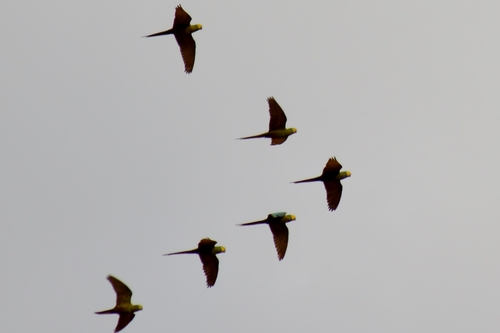
ズグロヒメコンゴウインコ (Orthopsittaca manilatus) ズグロヒメコンゴウインコ
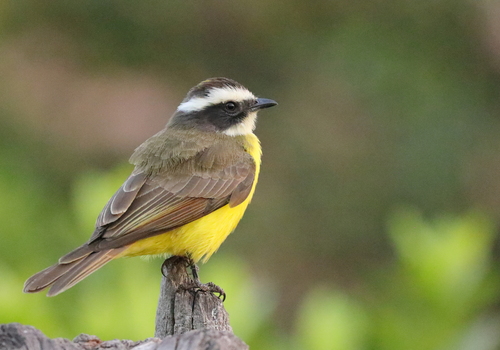
キバラヒタキモドキ (Myiozetetes cayanensis) キバラヒタキモドキ

メディア

読み込み中…

要点

これら2種を区別する最も信頼できるフィールドマークは全体の構造です:ズグロヒメコンゴウインコは、主に緑色の体と目立つマルーン色の腹部斑点を持つ、大きく、長い尾を持ち、重いくちばしのオウムです。一方、キバラヒタキモドキは、茶色の上面、白い眉斑、明るい黄色の下面を持つ、はるかに小さく、細いくちばしの歌鳥です。幼鳥のズグロヒメコンゴウインコは、上くちばしに独特の白い線があり、ヒタキモドキには見られません。飛んでいるときや止まっているとき、オウムの長く尖った尾と裸の黄色い顔の皮膚は間違いなく識別できますが、ヒタキモドキは短い尾、暗いマスク、赤褐色の縁のある翼を示します。遠くから見たり、よく見えない鳥との混同が最も起こりやすいですが、サイズ、構造、オウムのマルーン色の腹部斑点に注意を払えば、ほとんどすべてのフィールドでの遭遇を解決できます。

識別のコツ

  1. サイズと構造: ズグロヒメコンゴウインコは、キバラヒタキモドキの2倍以上の長さと何倍もの質量を持っています。遠くからでも、オウムの長く尖った尾と大きな体は明らかです。ヒタキモドキは小さく、短い尾と細い体型を持っています。
  2. くちばしの形: オウムは巨大で曲がった暗灰色のくちばしを持ち(幼鳥は白いくちばしの線がある)、ヒタキモドキは短く、まっすぐで、太い黒いくちばしを持っています。くちばしの形は近距離での診断に役立ちます。
  3. 顔の皮膚: ズグロヒメコンゴウインコは、セレと顔の大部分に広範囲に裸のマスタードイエローの皮膚を示しますが、ヒタキモドキには羽毛のある顔があります。
  4. マルーン色の腹部斑点: オウムだけが下腹部に大きなマルーン色の斑点を持っています。ヒタキモドキは明るい黄色の下面を持ち、マルーンや赤はありません。
  5. 羽毛の色: オウムは主に緑色で、青みがかった額と灰色の顎/喉を持ち、そして大きなマルーン色の腹部斑点があります。ヒタキモドキは上面が茶色で、白い眉斑と下に黄色があります。ヒタキモドキには緑や青はありません。
  6. 眉斑: キバラヒタキモドキは、目を超えてしっかりとした白い眉斑(眉毛)を持っていますが、オウムにはそのようなマークはありません。
  7. 翼のパターン(幼鳥): 幼鳥のオウムは鈍い色で、上くちばしに独特の白い線があります;幼鳥のヒタキモドキは翼と尾の縁により赤褐色が多く見られますが、白いくちばしの線はありません。
  8. 尾の形: オウムの尾は長く尖っています;ヒタキモドキの尾は短く四角です。飛んでいるとき、その違いは際立っています。
  9. 裸の皮膚対羽毛の顔: オウムだけが裸の顔の皮膚を持っています;ヒタキモドキの顔は完全に羽毛で覆われており、暗いマスクがあります。
  10. 飛行スタイル: オウムは強く深い翼の打撃で飛び、飛行中によく鳴きます;ヒタキモドキは素早くひらひらとした飛行をし、通常は止まり木からの短い飛び出しを行います。
  11. 止まり方: オウムは直立して止まり、しばしば高いヤシの木に止まります;ヒタキモドキは露出した枝により水平に止まります。
  12. 生息地: オウムはほぼ常にヤシの湿地の中または近くにいます;ヒタキモドキは、オープンおよび半オープンな生息地の広範囲に見られます。
  13. 性別: 両種は羽毛において性別的に単形ですが、オウムのオスはわずかに大きいです。これはフィールドではほとんど役に立ちません。
  14. 幼鳥のオウムのくちばしの線: 灰色のくちばしの上に白い線がある鳥を見たら、それは幼鳥のズグロヒメコンゴウインコです—ヒタキモドキではありません。
  15. オウムには赤褐色の翼の縁がない: 翼と尾の赤褐色またはシナモン色の縁はヒタキモドキの特徴であり、特に幼鳥やいくつかの亜種に見られます;オウムはこれを示しません。

大きさ

ズグロヒメコンゴウインコははるかに大きく、約46 cm(18インチ)で、約300 g(11オンス)[wikipedia]の重さがあります。長く尖った尾と頑丈な体を持っています。キバラヒタキモドキははるかに小さく、長さはわずか16.5〜18 cm(6.5〜7.1インチ)で、重さは22〜29.5 g(0.78〜1.0オンス)[wikipedia]です。オウムのサイズと体重は、どんな直接的な比較でもすぐに明らかです、たとえ遠くからでも。

羽色

幼鳥のズグロヒメコンゴウインコは大人よりも鈍い色をしており、上くちばしに白い線がある独特の灰色のくちばしを持っています—これはスピックスのオウムを除いてオウムの中でユニークであり、ヒタキモドキには決して見られません。両性の成鳥は主に緑色で、青みがかった額、灰色の顎/喉/上胸部、そして大きなマルーン色の腹部斑点を持っています。裸のマスタードイエローの顔の皮膚は診断的です。翼の下と尾の下は鈍いオリーブイエローです。対照的に、キバラヒタキモドキ(成鳥と幼鳥)は、茶色からオリーブブラウンの上面、白い眉斑、暗いすす色の茶色の冠と顔、そして明るい黄色の下面を持っています。彼らの翼は深い灰色がかった茶色で、赤褐色またはシナモン色の縁があります(幼鳥やいくつかの亜種ではより顕著です)。尾は暗い茶色でオリーブまたは赤褐色の縁があります。ヒタキモドキの幼鳥は黄色の冠の斑点がなく、翼と尾の縁により広範囲に赤褐色が見られます。ヒタキモドキはマルーン色の腹部、裸の顔の皮膚、または緑色の体を示すことはありません。

行動

ズグロヒメコンゴウインコは強く、直接的に飛ぶ鳥で、しばしばペアや小さな群れで見られ、通常はヤシの木の林と関連しています。彼らは直立して止まり、しばしば開けた場所で、重いくちばしを使って食べ物を操作し、登ります。キバラヒタキモドキは活発で、サリーングヒタキモドキです;彼らはより水平に止まり、しばしば露出した枝に止まり、昆虫を捕まえるために短い飛行を行います。彼らの動きは素早く敏捷で、重くてより慎重なオウムとは異なります。

生息環境

ズグロヒメコンゴウインコはモリチェヤシ(Mauritia flexuosa)の湿地とヤシの木の林がある砂地のサバンナに密接に関連しており、これらの生息地から離れて見られることはほとんどありません[wikipedia]。キバラヒタキモドキははるかに適応力があり、南アメリカ全体の広範囲にわたるオープンおよび半オープンな生息地に見られ、森林の端、二次成長、庭、都市部などが含まれます。ヤシの湿地から離れて見られた場合、ズグロヒメコンゴウインコはあり得ません。

より良い説明を送る

比較と同じ項目を使ってください。文章はすぐに公開されます。

The most reliable field mark to separate these two species is overall structure: the Red-bellied Macaw is a large, long-tailed, heavy-billed parrot with a mostly green body and a prominent maroon belly patch, while the Rusty-margined Flycatcher is a much smaller, slim-billed songbird with brown upperparts, a white supercilium, and bright yellow underparts. Juvenile Red-bellied Macaws have a unique white line on the upper beak, which is never seen in flycatchers. In flight or perched, the macaw's long, pointed tail and bare yellow facial skin are unmistakable, whereas the flycatcher shows a short tail, dark mask, and rufous-edged wings. Confusion is most likely with distant or poorly seen birds, but attention to size, structure, and the macaw's maroon belly patch will resolve nearly all field encounters.

  1. Size and structure: Red-bellied Macaw is over twice the length and many times the mass of Rusty-margined Flycatcher. Even at a distance, the macaw's long, pointed tail and bulky body are obvious. The flycatcher is small, with a short tail and slim build.
  2. Bill shape: Macaw has a massive, curved, dark-grey beak (juveniles with a white culmen stripe), while the flycatcher has a short, straight, stubby black bill. Bill shape is diagnostic at close range.
  3. Facial skin: Red-bellied Macaw shows extensive bare mustard-yellow skin on the cere and much of the face—never present in flycatchers, which have feathered faces.
  4. Maroon belly patch: Only the macaw has a large maroon patch on the lower belly. The flycatcher has bright yellow underparts with no maroon or red.
  5. Plumage color: Macaw is mostly green with a bluish forehead and greyish chin/throat; flycatcher is brown above, with a white supercilium and yellow below. No green or blue on the flycatcher.
  6. Supercilium: Rusty-margined Flycatcher has a strong white eyebrow (supercilium) extending well past the eye; macaw lacks any such mark.
  7. Wing pattern (juveniles): Juvenile macaws are duller and have a unique white stripe on the upper beak; juvenile flycatchers have more rusty-cinnamon on wing and tail edges, but never a white beak stripe.
  8. Tail shape: Macaw's tail is long and pointed; flycatcher's is short and square. In flight, the difference is striking.
  9. Bare skin vs feathered face: Only the macaw has bare facial skin; flycatcher's face is fully feathered, with a dark mask.
  10. Flight style: Macaws fly with strong, deep wingbeats and often call in flight; flycatchers have quick, fluttery flights, usually short sallies from a perch.
  11. Perching posture: Macaws perch upright, often high in palms; flycatchers perch more horizontally on exposed branches.
  12. Habitat: Macaws are almost always in or near palm swamps; flycatchers are found in a much wider range of open and semi-open habitats.
  13. Sexes: Both species are sexually monomorphic in plumage, but macaw males are slightly larger. This is rarely useful in the field.
  14. Juvenile macaw beak stripe: If you see a bird with a white stripe along the top of a grey beak, it is a juvenile Red-bellied Macaw—never a flycatcher.
  15. No rufous wing edges on macaw: Rusty or cinnamon edges on the wings and tail are a flycatcher feature, especially in juveniles and some subspecies; macaws never show these.

Red-bellied Macaw is much larger, measuring about 46 cm (18 in) and weighing around 300 g (11 oz) [wikipedia], with a long, pointed tail and robust build. Rusty-margined Flycatcher is much smaller, only 16.5–18 cm (6.5–7.1 in) long and 22–29.5 g (0.78–1.0 oz) [wikipedia]. The macaw's size and bulk are immediately obvious in any direct comparison, even at a distance.

Juvenile Red-bellied Macaws are duller than adults and have a distinctive grey beak with a white stripe along the culmen—this is unique among macaws except Spix's and never present in flycatchers. Adults of both sexes are mostly green with a bluish forehead, greyish chin/throat/upper chest, and a large maroon belly patch. The bare mustard-yellow facial skin is diagnostic. The underwings and undertail are dull olive yellow. In contrast, Rusty-margined Flycatchers (adults and juveniles) have brown to olive-brown upperparts, a white supercilium, dark sooty brown crown and face, and bright yellow underparts. Their wings are deep grayish brown with rusty or cinnamon-rufous edges (more pronounced in juveniles and some subspecies). The tail is dusky brown with olive or rufous edges. Flycatcher juveniles lack the yellow crown patch and show more extensive rusty-cinnamon on wing and tail edges. No flycatcher shows a maroon belly, bare facial skin, or green body.

Red-bellied Macaws are strong, direct fliers, often seen in pairs or small flocks, and are usually associated with palm groves. They perch upright, often in the open, and use their heavy bill to manipulate food and climb. Rusty-margined Flycatchers are active, sallying flycatchers; they perch more horizontally, often on exposed branches, and make short flights to catch insects. Their movements are quick and agile, unlike the heavier, more deliberate macaw.

Red-bellied Macaw is tightly linked to Moriche palm (Mauritia flexuosa) swamps and sandy savannahs with palm groves, rarely found away from these habitats [wikipedia]. Rusty-margined Flycatcher is much more adaptable, found in a wide range of open and semi-open habitats across South America, including forest edges, second growth, gardens, and urban areas. If seen away from palm swamps, a Red-bellied Macaw is unlikely.

変更を破棄しますか?

保存していない編集があります。今離れると失われます。

ズグロヒメコンゴウインコ · キバラヒタキモドキ · 苦手な鳥