

Red-bellied Macaw vs Rusty-margined Flycatcher
Orthopsittaca manilatus contro Myiozetetes cayanensis
Fai un quiz con Red-bellied Macaw e Rusty-margined Flycatcher
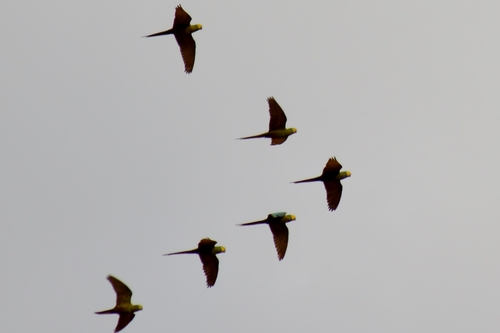 Red-bellied Macaw
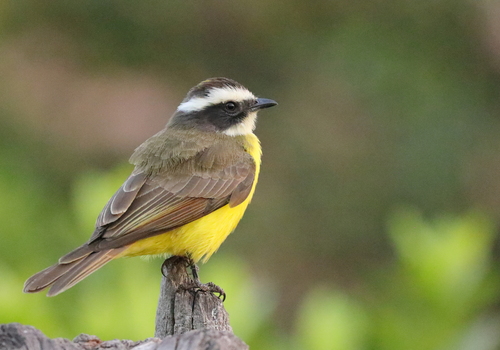 Rusty-margined Flycatcher
In breve
Il segno distintivo più affidabile per separare queste due specie è la struttura complessiva: il Red-bellied Macaw è un grande pappagallo dalla lunga coda e dal becco pesante, con un corpo per lo più verde e una prominente macchia di pancia color marrone, mentre il Rusty-margined Flycatcher è un uccello canoro molto più piccolo e dal becco sottile, con parti superiori marroni, un sopracciglio bianco e parti inferiori gialle brillanti. I giovani Red-bellied Macaw hanno una linea bianca unica sul becco superiore, che non si vede mai nei flycatcher. In volo o posati, la lunga coda appuntita del macaw e la pelle facciale gialla nuda sono inconfondibili, mentre il flycatcher mostra una coda corta, una maschera scura e ali con bordi rufous. La confusione è più probabile con uccelli lontani o visti male, ma prestare attenzione alle dimensioni, alla struttura e alla macchia di pancia marrone del macaw risolverà quasi tutti gli incontri sul campo.
Consigli di identificazione
- Dimensioni e struttura: Il Red-bellied Macaw è oltre due volte la lunghezza e molte volte la massa del Rusty-margined Flycatcher. Anche a distanza, la lunga coda appuntita e il corpo massiccio del macaw sono evidenti. Il flycatcher è piccolo, con una coda corta e una struttura snella.
- Forma del becco: Il macaw ha un becco massiccio, curvo e grigio scuro (i giovani hanno una striscia bianca sul culmine), mentre il flycatcher ha un becco corto, dritto e tozzo di colore nero. La forma del becco è diagnostica a distanza ravvicinata.
- Pelle facciale: Il Red-bellied Macaw mostra una vasta pelle nuda di colore giallo senape sul cere e gran parte del viso—mai presente nei flycatcher, che hanno volti piumati.
- Macchia di pancia marrone: Solo il macaw ha una grande macchia marrone sulla parte inferiore della pancia. Il flycatcher ha parti inferiori gialle brillanti senza marrone o rosso.
- Colore del piumaggio: Il macaw è per lo più verde con una fronte bluastro e un mento/collo/petto superiore grigio; il flycatcher è marrone sopra, con un sopracciglio bianco e giallo sotto. Nessun verde o blu nel flycatcher.
- Sopracciglio: Il Rusty-margined Flycatcher ha un forte sopracciglio bianco (supercilium) che si estende ben oltre l'occhio; il macaw non ha alcun segno simile.
- Schema delle ali (giovani): I giovani macaw sono più opachi e hanno una striscia bianca unica sul becco superiore; i giovani flycatcher hanno più rufous-cannella sui bordi delle ali e della coda, ma mai una striscia bianca sul becco.
- Forma della coda: La coda del macaw è lunga e appuntita; quella del flycatcher è corta e quadrata. In volo, la differenza è sorprendente.
- Pelle nuda vs viso piumato: Solo il macaw ha pelle facciale nuda; il viso del flycatcher è completamente piumato, con una maschera scura.
- Stile di volo: I macaw volano con battiti d'ala forti e profondi e spesso chiamano in volo; i flycatcher hanno voli rapidi e fluttuanti, di solito brevi salti da un posatoio.
- Postura di poso: I macaw si posano in posizione verticale, spesso in alto nelle palme; i flycatcher si posano più orizzontalmente su rami esposti.
- Habitat: I macaw si trovano quasi sempre in o vicino a paludi di palma; i flycatcher si trovano in una gamma molto più ampia di habitat aperti e semi-aperti.
- Sessi: Entrambe le specie sono sessualmente monomorfiche nel piumaggio, ma i maschi del macaw sono leggermente più grandi. Questo è raramente utile sul campo.
- Striscia sul becco del giovane macaw: Se vedi un uccello con una striscia bianca lungo la parte superiore di un becco grigio, è un giovane Red-bellied Macaw—mai un flycatcher.
- Nessun bordo rufous sulle ali del macaw: I bordi rufous o cannella sulle ali e sulla coda sono una caratteristica del flycatcher, specialmente nei giovani e in alcune sottospecie; i macaw non mostrano mai questi.
Taglia
Il Red-bellied Macaw è molto più grande, misurando circa 46 cm (18 in) e pesando circa 300 g (11 oz) [wikipedia], con una lunga coda appuntita e una struttura robusta. Il Rusty-margined Flycatcher è molto più piccolo, lungo solo 16.5–18 cm (6.5–7.1 in) e pesante 22–29.5 g (0.78–1.0 oz) [wikipedia]. Le dimensioni e la massa del macaw sono immediatamente evidenti in qualsiasi confronto diretto, anche a distanza.
Piumaggio
I giovani Red-bellied Macaw sono più opachi degli adulti e hanno un becco grigio distintivo con una striscia bianca lungo il culmine—questo è unico tra i macaw eccetto Spix's e mai presente nei flycatcher. Gli adulti di entrambi i sessi sono per lo più verdi con una fronte bluastro, un mento/collo/petto superiore grigio e una grande macchia di pancia marrone. La pelle facciale nuda di colore giallo senape è diagnostica. Le ali inferiori e la coda sono di un giallo oliva opaco. Al contrario, i Rusty-margined Flycatchers (adulti e giovani) hanno parti superiori marroni a marrone oliva, un sopracciglio bianco, una corona e un viso di colore marrone scuro e parti inferiori gialle brillanti. Le loro ali sono di un marrone grigio scuro con bordi rufous o cannella (più pronunciati nei giovani e in alcune sottospecie). La coda è di un marrone scuro con bordi oliva o rufous. I giovani flycatcher mancano della macchia gialla sulla corona e mostrano più rufous-cannella sui bordi delle ali e della coda. Nessun flycatcher mostra una pancia marrone, pelle facciale nuda o corpo verde.
Comportamento
I Red-bellied Macaws sono forti volatori diretti, spesso visti in coppie o piccoli stormi, e sono solitamente associati a boschetti di palme. Si posano in posizione verticale, spesso in spazi aperti, e usano il loro becco pesante per manipolare il cibo e arrampicarsi. I Rusty-margined Flycatchers sono flycatcher attivi, che si lanciano; si posano più orizzontalmente, spesso su rami esposti, e fanno brevi voli per catturare insetti. I loro movimenti sono rapidi e agili, a differenza del macaw più pesante e deliberato.
Habitat
Il Red-bellied Macaw è strettamente legato a paludi di palma Moriche (Mauritia flexuosa) e savane sabbiose con boschetti di palme, raramente trovato lontano da questi habitat [wikipedia]. Il Rusty-margined Flycatcher è molto più adattabile, trovato in una vasta gamma di habitat aperti e semi-aperti in tutto il Sud America, inclusi bordi forestali, crescita secondaria, giardini e aree urbane. Se visto lontano dalle paludi di palma, è improbabile che si tratti di un Red-bellied Macaw.
Red-bellied Macaw · Rusty-margined Flycatcher · I miei uccelli difficili