

Motmot

ナキヒタキモドキ 対 ニシモリタイランチョウ

Contopus cooperi 対 Contopus sordidulus

ナキヒタキモドキとニシモリタイランチョウのクイズ
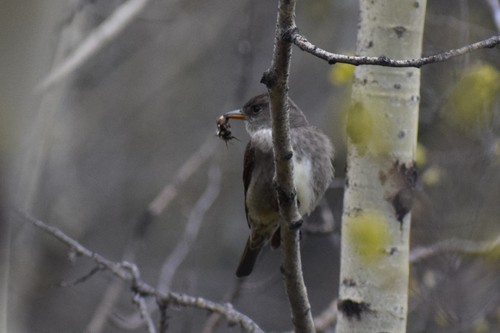
ナキヒタキモドキ (Contopus cooperi) ナキヒタキモドキ
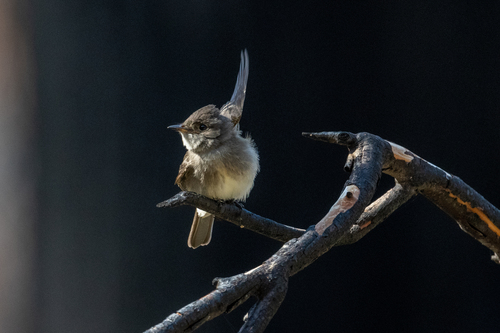
ニシモリタイランチョウ (Contopus sordidulus) ニシモリタイランチョウ

メディア

読み込み中…

要点

ナキヒタキモドキとニシモリタイランチョウを区別するための最も信頼できるフィールドマークは、胸の側面にある濃い灰色の大胆な「ベスト」であり、対照的な白い中央の喉と腹をフレームしています—これはナキヒタキモドキに特有で、すべての年齢で見ることができます。ニシモリタイランチョウはこのベストを欠いており、代わりにはるかに均一で、薄く洗われたオリーブグレーの胸と腹部を示します。ナキヒタキモドキはまた、明らかに大きくてがっしりしており、より太いくちばしと長い翼を持ち、しばしば露出した枯れ木の上に非常に直立して止まります。両種は地味なヒタキで、上面の色調は似ていますが、胸の模様、サイズ、姿勢に注意を払うことで、ほとんどのフィールド状況で区別できます。

識別のコツ

  1. Look for the 'vest': ナキヒタキモドキは常に胸の側面に大胆で暗い灰色のベストを示し、白い中央の喉と腹を鮮やかにフレームしています。ニシモリタイランチョウはこのベストを欠いており、胸にはわずかにオリーブ色の洗いがかかった均一に淡い色合いを持っています。
  2. Size and bulk: ナキヒタキモドキははるかに大きくて重い—ニシモリタイランチョウの約2倍の質量です。両方を一緒に見ると、サイズの違いは際立っていますが、単独でもナキヒタキモドキは頑丈で長い翼を持っているように見えます。
  3. Perching posture: ナキヒタキモドキは非常に直立して止まり、しばしば最も高く、最も露出した枯れた枝や枯れ木の上に止まります。ニシモリタイランチョウは直立していますが、極端ではなく、通常は低いまたは目立たない止まり木を選びます。
  4. Bill structure: ナキヒタキモドキは比較的長くて太いくちばしを持っています; ニシモリタイランチョウのくちばしは細く、下顎の基部に黄色が見られますが、これは遠くからは見えにくいことがあります。
  5. Wing bars: 両種は2つの淡い翼帯を持っていますが、これらは区別するには強すぎません。
  6. Upperpart color: 両方とも上面は灰色-オリーブですが、ナキヒタキモドキは新しい羽毛と良い光の中でより茶色がかって見えることがあります。これは微妙で、悪い光の中では信頼できません。
  7. Underpart color: ニシモリタイランチョウは下部がより均一に淡く、胸にはわずかにオリーブ色の洗いがかかっているだけで、ナキヒタキモドキのはっきりとしたベストは決してありません。
  8. Sex and age: 両種のすべての性別と年齢は似ています; 使用できる季節的または性別に基づく違いはありません。
  9. Habitat context: 高く開けた針葉樹林で目立つ枯れ木があり、特に水の近くにいる場合、ナキヒタキモドキの可能性が高いです。低く、より閉じたまたは河川の森では、ニシモリタイランチョウがより典型的です。
  10. Behavior in flight: ナキヒタキモドキの飛行はより力強く、直接的で、その大きなサイズと長い翼に合っています。ニシモリタイランチョウはより軽く、ひらひらとした印象を与えます。
  11. Voice (with caution): 大きくてブザーのような「ピー」という声や、降下する「ツィー」の歌が「ピー」で終わるのを聞いた場合、ニシモリタイランチョウを聞いている可能性が高いです。ナキヒタキモドキの声はここでは説明されていないので、両種の歌をよく知っていない限り、これに頼らないでください。
  12. Pitfalls: 悪い光の中や遠くからは、胸のベストが見えにくいことがあります; いつも明確で正面からのビューを試みてください。鳥が単独または遠くにいる場合、サイズは誤解を招くことがあるので、複数のマークを使用してください。
  13. Not diagnostic: 幼鳥や未成熟の翼のパターンは、どちらの種にも特異的なものとして説明されていないので、これに頼って区別しないでください。
  14. When in doubt: 微妙な色の違いや翼帯よりも、胸の模様と全体のサイズ/構造を優先してください。
  15. Summary tip: 鳥がベストを着ていてがっしりしており、高く直立して止まっている場合はナキヒタキモドキです; スレンダーで下部が均一に淡く、姿勢が目立たない場合はニシモリタイランチョウです。

大きさ

ナキヒタキモドキはニシモリタイランチョウよりも明らかに大きくて重い—約2倍の重さです ([wikipedia])。ナキヒタキモドキは平均28–35 g ([avonet])、一方、ニシモリタイランチョウはわずか11–14 g ([wikipedia])です。長さでは、ナキヒタキモドキはスズメよりも大きいがロビンよりは小さく、ニシモリタイランチョウは14–16 cm (5.5–6.3 in)の長さです。ナキヒタキモドキはまた、相対的に長い翼と太いくちばしを持ち、スレンダーでより繊細なニシモリタイランチョウと比較して、より頑丈で直立した外観を与えています。

羽色

行動

ナキヒタキモドキは通常、非常に直立して止まり、しばしば高い枯れ木や露出した枝の最上部で飛んでいる昆虫を探します。その姿勢は、ニシモリタイランチョウと比較してより垂直で警戒しています。ニシモリタイランチョウも直立して止まりますが、より低く、露出の少ない止まり木を選ぶ傾向があり、より繊細でがっしりしていない印象を与えます。両種は飛んでいる昆虫を捕まえるために飛び出しますが、ナキヒタキモドキの大きなサイズと長い翼は、その飛行をより力強く直接的に見せます。

生息環境

ナキヒタキモドキは開けた地域や北方および針葉樹林の縁を好み、しばしば水の近くや高い標高で見られ、高く目立つ木や枯れ木と強く関連しています ([wikipedia])。ニシモリタイランチョウも開けた森林に見られますが、より広範な森林生息地、特に河川地域に典型的であり、高い枯れ木や森林の縁にそれほど密接に関連していません。両者は北アメリカ西部で重なることがありますが、ナキヒタキモドキはより高く、開けた、または最近焼けた針葉樹林で見られる可能性が高いです。

声

ノートには呼び声の直接的な比較は提供されていません。ニシモリタイランチョウは特徴的なブザーのような「ピー」という呼び声と、降下する「ツィー」の3回の急速な歌で、降下する「ピー」で終わります ([wikipedia])。ナキヒタキモドキの声はここでは説明されていないので、区別のために視覚的なマークに頼ってください。

より良い説明を送る

比較と同じ項目を使ってください。文章はすぐに公開されます。

The most reliable field mark for separating Olive-sided Flycatcher from Western Wood-Pewee is the bold, dark 'vest' of dusky gray on the sides of the breast, framing a contrastingly white central throat and belly—unique to Olive-sided and visible on all ages. Western Wood-Pewee lacks this vest and instead shows a much more uniform, lightly washed olive-gray breast and underparts. Olive-sided Flycatcher is also noticeably larger and bulkier, with a stouter bill and longer wings, often perching very upright atop exposed snags. Both species are drab flycatchers with similar upperpart tones, but careful attention to breast pattern, size, and posture will separate them in most field situations.

  1. Look for the 'vest': Olive-sided Flycatcher always shows a bold, dark gray vest on the sides of the breast, sharply framing a white central throat and belly. Western Wood-Pewee lacks this vest and is more uniformly pale below with only a faint olive wash on the breast.
  2. Size and bulk: Olive-sided is much larger and heavier—about twice the mass of Western Wood-Pewee. If you see both together, the size difference is striking, but even singly, Olive-sided looks robust and long-winged.
  3. Perching posture: Olive-sided perches very upright, often on the highest, most exposed dead branches or snags. Western Wood-Pewee is upright but less extreme, and usually chooses lower or less prominent perches.
  4. Bill structure: Olive-sided has a relatively long, stout bill; Western Wood-Pewee's bill is thinner and shows yellow at the base of the lower mandible, but this can be hard to see at a distance.
  5. Wing bars: Both species have two pale wing bars, but these are not strong enough to separate them.
  6. Upperpart color: Both are gray-olive above, but Olive-sided can look browner or more olive in fresh plumage and good light. This is subtle and unreliable in poor light.
  7. Underpart color: Western Wood-Pewee is more evenly pale below, with only a slight olive wash on the breast—never the sharply defined vest of Olive-sided.
  8. Sex and age: Both sexes and all ages are similar within each species; there is no seasonal or sex-based difference to use.
  9. Habitat context: If you are in a high, open coniferous forest with prominent snags, especially near water, Olive-sided is more likely. In lower, more closed or riparian woods, Western Wood-Pewee is more typical.
  10. Behavior in flight: Olive-sided's flight is more powerful and direct, matching its larger size and longer wings. Western Wood-Pewee appears lighter and more fluttery.
  11. Voice (with caution): If you hear a loud, buzzy 'peeer' or a song of descending 'tsees' ending in 'peeer,' you are likely hearing Western Wood-Pewee. Olive-sided's vocalizations are not described here, so do not rely on this unless you know both species' songs well.
  12. Pitfalls: In poor light or at a distance, the breast vest can be hard to see; always try for a clear, frontal view. Size can be misleading if the bird is alone or distant, so use multiple marks.
  13. Not diagnostic: Wing pattern in juveniles and immatures is not described as distinctive for either species, so do not rely on this for separation.
  14. When in doubt: Prioritize the breast pattern and overall size/structure over subtle color differences or wing bars.
  15. Summary tip: If the bird looks vested and bulky, perched high and upright, it's Olive-sided; if it looks slender, evenly pale below, and less prominent in posture, it's Western Wood-Pewee.

Olive-sided Flycatcher is significantly larger and heavier than Western Wood-Pewee—about twice the weight ([wikipedia]). Olive-sided averages 28–35 g ([avonet]), while Western Wood-Pewee is just 11–14 g ([wikipedia]). In length, Olive-sided is larger than a sparrow but smaller than a robin, while Western Wood-Pewee is 14–16 cm (5.5–6.3 in) long. Olive-sided also has proportionally longer wings and a stouter bill, giving it a more robust, upright look compared to the slender, more delicate Western Wood-Pewee.

  • Juvenile/immature flight and wing pattern: No specific juvenile or immature upperwing pattern differences are described for these two species in the sources; both are drab above and lack strong wing patterning. Focus instead on breast and underpart contrasts.

  • Adult plumage: Olive-sided Flycatcher shows a distinctive 'vested' look: the sides of the breast are dark gray, sharply contrasting with a white central throat and belly. The olive tones on the back and wings are subtle and best seen in good light. Western Wood-Pewee is more evenly gray-olive above and below, with only a faint olive wash on the breast and no sharply defined vest. Both have two pale wing bars, but these are not strongly contrasting or diagnostic between the two.

  • Bill color: Western Wood-Pewee has a dark bill with yellow at the base of the lower mandible; Olive-sided's bill is relatively long and stout, but color is less distinctive in the field.

  • Sex/season: Both species are sexually monomorphic; no seasonal plumage variation is noted that would affect identification.

Olive-sided Flycatcher typically perches very upright, often at the very top of tall dead snags or exposed branches, scanning for flying insects. Its posture is more vertical and alert compared to Western Wood-Pewee, which also perches upright but tends to choose lower, less exposed perches and appears more delicate and less bulky. Both species sally out to catch insects in flight, but Olive-sided's larger size and longer wings make its flight appear more powerful and direct.

Olive-sided Flycatcher prefers open areas or edges of boreal and coniferous forests, often near water and at higher elevations, and is strongly associated with tall, prominent trees or snags ([wikipedia]). Western Wood-Pewee is also found in open woodlands but is more typical of a wider range of wooded habitats, including riparian areas, and is not as tightly linked to tall snags or forest edges. Both can overlap in western North America, but Olive-sided is more likely in higher, more open, or recently burned coniferous forests.

No direct comparison of calls is provided in the notes. Western Wood-Pewee has a distinctive, buzzy 'peeer' call and a song of three rapid descending 'tsees' ending with a descending 'peeer' ([wikipedia]). Olive-sided Flycatcher's vocalizations are not described here, so rely on visual marks for separation.

変更を破棄しますか?

保存していない編集があります。今離れると失われます。

ナキヒタキモドキ · ニシモリタイランチョウ · 苦手な鳥