

Olive-sided Flycatcher vs Western Wood-Pewee
Contopus cooperi contro Contopus sordidulus
Fai un quiz con Olive-sided Flycatcher e Western Wood-Pewee
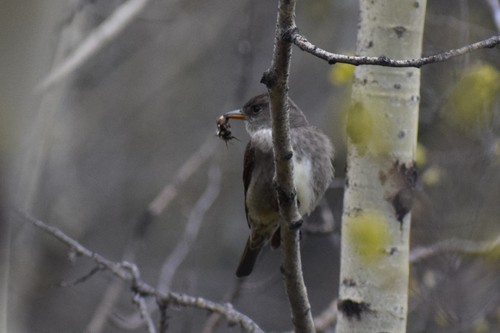 Olive-sided Flycatcher
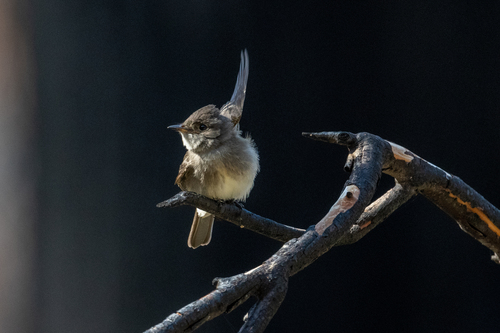 Western Wood-Pewee
In breve
Il segno di campo più affidabile per separare l'Olive-sided Flycatcher dal Western Wood-Pewee è il bold, scuro 'gilet' di grigio scuro sui lati del petto, che incornicia una gola e un ventre centrali bianchi in contrasto—unico per l'Olive-sided e visibile in tutte le età. Il Western Wood-Pewee manca di questo gilet e mostra invece un petto e parti inferiori molto più uniformi, leggermente lavati di grigio oliva. L'Olive-sided Flycatcher è anche notevolmente più grande e massiccio, con un becco più robusto e ali più lunghe, spesso posandosi molto eretto sulla cima di tronchi esposti. Entrambe le specie sono moschettieri opachi con toni simili nella parte superiore, ma un'attenzione attenta al motivo del petto, alla dimensione e alla postura le separerà nella maggior parte delle situazioni di campo.
Consigli di identificazione
- Cerca il 'gilet': L'Olive-sided Flycatcher mostra sempre un bold, scuro gilet grigio sui lati del petto, incorniciando nettamente una gola e un ventre centrali bianchi. Il Western Wood-Pewee manca di questo gilet ed è più uniformemente pallido sotto con solo un leggero lavaggio oliva sul petto.
- Dimensione e massa: L'Olive-sided è molto più grande e pesante—circa il doppio della massa del Western Wood-Pewee. Se vedi entrambi insieme, la differenza di dimensione è sorprendente, ma anche singolarmente, l'Olive-sided appare robusto e con ali lunghe.
- Postura di poso: L'Olive-sided si posa molto eretto, spesso sui rami morti più alti e più esposti. Il Western Wood-Pewee è eretto ma meno estremo, e di solito sceglie posatoi più bassi o meno prominenti.
- Struttura del becco: L'Olive-sided ha un becco relativamente lungo e robusto; il becco del Western Wood-Pewee è più sottile e mostra giallo alla base del mandibolo inferiore, ma questo può essere difficile da vedere a distanza.
- Bande alari: Entrambe le specie hanno due bande alari chiare, ma queste non sono forti abbastanza per separarle.
- Colore della parte superiore: Entrambi sono grigio-oliva sopra, ma l'Olive-sided può apparire più marrone o più oliva in piumaggio fresco e buona luce. Questo è sottile e inaffidabile in scarsa luce.
- Colore della parte inferiore: Il Western Wood-Pewee è più uniformemente pallido sotto, con solo un leggero lavaggio oliva sul petto—mai il gilet nettamente definito dell'Olive-sided.
- Sesso e età: Entrambi i sessi e tutte le età sono simili all'interno di ciascuna specie; non ci sono differenze stagionali o basate sul sesso da utilizzare.
- Contesto dell'habitat: Se ti trovi in una foresta conifera alta e aperta con tronchi prominenti, specialmente vicino all'acqua, è più probabile che tu veda l'Olive-sided. In boschi più bassi, più chiusi o ripariani, il Western Wood-Pewee è più tipico.
- Comportamento in volo: Il volo dell'Olive-sided è più potente e diretto, in linea con la sua dimensione più grande e ali più lunghe. Il Western Wood-Pewee appare più leggero e più svolazzante.
- Voce (con cautela): Se senti un forte, ronzante 'peeer' o una canzone di 'tsees' discendenti che termina in 'peeer', è probabile che tu stia sentendo il Western Wood-Pewee. Le vocalizzazioni dell'Olive-sided non sono descritte qui, quindi non fare affidamento su questo a meno che tu non conosca bene le canzoni di entrambe le specie.
- Trappole: In scarsa luce o a distanza, il gilet del petto può essere difficile da vedere; cerca sempre di ottenere una vista chiara e frontale. La dimensione può essere fuorviante se l'uccello è solo o distante, quindi utilizza più segni.
- Non diagnostico: Il motivo alare nei giovanili e negli immaturi non è descritto come distintivo per nessuna delle due specie, quindi non fare affidamento su questo per la separazione.
- Quando hai dubbi: Dai priorità al motivo del petto e alla dimensione/struttura complessiva rispetto a sottili differenze di colore o bande alari.
- Suggerimento riassuntivo: Se l'uccello appare giletato e massiccio, posato in alto e eretto, è l'Olive-sided; se appare snello, uniformemente pallido sotto e meno prominente nella postura, è il Western Wood-Pewee.
Taglia
L'Olive-sided Flycatcher è significativamente più grande e pesante del Western Wood-Pewee—circa il doppio del peso ([wikipedia]). L'Olive-sided pesa in media 28–35 g ([avonet]), mentre il Western Wood-Pewee pesa solo 11–14 g ([wikipedia]). In lunghezza, l'Olive-sided è più grande di un passero ma più piccolo di un pettirosso, mentre il Western Wood-Pewee è lungo 14–16 cm (5.5–6.3 in). L'Olive-sided ha anche ali proporzionalmente più lunghe e un becco più robusto, conferendogli un aspetto più robusto e eretto rispetto al snello e più delicato Western Wood-Pewee.
Piumaggio
-
Giovanile/immaturo volo e motivo alare: Non sono descritte differenze specifiche nel motivo alare superiore per giovanili o immaturi per queste due specie nelle fonti; entrambi sono opachi sopra e mancano di un forte motivo alare. Concentrati invece sui contrasti del petto e delle parti inferiori.
-
Piumaggio adulto: L'Olive-sided Flycatcher mostra un aspetto distintivo 'giletato': i lati del petto sono grigio scuro, in netto contrasto con una gola e un ventre centrali bianchi. I toni oliva sulla schiena e sulle ali sono sottili e meglio visti in buona luce. Il Western Wood-Pewee è più uniformemente grigio-oliva sopra e sotto, con solo un leggero lavaggio oliva sul petto e senza gilet nettamente definito. Entrambi hanno due bande alari chiare, ma queste non sono fortemente contrastanti o diagnostiche tra le due.
-
Colore del becco: Il Western Wood-Pewee ha un becco scuro con giallo alla base del mandibolo inferiore; il becco dell'Olive-sided è relativamente lungo e robusto, ma il colore è meno distintivo sul campo.
-
Sesso/stagione: Entrambe le specie sono sessualmente monomorfiche; non è stata notata alcuna variazione di piumaggio stagionale che possa influenzare l'identificazione.
Comportamento
L'Olive-sided Flycatcher si posa tipicamente molto eretto, spesso sulla cima di tronchi morti alti o rami esposti, scrutando per insetti volanti. La sua postura è più verticale e allerta rispetto al Western Wood-Pewee, che si posa anch'esso eretto ma tende a scegliere posatoi più bassi e meno esposti e appare più delicato e meno massiccio. Entrambe le specie si lanciano per catturare insetti in volo, ma la dimensione più grande e le ali più lunghe dell'Olive-sided rendono il suo volo più potente e diretto.
Habitat
L'Olive-sided Flycatcher preferisce aree aperte o bordi di foreste boreali e conifere, spesso vicino all'acqua e a elevazioni più alte, ed è fortemente associato a alberi o tronchi alti e prominenti ([wikipedia]). Il Western Wood-Pewee si trova anche in boschi aperti ma è più tipico di una gamma più ampia di habitat boschivi, comprese le aree ripariane, e non è così strettamente legato a tronchi alti o bordi forestali. Entrambi possono sovrapporsi nel nord-ovest dell'America, ma l'Olive-sided è più probabile in foreste conifere più alte, più aperte o recentemente bruciate.
Voce
Nessun confronto diretto dei richiami è fornito nelle note. Il Western Wood-Pewee ha un distintivo, ronzante 'peeer' e una canzone di tre 'tsees' discendenti rapidi che termina con un 'peeer' discendente ([wikipedia]). Le vocalizzazioni dell'Olive-sided Flycatcher non sono descritte qui, quindi fai affidamento sui segni visivi per la separazione.
Olive-sided Flycatcher · Western Wood-Pewee · I miei uccelli difficili