

Motmot

Northern Tropical Pewee 対 キバラメジロハエトリ

Contopus bogotensis 対 Empidonax flaviventris

Northern Tropical Peweeとキバラメジロハエトリのクイズ
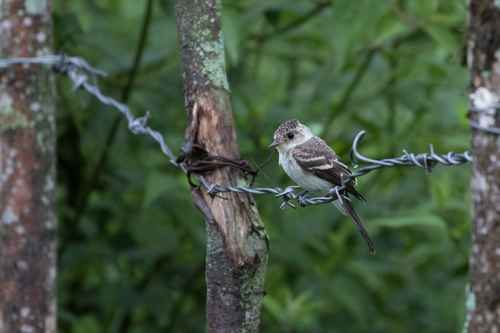
Northern Tropical Pewee (Contopus bogotensis) Northern Tropical Pewee
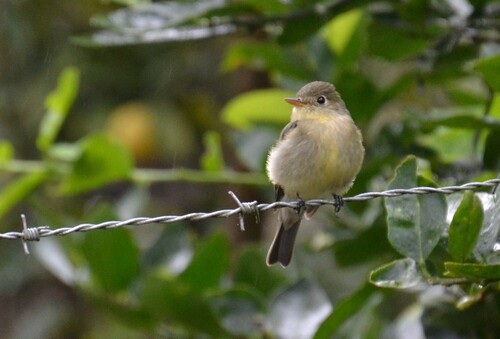
キバラメジロハエトリ (Empidonax flaviventris) キバラメジロハエトリ

メディア

読み込み中…

要点

Northern Tropical Peweeとキバラメジロハエトリを区別する最も信頼できるフィールドマークは、特に幼鳥における腹部と翼帯の色とパターンです:幼鳥のpeweeは上面がより茶色く、翼覆羽の先端が広いシナモンバフ色を示しますが、すべての年齢のキバラメジロハエトリは強い黄色味のある腹部と大胆で対照的な翼帯を持っています。成鳥は、peweeのすすけたオリーブグレーの上面と薄い翼帯と、ハエトリの緑がかった背中、黄色い腹部、そしてはるかに目立つ翼帯で区別できます。くちばしの色も役立ちます:peweeは黄色味またはオレンジ色の下顎を持ち、ハエトリの下顎はオレンジピンクです。両種は直立して止まり、昆虫を捕まえますが、peweeはしばしば同じ止まり木に戻り、尾を震わせるのに対し、ハエトリは葉の上をホバリングすることがあります。サイズは似ていますが、peweeはややスリムで尾が長く見えることがあります。

識別のコツ

  1. Juvenile wing coverts: 幼鳥のNorthern Tropical Peweeは、翼覆羽の先端が広い淡いシナモンバフ色を示し、翼帯に温かみのあるバフ色の外観を与えます。キバラメジロハエトリの幼鳥(および成鳥)は大胆な白または黄色味のある翼帯を持っていますが、peweeの広いシナモンバフ色はありません。
  2. Upperparts color: Peweeは上面がすすけたオリーブグレー(成鳥)またはより茶色(幼鳥)ですが、ハエトリは常に緑がかった上面です。
  3. Underparts color: Peweeは白から黄色味のある白の腹部を持ち、上胸部にはわずかに灰色の色合いがあります;ハエトリは特に喉と腹部がはっきりと黄色です。
  4. Wing bars: Peweeの翼帯は薄く、灰白色から茶色がかった灰色で、しばしば微妙です;ハエトリの翼帯は大胆で、白または黄色味があり、黒っぽい翼と強く対照的です。
  5. Eye-ring: 両方とも白または淡いアイリングを持っていますが、peweeのものは薄く、ハエトリのものはしばしばより目立ち、涙滴状の突出はありません(これはWestern Flycatcherの診断的特徴であり、これらの2種にはありません)。
  6. Bill color: Peweeは黒い上顎と黄色味またはオレンジ色の下顎(幼鳥は暗いオレンジ)を持ち、ハエトリの下顎はオレンジピンクで、上顎は暗いです。
  7. Tail length: Peweeの尾はやや長く、オリーブグレー;ハエトリの尾は比較的短く、色がそれほど際立っていません。
  8. Crest: Peweeは頭頂にわずかな冠を持ち、微妙に尖った外観を与えます;ハエトリの頭頂は平らです。
  9. Face pattern: Peweeの顔は灰色がかったオリーブ色で、白から灰色がかった白の頬があります;ハエトリの顔は緑がかり、より明るい黄色の喉があります。
  10. Perching behavior: Peweeはしばしば同じ止まり木に戻り、サリーの後に尾を震わせます;ハエトリは葉の上をホバリングし、同じ尾を震わせる習性を示しません。
  11. Habitat context: 熱帯の森林の縁や中層の止まり木では、peweeがより可能性が高いです;北方または北部の混合森林、特に渡りの際には、ハエトリがより可能性が高いです。
  12. Feeding behavior: Peweeは厳密に昆虫食で、混合群に参加することはほとんどありません;ハエトリはベリーや種子を食べることがあり、採餌においてより柔軟です。
  13. Vocalization: 聞こえた場合、ハエトリの粗い下降する「tse-berk」が役立つかもしれませんが、peweeの声はここでは説明されていません。
  14. Sex and season: 両種は羽毛において性別が同じです;季節的な変化は微妙ですが、幼鳥のpeweeのバフ色の翼覆羽は、晩夏と秋に強いマークです。
  15. Pitfall: 照明に注意してください:peweeの微妙なオリーブと灰色の色調は、深い影の中でより緑がかって見えることがあり、ハエトリの黄色い腹部は悪い光の中で抑えられることがあります。常に複数のマークを確認してください。

大きさ

両種は長さが似ており(Northern Tropical Pewee: 12–14 cm; キバラメジロハエトリ: 13–15 cm)、体重も重なります(Pewee: 8–14 g; ハエトリ: 8.5–17 g)が、ハエトリは平均してやや重い(平均11.3 g)です。フィールドでは、サイズは強い区別要因ではありませんが、peweeはややスリムで尾が長く見えることがあり、ハエトリはよりコンパクトで尾が短く見えます。

羽色

行動

両種は止まり木から昆虫を捕まえますが、peweeは通常、森林の縁や中層の露出したまたは半露出した止まり木により直立して座り、しばしば同じ止まり木に戻り、各サリーの後に尾を震わせます。ハエトリも低いまたは中層に止まりますが、葉の上をホバリングする可能性が高く、昆虫に加えてベリーや種子を取ることがあります。Peweeは混合種の群れに参加することはほとんどありませんが、ハエトリの群れ行動は指定されていません。

生息環境

Northern Tropical Peweeはメキシコ南東部から南アメリカ北部まで見られ、森林の縁や中層の止まり木を好みます。キバラメジロハエトリは北方または混合森林で繁殖し、特に渡りや繁殖の際には北アメリカで見られる可能性が高いです。重複する範囲では、文脈と生息地が役立ちます:peweeは熱帯/亜熱帯の森林の縁でより可能性が高く、ハエトリは北方または渡りの森林環境でより可能性が高いです。

声

キバラメジロハエトリは粗い下降する「tse-berk」という歌を発し、これはチビメジロハエトリと混同されることがありますが、peweeについては説明されていません。peweeの声はソースで詳細に説明されていないため、声はここでは信頼できる区別要因ではありません。

より良い説明を送る

比較と同じ項目を使ってください。文章はすぐに公開されます。

The most reliable field mark to separate Northern Tropical Pewee and Yellow-bellied Flycatcher is the color and pattern of the underparts and wing bars, especially in juveniles: juvenile pewees show browner upperparts and broad cinnamon-buff tips to wing coverts, while Yellow-bellied Flycatchers of all ages have strong yellowish underparts and bold, contrasting wing bars. Adults can be separated by the pewee’s sooty olive-gray upperparts and thin wing bars versus the flycatcher's greenish back, yellow belly, and much more prominent wing bars. Bill color also helps: the pewee has a yellowish or orangey mandible, while the flycatcher’s lower mandible is orange-pink. Both species perch upright and sally for insects, but the pewee often returns to the same perch and shivers its tail, while the flycatcher may hover over foliage. Size is similar, but the pewee can appear slightly slimmer and longer-tailed.

  1. Juvenile wing coverts: Juvenile Northern Tropical Pewee shows broad pale cinnamon-buff tips to wing coverts, giving a warm, buffy look to the wing bars. Yellow-bellied Flycatcher juveniles (and adults) have bold white or yellowish wing bars, but not the broad cinnamon-buff of the pewee.
  2. Upperparts color: Pewee is sooty olive-gray above (adults) or browner (juveniles), while flycatcher is always greenish above.
  3. Underparts color: Pewee has white to yellowish white underparts with only a faint gray tinge on the upper breast; flycatcher is distinctly yellow below, especially on the throat and belly.
  4. Wing bars: Pewee’s wing bars are thin and grayish white to brownish gray, often subtle; flycatcher’s are bold, white or yellowish, and strongly contrast with the blackish wings.
  5. Eye-ring: Both have a white or pale eye-ring, but the pewee’s is thin and the flycatcher’s is often more prominent, never with a teardrop projection (which is diagnostic for Western Flycatcher, not these two).
  6. Bill color: Pewee has a black upper mandible and yellowish/orangey lower mandible (dusky orange in juveniles); flycatcher’s lower mandible is orange-pink, upper is dark.
  7. Tail length: Pewee’s tail is slightly longer and olive-gray; flycatcher’s is relatively short and not as distinct in color.
  8. Crest: Pewee has a slight crest on the crown, giving a subtly peaked appearance; flycatcher’s crown is flatter.
  9. Face pattern: Pewee’s face is grayish olive with white to grayish white lores; flycatcher’s face is greenish with a brighter yellow throat.
  10. Perching behavior: Pewee often returns to the same perch and shivers its tail after sallying; flycatcher may hover over foliage and does not show the same tail-shivering habit.
  11. Habitat context: In tropical forest edge or mid-level perches, pewee is more likely; in boreal or northern mixed forest, especially during migration, flycatcher is more likely.
  12. Feeding behavior: Pewee is strictly insectivorous and rarely joins mixed flocks; flycatcher may eat berries or seeds and is more flexible in foraging.
  13. Vocalization: If heard, the flycatcher’s rough, descending "tse-berk" may help, but pewee’s voice is not described here.
  14. Sex and season: Both species are sexually monomorphic in plumage; seasonal variation is subtle, but juvenile pewee’s buffy wing coverts are a strong mark in late summer and fall.
  15. Pitfall: Beware of lighting: the pewee’s subtle olive and gray tones can look greener in deep shade, and the flycatcher’s yellow belly can be subdued in poor light. Always check multiple marks.

Both species are similar in length (Northern Tropical Pewee: 12–14 cm; Yellow-bellied Flycatcher: 13–15 cm), and their weights overlap (Pewee: 8–14 g; Flycatcher: 8.5–17 g), but the flycatcher averages slightly heavier (mean 11.3 g). In the field, size is not a strong separator, but the pewee may look a bit more slender and long-tailed, while the flycatcher appears more compact with a shorter tail.

  • Juveniles: Juvenile Northern Tropical Pewees have browner upperparts than adults, with broad buff to cinnamon-buff edges on upperpart feathers and wide pale cinnamon-buff tips to wing coverts; their chin is brown. Juvenile Yellow-bellied Flycatchers are not described in detail, but all ages show greenish upperparts and strong yellow underparts, with bold white or yellowish wing bars.
  • Adults: The pewee is sooty olive-gray above with a dark crown and thin grayish white to brownish gray wing bars. Its underparts are white to yellowish white, with only a gray tinge on the upper breast. The flycatcher is greenish above, with a brighter yellow belly and throat, and the wing bars are much more prominent and contrasting against blackish wings. The pewee’s face is grayish olive with a thin white eye-ring, while the flycatcher’s eye-ring is white or yellow, never teardrop-shaped.
  • Bill: The pewee has a black maxilla and yellowish/orangey mandible (juveniles: dusky orange), while the flycatcher’s upper mandible is dark and lower mandible is orange-pink.
  • Tail: The pewee’s tail is olive-gray and slightly longer; the flycatcher’s tail is relatively short.

Both species sally for insects from perches, but the pewee typically sits more upright on exposed or semi-exposed perches at forest edge or mid-level, often returning to the same perch and shivering its tail after each sally. The flycatcher also perches low or mid-level, but is more likely to hover over foliage and may take berries or seeds in addition to insects. The pewee rarely joins mixed-species flocks, while the flycatcher’s flocking behavior is not specified.

Northern Tropical Pewee is found from southeastern Mexico to northern South America, favoring forest edges and mid-level perches. Yellow-bellied Flycatcher breeds in boreal or mixed forests and is more likely to be found in North America during migration or breeding. In overlapping ranges, context and habitat can help: pewee is more likely in tropical/subtropical forest edge, flycatcher in northern or migratory woodland settings.

The Yellow-bellied Flycatcher gives a rough, descending "tse-berk" song, which can be confused with the Least Flycatcher but is not described for the pewee. The pewee’s vocalizations are not detailed in the sources, so voice is not a reliable separator here.

変更を破棄しますか?

保存していない編集があります。今離れると失われます。

Northern Tropical Pewee · キバラメジロハエトリ · 苦手な鳥