

Pibí Tropical (grupo brachytarsus) vs Mosquero Ventriamarillo
Contopus bogotensis frente a Empidonax flaviventris
Juega un quiz con Pibí Tropical (grupo brachytarsus) y Mosquero Ventriamarillo
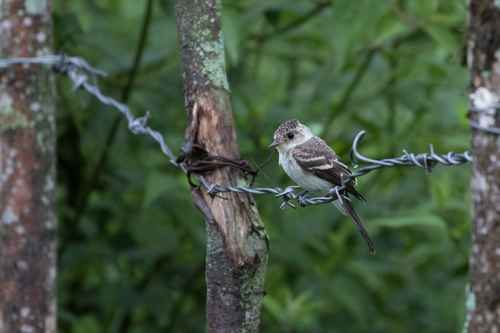 Pibí Tropical (grupo brachytarsus)
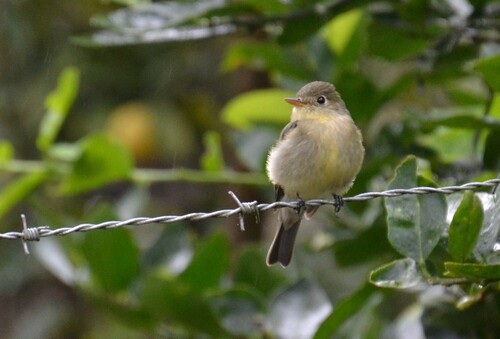 Mosquero Ventriamarillo
En breve
La marca de campo más confiable para separar el Pibí Tropical y el Mosquero Ventriamarillo es el color y patrón de las partes inferiores y las barras alares, especialmente en juveniles: los pibíes juveniles muestran partes superiores más marrones y puntas anchas de canela-buff en las cobertoras alares, mientras que los Mosqueros Ventriamarillo de todas las edades tienen partes inferiores amarillentas fuertes y barras alares audaces y contrastantes. Los adultos se pueden separar por las partes superiores gris olivo sucio del pibí y sus barras alares delgadas frente a la espalda verdosa del mosquero, el vientre amarillo y las barras alares mucho más prominentes. El color del pico también ayuda: el pibí tiene una mandíbula amarillenta o anaranjada, mientras que la mandíbula inferior del mosquero es de color naranja-rosado. Ambas especies se posan erguido y salen en busca de insectos, pero el pibí a menudo regresa al mismo posadero y tiembla su cola, mientras que el mosquero puede flotar sobre el follaje. El tamaño es similar, pero el pibí puede parecer ligeramente más delgado y con la cola más larga.
Consejos de identificación
- Cobertoras alares juveniles: El Pibí Tropical juvenil muestra puntas anchas de canela-buff pálido en las cobertoras alares, dando un aspecto cálido y buffy a las barras alares. Los juveniles del Mosquero Ventriamarillo (y adultos) tienen barras alares audaces blancas o amarillentas, pero no las anchas canela-buff del pibí.
- Color de las partes superiores: El pibí es gris olivo sucio arriba (adultos) o más marrón (juveniles), mientras que el mosquero siempre es verdoso arriba.
- Color de las partes inferiores: El pibí tiene partes inferiores blancas a amarillentas con solo un leve matiz gris en la parte superior del pecho; el mosquero es distintivamente amarillo por debajo, especialmente en la garganta y el vientre.
- Barras alares: Las barras alares del pibí son delgadas y de color blanco grisáceo a gris marrón, a menudo sutiles; las del mosquero son audaces, blancas o amarillentas, y contrastan fuertemente con las alas negruzcas.
- Anillo ocular: Ambos tienen un anillo ocular blanco o pálido, pero el del pibí es delgado y el del mosquero es a menudo más prominente, nunca con una proyección en forma de lágrima (que es diagnóstica para el Mosquero del Pacífico, no para estos dos).
- Color del pico: El pibí tiene una mandíbula superior negra y una mandíbula inferior amarillenta/anaranjada (naranja oscuro en juveniles); la mandíbula inferior del mosquero es naranja-rosada, la superior es oscura.
- Longitud de la cola: La cola del pibí es ligeramente más larga y de color gris olivo; la del mosquero es relativamente corta y no tan distintiva en color.
- Cresta: El pibí tiene una ligera cresta en la corona, dando una apariencia sutilmente puntiaguda; la corona del mosquero es más plana.
- Patrón facial: La cara del pibí es gris oliva con loretes blancos a grisáceos; la cara del mosquero es verdosa con una garganta amarilla más brillante.
- Comportamiento de posado: El pibí a menudo regresa al mismo posadero y tiembla su cola después de salir; el mosquero puede flotar sobre el follaje y no muestra el mismo hábito de temblar la cola.
- Contexto de hábitat: En el borde del bosque tropical o en posaderos a media altura, es más probable encontrar al pibí; en bosques boreales o mixtos del norte, especialmente durante la migración, es más probable encontrar al mosquero.
- Comportamiento alimenticio: El pibí es estrictamente insectívoro y rara vez se une a bandadas mixtas; el mosquero puede comer bayas o semillas y es más flexible en la búsqueda de alimento.
- Vocalización: Si se escucha, la canción áspera y descendente "tse-berk" del mosquero puede ayudar, pero la voz del pibí no se describe aquí.
- Sexo y temporada: Ambas especies son sexualmente monomórficas en plumaje; la variación estacional es sutil, pero las cobertoras alares buffy del pibí juvenil son una marca fuerte a finales del verano y otoño.
- Trampa: Cuidado con la iluminación: los sutiles tonos oliva y gris del pibí pueden verse más verdes en sombra profunda, y el vientre amarillo del mosquero puede ser atenuado en mala luz. Siempre verifica múltiples marcas.
Tamaño
Ambas especies son similares en longitud (Pibí Tropical: 12–14 cm; Mosquero Ventriamarillo: 13–15 cm), y sus pesos se superponen (Pibí: 8–14 g; Mosquero: 8.5–17 g), pero el mosquero promedia ligeramente más pesado (promedio 11.3 g). En el campo, el tamaño no es un separador fuerte, pero el pibí puede parecer un poco más esbelto y con la cola más larga, mientras que el mosquero parece más compacto con una cola más corta.
Plumaje
- Juveniles: Los pibíes Tropicales juveniles tienen partes superiores más marrones que los adultos, con bordes anchos de buff a canela-buff en las plumas de las partes superiores y puntas amplias de canela-buff pálido en las cobertoras alares; su barbilla es marrón. Los juveniles del Mosquero Ventriamarillo no se describen en detalle, pero todas las edades muestran partes superiores verdosas y partes inferiores amarillas fuertes, con barras alares audaces blancas o amarillentas.
- Adultos: El pibí es gris olivo sucio arriba con una corona oscura y barras alares delgadas de color blanco grisáceo a gris marrón. Sus partes inferiores son blancas a amarillentas, con solo un matiz gris en la parte superior del pecho. El mosquero es verdoso arriba, con un vientre y garganta amarillos más brillantes, y las barras alares son mucho más prominentes y contrastantes contra las alas negruzcas. La cara del pibí es gris oliva con un delgado anillo ocular blanco, mientras que el anillo ocular del mosquero es blanco o amarillo, nunca en forma de lágrima.
- Pico: El pibí tiene una maxila negra y una mandíbula amarillenta/anaranjada (juveniles: naranja oscuro), mientras que la mandíbula superior del mosquero es oscura y la mandíbula inferior es naranja-rosada.
- Cola: La cola del pibí es gris olivo y ligeramente más larga; la cola del mosquero es relativamente corta.
Comportamiento
Ambas especies salen en busca de insectos desde posaderos, pero el pibí típicamente se sienta más erguido en posaderos expuestos o semi-expuestos en el borde del bosque o a media altura, a menudo regresando al mismo posadero y temblando su cola después de cada salida. El mosquero también se posa bajo o a media altura, pero es más probable que flote sobre el follaje y puede tomar bayas o semillas además de insectos. El pibí rara vez se une a bandadas de especies mixtas, mientras que el comportamiento de bandada del mosquero no se especifica.
Hábitat
El Pibí Tropical se encuentra desde el sureste de México hasta el norte de Sudamérica, favoreciendo los bordes de los bosques y los posaderos a media altura. El Mosquero Ventriamarillo cría en bosques boreales o mixtos y es más probable que se encuentre en América del Norte durante la migración o la cría. En rangos superpuestos, el contexto y el hábitat pueden ayudar: el pibí es más probable que se encuentre en el borde del bosque tropical/subtropical, el mosquero en entornos boscosos del norte o migratorios.
Voz
El Mosquero Ventriamarillo emite una canción áspera y descendente "tse-berk", que puede confundirse con el Mosquero Mínimo, pero no se describe para el pibí. Las vocalizaciones del pibí no se detallan en las fuentes, por lo que la voz no es un separador confiable aquí.
Pibí Tropical (grupo brachytarsus) · Mosquero Ventriamarillo · Mis aves difíciles