

Northern Tropical Pewee vs Yellow-bellied Flycatcher
Contopus bogotensis contro Empidonax flaviventris
Fai un quiz con Northern Tropical Pewee e Yellow-bellied Flycatcher
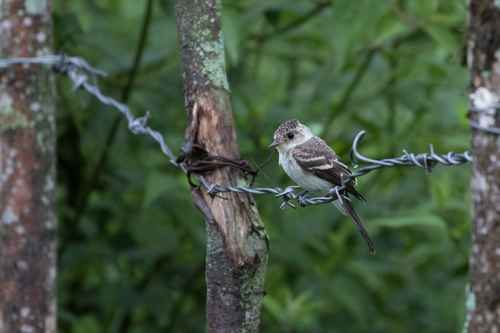 Northern Tropical Pewee
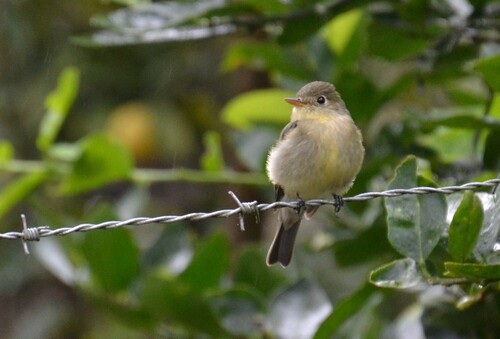 Yellow-bellied Flycatcher
In breve
Il segno di campo più affidabile per separare il Northern Tropical Pewee e il Yellow-bellied Flycatcher è il colore e il motivo delle parti inferiori e delle barre alari, specialmente nei giovanili: i giovanili pewee mostrano parti superiori più marroni e punte ampie di cannella-buff sulle copritrici alari, mentre i Yellow-bellied Flycatcher di tutte le età hanno parti inferiori fortemente giallastre e barre alari audaci e contrastanti. Gli adulti possono essere separati dalle parti superiori grigio-oliva nerastre del pewee e dalle barre alari sottili rispetto al dorso verdastro del flycatcher, al ventre giallo e alle barre alari molto più prominenti. Anche il colore del becco aiuta: il pewee ha una mandibola giallastra o arancione, mentre la mandibola inferiore del flycatcher è arancio-rosa. Entrambe le specie si posano erette e si lanciano per gli insetti, ma il pewee spesso ritorna allo stesso posatoio e scuote la coda, mentre il flycatcher può librarsi sopra il fogliame. La dimensione è simile, ma il pewee può apparire leggermente più snello e con una coda più lunga.
Consigli di identificazione
- Juvenile wing coverts: Il giovanile Northern Tropical Pewee mostra punte ampie di cannella-buff chiaro sulle copritrici alari, dando un aspetto caldo e buffo alle barre alari. I giovanili Yellow-bellied Flycatcher (e gli adulti) hanno barre alari audaci bianche o giallastre, ma non le ampie barre di cannella-buff del pewee.
- Upperparts color: Il pewee è grigio-oliva nerastro sopra (adulti) o più marrone (giovanili), mentre il flycatcher è sempre verdastro sopra.
- Underparts color: Il pewee ha parti inferiori bianche a giallastre con solo una leggera sfumatura grigia sul petto superiore; il flycatcher è distintamente giallo sotto, specialmente sulla gola e sul ventre.
- Wing bars: Le barre alari del pewee sono sottili e grigio-bianco a grigio-marrone, spesso sottili; quelle del flycatcher sono audaci, bianche o giallastre, e contrastano fortemente con le ali nerastre.
- Eye-ring: Entrambi hanno un anello oculare bianco o pallido, ma quello del pewee è sottile e quello del flycatcher è spesso più prominente, mai con una proiezione a goccia (che è diagnostica per il Western Flycatcher, non per questi due).
- Bill color: Il pewee ha una mandibola superiore nera e una mandibola inferiore giallastra/arancione (arancione scuro nei giovanili); la mandibola inferiore del flycatcher è arancio-rosa, quella superiore è scura.
- Tail length: La coda del pewee è leggermente più lunga e grigio-oliva; la coda del flycatcher è relativamente corta e non così distinta nel colore.
- Crest: Il pewee ha una leggera cresta sulla corona, dando un aspetto leggermente appuntito; la corona del flycatcher è più piatta.
- Face pattern: Il volto del pewee è grigio-oliva con lore bianchi a grigio-bianco; il volto del flycatcher è verdastro con una gola gialla più brillante.
- Perching behavior: Il pewee spesso ritorna allo stesso posatoio e scuote la coda dopo essersi lanciato; il flycatcher può librarsi sopra il fogliame e non mostra la stessa abitudine di scuotere la coda.
- Habitat context: In posatoi a livello medio o al margine della foresta tropicale, il pewee è più probabile; in foreste boreali o miste settentrionali, specialmente durante la migrazione, il flycatcher è più probabile.
- Feeding behavior: Il pewee è strettamente insetivoro e raramente si unisce a stormi misti; il flycatcher può mangiare bacche o semi ed è più flessibile nella ricerca di cibo.
- Vocalization: Se sentito, il canto ruvido e discendente "tse-berk" del flycatcher può aiutare, ma la voce del pewee non è descritta qui.
- Sex and season: Entrambe le specie sono sessualmente monomorfiche nel piumaggio; la variazione stagionale è sottile, ma le copritrici alari buff del giovanile pewee sono un segno forte a fine estate e autunno.
- Pitfall: Fai attenzione all'illuminazione: le sfumature sottili di oliva e grigio del pewee possono apparire più verdi in ombra profonda, e il ventre giallo del flycatcher può essere attenuato in scarsa luce. Controlla sempre più segni.
Taglia
Entrambe le specie sono simili in lunghezza (Northern Tropical Pewee: 12–14 cm; Yellow-bellied Flycatcher: 13–15 cm), e i loro pesi si sovrappongono (Pewee: 8–14 g; Flycatcher: 8.5–17 g), ma il flycatcher è mediamente leggermente più pesante (media 11.3 g). Sul campo, la dimensione non è un forte separatore, ma il pewee può apparire un po' più snello e con una coda più lunga, mentre il flycatcher appare più compatto con una coda più corta.
Piumaggio
- Juveniles: I giovanili Northern Tropical Pewee hanno parti superiori più marroni rispetto agli adulti, con bordi ampi di buff a cannella sulle piume delle parti superiori e punte ampie di cannella-buff chiaro sulle copritrici alari; il loro mento è marrone. I giovanili Yellow-bellied Flycatcher non sono descritti in dettaglio, ma tutte le età mostrano parti superiori verdastre e parti inferiori fortemente gialle, con barre alari audaci bianche o giallastre.
- Adults: Il pewee è grigio-oliva nerastro sopra con una corona scura e barre alari sottili grigio-bianco a grigio-marrone. Le sue parti inferiori sono bianche a giallastre, con solo una sfumatura grigia sul petto superiore. Il flycatcher è verdastro sopra, con un ventre e una gola gialli più brillanti, e le barre alari sono molto più prominenti e contrastano con le ali nerastre. Il volto del pewee è grigio-oliva con un sottile anello oculare bianco, mentre l'anello oculare del flycatcher è bianco o giallo, mai a forma di goccia.
- Bill: Il pewee ha una maxilla nera e una mandibola giallastra/arancione (giovanili: arancione scuro), mentre la mandibola superiore del flycatcher è scura e la mandibola inferiore è arancio-rosa.
- Tail: La coda del pewee è grigio-oliva e leggermente più lunga; la coda del flycatcher è relativamente corta.
Comportamento
Entrambe le specie si lanciano per gli insetti dai posatoi, ma il pewee tipicamente si siede più eretto su posatoi esposti o semi-esposti al margine della foresta o a livello medio, spesso tornando allo stesso posatoio e scuotendo la coda dopo ogni lancio. Anche il flycatcher si posiziona basso o a livello medio, ma è più probabile che si librino sopra il fogliame e possa prendere bacche o semi oltre agli insetti. Il pewee raramente si unisce a stormi di specie miste, mentre il comportamento di stormo del flycatcher non è specificato.
Habitat
Il Northern Tropical Pewee si trova dal sud-est del Messico al nord del Sud America, preferendo i margini delle foreste e i posatoi a livello medio. Il Yellow-bellied Flycatcher nidifica in foreste boreali o miste ed è più probabile trovarlo in Nord America durante la migrazione o la nidificazione. In aree sovrapposte, il contesto e l'habitat possono aiutare: il pewee è più probabile nel margine della foresta tropicale/subtropicale, il flycatcher in ambienti boschivi settentrionali o migratori.
Voce
Il Yellow-bellied Flycatcher emette un canto ruvido e discendente "tse-berk", che può essere confuso con il Least Flycatcher ma non è descritto per il pewee. Le vocalizzazioni del pewee non sono dettagliate nelle fonti, quindi la voce non è un separatore affidabile qui.
Northern Tropical Pewee · Yellow-bellied Flycatcher · I miei uccelli difficili