

Motmot

コバシハエトリ 対 クリメコバシハエトリ

Phylloscartes ventralis 対 Phylloscartes sylviolus

コバシハエトリとクリメコバシハエトリのクイズ
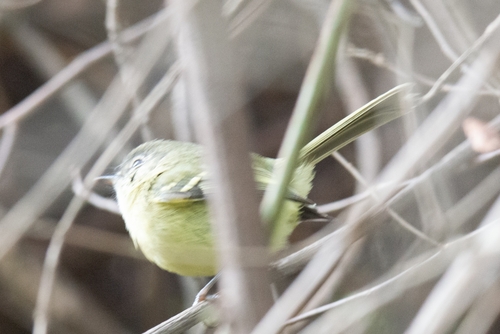
コバシハエトリ (Phylloscartes ventralis) コバシハエトリ
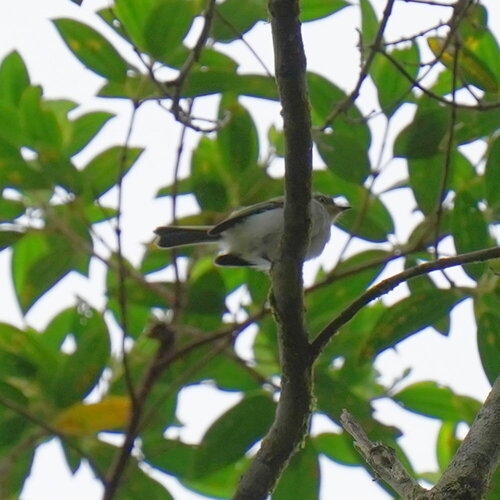
クリメコバシハエトリ (Phylloscartes sylviolus) クリメコバシハエトリ

メディア

読み込み中…

要点

モトモトのコバシハエトリとクリメコバシハエトリを区別する最も信頼できるフィールドマークは顔の模様です:コバシハエトリは、壊れた白っぽいアイリングと暗い「口ひげ」を持つ特徴的なまだらの頬を示し、クリメコバシハエトリは、オリーブ色の顔に対して際立つ大胆な赤褐色のロアとアイリングを持っています。両種は小型で活発なPhylloscartesのハエトリで、サイズと構造は似ていますが、頭部と腹部の色彩が重要です。フィールドでは、目の周り、ロア、頬の色と模様、さらには虹彩の色に注意を払ってください。翼と尾の模様は微妙ですが、顔のマークと組み合わせることで役立つことがあります。両種はしばしば混合群れに参加し、樹冠で餌を探すため、文脈は常に区別に役立つわけではありません。

識別のコツ

  1. 顔の模様が鍵: コバシハエトリは、壊れた白っぽいアイリング、暗い「口ひげ」、目の下に三日月を持つまだらの頬を持っています;クリメコバシハエトリは、大胆な赤褐色のロアと広い一致するアイリングを持ち、まだらはありません。
  2. 虹彩の色: コバシハエトリは暗い茶色の虹彩を持ち、クリメコバシハエトリは明るい白の虹彩を持っています。これは良い光の下でしばしば見られ、強いフィールドマークです。
  3. スーパーシリウムとアイリング: コバシハエトリは短く薄い白っぽいスーパーシリウムと不明瞭で壊れたアイリングを示します;クリメコバシハエトリはスーパーシリウムがなく、広く連続した赤褐色のアイリングを持っています。
  4. ロアの色: クリメコバシハエトリの赤褐色のロアは独特で、オリーブ色の上顔と対照的であり、コバシハエトリは顔のまだらに溶け込む暗いロアを持っています。
  5. 頬と口ひげ: コバシハエトリだけが特徴的なまだらの頬と暗い「口ひげ」のマークを示し、クリメコバシハエトリの顔は赤褐色のアイリングを除いてはクリーンです。
  6. 冠と上面: 両者はオリーブ色ですが、コバシハエトリはクリメコバシハエトリの明るいオリーブ色の冠と背中よりも暗く、明るさが少ないです。
  7. 翼の模様: 両者は暗い翼に黄色っぽいまたは淡い黄色の翼帯を持っていますが、コバシハエトリは2つの翼帯(黄色の先端を持つカバー羽から)を示すことがありますが、クリメコバシハエトリは通常1つの帯を示します。
  8. 尾の縁: コバシハエトリは尾羽の基部に明るいオリーブ黄色の外側の羽を持っています;クリメコバシハエトリはオリーブ色の縁を持っていますが、明るさや広がりはありません。
  9. 腹部: コバシハエトリはよりオリーブ灰色から黄色っぽく、淡いオリーブの模様があります;クリメコバシハエトリは主に白っぽく、胸や側面に緑がかった暗い色合いと黄色の尾羽カバーがあります。
  10. 顎と喉: コバシハエトリは白っぽい顎と上喉を持ち、クリメコバシハエトリは黄色の顎と淡い黄色の喉を持っています。
  11. くちばしと脚: 両者は尖った黒いくちばしと青灰色からスレート色の脚を持っています—これらは区別には役立ちません。
  12. 餌を探す行動: 両種は似たように餌を探すため、行動は区別には信頼できません。
  13. 生息地と範囲: 両者が生息する場所では、生息地は診断的ではありませんが、コバシハエトリはコアのアトランティックフォレスト地域の外でより広範囲に分布しています。
  14. 年齢/性別の変異: 両性およびすべての年齢は、各種内で似たように見えます;どちらの種にも幼鳥や未熟な特有の翼や尾のマークは記載されていません。
  15. 照明と角度: 光が悪い場合、虹彩の色や微妙な顔のマークは見えにくくなることがあるため、ロア/アイリングの大胆さと色、全体の顔の模様を優先してください。

大きさ

両種は本質的にサイズが同一で、平均体重は約8グラム、長さは約12センチメートルです。フィールドで区別するために信頼できる構造や比率の意味のある違いはありません。くちばしの形状や尾の長さも似ているため、サイズや印象だけに頼って同定しないでください。

羽色

どちらの種にも年齢特有の上翼や飛行マークは記載されていないため、成鳥の羽毛に焦点を当ててください。コバシハエトリは短く薄い白っぽいスーパーシリウム、壊れた白っぽいアイリング、目を通る暗い線、特徴的なまだらの頬、暗い「口ひげ」、目の下の三日月を持っています。冠と上面は暗いオリーブ色で、暗い翼には飛行羽の基部に明るいオリーブ黄色の外側の羽と2つの黄色っぽい翼帯があります。腹部は変動がありますが、一般的にはオリーブ灰色から黄色っぽく、時には淡いオリーブの模様があります。虹彩は暗い茶色です。

クリメコバシハエトリは、対照的に、ロアに強い赤褐色の色合いを示し、広い一致するアイリングに延びており、より大胆な顔の模様を際立たせています。上顔はオリーブ色、下顔は淡い黄色、冠/上面は明るいオリーブ色です。翼は暗く、オリーブ色の縁と1つの淡い黄色の翼帯があります。尾は暗く、オリーブ色の縁があります。腹部は主に白っぽく、胸や側面に緑がかった暗い色合いと黄色の尾羽カバーがあります。虹彩は明るい白で、コバシハエトリとの対照が際立っています。両者は尖った黒いくちばしと青灰色からスレート色の脚を持っています。

行動

両種は中層から樹冠で活発に餌を探し、しばしば混合種の群れに参加し、短いサリーや葉や小枝からのホバリング採餌という似たような採餌戦略を使用します。両者は水平に止まり、時には尾を上げて止まります。フィールドで区別するための重要な行動の違いはありません。

生息環境

彼らの分布はアルゼンチン、ブラジル、パラグアイで重なり、両者は森林生息地に見られます。コバシハエトリはより広範囲に分布し、ボリビア、ペルー、ウルグアイにも生息していますが、クリメコバシハエトリはより制限されています。両種は主に樹冠または中層で餌を探すため、生息地や採餌の高さは、彼らの分布が重なる場所での区別には信頼できません。

より良い説明を送る

比較と同じ項目を使ってください。文章はすぐに公開されます。

The most reliable field mark to separate Mottle-cheeked Tyrannulet from Bay-ringed Tyrannulet is the facial pattern: Mottle-cheeked shows a distinctive mottled cheek with a broken whitish eye-ring and dusky 'moustache', while Bay-ringed has a bold rufous-chestnut lore and eye-ring that stand out against its otherwise olive face. Both species are small, active Phylloscartes tyrannulets with similar size and structure, but their head and underpart coloration are key. In the field, pay close attention to the color and pattern around the eye, lores, and cheeks, as well as the iris color. Wing and tail patterns are subtle but can help when combined with facial marks. Both species often join mixed flocks and forage in the canopy, so context is not always helpful for separation.

  1. Facial pattern is key: Mottle-cheeked Tyrannulet has a mottled cheek with a broken whitish eye-ring, dusky 'moustache', and a crescent below the eye; Bay-ringed Tyrannulet has a bold rufous-chestnut lore and a wide matching eye-ring, with no mottling.
  2. Iris color: Mottle-cheeked has a dark brown iris, while Bay-ringed has a bright white iris. This is often visible in good light and is a strong field mark.
  3. Supercilium and eye-ring: Mottle-cheeked shows a short, thin whitish supercilium and an indistinct, broken eye-ring; Bay-ringed lacks a supercilium but has a wide, continuous rufous-chestnut eye-ring.
  4. Lore color: The rufous-chestnut lores of Bay-ringed are unique and contrast with the olive upper face, while Mottle-cheeked has dusky lores blending into the facial mottling.
  5. Cheek and moustache: Only Mottle-cheeked shows the distinctive mottled cheek and dusky 'moustache' mark; Bay-ringed's face is clean except for the rufous eye-ring.
  6. Crown and upperparts: Both are olive, but Mottle-cheeked is darker and less bright than Bay-ringed's bright olive crown and back.
  7. Wing pattern: Both have dusky wings with yellowish or pale yellow wing bars, but Mottle-cheeked may show two wing bars (from yellow-tipped coverts), while Bay-ringed typically shows a single bar.
  8. Tail edges: Mottle-cheeked has bright olive-yellow outer webs at the base of tail feathers; Bay-ringed has olive edges but not as bright or extensive.
  9. Underparts: Mottle-cheeked is more olive-gray to yellowish with faint olive markings; Bay-ringed is mostly whitish with a greenish dusky tinge on the sides and yellow undertail coverts.
  10. Chin and throat: Mottle-cheeked has a whitish chin and upper throat; Bay-ringed has a yellow chin and paler yellow throat.
  11. Bill and legs: Both have a pointed black bill and bluish gray to slate legs—these are not useful for separation.
  12. Foraging behavior: Both species forage similarly, so behavior is not reliable for separation.
  13. Habitat and range: Where both occur, habitat is not diagnostic, but Mottle-cheeked is more widespread outside the core Atlantic Forest region.
  14. Age/sex variation: Both sexes and all ages look similar within each species; no juvenile or immature-specific wing or tail marks are described for either.
  15. Lighting and angle: In poor light, iris color and subtle facial marks may be hard to see, so prioritize the boldness and color of the lore/eye-ring and overall face pattern.

Both species are essentially identical in size, with an average body mass of about 8 grams and a length of approximately 12 cm. There are no meaningful differences in structure or proportions that can be reliably used in the field to separate them. Bill shape and tail length are also similar, so do not rely on size or jizz alone for identification.

No age-specific upperwing or flight marks are described for either species, so focus on adult plumage. Mottle-cheeked Tyrannulet has a short, thin whitish supercilium, a broken whitish eye-ring, dusky line through the eye, and a distinctive mottled cheek with a dusky 'moustache' and a crescent below the eye. Its crown and upperparts are dark olive, with dusky wings featuring bright olive-yellow outer webs at the base of the flight feathers and two yellowish wing bars. Underparts are variable but generally olive-gray to yellowish, sometimes with faint olive markings. The iris is dark brown.

Bay-ringed Tyrannulet, in contrast, shows a strong rufous-chestnut coloration at the lores that extends into a wide, matching eye-ring, setting off a bolder facial pattern. The upper face is olive, lower face pale yellow, and the crown/upperparts are bright olive. The wings are dusky with olive edges and a single pale yellow wing bar. The tail is dusky with olive edges. Underparts are mostly whitish with a greenish dusky tinge on the sides of the breast/flanks and yellow undertail coverts. The iris is bright white, a striking contrast to Mottle-cheeked. Both have a pointed black bill and bluish gray to slate legs.

Both species forage actively in the mid-story to canopy, often joining mixed-species flocks, and use similar feeding strategies—short sallies and hover-gleaning from leaves and twigs. Both perch horizontally, sometimes with the tail cocked up. There is no significant behavioral difference to separate them in the field.

Their ranges overlap in Argentina, Brazil, and Paraguay, and both are found in forested habitats. Mottle-cheeked Tyrannulet is more widespread, occurring also in Bolivia, Peru, and Uruguay, while Bay-ringed is more restricted. Both species forage mainly in the canopy or mid-story, so habitat and foraging height are not reliable for separation where their ranges overlap.

変更を破棄しますか?

保存していない編集があります。今離れると失われます。

コバシハエトリ · クリメコバシハエトリ · 苦手な鳥