

Motmot

ヒメヨシゴイ 対 セジロミゾゴイ

Botaurus minutus 対 Calherodius leuconotus

ヒメヨシゴイとセジロミゾゴイのクイズ
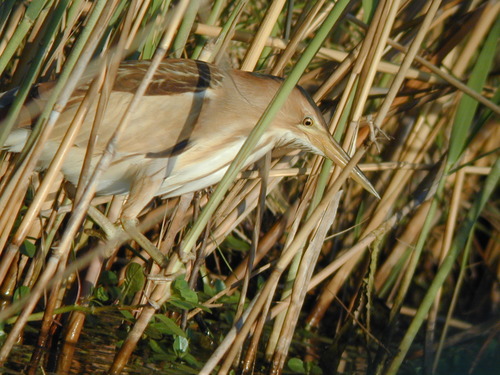
ヒメヨシゴイ (Botaurus minutus) ヒメヨシゴイ
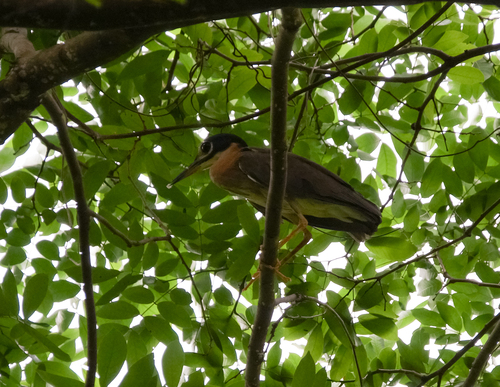
セジロミゾゴイ (Calherodius leuconotus) セジロミゾゴイ

メディア

読み込み中…

要点

ヒメヨシゴイとセジロミゾゴイを区別するための最も信頼できるフィールドマークは、特に未熟な鳥において、上翼のパターンです:幼鳥のセジロミゾゴイは上翼の覆羽に明確な白い斑点を示しますが、幼鳥のヒメヨシゴイはより均一に赤褐色で縞模様があり、これらの斑点がありません。成鳥のヒメヨシゴイは非常に小さく、コンパクトで繊細な体型と淡い前翼パネルを持っていますが、セジロミゾゴイは明らかに大きく、背中に目を引く白い三角形の斑点と赤褐色の首と胸を持っています。両種は未熟な羽毛に縞模様の腹部を示すことがありますが、全体のサイズ、翼のマーキング、白い肩羽の斑点の有無が重要です。生息地と分布も役立ちます:ヒメヨシゴイはヨーロッパ-アフリカの渡り鳥ですが、セジロミゾゴイはサハラ以南のアフリカに生息しています。

識別のコツ

  1. Juvenile upperwing pattern: 上翼の覆羽に白い斑点を探してください—幼鳥のセジロミゾゴイには存在し、ヒメヨシゴイのどの年齢にもありません。これは飛行中または止まっている未熟な個体にとって最も信頼できるマークです。
  2. Size and structure: ヒメヨシゴイは非常に小さく、より繊細で、相対的に長く細い首とくちばしを持っています。セジロミゾゴイは頑丈で、重厚感があり、明らかに大きいです。
  3. Forewing panel (adults): 成鳥のヒメヨシゴイは、黒い翼と対照的な淡いピンクがかったバフの卵形パネルを内側の翼の覆羽に示します。これはセジロミゾゴイにはありません。
  4. White scapular patch: 成鳥のセジロミゾゴイは、止まっているときや時々飛んでいるときに見える背中の大きな三角形の白い斑点(肩羽)を持っています。ヒメヨシゴイはこの特徴を示すことはありません。
  5. Head and eye: セジロミゾゴイは短い冠を持つ黒い頭と白いリングのある大きな赤い目を持っていますが、ヒメヨシゴイのオスは黒い冠を持っていますが、冠と赤い目はありません。
  6. Neck and breast color: 成鳥のセジロミゾゴイは赤褐色(赤茶色)の首と胸を持ち、ヒメヨシゴイの淡いバフの腹部と対照的です。
  7. Underwing color: ヒメヨシゴイは飛行中に完全に白い下翼を示します;セジロミゾゴイの下翼の色は特に特徴的ではないとされています。
  8. Streaking: 両種は幼鳥に縞模様の腹部を示すことがありますが、上翼の覆羽に白い斑点を持つのはセジロミゾゴイだけです。
  9. Bill shape: 両者は長く鋭いくちばしを持っていますが、ヒメヨシゴイのくちばしは頭のサイズに対して相対的に細く長いです。
  10. Leg color: セジロミゾゴイは黄色い脚を持っています;ヒメヨシゴイの脚の色は指定されていませんが、主要なフィールドマークではありません。
  11. Flight jizz: ヒメヨシゴイは速く深い翼の打撃で飛び、コンパクトに見えます;セジロミゾゴイは飛行中により重厚で遅く見えます。
  12. Habitat and range: 渡りの外でヨーロッパで見られた場合、ほぼ確実にヒメヨシゴイです。サハラ以南のアフリカでは、特に森林の湿地でセジロミゾゴイの方が可能性が高いです。
  13. Season: ヒメヨシゴイは4月中旬から9月までの間のみヨーロッパに存在します;この期間外では、セジロミゾゴイがアフリカでより可能性が高いです。
  14. Sex differences: メスのヒメヨシゴイはオスよりも鈍く、より縞模様が多いですが、それでもセジロミゾゴイの白い肩羽の斑点はありません。
  15. Confusion risk: 未熟な鳥は最も混同されやすいです—上翼のパターン(白い斑点対均一な赤褐色/縞模様)と全体のサイズに焦点を当ててください。

大きさ

ヒメヨシゴイはかなり小さく、体重は約147g、長さは33〜38cmです。それに対して、セジロミゾゴイは中型のサギで、長さは50〜55cmで、フィールドでははるかに重厚で長くなります。ヒメヨシゴイはヨーロッパで最も小さな繁殖サギであり、頑丈で重厚なセジロミゾゴイの隣ではほぼ優雅に見えます。

羽色

行動

両種は秘密主義であり、しばしば密な湿地の植生の中に隠れていますが、ヒメヨシゴイは小さなサイズのため、より敏捷に見えることがあり、しばしば葦の中を這い回ったり、短く低い飛行をするのが見られます。セジロミゾゴイは大きく重いため、より慎重に動き、しばしば薄明かりや夜行性で、時には昼間に止まることがあります。飛行中、ヒメヨシゴイはコンパクトで素早く見えますが、セジロミゾゴイはより重厚で遅く見えます。

生息環境

ヒメヨシゴイはヨーロッパの湿地で繁殖し、冬のためにアフリカに渡ります。彼らは4月中旬からヨーロッパに到着し、9月までに出発します。彼らは密な葦原や湿地を好みます。セジロミゾゴイはサハラ以南のアフリカに生息し、森林の湿地、川、湖に見られ、しばしばヒメヨシゴイよりも森林や日陰の生息地にいます。分布だけでも、渡りの期間外では診断的である可能性があります。

より良い説明を送る

比較と同じ項目を使ってください。文章はすぐに公開されます。

The most reliable field mark for separating Little Bittern and White-backed Night Heron, especially in immature birds, is the upperwing pattern: juvenile White-backed Night Herons show distinct white spots on the upperwing coverts, while juvenile Little Bitterns are more uniformly rufous and streaked, lacking these spots. Adult Little Bitterns are much smaller, with a compact, delicate build and a pale forewing panel, while White-backed Night Herons are noticeably larger, with a striking white triangular patch on the back and a rufous neck and breast. Both species can show streaked underparts in immature plumages, but overall size, wing markings, and the presence or absence of a white scapular patch are key. Habitat and range are also helpful: Little Bitterns are European-African migrants, while White-backed Night Herons are resident in sub-Saharan Africa.

  1. Juvenile upperwing pattern: Look for white spots on the upperwing coverts—present in juvenile White-backed Night Heron, absent in Little Bittern of any age. This is the most reliable mark for immatures in flight or perched.
  2. Size and structure: Little Bittern is much smaller and more delicate, with a proportionally longer, thinner neck and bill. White-backed Night Heron is robust, heavyset, and noticeably larger.
  3. Forewing panel (adults): Adult Little Bitterns show a pale pinkish-buff oval panel on the inner wing coverts, contrasting with black wings. This is absent in White-backed Night Heron.
  4. White scapular patch: Adult White-backed Night Herons have a large, triangular white patch on the back (scapulars), visible when perched and sometimes in flight. Little Bitterns never show this feature.
  5. Head and eye: White-backed Night Heron has a black head with a short crest and large red eyes with white rings, while Little Bittern males have a black crown but lack the crest and red eye.
  6. Neck and breast color: White-backed Night Heron adults have a rufous (reddish-brown) neck and breast, contrasting with the pale buff underparts of Little Bitterns.
  7. Underwing color: Little Bitterns show completely whitish underwings in flight; White-backed Night Heron underwing color is not described as distinctive.
  8. Streaking: Both species can show streaked underparts in juveniles, but only White-backed Night Heron has white spots on the upperwing coverts.
  9. Bill shape: Both have long, sharp bills, but Little Bittern's is proportionally finer and longer relative to head size.
  10. Leg color: White-backed Night Heron has yellow legs; Little Bittern leg color is not specified but is not a primary field mark.
  11. Flight jizz: Little Bitterns fly with rapid, deep wingbeats and appear compact; White-backed Night Herons are bulkier and slower in flight.
  12. Habitat and range: If seen in Europe outside of migration, it's almost certainly Little Bittern. In sub-Saharan Africa, especially in wooded wetlands, White-backed Night Heron is more likely.
  13. Season: Little Bitterns are only present in Europe from mid-April to September; outside this window, White-backed Night Heron is more likely in Africa.
  14. Sex differences: Female Little Bitterns are duller and more streaked than males, but still lack the white scapular patch of White-backed Night Heron.
  15. Confusion risk: Immature birds are most often confused—focus on upperwing pattern (white spots vs. uniform rufous/streaked) and overall size.

Little Bittern is significantly smaller, with a body mass of about 147 g and a length of 33–38 cm. In contrast, White-backed Night Heron is a medium-sized heron, 50–55 cm long, making it much bulkier and longer in the field. The Little Bittern is the smallest breeding heron in Europe, appearing almost dainty next to the robust, heavyset White-backed Night Heron.

  • Juvenile/immature birds: Juvenile White-backed Night Herons are best recognized by their streaked breast and distinctive white spots on the upperwing coverts, a feature not present in Little Bittern. Juvenile Little Bitterns are more rufous overall and heavily streaked on both upperparts and underparts, including the wing coverts, but lack discrete white spots.

  • Adult males: Little Bittern males have a black crown, nape, back, and wings with a faint green sheen, and a contrasting pinkish-buff oval panel on the inner wing coverts. Their underparts are pale buff, and the underwing is whitish. White-backed Night Heron adults have a black head with a short crest, large red eyes with white rings, a rufous neck and breast, white throat, and a prominent white triangular patch on the back (scapulars). The belly is whitish-brown.

  • Adult females: Female Little Bitterns are duller, with brownish-black upperparts and more streaked, less clean underparts. Their wing panel is less obvious. Female White-backed Night Herons are not specifically described as differing from males, but the key marks (white scapular patch, rufous neck) remain.

  • In flight: Little Bitterns show pale forewing panels and whitish underwings, while White-backed Night Herons may show the white scapular patch and, in immatures, white spots on the upperwing.

Both species are secretive and often skulk in dense wetland vegetation, but Little Bitterns, due to their small size, can appear more agile and are often seen clambering through reeds or making short, low flights. White-backed Night Herons, being larger and heavier, move more deliberately and are often more crepuscular or nocturnal, sometimes roosting during the day. In flight, Little Bitterns appear compact and quick, while White-backed Night Herons look bulkier and slower.

Little Bitterns breed in European wetlands and migrate to Africa for the winter, arriving in Europe from mid-April and departing by September. They prefer dense reedbeds and marshes. White-backed Night Herons are residents of sub-Saharan Africa, found in wooded wetlands, rivers, and lakes, often in more forested or shaded habitats than Little Bitterns. Range alone can be diagnostic outside migration periods.

変更を破棄しますか?

保存していない編集があります。今離れると失われます。

ヒメヨシゴイ · セジロミゾゴイ · 苦手な鳥