

Avetorillo Común vs Martinete Encapuchado
Botaurus minutus frente a Calherodius leuconotus
Juega un quiz con Avetorillo Común y Martinete Encapuchado
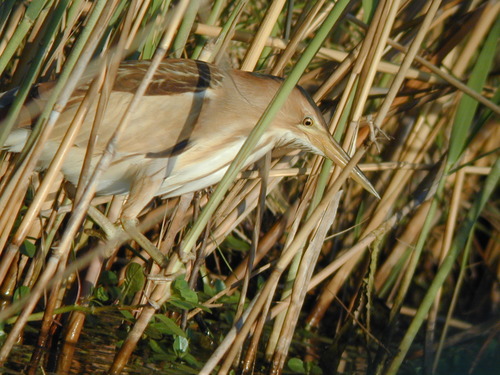 Avetorillo Común
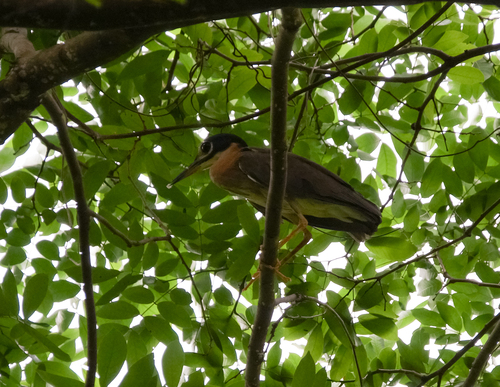 Martinete Encapuchado
En breve
La marca de campo más confiable para separar el Avetorillo Común y el Martinete Encapuchado, especialmente en aves inmaduras, es el patrón del ala superior: los martinetes encapuchados juveniles muestran manchas blancas distintas en las cobertoras del ala superior, mientras que los avetorillos comunes juveniles son más uniformemente rufo y estriados, careciendo de estas manchas. Los avetorillos comunes adultos son mucho más pequeños, con una construcción compacta y delicada y un panel de ala delantera pálido, mientras que los martinetes encapuchados son notablemente más grandes, con una llamativa mancha blanca triangular en la espalda y un cuello y pecho rufo. Ambas especies pueden mostrar partes inferiores estriadas en plumajes inmaduros, pero el tamaño general, las marcas de las alas y la presencia o ausencia de una mancha escapular blanca son clave. El hábitat y el rango también son útiles: los avetorillos comunes son migrantes euroafricanos, mientras que los martinetes encapuchados son residentes en África subsahariana.
Consejos de identificación
- Patrón del ala superior juvenil: Busca manchas blancas en las cobertoras del ala superior—presentes en el juvenil Martinete Encapuchado, ausentes en el Avetorillo Común de cualquier edad. Esta es la marca más confiable para inmaduros en vuelo o posados.
- Tamaño y estructura: El Avetorillo Común es mucho más pequeño y más delicado, con un cuello y pico proporcionalmente más largos y delgados. El Martinete Encapuchado es robusto, corpulento y notablemente más grande.
- Panel del ala delantera (adultos): Los avetorillos comunes adultos muestran un panel ovalado de color rosa pálido en las cobertoras del ala interna, contrastando con alas negras. Esto está ausente en el Martinete Encapuchado.
- Mancha escapular blanca: Los martinetes encapuchados adultos tienen una gran mancha blanca triangular en la espalda (escapulares), visible cuando están posados y a veces en vuelo. Los avetorillos comunes nunca muestran esta característica.
- Cabeza y ojo: El Martinete Encapuchado tiene una cabeza negra con una cresta corta y grandes ojos rojos con anillos blancos, mientras que los machos de Avetorillo Común tienen una corona negra pero carecen de la cresta y el ojo rojo.
- Color del cuello y pecho: Los adultos del Martinete Encapuchado tienen un cuello y pecho rufos (marrón rojizo), contrastando con las partes inferiores pálidas de los avetorillos comunes.
- Color del ala inferior: Los avetorillos comunes muestran alas inferiores completamente blanquecinas en vuelo; el color del ala inferior del Martinete Encapuchado no se describe como distintivo.
- Estriado: Ambas especies pueden mostrar partes inferiores estriadas en juveniles, pero solo el Martinete Encapuchado tiene manchas blancas en las cobertoras del ala superior.
- Forma del pico: Ambos tienen picos largos y afilados, pero el del Avetorillo Común es proporcionalmente más fino y largo en relación con el tamaño de la cabeza.
- Color de las patas: El Martinete Encapuchado tiene patas amarillas; el color de las patas del Avetorillo Común no se especifica pero no es una marca de campo primaria.
- Estilo de vuelo: Los avetorillos comunes vuelan con aleteos rápidos y profundos y parecen compactos; los martinetes encapuchados son más voluminosos y más lentos en vuelo.
- Hábitat y rango: Si se ve en Europa fuera de la migración, es casi seguro que es un Avetorillo Común. En África subsahariana, especialmente en humedales boscosos, es más probable que sea un Martinete Encapuchado.
- Temporada: Los avetorillos comunes solo están presentes en Europa desde mediados de abril hasta septiembre; fuera de esta ventana, es más probable que el Martinete Encapuchado esté en África.
- Diferencias sexuales: Las hembras de Avetorillo Común son más apagadas y más estriadas que los machos, pero aún carecen de la mancha escapular blanca del Martinete Encapuchado.
- Riesgo de confusión: Las aves inmaduras son las que más a menudo se confunden—enfócate en el patrón del ala superior (manchas blancas vs. rufo/estriado uniforme) y el tamaño general.
Tamaño
El Avetorillo Común es significativamente más pequeño, con una masa corporal de aproximadamente 147 g y una longitud de 33–38 cm. En contraste, el Martinete Encapuchado es un herón de tamaño mediano, de 50–55 cm de largo, lo que lo hace mucho más voluminoso y largo en el campo. El Avetorillo Común es el herón reproductor más pequeño de Europa, apareciendo casi delicado junto al robusto y corpulento Martinete Encapuchado.
Plumaje
-
Aves juveniles/inmaduras: Los martinetes encapuchados juveniles son mejor reconocidos por su pecho estriado y las distintivas manchas blancas en las cobertoras del ala superior, una característica que no está presente en el Avetorillo Común. Los avetorillos comunes juveniles son más rufo en general y están fuertemente estriados en ambas partes superiores e inferiores, incluidas las cobertoras del ala, pero carecen de manchas blancas discretas.
-
Machos adultos: Los machos de Avetorillo Común tienen una corona negra, nuca, espalda y alas con un leve brillo verde, y un panel ovalado de color rosa pálido en las cobertoras del ala interna. Sus partes inferiores son de color pálido, y el ala inferior es blanquecina. Los adultos del Martinete Encapuchado tienen una cabeza negra con una cresta corta, grandes ojos rojos con anillos blancos, un cuello y pecho rufos, garganta blanca y una prominente mancha blanca triangular en la espalda (escapulares). El vientre es marrón blanquecino.
-
Hembras adultas: Las hembras de Avetorillo Común son más apagadas, con partes superiores de color marrón-negro y partes inferiores más estriadas y menos limpias. Su panel de ala es menos obvio. Las hembras de Martinete Encapuchado no se describen específicamente como diferentes de los machos, pero las marcas clave (mancha escapular blanca, cuello rufo) permanecen.
-
En vuelo: Los avetorillos comunes muestran paneles de ala delantera pálidos y alas inferiores blanquecinas, mientras que los martinetes encapuchados pueden mostrar la mancha escapular blanca y, en inmaduros, manchas blancas en el ala superior.
Comportamiento
Ambas especies son secretivas y a menudo se esconden en la densa vegetación de humedales, pero los avetorillos comunes, debido a su pequeño tamaño, pueden parecer más ágiles y a menudo se les ve trepando a través de cañas o realizando vuelos cortos y bajos. Los martinetes encapuchados, siendo más grandes y pesados, se mueven de manera más deliberada y a menudo son más crepusculares o nocturnos, a veces posándose durante el día. En vuelo, los avetorillos comunes parecen compactos y rápidos, mientras que los martinetes encapuchados lucen más voluminosos y lentos.
Hábitat
Los avetorillos comunes crían en humedales europeos y migran a África para el invierno, llegando a Europa desde mediados de abril y partiendo en septiembre. Prefieren lechos de cañas densos y pantanos. Los martinetes encapuchados son residentes de África subsahariana, encontrados en humedales boscosos, ríos y lagos, a menudo en hábitats más boscosos o sombreados que los avetorillos comunes. El rango por sí solo puede ser diagnóstico fuera de los períodos de migración.
Avetorillo Común · Martinete Encapuchado · Mis aves difíciles