

Tarabusino vs White-backed Night Heron
Botaurus minutus contro Calherodius leuconotus
Fai un quiz con Tarabusino e White-backed Night Heron
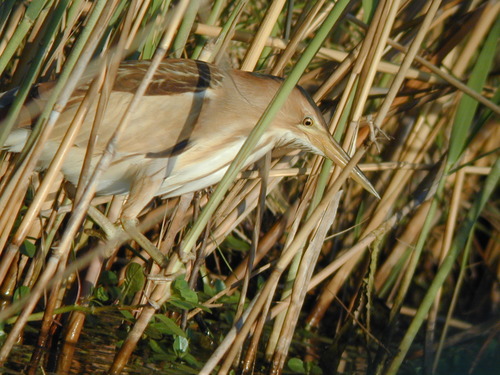 Tarabusino
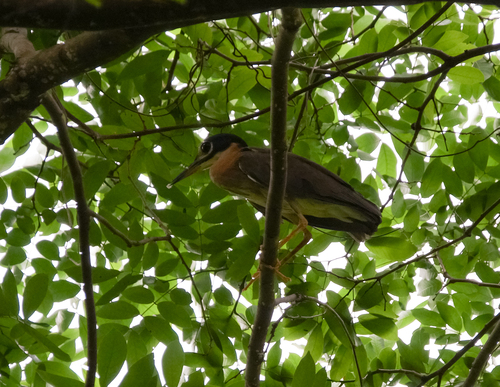 White-backed Night Heron
In breve
Il segno di campo più affidabile per separare il Tarabusino e il White-backed Night Heron, specialmente negli uccelli immaturi, è il motivo delle ali superiori: i giovani White-backed Night Herons mostrano distintive macchie bianche sulle copritrici delle ali superiori, mentre i giovani Tarabusini sono più uniformemente rufous e striati, privi di queste macchie. I Tarabusini adulti sono molto più piccoli, con una struttura compatta e delicata e un pannello anteriore delle ali pallido, mentre i White-backed Night Herons sono notevolmente più grandi, con una sorprendente macchia triangolare bianca sulla schiena e un collo e un petto rufous. Entrambe le specie possono mostrare parti inferiori striate in piumaggi immaturi, ma le dimensioni complessive, i segni delle ali e la presenza o assenza di una macchia scapolare bianca sono fondamentali. L'habitat e l'areale sono anche utili: i Tarabusini sono migratori euro-africani, mentre i White-backed Night Herons sono residenti nell'Africa sub-sahariana.
Consigli di identificazione
- Juvenile upperwing pattern: Cerca macchie bianche sulle copritrici delle ali superiori—presenti nel giovane White-backed Night Heron, assenti nel Tarabusino di qualsiasi età. Questo è il segno più affidabile per gli immaturi in volo o appollaiati.
- Size and structure: Il Tarabusino è molto più piccolo e più delicato, con un collo e un becco proporzionalmente più lunghi e sottili. Il White-backed Night Heron è robusto, massiccio e notevolmente più grande.
- Forewing panel (adults): I Tarabusini adulti mostrano un pannello ovale di colore rosa pallido sulle copritrici delle ali interne, in contrasto con le ali nere. Questo è assente nel White-backed Night Heron.
- White scapular patch: I White-backed Night Herons adulti hanno una grande macchia bianca triangolare sulla schiena (scapolari), visibile quando sono appollaiati e a volte in volo. I Tarabusini non mostrano mai questa caratteristica.
- Head and eye: Il White-backed Night Heron ha una testa nera con una corta cresta e grandi occhi rossi con anelli bianchi, mentre i maschi di Tarabusino hanno una corona nera ma mancano della cresta e dell'occhio rosso.
- Neck and breast color: Gli adulti di White-backed Night Heron hanno un collo e un petto rufous (marrone-rossiccio), in contrasto con le parti inferiori pallide dei Tarabusini.
- Underwing color: I Tarabusini mostrano ali inferiori completamente bianche in volo; il colore delle ali inferiori del White-backed Night Heron non è descritto come distintivo.
- Streaking: Entrambe le specie possono mostrare parti inferiori striate nei giovani, ma solo il White-backed Night Heron ha macchie bianche sulle copritrici delle ali superiori.
- Bill shape: Entrambi hanno becchi lunghi e affilati, ma quello del Tarabusino è proporzionalmente più fine e lungo rispetto alla dimensione della testa.
- Leg color: Il White-backed Night Heron ha gambe gialle; il colore delle gambe del Tarabusino non è specificato ma non è un segno di campo primario.
- Flight jizz: I Tarabusini volano con battiti d'ala rapidi e profondi e appaiono compatti; i White-backed Night Herons sono più massicci e più lenti in volo.
- Habitat and range: Se visti in Europa al di fuori della migrazione, è quasi certamente un Tarabusino. Nell'Africa sub-sahariana, specialmente in zone umide boschive, è più probabile vedere un White-backed Night Heron.
- Season: I Tarabusini sono presenti in Europa solo da metà aprile a settembre; al di fuori di questo periodo, è più probabile vedere un White-backed Night Heron in Africa.
- Sex differences: Le femmine di Tarabusino sono più opache e più striate dei maschi, ma mancano comunque della macchia scapolare bianca del White-backed Night Heron.
- Confusion risk: Gli uccelli immaturi sono spesso confusi—concentrati sul motivo delle ali superiori (macchie bianche vs. rufous/striate uniformi) e sulle dimensioni complessive.
Taglia
Il Tarabusino è significativamente più piccolo, con una massa corporea di circa 147 g e una lunghezza di 33–38 cm. Al contrario, il White-backed Night Heron è un airone di dimensioni medie, lungo 50–55 cm, rendendolo molto più massiccio e lungo sul campo. Il Tarabusino è il più piccolo airone nidificante in Europa, apparendo quasi delicato accanto al robusto e massiccio White-backed Night Heron.
Piumaggio
-
Juvenile/immature birds: I giovani White-backed Night Herons sono meglio riconosciuti per il loro petto striato e le distintive macchie bianche sulle copritrici delle ali superiori, una caratteristica non presente nel Tarabusino. I giovani Tarabusini sono più rufous nel complesso e fortemente striati sia nelle parti superiori che inferiori, comprese le copritrici delle ali, ma mancano di discrete macchie bianche.
-
Adult males: I maschi di Tarabusino hanno una corona nera, nuca, schiena e ali con una leggera lucentezza verde, e un pannello ovale di colore rosa pallido sulle copritrici delle ali interne. Le loro parti inferiori sono di colore buff pallido, e l'ala inferiore è bianca. Gli adulti di White-backed Night Heron hanno una testa nera con una corta cresta, grandi occhi rossi con anelli bianchi, un collo e un petto rufous, una gola bianca e una prominente macchia triangolare bianca sulla schiena (scapolari). La pancia è bianco-marrone.
-
Adult females: Le femmine di Tarabusino sono più opache, con parti superiori marrone-nerastre e parti inferiori più striate e meno pulite. Il loro pannello alare è meno evidente. Le femmine di White-backed Night Heron non sono specificamente descritte come diverse dai maschi, ma i segni chiave (macchia scapolare bianca, collo rufous) rimangono.
-
In flight: I Tarabusini mostrano pannelli anteriore delle ali pallidi e ali inferiori bianche, mentre i White-backed Night Herons possono mostrare la macchia scapolare bianca e, negli immaturi, macchie bianche sulle ali superiori.
Comportamento
Entrambe le specie sono segrete e spesso si nascondono nella densa vegetazione umida, ma i Tarabusini, a causa delle loro piccole dimensioni, possono apparire più agili e sono spesso visti arrampicarsi tra le canne o fare brevi voli bassi. I White-backed Night Herons, essendo più grandi e pesanti, si muovono in modo più deliberato e sono spesso più crepuscolari o notturni, a volte riposando durante il giorno. In volo, i Tarabusini appaiono compatti e veloci, mentre i White-backed Night Herons sembrano più massicci e lenti.
Habitat
I Tarabusini nidificano nelle zone umide europee e migrano in Africa per l'inverno, arrivando in Europa da metà aprile e partendo entro settembre. Preferiscono letti di canne densi e paludi. I White-backed Night Herons sono residenti dell'Africa sub-sahariana, trovati in zone umide boschive, fiumi e laghi, spesso in habitat più boschivi o ombreggiati rispetto ai Tarabusini. L'areale da solo può essere diagnostico al di fuori dei periodi di migrazione.
Tarabusino · White-backed Night Heron · I miei uccelli difficili