

Motmot

シュモクドリ 対 ヒメショウビン

Scopus umbretta 対 Ispidina picta

シュモクドリとヒメショウビンのクイズ
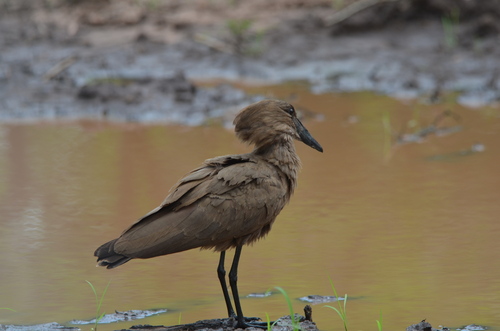
シュモクドリ (Scopus umbretta) シュモクドリ
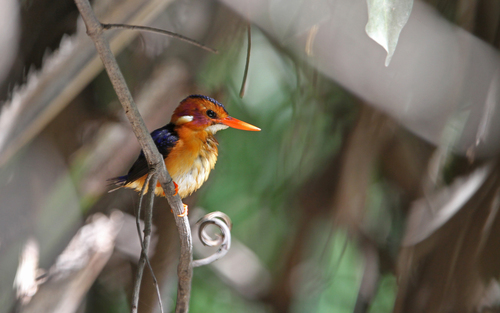
ヒメショウビン (Ispidina picta) ヒメショウビン

メディア

読み込み中…

要点

シュモクドリとヒメショウビンを区別する最も信頼できる方法は、全体的なサイズと構造によるものです:シュモクドリは中型の地味な茶色の水鳥で、特徴的なハンマー型の頭と長いくちばしを持ち、ヒメショウビンは小さく、鮮やかな色の森林の鳥で、短くてまっすぐなくちばしを持っています。飛んでいる時や止まっている時、シュモクドリのずんぐりした体型、広い翼、そしてぎこちない歩き方は、ヒメショウビンのコンパクトで繊細なプロポーションと速くて直線的な飛行と鋭く対比します。幼鳥の羽色はここでは混乱の原因にはならず、両種とも成鳥に似ていますが、ヒメショウビンの青い上面と赤褐色の下面は決してシュモクドリには見られません。生息地も強い手がかりです:シュモクドリは常に水の近くにいますが、ヒメショウビンは開けた湿地から離れた森林の地域を好みます。

識別のコツ

  1. サイズは最も決定的な特徴です:シュモクドリはヒメショウビンの4倍以上の長さで、はるかに重いです。遠くからでも、ヒメショウビンは小さくて繊細に見え、シュモクドリは頑丈でサギのようです。
  2. 頭とくちばしの形:シュモクドリは独特のハンマー型の頭を持ち、長くて太く、わずかにフック状のくちばしと後ろに冠があります。ヒメショウビンは小さくて丸い頭と短くてまっすぐなくちばし(成鳥はオレンジ、幼鳥は黒)を持っています。
  3. 羽色:シュモクドリは地味な茶色で、背中にわずかな紫の虹色があり、わずかに縞模様の尾を持っています。ヒメショウビンは上面が明るい青、下面が赤褐色で、暗い青の冠と白い耳の斑点があります(南部の個体には上に青い斑点があることもあります)。
  4. 幼鳥の違い:幼鳥のヒメショウビンは黒いくちばしを持ち、耳羽に紫が少なくなりますが、強い青と赤褐色のコントラストを示します。幼鳥のシュモクドリは成鳥と同じく茶色で、くちばしは茶色で、巣立ち時に黒くなります。どの年齢でも羽色の重複はありません。
  5. 脚と足:シュモクドリの脚は長く、黒く、部分的に水かきがあり、上脛骨までしか羽毛がありません。ヒメショウビンの脚は非常に短く、目立ちません。
  6. 飛行スタイル:シュモクドリは広くて丸い翼で飛び、時には首を伸ばしたり巻いたりして滑空します。ヒメショウビンの飛行は速く、直線的で低く、翼を素早く動かし、滑空しません。
  7. 止まっている姿勢:シュモクドリは水の中でしばしば直立し、ぎこちなく上下に動きます。ヒメショウビンは森林の枝に水平に止まり、地面や水の中にはめったにいません。
  8. 生息地の文脈:シュモクドリは常に水の近くにいます—湖、川、池、湿地。ヒメショウビンは森林、森林の端、または茂みで見られ、しばしば水から離れています。
  9. 採餌行動:シュモクドリは水の中で足を動かしたり、泥を探ったりして獲物を探します。ヒメショウビンは止まり木から飛び出して昆虫を捕まえ、決して水に入ることはありません。
  10. 尾と翼の形:シュモクドリは短くてわずかに縞模様の尾と広い翼を持ち、ヒメショウビンは短い尾を持っていますが、サイズに対してはるかに狭く尖った翼を持っています。
  11. 鳴き声:シュモクドリの鳴き声は鋭く、カッカッとしたり、ガラガラとしたりし、しばしば社会的な群れの中で聞かれます。ヒメショウビンは飛行中に高音で昆虫のような「ツィップ・ツィップ」と鳴きます。
  12. 社会的行動:シュモクドリは単独または小さな群れで見られることがあり、時には社会的な鳴き声を発します。ヒメショウビンは通常、孤独またはペアで見られます。
  13. 誤認の文脈:もし小さな青と赤褐色の鳥を森林で見たら、それは決してシュモクドリではありません。もし中型の茶色の鳥が水の中で歩いていたら、それは決してヒメショウビンではありません。
  14. 性別は同じ:両種は性差がほとんどないか全くありません;性別に頼って区別しないでください。
  15. 季節による混乱はない:両種は年間を通じて基本的な羽色を保持し、季節的な換羽やエクリプス羽色による混乱はありません。

大きさ

シュモクドリははるかに大きく、約56 cmの高さで、約470 gの重さがあります。一方、ヒメショウビンはわずか12 cmの長さと14.6 gの重さです[wikipedia][wikidata]。この違いは非常に極端で、遠くからでも暗い光の中でも、ヒメショウビンはスズメサイズに見え、シュモクドリは小さなサギやコウノトリに匹敵します。くちばしのサイズもこれを反映しています:シュモクドリのくちばしは長く(80–85 mm)、太く、わずかにフック状ですが、ヒメショウビンのくちばしは短くてまっすぐです。シュモクドリの雛でさえ、成鳥のヒメショウビンよりもはるかに大きいです。

羽色

この2種の間には混乱を招く年齢特有の翼や飛行パターンはありません:幼鳥と成鳥は色と構造で簡単に区別できます。シュモクドリは均一に地味な茶色で、背中にわずかな紫の虹色があり、わずかに縞模様の尾を持っています。明るい色や対照的な色はありません。脚は黒く、上脛骨までしか羽毛がありません。対照的に、ヒメショウビンは非常にカラフルです:成鳥と幼鳥は赤褐色の下面、青い背中と尾、暗い青の冠を持っています。幼鳥は黒いくちばし(オレンジではない)を持ち、耳羽に紫が少なくなりますが、依然として強い青と赤褐色のコントラストを示します。ヒメショウビンが全体が茶色に見える段階や、シュモクドリが青や赤褐色の羽色を示す段階はありません。

行動

シュモクドリの行動は典型的な水鳥のものです:浅い水の中を歩いたり、足を動かしたりして獲物を探し、泥を探ったりします。時には広くて丸い翼で滑空し、伸ばしたり巻いたりした首で飛ぶこともあり、時には水面から獲物をつかむために飛びながら餌を取ります。ヒメショウビンは典型的な小さなカワセミのように振る舞います:森林で静かに止まり、昆虫を捕まえるために速くて直線的な飛行をします。水の中で歩いたり、泳いだりすることはなく、飛行は速くて直線的で、滑空やグライドはしません。

生息環境

シュモクドリは常に水と関連しています:湿地、湖の岸、川の岸、河口、さらには魚の池や岩の海岸で見られます[wikipedia]。水から離れた乾燥した森林では決して見られません。一方、ヒメショウビンは森林や森林の端の鳥で、しばしば開けた水から遠く離れています。密な森林や茂みの中で小さな青と赤褐色の鳥を見かけることは、ヒメショウビンの強い手がかりであり、浅い水の中でうろつく中型の茶色の鳥はほぼ確実にシュモクドリです。

声

シュモクドリは単独の時はほとんど静かですが、群れの中ではさまざまなカッカッという音やガラガラという音、特徴的な「イップ・パー」という鳴き声を発します。単独の飛行中の鳴き声は鋭い「ニップ」または「ケック」です。ヒメショウビンの鳴き声は高音で昆虫のような「ツィップ・ツィップ」で、通常は飛行中に発せられます。ヒメショウビンの鳴き声ははるかに高くて繊細であり、シュモクドリの鳴き声は粗く、より社会的です。

より良い説明を送る

比較と同じ項目を使ってください。文章はすぐに公開されます。

The most reliable way to separate Hamerkop from African Pygmy Kingfisher is by overall size and structure: Hamerkop is a medium-sized, drab brown waterbird with a distinctive hammer-shaped head and long bill, while African Pygmy Kingfisher is a tiny, vividly colored woodland bird with a short, straight bill. In flight or perched, Hamerkop’s bulky build, broad wings, and jerky gait contrast sharply with the kingfisher’s compact, delicate proportions and rapid, direct flight. Juvenile plumages are not a source of confusion here, as both species resemble adults, but the kingfisher’s blue upperparts and rufous underparts are never matched by Hamerkop. Habitat is also a strong clue: Hamerkop is always near water, while African Pygmy Kingfisher prefers wooded areas away from open wetlands.

  1. Size is the single most decisive mark: Hamerkop is over four times the length and vastly heavier than African Pygmy Kingfisher. Even at a distance, the kingfisher will look tiny and delicate, while Hamerkop is robust and heron-like.
  2. Head and bill shape: Hamerkop has a unique hammer-shaped head with a long, thick, slightly hooked bill and a crest at the back. African Pygmy Kingfisher has a small, rounded head and a short, straight bill (orange in adults, black in juveniles).
  3. Plumage color: Hamerkop is plain brown with faint purple iridescence and a slightly barred tail. African Pygmy Kingfisher is bright blue above, rufous below, with a dark blue crown and white ear patch (sometimes with a blue spot above in southern birds).
  4. Juvenile differences: Juvenile kingfishers have a black bill and less violet on the ear coverts but still show strong blue and rufous contrast. Juvenile Hamerkops are brown like adults, with a brown bill that becomes black at fledging. There is no overlap in plumage at any age.
  5. Legs and feet: Hamerkop’s legs are long, black, and partially webbed, feathered only to the upper tibia. Kingfisher’s legs are very short and inconspicuous.
  6. Flight style: Hamerkop flies with broad, rounded wings, sometimes soaring with neck outstretched or coiled. Kingfisher’s flight is rapid, direct, and low, with quick wingbeats and no soaring.
  7. Perched posture: Hamerkop stands upright, often in water, with a jerky, bobbing gait. Kingfisher perches horizontally on branches in woodland, rarely on the ground or in water.
  8. Habitat context: Hamerkop is always near water—lakes, rivers, ponds, wetlands. African Pygmy Kingfisher is found in woodland, forest edge, or bush, often away from water.
  9. Feeding behavior: Hamerkop hunts by wading, probing mud, or shuffling feet in water. Kingfisher catches insects by sallying from a perch, never wading.
  10. Tail and wing shape: Hamerkop has a short, slightly barred tail and broad wings; kingfisher has a short tail but much narrower, pointed wings relative to its size.
  11. Vocalizations: Hamerkop’s calls are shrill, cackling, or rattling, often in social groups. Kingfisher gives a high, insect-like 'tsip-tsip' in flight.
  12. Social behavior: Hamerkop may be seen alone or in small groups, sometimes giving social calls. Kingfisher is usually solitary or in pairs.
  13. Mistaken context: If you see a small, blue-and-rufous bird in woodland, it is never a Hamerkop. If you see a medium-sized brown bird wading in water, it is never an African Pygmy Kingfisher.
  14. Sexes alike: Both species show little or no sexual dimorphism; do not rely on sex to separate them.
  15. No seasonal confusion: Both species retain their basic plumage year-round; no seasonal molt or eclipse plumage causes confusion.

Hamerkop is vastly larger, standing about 56 cm tall and weighing around 470 g, compared to the African Pygmy Kingfisher’s tiny 12 cm length and 14.6 g weight [wikipedia][wikidata]. The difference is so extreme that even at a distance or in poor light, the kingfisher appears sparrow-sized, while Hamerkop is comparable to a small heron or egret. Bill size also reflects this: Hamerkop’s bill is long (80–85 mm), thick, and slightly hooked, while the kingfisher’s is short and straight. Even fledglings of Hamerkop are much larger than adult kingfishers.

There are no confusing age-specific wing or flight patterns between these two: both juveniles and adults are easily separated by color and structure. Hamerkop is uniformly drab brown with a faint purple iridescence on the back and a slightly barred tail, lacking any bright or contrasting colors. Its legs are black and only feathered to the upper tibia. African Pygmy Kingfisher, by contrast, is strikingly colorful: adults and juveniles have rufous underparts, a blue back and tail, and a dark blue crown. Juveniles have a black bill (not orange) and less violet on the ear coverts, but still show the strong blue/rufous contrast. There is no stage where a kingfisher appears all-brown or where a Hamerkop shows blue or rufous plumage.

Hamerkop’s behavior is typical of a wader: it walks or wades in shallow water with a jerky, rapid gait, often probing mud or shuffling its feet to flush prey. It may also soar with broad, rounded wings and a stretched or coiled neck, and sometimes feeds in flight by snatching prey from the water surface. African Pygmy Kingfisher behaves like a typical small kingfisher: it perches quietly in woodland, then makes rapid, direct flights to catch insects. It is not seen wading or walking in water, and its flight is fast and straight, not soaring or gliding.

Hamerkop is always associated with water: it is found in wetlands, lakesides, riverbanks, estuaries, and even fish ponds or rocky coasts [wikipedia]. It is never found in dry woodland away from water. African Pygmy Kingfisher, on the other hand, is a bird of woodland and forest edges, often far from open water. Seeing a small blue-and-rufous bird in dense woodland or bush is a strong pointer to kingfisher, while any medium-sized brown bird stalking in shallow water is almost certainly a Hamerkop.

Hamerkop is mostly silent when alone, but in groups it gives a variety of cackles, rattles, and a distinctive 'yip-purr' call. Its solo flight call is a shrill 'nyip' or 'kek.' African Pygmy Kingfisher’s call is a high-pitched, insect-like 'tsip-tsip,' usually given in flight. The kingfisher’s call is much higher and more delicate, while Hamerkop’s are coarser and more social.

変更を破棄しますか?

保存していない編集があります。今離れると失われます。

シュモクドリ · ヒメショウビン · 苦手な鳥