

Hamerkop vs African Pygmy Kingfisher
Scopus umbretta contro Ispidina picta
Fai un quiz con Hamerkop e African Pygmy Kingfisher
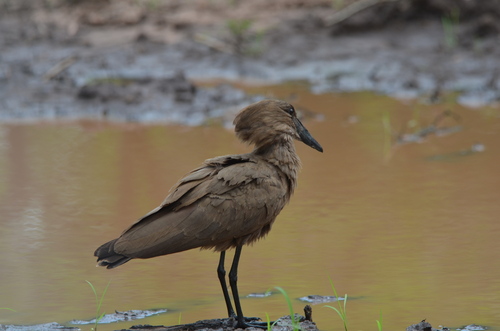 Hamerkop
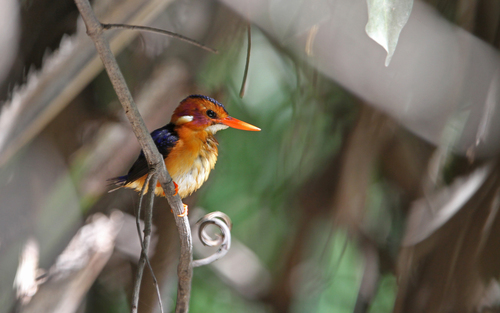 African Pygmy Kingfisher
In breve
Il modo più affidabile per separare Hamerkop da African Pygmy Kingfisher è attraverso le dimensioni e la struttura complessive: Hamerkop è un uccello acquatico di medie dimensioni, di colore marrone opaco, con una testa a forma di martello distintiva e un becco lungo, mentre African Pygmy Kingfisher è un uccello boschivo minuscolo e vivacemente colorato con un becco corto e dritto. In volo o posato, la corporatura massiccia di Hamerkop, le ali larghe e il passo irregolare contrastano nettamente con le proporzioni compatte e delicate del martin pescatore e il suo volo rapido e diretto. Le piume giovanili non sono una fonte di confusione qui, poiché entrambe le specie assomigliano agli adulti, ma le parti superiori blu del martin pescatore e le parti inferiori ruggine non sono mai eguagliate da Hamerkop. L'habitat è anche un forte indizio: Hamerkop è sempre vicino all'acqua, mentre African Pygmy Kingfisher preferisce aree boschive lontane da zone umide aperte.
Consigli di identificazione
- La dimensione è il segno più decisivo: Hamerkop è oltre quattro volte la lunghezza e molto più pesante di African Pygmy Kingfisher. Anche a distanza, il martin pescatore apparirà minuscolo e delicato, mentre Hamerkop è robusto e simile a un airone.
- Forma della testa e del becco: Hamerkop ha una testa unica a forma di martello con un becco lungo, spesso, leggermente ricurvo e una cresta sul retro. African Pygmy Kingfisher ha una testa piccola e arrotondata e un becco corto e dritto (arancione negli adulti, nero nei giovanili).
- Colore della piumatura: Hamerkop è di un marrone uniforme con una leggera iridescenza viola e una coda leggermente barrata. African Pygmy Kingfisher è di un blu brillante sopra, ruggine sotto, con una corona blu scura e una macchia bianca sull'orecchio (a volte con una macchia blu sopra negli uccelli del sud).
- Differenze giovanili: I martin pescatori giovanili hanno un becco nero e meno viola sulle copritrici auricolari ma mostrano comunque un forte contrasto blu e ruggine. I giovanili di Hamerkop sono marroni come gli adulti, con un becco marrone che diventa nero alla prima volata. Non c'è sovrapposizione nella piumatura a nessuna età.
- Zampe e piedi: Le zampe di Hamerkop sono lunghe, nere e parzialmente palmati, piumati solo fino alla parte superiore della tibia. Le zampe del martin pescatore sono molto corte e poco appariscenti.
- Stile di volo: Hamerkop vola con ali larghe e arrotondate, a volte planando con il collo disteso o arrotolato. Il volo del martin pescatore è rapido, diretto e basso, con battiti d'ali veloci e senza planare.
- Postura posata: Hamerkop sta in posizione eretta, spesso in acqua, con un passo irregolare e ondeggiante. Il martin pescatore si posa orizzontalmente sui rami nel bosco, raramente a terra o in acqua.
- Contesto dell'habitat: Hamerkop è sempre vicino all'acqua: laghi, fiumi, stagni, zone umide. African Pygmy Kingfisher si trova in boschi, ai margini delle foreste o in cespugli, spesso lontano dall'acqua.
- Comportamento alimentare: Hamerkop caccia camminando, sondando il fango o muovendo i piedi in acqua. Il martin pescatore cattura insetti lanciandosi da un posatoio, mai camminando.
- Forma della coda e delle ali: Hamerkop ha una coda corta e leggermente barrata e ali larghe; il martin pescatore ha una coda corta ma ali molto più strette e appuntite rispetto alla sua dimensione.
- Vocalizzazioni: I richiami di Hamerkop sono acuti, striduli o tintinnanti, spesso in gruppi sociali. Il martin pescatore emette un 'tsip-tsip' acuto in volo.
- Comportamento sociale: Hamerkop può essere visto da solo o in piccoli gruppi, a volte emettendo richiami sociali. Il martin pescatore è solitamente solitario o in coppie.
- Contesto di confusione: Se vedi un piccolo uccello blu e ruggine nel bosco, non è mai un Hamerkop. Se vedi un uccello marrone di medie dimensioni che si muove in acqua, non è mai un African Pygmy Kingfisher.
- Sessi simili: Entrambe le specie mostrano poco o nessun dimorfismo sessuale; non fare affidamento sul sesso per separarli.
- Nessuna confusione stagionale: Entrambe le specie mantengono la loro piumatura di base tutto l'anno; nessuna muta stagionale o piumaggio di eclissi causa confusione.
Taglia
Hamerkop è di gran lunga più grande, con un'altezza di circa 56 cm e un peso di circa 470 g, rispetto alla lunghezza di soli 12 cm e al peso di 14,6 g di African Pygmy Kingfisher [wikipedia][wikidata]. La differenza è così estrema che anche a distanza o in scarsa illuminazione, il martin pescatore appare delle dimensioni di un passero, mentre Hamerkop è paragonabile a un piccolo airone o garzetta. Anche la dimensione del becco riflette questo: il becco di Hamerkop è lungo (80–85 mm), spesso e leggermente ricurvo, mentre quello del martin pescatore è corto e dritto. Anche i pulcini di Hamerkop sono molto più grandi dei martin pescatori adulti.
Piumaggio
Non ci sono schemi di volo o di ali specifici per età confusi tra questi due: sia i giovanili che gli adulti sono facilmente separabili per colore e struttura. Hamerkop è di un marrone uniforme con una leggera iridescenza viola sulla schiena e una coda leggermente barrata, privo di colori brillanti o contrastanti. Le sue zampe sono nere e piumate solo fino alla parte superiore della tibia. African Pygmy Kingfisher, al contrario, è straordinariamente colorato: adulti e giovanili hanno parti inferiori ruggine, una schiena e una coda blu, e una corona blu scura. I giovanili hanno un becco nero (non arancione) e meno viola sulle copritrici auricolari, ma mostrano comunque un forte contrasto blu/ruggine. Non esiste uno stadio in cui un martin pescatore appare completamente marrone o in cui un Hamerkop mostra piumaggio blu o ruggine.
Comportamento
Il comportamento di Hamerkop è tipico di un wader: cammina o si muove in acqua bassa con un passo irregolare e rapido, spesso sondando il fango o muovendo i piedi per spaventare le prede. Può anche planare con ali larghe e arrotondate e un collo disteso o arrotolato, e a volte si nutre in volo afferrando prede dalla superficie dell'acqua. African Pygmy Kingfisher si comporta come un tipico piccolo martin pescatore: si posa silenziosamente nel bosco, poi compie voli rapidi e diretti per catturare insetti. Non viene visto camminare o muoversi in acqua, e il suo volo è veloce e diretto, non planante o scivoloso.
Habitat
Hamerkop è sempre associato all'acqua: si trova in zone umide, lungo i laghi, le rive dei fiumi, le foci, e persino in stagni per pesci o coste rocciose [wikipedia]. Non si trova mai in boschi asciutti lontano dall'acqua. African Pygmy Kingfisher, d'altra parte, è un uccello di boschi e margini di foresta, spesso lontano dall'acqua aperta. Vedere un piccolo uccello blu e ruggine in un bosco fitto o in un cespuglio è un forte indicatore di un martin pescatore, mentre qualsiasi uccello marrone di medie dimensioni che si muove in acqua bassa è quasi certamente un Hamerkop.
Voce
Hamerkop è per lo più silenzioso quando è solo, ma in gruppo emette una varietà di stridi, tintinni e un distintivo richiamo 'yip-purr'. Il suo richiamo di volo solitario è un acuto 'nyip' o 'kek.' Il richiamo di African Pygmy Kingfisher è un 'tsip-tsip' acuto, simile a un insetto, solitamente emesso in volo. Il richiamo del martin pescatore è molto più alto e delicato, mentre quelli di Hamerkop sono più grezzi e sociali.
Hamerkop · African Pygmy Kingfisher · I miei uccelli difficili