

Avemartillo vs Martín Pigmeo Africano
Scopus umbretta frente a Ispidina picta
Juega un quiz con Avemartillo y Martín Pigmeo Africano
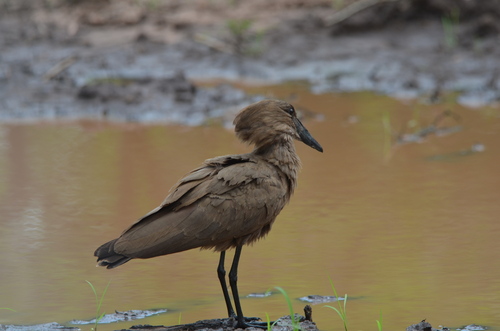 Avemartillo
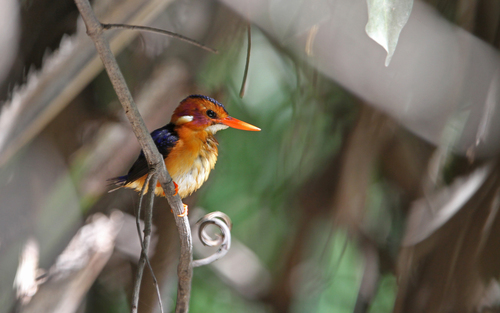 Martín Pigmeo Africano
En breve
La forma más confiable de separar el Avemartillo del Martín Pigmeo Africano es por tamaño y estructura general: el Avemartillo es un ave acuática de tamaño mediano, de color marrón apagado, con una cabeza distintiva en forma de martillo y un pico largo, mientras que el Martín Pigmeo Africano es un pequeño pájaro del bosque, vívidamente coloreado, con un pico corto y recto. En vuelo o posado, la construcción robusta del Avemartillo, sus alas anchas y su andar brusco contrastan marcadamente con las proporciones compactas y delicadas del martinete y su vuelo rápido y directo. Las plumajes juveniles no son una fuente de confusión aquí, ya que ambas especies se asemejan a los adultos, pero las partes superiores azules y las partes inferiores rufo del martinete nunca son igualadas por el Avemartillo. El hábitat también es una pista fuerte: el Avemartillo siempre está cerca del agua, mientras que el Martín Pigmeo Africano prefiere áreas boscosas alejadas de humedales abiertos.
Consejos de identificación
- El tamaño es la marca más decisiva: El Avemartillo es más de cuatro veces la longitud y mucho más pesado que el Martín Pigmeo Africano. Incluso a distancia, el martinete parecerá pequeño y delicado, mientras que el Avemartillo es robusto y similar a una garza.
- Forma de la cabeza y el pico: El Avemartillo tiene una cabeza única en forma de martillo con un pico largo, grueso y ligeramente curvado, y una cresta en la parte posterior. El Martín Pigmeo Africano tiene una cabeza pequeña y redondeada y un pico corto y recto (naranja en adultos, negro en juveniles).
- Color del plumaje: El Avemartillo es de color marrón uniforme con un leve iridiscente púrpura y una cola ligeramente barrada. El Martín Pigmeo Africano es de un brillante azul por encima, rufo por debajo, con una corona azul oscura y una mancha blanca en la oreja (a veces con un punto azul arriba en los pájaros del sur).
- Diferencias juveniles: Los martinetes juveniles tienen un pico negro y menos violeta en las coberturas de la oreja, pero aún muestran un fuerte contraste azul y rufo. Los juveniles de Avemartillo son marrones como los adultos, con un pico marrón que se vuelve negro al volar. No hay superposición en el plumaje a ninguna edad.
- Piernas y pies: Las piernas del Avemartillo son largas, negras y parcialmente palmeadas, con plumas solo hasta la parte superior de la tibia. Las piernas del martinete son muy cortas e inconspicuas.
- Estilo de vuelo: El Avemartillo vuela con alas anchas y redondeadas, a veces planeando con el cuello estirado o enrollado. El vuelo del martinete es rápido, directo y bajo, con batidos de alas rápidos y sin planeo.
- Postura posada: El Avemartillo se mantiene erguido, a menudo en el agua, con un andar brusco y oscilante. El martinete se posa horizontalmente en ramas en el bosque, rara vez en el suelo o en el agua.
- Contexto del hábitat: El Avemartillo siempre está cerca del agua: lagos, ríos, estanques, humedales. El Martín Pigmeo Africano se encuentra en bosques, bordes de bosques o arbustos, a menudo lejos del agua.
- Comportamiento alimenticio: El Avemartillo caza caminando, sondeando el barro o moviendo los pies en el agua. El martinete atrapa insectos saltando desde un posadero, nunca caminando.
- Forma de la cola y las alas: El Avemartillo tiene una cola corta y ligeramente barrada y alas anchas; el martinete tiene una cola corta pero alas mucho más estrechas y puntiagudas en relación a su tamaño.
- Vocalizaciones: Los llamados del Avemartillo son agudos, cackling o rattling, a menudo en grupos sociales. El martinete emite un 'tsip-tsip' agudo, similar a un insecto, en vuelo.
- Comportamiento social: El Avemartillo puede verse solo o en pequeños grupos, a veces emitiendo llamados sociales. El martinete es generalmente solitario o en parejas.
- Contexto de confusión: Si ves un pequeño pájaro azul y rufo en el bosque, nunca es un Avemartillo. Si ves un pájaro marrón de tamaño mediano caminando en el agua, nunca es un Martín Pigmeo Africano.
- Sexos similares: Ambas especies muestran poco o ningún dimorfismo sexual; no confíes en el sexo para separarlos.
- Sin confusión estacional: Ambas especies mantienen su plumaje básico durante todo el año; ninguna muda estacional o plumaje de eclipse causa confusión.
Tamaño
El Avemartillo es mucho más grande, midiendo aproximadamente 56 cm de altura y pesando alrededor de 470 g, en comparación con la pequeña longitud de 12 cm y el peso de 14.6 g del Martín Pigmeo Africano [wikipedia][wikidata]. La diferencia es tan extrema que incluso a distancia o con poca luz, el martinete parece del tamaño de un gorrión, mientras que el Avemartillo es comparable a una pequeña garza o garceta. El tamaño del pico también refleja esto: el pico del Avemartillo es largo (80–85 mm), grueso y ligeramente curvado, mientras que el del martinete es corto y recto. Incluso los polluelos de Avemartillo son mucho más grandes que los martinetes adultos.
Plumaje
No hay patrones de alas o vuelo específicos de edad confusos entre estos dos: tanto los juveniles como los adultos se separan fácilmente por color y estructura. El Avemartillo es de un marrón apagado uniforme con un leve iridiscente púrpura en la espalda y una cola ligeramente barrada, careciendo de colores brillantes o contrastantes. Sus piernas son negras y solo tienen plumas hasta la parte superior de la tibia. El Martín Pigmeo Africano, en contraste, es strikingly colorido: los adultos y juveniles tienen partes inferiores rufas, una espalda y cola azules, y una corona azul oscura. Los juveniles tienen un pico negro (no naranja) y menos violeta en las coberturas de la oreja, pero aún muestran el fuerte contraste azul/rufo. No hay etapa en la que un martinete aparezca completamente marrón o donde un Avemartillo muestre plumaje azul o rufo.
Comportamiento
El comportamiento del Avemartillo es típico de un zancudo: camina o se adentra en aguas poco profundas con un andar brusco y rápido, a menudo sondeando el barro o moviendo sus pies para asustar a la presa. También puede planear con alas anchas y redondeadas y un cuello estirado o enrollado, y a veces se alimenta en vuelo al atrapar presas de la superficie del agua. El Martín Pigmeo Africano se comporta como un pequeño martinete típico: se posa en silencio en el bosque, luego realiza vuelos rápidos y directos para atrapar insectos. No se le ve caminando o caminando en el agua, y su vuelo es rápido y recto, no planeando o deslizándose.
Hábitat
El Avemartillo siempre está asociado con el agua: se encuentra en humedales, orillas de lagos, márgenes de ríos, estuarios e incluso estanques de peces o costas rocosas [wikipedia]. Nunca se encuentra en bosques secos alejados del agua. El Martín Pigmeo Africano, por otro lado, es un pájaro de bosques y bordes de bosques, a menudo lejos del agua abierta. Ver un pequeño pájaro azul y rufo en un denso bosque o arbusto es un fuerte indicativo de martinete, mientras que cualquier pájaro marrón de tamaño mediano acechando en aguas poco profundas es casi con seguridad un Avemartillo.
Voz
El Avemartillo es mayormente silencioso cuando está solo, pero en grupos emite una variedad de cackles, rattles y un distintivo llamado 'yip-purr'. Su llamado de vuelo en solitario es un agudo 'nyip' o 'kek.' El llamado del Martín Pigmeo Africano es un 'tsip-tsip' agudo, similar a un insecto, que generalmente se emite en vuelo. El llamado del martinete es mucho más alto y delicado, mientras que los del Avemartillo son más ásperos y sociales.