

Motmot

ヤマゲラ 対 ヨーロッパアオゲラ

Picus canus 対 Picus viridis

ヤマゲラとヨーロッパアオゲラのクイズ
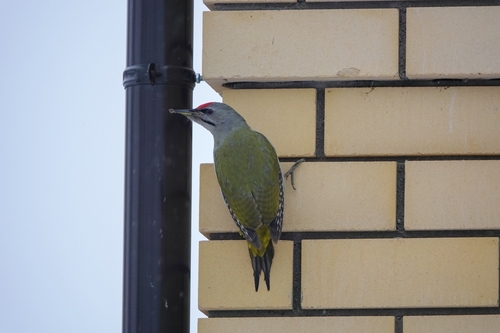
ヤマゲラ (Picus canus) ヤマゲラ
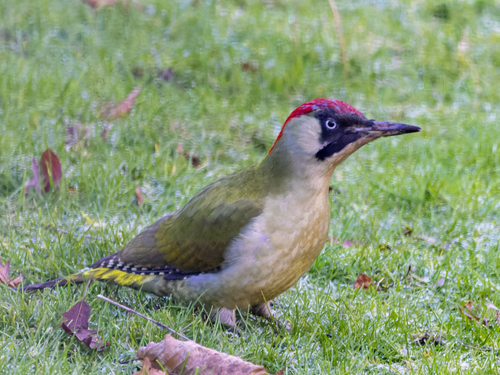
ヨーロッパアオゲラ (Picus viridis) ヨーロッパアオゲラ

メディア

読み込み中…

要点

ヤマゲラとヨーロッパアオゲラを区別する最も信頼できるフィールドマークは、頭部と腹部の色です:Grey-headedは淡い灰色の頭と胸を示し、Green Woodpeckerは黄緑色の腹部と明るい赤い冠と後頭部を持っています。すべての年齢において、Green Woodpeckerは明らかに大きくてがっしりしており、首が長く、くちばしが重いですが、これはフィールドでは微妙です。両種は上面が緑色ですが、Green Woodpeckerは黄色い尾羽と、目の周りと鼻孔を通る大胆な黒い「マスク」を持っており、Grey-headedのより控えめな顔とは異なります。幼鳥のGreen Woodpeckerは、下部が heavily streaked and spotted で、混乱を引き起こす可能性がありますが、全体的な構造と顔の模様は独特です。鳴き声は似ていますが、Grey-headedの歌はよりメロディックで、Greenの大きくて笑うような「ヤッフル」よりも爆発的ではありません。

識別のコツ

  1. 頭部と腹部の色(すべての年齢): ヤマゲラは淡い灰色の頭と胸を持ち、Green Woodpeckerは黄緑色の腹部と明るい赤い冠と後頭部を持っています。これは良い光の中で最も信頼できるフィールドマークです。
  2. 顔のマスク(すべての年齢): Green Woodpeckerは鼻孔を通り目の周りに大胆な黒いマスクを持ち、両性で非常に目立ちます。Grey-headedは鼻孔を横切る目立たない黒い線と狭い黒い口ひげを持っています。
  3. 口ひげのストライプ(成鳥): Green Woodpeckerでは、オスは赤い中心を持つ黒い口ひげを持ち、メスは完全に黒いです。Grey-headedでは、口ひげは常に狭く黒く、オスは赤い前冠も示します。
  4. 冠と後頭部(成鳥): Grey-headedのオスは赤い前冠を持ち(後頭部には及ばない)、メスは冠に赤がありません。Green Woodpeckerは両性で明るい赤い冠と後頭部を持っています。
  5. 幼鳥の羽毛: 幼鳥のGreen Woodpeckerは、下部と上部が heavily streaked and spotted で、暗い口ひげを持っています(若いオスは夏の中頃に赤い羽毛が見られることがあります)。幼鳥のGrey-headedはストリーキーまたはスポッティーとは記述されておらず、ストリーキーな幼鳥はほぼ常にGreen Woodpeckerです。
  6. 尾羽の色(すべての年齢): Green Woodpeckerは黄色い尾羽を持ち、飛んでいるときや止まっているときに見えることがあります。Grey-headedの上面はより均一なオリーブグリーンで、明確な黄色い尾羽がありません。
  7. サイズと構造: Green Woodpeckerは大きくてがっしりしており、首が長く、くちばしが重いです。Grey-headedは小さく、スリムで、少し丸い頭を持っています。これは両者が一緒に見られない限り微妙です。
  8. くちばしと首: Green Woodpeckerのくちばしは重く、首が長く、より頑丈な外観を与えます。Grey-headedのくちばしはスリムで、首は短いです。
  9. 飛行パターン: 両者は波状の飛行を持っていますが、Green Woodpeckerの大きなサイズと黄色い尾羽は飛行中に見えることがあります。
  10. 声: Green Woodpeckerの鳴き声は大きく、爆発的な「ヤッフル」であり、Grey-headedの歌はよりメロディックで、騒々しくありません。鳴き声は混乱を引き起こす可能性がありますが、全体的なトーンとリズムは異なります。
  11. 生息地と文脈: Green Woodpeckerはヨーロッパでより一般的で、地面で餌を探していることが多いです。両種は木の穴に巣を作り、似たような生息地を使用するため、文脈は常に診断的ではありません。
  12. 性差: 両種とも、オスは頭部や口ひげにより多くの赤を持っていますが、パターンは異なります:Green Woodpeckerのオスは赤い中心の口ひげを持ち、Grey-headedのオスは赤い前冠を持っています。
  13. 亜種の変異: 一部のGrey-headedの亜種(特にアジアのもの)は黒い後頭部と暗い緑の翼を持っていますが、ヨーロッパでは典型的な形態は上記の通りです。Green Woodpeckerはその範囲全体でより一貫していますが、イベリア半島では異なる場合があります(ここではカバーされていません)。
  14. ハイブリッドの注意: これらの種の間の稀なハイブリッドは中間的な特徴を示すことがありますが、これは例外的で、通常はGrey-headedにより近いです。
  15. 落とし穴: 遠くにいるか、見えにくい鳥は、サイズと緑色の上面が似ているために混乱することがあります。正確な識別のためには、頭部と腹部の色、顔のマスク、尾羽の色に焦点を当てることが最良のチャンスです。

大きさ

ヨーロッパアオゲラはヤマゲラよりも明らかに大きく、重いです。平均的な成鳥の質量は193gで、Grey-headedははるかに軽い体型です(ノートには正確な質量は記載されていませんが、小さくて軽いと説明されています)。Green Woodpeckerは長さ30〜36cm、翼幅45〜51cmで、Grey-headedは長さ25〜26cm、翼幅38〜40cmです。フィールドでは、このサイズの違いは微妙で、両種が一緒に見られない限り判断が難しいですが、Green Woodpeckerはしばしばよりがっしりしており、首が長く、くちばしが重いように見えます。

羽色

行動

両種は内気で、視覚よりも声で検出されることが多いです。Green Woodpeckerは地面でアリを食べることが多く、他のキツツキと比べて木を叩くことは少ないです。ヤマゲラの行動は詳細には記述されていませんが、一般的に elusive で、見られることよりも聞かれることが多いです。飛行中、Green Woodpeckerは数回の羽ばたきの後に滑空する波状のパターンを示し、これは両種に典型的です。

生息環境

両種はヨーロッパとアジアの森林生息地に見られ、いくつかの重複があります。Green Woodpeckerはヨーロッパでより広く、一般的です。一方、ヤマゲラは中央および東アジアに広がるより広い範囲を持っています。ノートには強い生息地の分離は記載されていませんが、Green Woodpeckerはヨーロッパでより一般的に見られると説明されています。両種は木の穴に巣を作り、似たような種類の木を使用します。

声

鳴き声は似ており、混乱を引き起こす可能性があります。Green Woodpeckerは大きくて笑うような「ヤッフル」(kyü-kyü-kyück)で知られ、爆発的で遠くまで届きます。その歌は10〜18の「klü」音の連続で、速くなり、音程が下がります。ヤマゲラの領土の歌はよりメロディックでクリーンで、10〜15の音が音程を下げて遅くなり、しばしばメランコリックまたは「死にかけている」ように聞こえます。Grey-headedのメスの歌は静かで、メロディックではなく、よりかすれた音です。両種は鋭い単音の鳴き声を出しますが、Green Woodpeckerのものは一般的に大きくて騒々しいです。

より良い説明を送る

比較と同じ項目を使ってください。文章はすぐに公開されます。

The most reliable field mark to separate Grey-headed Woodpecker from Eurasian Green Woodpecker is the color of the head and underparts: Grey-headed shows a pale grey head and breast, while Green Woodpecker has a yellowish-green underbody and a bright red crown and nape. In all ages, Green Woodpecker is distinctly larger and bulkier, with a longer neck and heavier bill, but this is subtle in the field. Both species are green above, but Green Woodpecker has a yellow rump and a bold black 'mask' through the lores and around the eye, unlike the more subdued face of Grey-headed. Juvenile Green Woodpeckers are heavily streaked and spotted below, which can cause confusion, but their overall structure and facial pattern remain distinctive. Calls are similar, but the Grey-headed's song is more melodic and less explosive than the Green's loud, laughing 'yaffle.'

  1. Head and underparts color (all ages): Grey-headed Woodpecker has a pale grey head and breast, while Green Woodpecker has a yellowish-green underbody and a bright red crown and nape. This is the most reliable field mark in good light.
  2. Facial mask (all ages): Green Woodpecker has a bold black mask through the lores and around the eye, very prominent in both sexes. Grey-headed has a much less conspicuous black line across the lores and a narrower black moustache.
  3. Moustache stripe (adults): In Green Woodpecker, the male has a black moustache with a red centre, while the female's is solid black. In Grey-headed, the moustache is always narrow and black, with the male also showing a red forecrown.
  4. Crown and nape (adults): Grey-headed male has a red forecrown (not extending to the nape); female lacks red on the crown. Green Woodpecker has a bright red crown and nape in both sexes.
  5. Juvenile plumage: Juvenile Green Woodpecker is heavily streaked and spotted below and above, with a dark moustache (some red in young males by mid-summer). Juvenile Grey-headed is not described as streaky or spotty, so a streaked juvenile is almost always Green Woodpecker.
  6. Rump color (all ages): Green Woodpecker has a yellow rump, which can be visible in flight or when perched. Grey-headed's upperparts are more uniformly olive green, lacking a distinct yellow rump.
  7. Size and structure: Green Woodpecker is larger and bulkier, with a longer neck and heavier bill. Grey-headed is smaller, slimmer, and has a slightly rounder head. This is subtle unless both are seen together.
  8. Bill and neck: Green Woodpecker's bill is heavier and its neck longer, giving a more robust appearance. Grey-headed's bill is slimmer and neck shorter.
  9. Flight pattern: Both have undulating flight, but Green Woodpecker's larger size and yellow rump may be visible in flight.
  10. Voice: Green Woodpecker's call is a loud, explosive 'yaffle,' while Grey-headed's song is more melodic and less raucous. Calls can be confusing, but the overall tone and rhythm differ.
  11. Habitat and context: Green Woodpecker is more common in Europe and often found feeding on the ground. Both species nest in tree holes and use similar habitats, so context is not always diagnostic.
  12. Sex differences: In both species, males have more red on the head or moustache, but the pattern differs: Green Woodpecker male has a red-centred moustache, Grey-headed male has a red forecrown.
  13. Subspecies variation: Some Grey-headed subspecies (notably in Asia) have a black nape and darker green wings, but in Europe, the typical form is as described above. Green Woodpecker is more consistent across its range, except in the Iberian Peninsula (not covered here).
  14. Hybrid caution: Rare hybrids between these species can show intermediate features, but these are exceptional and usually resemble Grey-headed more closely.
  15. Pitfalls: Distant or poorly seen birds can be confused due to similar size and green upperparts. Focus on head and underparts color, facial mask, and rump color for the best chance of correct identification.

Eurasian Green Woodpecker is noticeably larger and heavier than Grey-headed Woodpecker, with an average adult mass of 193 g compared to Grey-headed's much lighter build (no precise mass in the notes, but described as smaller and lighter). Green Woodpecker measures 30–36 cm in length with a 45–51 cm wingspan, while Grey-headed is 25–26 cm long with a 38–40 cm wingspan. In the field, this size difference is subtle and can be hard to judge unless both species are seen together, but Green Woodpecker often appears bulkier, with a longer neck and heavier bill.

  • Juveniles: Juvenile Green Woodpecker is heavily streaked and spotted all over, including the underparts, and the moustache is initially dark (with some red feathers in young males by mid-summer). Juvenile Grey-headed Woodpecker is not described in detail, but does not have the same level of streaking or spotting. This makes a streaky, spotty juvenile almost always a Green Woodpecker.
  • Adults (male): Grey-headed Woodpecker male has a pale grey head with a red forecrown (not extending to the nape), a black line across the lores, and a narrow black moustache. Green Woodpecker male has a bright red crown and nape, a black facial mask (lores and around the white eye), and a black moustache with a red centre. Both are green above, but Green Woodpecker has a yellow rump and yellowish-green underparts, while Grey-headed is more uniform olive above and pale grey below.
  • Adults (female): Grey-headed female lacks the red forecrown and has fine black streaks on the crown; Green Woodpecker female lacks the red in the moustache (solid black), but otherwise resembles the male. The facial mask is always bolder in Green Woodpecker.
  • Flight: No distinctive upperwing pattern is described for either species in flight, but Green Woodpecker's yellow rump and larger size can be visible in good light.

Both species are shy and often detected by voice rather than by sight. Green Woodpecker spends much of its time feeding on ants on the ground and is less likely to drum on trees compared to other woodpeckers. Grey-headed Woodpecker's behavior is not described in detail, but it is generally similar in being elusive and more often heard than seen. In flight, Green Woodpecker shows an undulating pattern with several wingbeats followed by a glide, which is typical for both species.

Both species can be found in wooded habitats across Europe and into Asia, with some overlap. Green Woodpecker is more widespread and common in Europe, while Grey-headed Woodpecker has a broader range extending into central and eastern Asia. There is no strong habitat separation in the notes, but Green Woodpecker is described as more commonly found in Europe. Both species nest in tree holes and use similar types of trees.

Calls are similar and can be confusing. Green Woodpecker is known for its loud, laughing 'yaffle' (kyü-kyü-kyück), which is explosive and far-carrying. Its song is a series of 10–18 'klü' notes, speeding up and dropping in pitch. Grey-headed Woodpecker's territorial song is more melodic and cleaner, with a series of 10–15 notes that decline in pitch and slow down, often sounding melancholic or 'dying.' Female Grey-headed's song is quieter, less melodious, and more croaky. Both species give sharp, single calls, but Green Woodpecker's are generally louder and more raucous.

変更を破棄しますか?

保存していない編集があります。今離れると失われます。

ヤマゲラ · ヨーロッパアオゲラ · 苦手な鳥