

Picchio cenerino vs Picchio verde
Picus canus contro Picus viridis
Fai un quiz con Picchio cenerino e Picchio verde
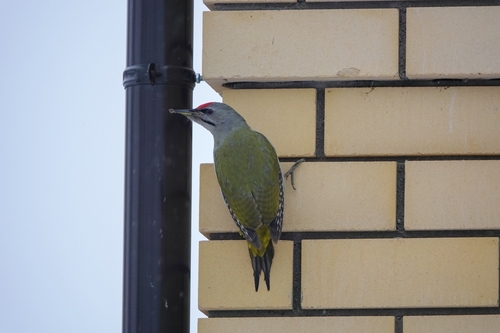 Picchio cenerino
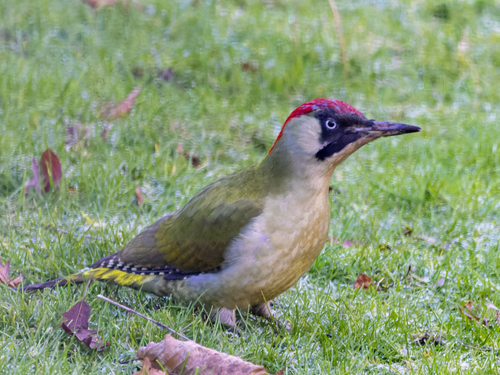 Picchio verde
In breve
Il segno distintivo più affidabile per separare il Picchio cenerino dal Picchio verde è il colore della testa e delle parti inferiori: il Picchio cenerino mostra una testa e un petto grigio chiaro, mentre il Picchio verde ha un corpo inferiore giallo-verde e una corona e nuca rosso brillante. In tutte le età, il Picchio verde è nettamente più grande e robusto, con un collo più lungo e un becco più pesante, ma questo è sottile sul campo. Entrambe le specie sono verdi sopra, ma il Picchio verde ha un sopracciglio giallo e una 'maschera' nera audace attraverso le lore e attorno all'occhio, a differenza del volto più sobrio del Picchio cenerino. I Picchi verdi giovani sono fortemente striati e macchiati sotto, il che può causare confusione, ma la loro struttura generale e il modello facciale rimangono distintivi. I richiami sono simili, ma il canto del Picchio cenerino è più melodico e meno esplosivo rispetto al forte e ridicolo 'yaffle' del Picchio verde.
Consigli di identificazione
- Colore della testa e delle parti inferiori (tutte le età): Il Picchio cenerino ha una testa e un petto grigio chiaro, mentre il Picchio verde ha un corpo inferiore giallo-verde e una corona e nuca rosso brillante. Questo è il segno distintivo più affidabile in buona luce.
- Maschera facciale (tutte le età): Il Picchio verde ha una maschera nera audace attraverso le lore e attorno all'occhio, molto prominente in entrambi i sessi. Il Picchio cenerino ha una linea nera molto meno evidente attraverso le lore e un baffo nero più stretto.
- Striscia del baffo (adulti): Nel Picchio verde, il maschio ha un baffo nero con un centro rosso, mentre quello della femmina è completamente nero. Nel Picchio cenerino, il baffo è sempre stretto e nero, con il maschio che mostra anche una corona anteriore rossa.
- Corona e nuca (adulti): Il maschio del Picchio cenerino ha una corona anteriore rossa (che non si estende alla nuca); la femmina non ha rosso sulla corona. Il Picchio verde ha una corona e nuca rosso brillante in entrambi i sessi.
- Piumaggio giovanile: Il Picchio verde giovane è fortemente striato e macchiato sotto e sopra, con un baffo scuro (alcuni rossi nei giovani maschi a metà estate). Il Picchio cenerino giovane non è descritto come striato o macchiato, quindi un giovane striato è quasi sempre un Picchio verde.
- Colore del sopracciglio (tutte le età): Il Picchio verde ha un sopracciglio giallo, che può essere visibile in volo o quando è posato. Le parti superiori del Picchio cenerino sono più uniformemente verdi oliva, senza un sopracciglio giallo distintivo.
- Dimensioni e struttura: Il Picchio verde è più grande e robusto, con un collo più lungo e un becco più pesante. Il Picchio cenerino è più piccolo, più snello e ha una testa leggermente più rotonda. Questo è sottile a meno che entrambi non siano visti insieme.
- Becco e collo: Il becco del Picchio verde è più pesante e il suo collo è più lungo, dando un aspetto più robusto. Il becco del Picchio cenerino è più snello e il collo più corto.
- Schema di volo: Entrambi hanno un volo ondulato, ma le dimensioni maggiori e il sopracciglio giallo del Picchio verde possono essere visibili in volo.
- Voce: Il richiamo del Picchio verde è un forte e esplosivo 'yaffle', mentre il canto del Picchio cenerino è più melodico e meno rauco. I richiami possono essere confusi, ma il tono e il ritmo complessivi differiscono.
- Habitat e contesto: Il Picchio verde è più comune in Europa e spesso si trova a nutrirsi a terra. Entrambe le specie nidificano in cavità degli alberi e utilizzano habitat simili, quindi il contesto non è sempre diagnostico.
- Differenze sessuali: In entrambe le specie, i maschi hanno più rosso sulla testa o sul baffo, ma il modello differisce: il maschio del Picchio verde ha un baffo con centro rosso, il maschio del Picchio cenerino ha una corona anteriore rossa.
- Variazione delle sottospecie: Alcune sottospecie di Picchio cenerino (in particolare in Asia) hanno una nuca nera e ali verdi più scure, ma in Europa, la forma tipica è come descritta sopra. Il Picchio verde è più consistente in tutto il suo areale, tranne che nella Penisola Iberica (non trattata qui).
- Cautela sugli ibridi: Rari ibridi tra queste specie possono mostrare caratteristiche intermedie, ma questi sono eccezionali e di solito somigliano più da vicino al Picchio cenerino.
- Trappole: Uccelli lontani o visti male possono essere confusi a causa delle dimensioni simili e delle parti superiori verdi. Concentrati sul colore della testa e delle parti inferiori, sulla maschera facciale e sul colore del sopracciglio per avere la migliore possibilità di identificazione corretta.
Taglia
Il Picchio verde è notevolmente più grande e pesante del Picchio cenerino, con una massa media adulta di 193 g rispetto alla costruzione molto più leggera del Picchio cenerino (nessuna massa precisa nelle note, ma descritto come più piccolo e leggero). Il Picchio verde misura 30–36 cm di lunghezza con un'apertura alare di 45–51 cm, mentre il Picchio cenerino è lungo 25–26 cm con un'apertura alare di 38–40 cm. Sul campo, questa differenza di dimensioni è sottile e può essere difficile da giudicare a meno che entrambe le specie non siano viste insieme, ma il Picchio verde appare spesso più robusto, con un collo più lungo e un becco più pesante.
Piumaggio
- Giovani: Il Picchio verde giovane è fortemente striato e macchiato ovunque, comprese le parti inferiori, e il baffo è inizialmente scuro (con alcune piume rosse nei giovani maschi a metà estate). Il Picchio cenerino giovane non è descritto in dettaglio, ma non ha lo stesso livello di striature o macchie. Questo rende un giovane striato e macchiato quasi sempre un Picchio verde.
- Adulti (maschio): Il maschio del Picchio cenerino ha una testa grigio chiaro con una corona anteriore rossa (che non si estende alla nuca), una linea nera attraverso le lore e un baffo nero stretto. Il maschio del Picchio verde ha una corona e nuca rosso brillante, una maschera facciale nera (lore e attorno all'occhio bianco) e un baffo nero con un centro rosso. Entrambi sono verdi sopra, ma il Picchio verde ha un sopracciglio giallo e parti inferiori giallo-verdi, mentre il Picchio cenerino è più uniforme oliva sopra e grigio chiaro sotto.
- Adulti (femmina): La femmina del Picchio cenerino non ha la corona anteriore rossa e ha sottili striature nere sulla corona; la femmina del Picchio verde non ha il rosso nel baffo (completamente nero), ma altrimenti somiglia al maschio. La maschera facciale è sempre più audace nel Picchio verde.
- Volo: Non è descritto alcun schema distintivo dell'ala superiore per entrambe le specie in volo, ma il sopracciglio giallo e le dimensioni maggiori del Picchio verde possono essere visibili in buona luce.
Comportamento
Entrambe le specie sono timide e spesso vengono rilevate dalla voce piuttosto che dalla vista. Il Picchio verde trascorre gran parte del suo tempo a nutrirsi di formiche a terra ed è meno propenso a tamburellare sugli alberi rispetto ad altri picchi. Il comportamento del Picchio cenerino non è descritto in dettaglio, ma è generalmente simile nell'essere elusivo e più spesso udito che visto. In volo, il Picchio verde mostra un modello ondulato con diversi battiti d'ala seguiti da un planare, che è tipico per entrambe le specie.
Habitat
Entrambe le specie possono essere trovate in habitat boschivi in tutta Europa e in Asia, con alcune sovrapposizioni. Il Picchio verde è più diffuso e comune in Europa, mentre il Picchio cenerino ha un'area di distribuzione più ampia che si estende nell'Asia centrale e orientale. Non c'è una forte separazione degli habitat nelle note, ma il Picchio verde è descritto come più comunemente trovato in Europa. Entrambe le specie nidificano in cavità degli alberi e utilizzano tipi simili di alberi.
Voce
I richiami sono simili e possono essere confusi. Il Picchio verde è noto per il suo forte e ridicolo 'yaffle' (kyü-kyü-kyück), che è esplosivo e si sente a distanza. Il suo canto è una serie di 10–18 note 'klü', che accelerano e scendono di tono. Il canto territoriale del Picchio cenerino è più melodico e pulito, con una serie di 10–15 note che declinano di tono e rallentano, spesso suonando malinconico o 'morente'. Il canto della femmina del Picchio cenerino è più silenzioso, meno melodioso e più rauco. Entrambe le specie emettono richiami acuti e singoli, ma quelli del Picchio verde sono generalmente più forti e più rauchi.