

Motmot

ウロコガマグチヨタカ 対 クビワガビチョウ

Batrachostomus stellatus 対 Pterorhinus pectoralis

ウロコガマグチヨタカとクビワガビチョウのクイズ
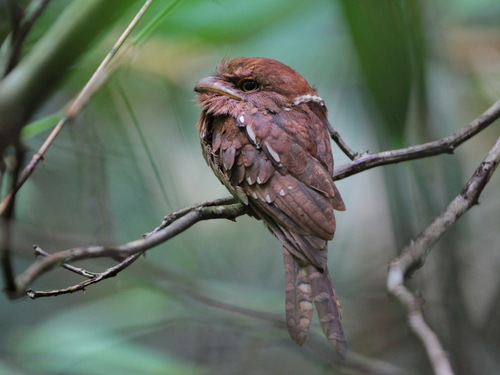
ウロコガマグチヨタカ (Batrachostomus stellatus) ウロコガマグチヨタカ
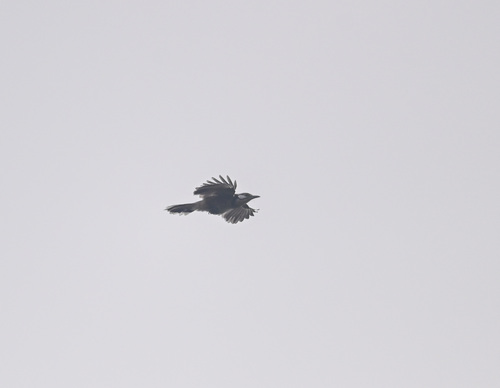
クビワガビチョウ (Pterorhinus pectoralis) クビワガビチョウ

メディア

読み込み中…

要点

ウロコガマグチヨタカとクビワガビチョウの最も信頼できる区別は、全体的な構造と姿勢です:ウロコガマグチヨタカは、幅広く平らなくちばしと暗褐色の保護色を持つ、ずんぐりした夜行性の鳥です。一方、クビワガビチョウは、より直立した、活発な雀類で、細いくちばしと目を引く黒と白の首の模様を持っています。ウロコガマグチヨタカは、白い襟と翼の覆羽に散在する白い斑点を持つ2つの色相(明るいものと暗いもの)を示し、性別は虹彩と脚の色の微妙な違いを除いて似ています。対照的に、クビワガビチョウは黒いネックレスと白い喉を持ち、昼間ははるかに社交的で目立ちます。幼鳥特有の翼や飛行パターンはどちらの種にも記載されていないため、これら2種を区別する際は全体的な構造、姿勢、羽毛の詳細に焦点を当ててください。

識別のコツ

  1. Posture and Structure: ウロコガマグチヨタカは水平に止まり、ずんぐりした平らな頭と幅広いくちばしを持っているように見えます;クビワガビチョウは直立しており、長い体を持ち、典型的な歌鳥のくちばしを持っています。これは、遠くからでも見える重要な構造的違いです。
  2. Plumage Pattern: ウロコガマグチヨタカは暗褐色で、白い襟と翼の覆羽に散在する白い斑点を持っています;クビワガビチョウは黒いネックレス、白い喉、強い顔の模様を持つ大胆な模様です。ネックレスはウロコガマグチヨタカには存在しません。
  3. Color Morphs: ウロコガマグチヨタカは明るいものと暗いものの色相がありますが、どちらも全体的には茶色で、クビワガビチョウの強いコントラストはありません。
  4. Sex Differences: ウロコガマグチヨタカでは、オスとメスは似ていますが、メスは暗い赤褐色で、茶色の虹彩と黄色がかった脚を持っています;オスは黄色の虹彩とピンクがかった脚を持っています。これらの微妙な違いは、クビワガビチョウには存在せず、メモには性差が記載されていません。
  5. Bill Shape: ウロコガマグチヨタカのくちばしは幅広く、平らで、広い—夜に昆虫を捕まえるために適応しています。クビワガビチョウは、歌鳥に典型的な細く尖ったくちばしを持っています。
  6. Behavior: ウロコガマグチヨタカは夜行性で、昼間は動かずに座っていることが多く、壊れた枝のように見えます。クビワガビチョウは昼行性で、活発で、騒がしい群れで移動することがよくあります。
  7. Habitat Use: ウロコガマグチヨタカは、夜や密な覆いから追い出されたとき以外はほとんど見られません;クビワガビチョウは、森林の縁や茂みで昼間によく見られます。
  8. Leg and Iris Color (Frogmouth only): よく見える場合、メスのウロコガマグチヨタカは黄色がかった脚と茶色の虹彩を持っています;オスはピンクがかった脚と黄色の虹彩を持っています。これはクビワガビチョウの特徴ではありません。
  9. Underpart Markings: ウロコガマグチヨタカは下部に卵形の白っぽい斑点を持っています;クビワガビチョウは清潔な白い喉と黒いネックレスを持ち、そのような斑点はありません。
  10. Sociality: ウロコガマグチヨタカは単独またはペアでいます;クビワガビチョウは非常に社交的で、しばしば群れでいます。
  11. Flight: どちらの種にも特定の年齢に特有の翼や飛行パターンは記載されていないため、構造と羽毛に頼ってください。
  12. Voice: メモには記載されていませんが、実際にはクビワガビチョウは非常に声が大きく、ウロコガマグチヨタカは一般的に静かで、夜に低く喉の奥から出るような鳴き声を出します。
  13. Size Impression: クビワガビチョウは、フィールドでコンパクトなウロコガマグチヨタカよりも大きく、より頑丈に見えます。
  14. Context: 夜に見られた場合、特に動かずに座っている場合はウロコガマグチヨタカを疑ってください;昼間に見られ、活発で騒がしい場合はクビワガビチョウを疑ってください。
  15. Potential Pitfall: 照明が悪い場合や短時間の視界では、ウロコガマグチヨタカの白い襟がクビワガビチョウのネックレスと間違えられることがありますが、羽毛や構造の他の部分は明らかに異なります。

大きさ

ウロコガマグチヨタカは中型の鳥で、体長は21〜25 cm、体重は47〜48.5 gです [wikipedia]。クビワガビチョウは一般的により大きく、がっしりしていますが、正確な測定値はメモには記載されていません。フィールドでは、クビワガビチョウは特に群れで見られるとき、長い体とより頑丈に見えます。対照的に、ウロコガマグチヨタカは止まっているときにコンパクトでずんぐりした外観を持っています。

羽色

どちらの種にも年齢特有の翼や飛行パターンは記載されていないため、区別は全体的な羽毛と構造の違いに依存します。ウロコガマグチヨタカは2つの色相(明るいものと暗いもの)で現れ、どちらも主に茶色で、白い襟と翼の覆羽に散在する白い斑点を持っています。下部には白っぽい卵形の斑点が見られます。オスとメスは似ていますが、メスは暗い赤褐色で茶色の虹彩と黄色がかった脚を持ち、オスは黄色の虹彩とピンクがかった脚を持っています。クビワガビチョウは、喉に特徴的な黒と白のネックレスを持ち、白い喉の斑点と一般的により対照的で模様のある外観を持っています。クビワガビチョウはウロコガマグチヨタカの暗褐色で斑点のある羽毛を持たず、代わりに強い顔と首の模様を示します。

行動

ウロコガマグチヨタカは厳密に夜行性で、通常は枝の上で動かずに座っており、カモフラージュに頼っています。昼間の活動的な行動ではほとんど見られません。クビワガビチョウは昼行性で、非常に社交的で、騒がしい群れで移動し、森林の下層や中層で活発に餌を探します。その行動は目立ち、エネルギッシュであり、ウロコガマグチヨタカの秘密主義的で静的な習性とは対照的です。

生息環境

ウロコガマグチヨタカの生息地については、提供されたメモには詳細が記載されていませんが、ウロコガマグチヨタカは通常、夜に昆虫を狩るために止まることができる密で湿った森林に関連しています。クビワガビチョウは、南アジアおよび東南アジア全域の亜熱帯または熱帯の湿った低地および山地の森林に生息し、ハワイにも導入されています。フィールドでは、クビワガビチョウは森林の縁、茂み、または二次成長の中で昼間に遭遇する可能性がはるかに高く、ウロコガマグチヨタカは夜や日中の止まり木から追い出されたとき以外はほとんど見られません。

より良い説明を送る

比較と同じ項目を使ってください。文章はすぐに公開されます。

The most reliable separation between Gould's Frogmouth and Greater Necklaced Laughingthrush is their overall structure and posture: the frogmouth is a squat, nocturnal bird with a broad, flat bill and cryptic brown plumage, while the laughingthrush is a more upright, active passerine with a slimmer bill and a striking black-and-white neck pattern. Gould's Frogmouth shows two color morphs (light and dark), both with a white collar and scattered white spots on the wing coverts, and sexes are similar except for subtle iris and leg color differences. In contrast, the Greater Necklaced Laughingthrush is boldly patterned with a black necklace and white throat, and is much more social and conspicuous by day. Juvenile-specific wing or flight patterns are not described for either species, so focus on overall structure, posture, and plumage details when separating these two.

  1. Posture and Structure: Gould's Frogmouth perches horizontally, appearing squat and flat-headed with a broad, wide bill; the Greater Necklaced Laughingthrush is upright, long-bodied, and has a typical songbird bill. This is a key structural difference visible even at a distance.
  2. Plumage Pattern: Frogmouths are cryptic brown with a white collar and scattered white spots on the wing coverts; laughingthrushes are boldly patterned with a black necklace, white throat, and strong facial markings. The necklace is never present in the frogmouth.
  3. Color Morphs: Gould's Frogmouth comes in light and dark morphs, but both are overall brown and lack the strong contrast of the laughingthrush.
  4. Sex Differences: In frogmouths, males and females are similar, but females are darker reddish-brown with brown irises and yellowish legs; males have yellow irises and pinkish legs. These subtle differences are not present in the laughingthrush, which is not described as sexually dimorphic in the notes.
  5. Bill Shape: The frogmouth's bill is broad, flat, and wide—adapted for catching insects at night. The laughingthrush has a slender, pointed bill typical of a songbird.
  6. Behavior: Frogmouths are nocturnal and sit motionless during the day, often resembling a broken branch. Laughingthrushes are diurnal, active, and often move in noisy flocks.
  7. Habitat Use: Frogmouths are rarely seen except at night or when flushed from dense cover; laughingthrushes are commonly seen in daylight in forest edges and thickets.
  8. Leg and Iris Color (Frogmouth only): If seen well, female frogmouths have yellowish legs and brown irises; males have pinkish legs and yellow irises. This is not a feature of the laughingthrush.
  9. Underpart Markings: Frogmouths have oval, whitish spots on the underparts; laughingthrushes have a clean white throat and a black necklace, with no such spotting.
  10. Sociality: Frogmouths are solitary or in pairs; laughingthrushes are highly social and often in groups.
  11. Flight: No distinctive age-specific wing or flight patterns are described for either species, so rely on structure and plumage.
  12. Voice: Not described in the notes, but in practice, laughingthrushes are very vocal and frogmouths are generally silent or give low, guttural calls at night.
  13. Size Impression: Laughingthrushes appear larger and more robust in the field than the compact frogmouth.
  14. Context: If seen at night, especially sitting motionless, suspect frogmouth; if seen in daylight, active and noisy, suspect laughingthrush.
  15. Potential Pitfall: In poor light or with a brief view, the frogmouth's white collar could be mistaken for the laughingthrush's necklace, but the rest of the plumage and structure will differ markedly.

Gould's Frogmouth is a medium-sized bird, measuring 21–25 cm in length and weighing 47–48.5 g [wikipedia]. The Greater Necklaced Laughingthrush is generally larger and bulkier, though exact measurements are not provided in the notes. In the field, the laughingthrush will appear longer-bodied and more robust, especially when seen in groups or moving through foliage. The frogmouth, by contrast, has a compact, squat appearance when perched.

No age-specific wing or flight patterns are described for either species, so separation relies on overall plumage and structural differences. Gould's Frogmouth appears in two morphs (light and dark), both predominantly brown with a white collar and scattered white spots on the wing coverts. The underparts show whitish, oval-shaped spots. Males and females are similar, but females are darker reddish-brown with brown irises and yellowish legs, while males have yellow irises and pinkish legs. The Greater Necklaced Laughingthrush is much more boldly marked, with a distinctive black-and-white necklace across the throat, a white throat patch, and a generally more contrasting and patterned appearance. The laughingthrush lacks the cryptic, spotty brown plumage of the frogmouth and instead shows strong facial and neck markings.

Gould's Frogmouth is strictly nocturnal and typically sits motionless on branches, relying on camouflage. It is rarely seen in active daylight behavior. The Greater Necklaced Laughingthrush is diurnal, highly social, and often moves in noisy groups, foraging actively in the lower and middle levels of forests. Its behavior is conspicuous and energetic, in stark contrast to the frogmouth's secretive, sedentary habits.

Gould's Frogmouth is not described in detail for habitat in the provided notes, but as a frogmouth, it is typically associated with dense, humid forests where it can roost and hunt insects at night. The Greater Necklaced Laughingthrush inhabits subtropical or tropical moist lowland and montane forests across a broad range in South and Southeast Asia, and has been introduced to Hawaii. In the field, the laughingthrush is much more likely to be encountered in daylight within forest edges, thickets, or secondary growth, while the frogmouth is almost never seen except at night or when flushed from a day roost.

変更を破棄しますか?

保存していない編集があります。今離れると失われます。

ウロコガマグチヨタカ · クビワガビチョウ · 苦手な鳥