

Motmot

キレンジャク 対 ヒレンジャク

Bombycilla garrulus 対 Bombycilla japonica

キレンジャクとヒレンジャクのクイズ
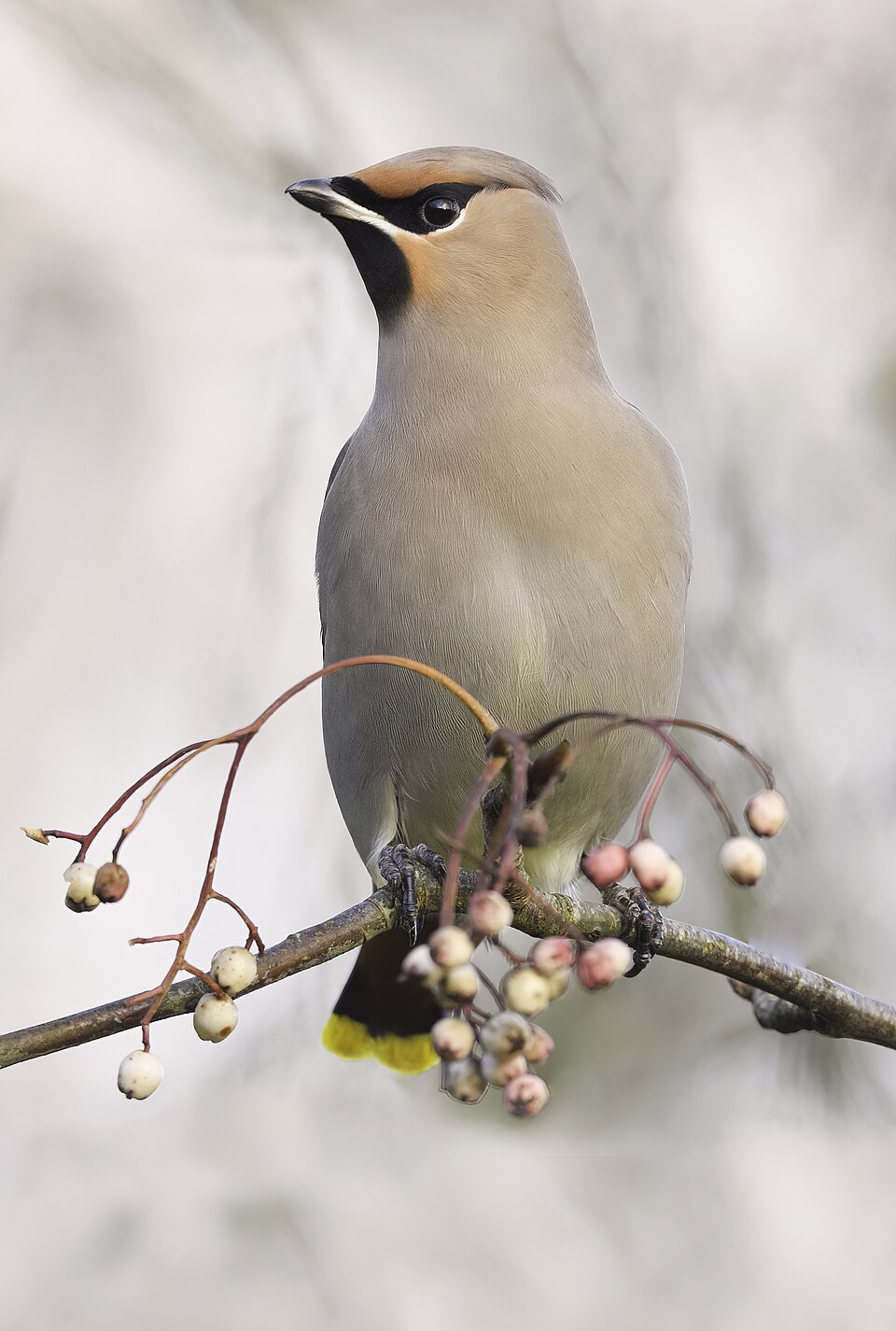
キレンジャク (Bombycilla garrulus) キレンジャク
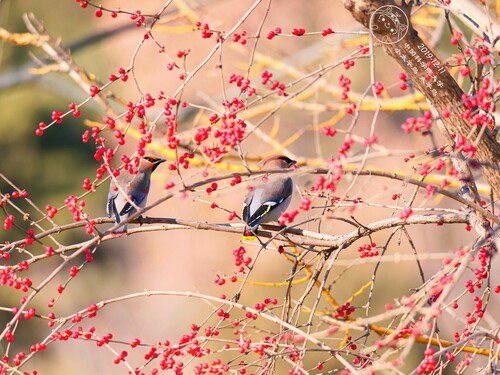
ヒレンジャク (Bombycilla japonica) ヒレンジャク

メディア

読み込み中…

要点

ボヘミアンレンジャクとヒレンジャクを区別する最も信頼できる方法は、尾の先端の色です:ボヘミアンは明るい黄色の尾先を示し、ヒレンジャクは黒い縁取りのある赤い尾先を持っています。飛んでいるときや止まっているとき、ボヘミアンレンジャクの成鳥は大胆な白と黄色の翼の模様と、二次羽に複数の赤い蝋状の先端(両性)を示しますが、ヒレンジャクはより拡散した赤褐色の翼帯と、オスにのみ赤い蝋状の先端を持っています。ボヘミアンはわずかに大きくてがっしりしており、バフグレーのトーンを持っていますが、ヒレンジャクは淡い黄色の腹部中央と錆色の赤い尾羽を持つピンクがかった茶色です。未熟な鳥と雌はより難しいですが、尾に黄色がないことと、ヒレンジャクに赤褐色の翼帯があることが重要です。両種は冬に一緒に群れを成すことがあるため、これらの詳細に注意を払う必要があります。

識別のコツ

  1. 尾先の色は最も早いチェックです: ボヘミアンレンジャクは常に広く明るい黄色の尾先を示します(成鳥と未熟鳥)、一方ヒレンジャクは黒で縁取られた赤い尾先を持っています。これは止まっているときと飛んでいるときの両方で見えます。
  2. 翼の模様(成鳥): ボヘミアンレンジャクの成鳥は、一次羽に大胆な黄色のストライプと閉じた翼に白い「魚のフック」マークを持っています。ヒレンジャクはこれを欠いており、代わりに大きな羽覆いに拡散した赤褐色の帯を探してください。
  3. 赤い蝋状の先端: ボヘミアンレンジャク(両性)は二次羽に複数の赤い蝋状の先端を示します(オスは6〜8、雌は5〜7)、しばしば涙滴形です。ヒレンジャクはオスにのみ赤い先端を示し、これらは少なく目立たず、雌は通常まったく持っていません。
  4. 腹部の色: ボヘミアンは豊かな栗色の下腹部を持ち、ヒレンジャクは淡い黄色の腹部中央を持っています。これは微妙ですが、近くで見ると役立ちます。
  5. 尾羽の覆い: ヒレンジャクは錆色の赤い尾羽の覆いを持ち、他の下部と対照的です;ボヘミアンはこれを持っていません。
  6. 顔の模様: 両者は黒いマスクと喉を持っていますが、ボヘミアンのマスクは広く、喉のパッチはより明確に定義されています(特にオスで)。ヒレンジャクのマスクは狭く、黒はそれほど遠くまで伸びません。
  7. 翼帯: ヒレンジャクのみが大きな羽覆いに拡散した赤褐色の帯を持っています;ボヘミアンはこの特徴を欠いています。
  8. 尾の色: 両者は灰色の尾を持っていますが、これは強い区別要因ではありません。
  9. 幼鳥/未熟な翼の模様: ボヘミアンの初冬の鳥は、一次羽の後縁に白い「ティックマーク」を欠き、一次羽の先端はより淡い(白または非常に淡い黄色)です。ヒレンジャクの未熟鳥はあまり詳細に記述されていませんが、尾に黄色がないことと赤褐色の翼帯があることが手がかりです。
  10. サイズと構造: ボヘミアンは大きくてがっしりしていますが、これは直接比較や混合群でのみ明らかです。
  11. 性差: ヒレンジャクでは、オスのみが二次羽に赤い蝋状の先端を持っています;雌はそれを欠いています。ボヘミアンでは、両性が赤い先端を持っていますが、雌は少なくなります。
  12. 飛行の特徴: 両種は長い翼と短い尾を持ち、速く直接的な飛行をしますが、ボヘミアンはわずかにがっしりして見えることがあります。
  13. 生息地の文脈: 冬の南日本と台湾では、ヒレンジャクの方が可能性が高いですが、両種は一緒に発生することがあり、特にベリーが豊富な地域で見られます。
  14. 混合群: 黄色と赤い尾を持つ鳥が一緒にいるのを見ると、混合群を観察している可能性が高いです;各鳥を注意深くチェックしてください。
  15. 落とし穴: 未熟なボヘミアンレンジャクは黄色が減少し、赤い先端が少なくなることがあり、ヒレンジャクに似ることがありますが、黄色の尾先と赤褐色の翼帯の欠如は信頼できます。赤い先端を欠くヒレンジャクの雌はボヘミアンと混同されるかもしれませんが、尾と翼帯は依然として彼らを区別します。

大きさ

ボヘミアンレンジャクは2種の中で大きく、通常は19〜23 cmの長さで、約55 gの重さです(ただし、一部の情報源ではやや高いことを示唆しています)。ヒレンジャクは15〜18 cmで、54〜64 gと小さく、フィールドでは微妙な違いですが、ボヘミアンは特に混合群ではがっしりしていて尾が長く見えます。両者は尖った冠羽を持ち、似たような比率を持っているため、サイズだけでは診断的ではありません。

羽色

年齢と性別は、これらの種を羽毛で区別するために重要です:

行動

両種は非常に社交的で、大きな群れを形成することが多く、特に冬には混合群で見られます。彼らの飛行は速く直接的で、スターリングを思わせる長い翼と短い尾を持っています。ボヘミアンレンジャクは木や茂みを簡単に登ると説明されていますが、地面では移動がぎこちないです。フィールドで彼らを信頼できるように区別するための重要な行動の違いは特に記載されていません。

生息環境

ボヘミアンレンジャクは北方のパレアールクと北アメリカの森林で繁殖し、針葉樹または混合林を好みます。ヒレンジャクはロシア極東と中国北東部の密な針葉樹林で南方で繁殖します。冬には、両種は東アジアで広く重なり、オープンな森林、農地、公園、ベリーが豊富な庭で見られます。冬の南日本ではヒレンジャクがより多く見られますが、ボヘミアンはより北方に生息していますが、食物が豊富な場所では両者が一緒に発生することがあります。

声

ヒレンジャクは高音のトリルを出しますが、真の歌は欠いています。ボヘミアンレンジャクの声は提供されたメモには記載されていないため、利用可能な情報に基づいて音声は信頼できるフィールドの区別要因ではありません。

より良い説明を送る

比較と同じ項目を使ってください。文章はすぐに公開されます。

The most reliable way to separate Bohemian and Japanese Waxwings is by tail tip color: Bohemian shows a bright yellow tail tip, while Japanese has a red tail tip with a black border. In flight or perched, Bohemian Waxwing adults display bold white and yellow wing markings and multiple red waxy tips on the secondaries (both sexes), whereas Japanese Waxwing has a more diffuse reddish-brown wing bar and red waxy tips only in males. Bohemian is slightly larger and bulkier, with buff-grey tones, while Japanese is pinkish-brown with a pale yellow belly center and rusty-red undertail. Immature and female birds are trickier, but the absence of yellow in the tail and the presence of a reddish wing bar in Japanese are key. Both species can flock together in winter, so careful attention to these details is needed.

  1. Tail tip color is the fastest check: Bohemian Waxwing always shows a broad, bright yellow tail tip (adults and immatures), while Japanese Waxwing has a red tail tip bordered with black. This is visible both perched and in flight.
  2. Wing pattern (adults): Bohemian Waxwing adults have a bold yellow stripe on the primaries and white 'fishhook' marks on the closed wing. Japanese Waxwing lacks these; instead, look for a diffuse reddish-brown bar across the greater coverts.
  3. Red waxy tips: Bohemian Waxwing (both sexes) shows multiple red waxy tips on the secondaries (6–8 in males, 5–7 in females), often teardrop-shaped. Japanese Waxwing only shows red tips in males, and these are fewer and less prominent; females usually lack them entirely.
  4. Belly color: Bohemian has a rich chestnut lower belly, while Japanese has a pale yellow belly center. This can be subtle but is useful on close views.
  5. Undertail coverts: Japanese Waxwing has rusty-red undertail coverts, contrasting with the rest of the underparts; Bohemian does not.
  6. Facial pattern: Both have a black mask and throat, but Bohemian's mask is broader and the throat patch is more sharply defined (especially in males). Japanese's mask is narrower and the black does not extend as far.
  7. Wing bar: Only Japanese Waxwing has a diffuse reddish-brown bar across the greater coverts; Bohemian lacks this feature.
  8. Rump color: Both have grey rumps, but this is not a strong separator.
  9. Juvenile/immature wing pattern: Bohemian first-winter birds lack the white 'tick mark' on the trailing edge of the primaries and have a paler (white or pale yellow) leading edge. Japanese immatures are less well described, but the absence of yellow in the tail and reddish wing bar remain clues.
  10. Size and structure: Bohemian is larger and bulkier, but this is only obvious in direct comparison or in mixed flocks.
  11. Sex differences: In Japanese Waxwing, only males have red waxy tips on the secondaries; females lack them. In Bohemian, both sexes have red tips, though females have fewer.
  12. Flight jizz: Both species have fast, direct flight with long wings and short tails, but Bohemian may appear slightly bulkier.
  13. Habitat context: In southern Japan and Taiwan in winter, Japanese Waxwing is more likely, but both species can occur together, especially in berry-rich areas.
  14. Mixed flocks: If you see both yellow- and red-tailed birds together, you are likely observing a mixed flock; check each bird carefully.
  15. Pitfalls: Immature Bohemian Waxwings can show reduced yellow and fewer red tips, making them resemble Japanese, but the yellow tail tip and lack of reddish wing bar remain reliable. Japanese females lacking red tips may be confused with Bohemian, but the tail and wing bar still separate them.

Bohemian Waxwing is the larger of the two, typically starling-sized at 19–23 cm in length and weighing around 55 g (though some sources suggest slightly higher). Japanese Waxwing is smaller at 15–18 cm and 54–64 g. The difference is subtle in the field, but Bohemian appears bulkier and longer-tailed, especially in mixed flocks. Both have a pointed crest and similar proportions, so size alone is rarely diagnostic unless birds are side by side.

Age and sex are crucial for separating these species by plumage:

  • Adults: Bohemian Waxwing adults have a buff-grey body, black face mask and throat, a broad yellow tail tip, and wings with a striking yellow stripe and white 'fishhook' marks on the primaries. Both sexes have multiple red waxy tips on the secondaries (6–8 in males, 5–7 in females). Japanese Waxwing adults are pinkish-brown with a black mask and throat, a red tail tip bordered with black, and a diffuse reddish-brown bar across the greater coverts. Only males have red waxy tips on the secondaries, and these are fewer and lack the 'teardrop' shape of Bohemian. The belly center is pale yellow, and the undertail coverts are rusty-red.

  • First-winter/immature: Bohemian first-winter birds lack the bold white 'tick mark' on the wing and have a paler (white or very pale yellow) leading edge to the primaries. The yellow tail tip is narrower, and there are fewer red wax tips (males: 4–6, females: 1–5 or none). Japanese immatures are less well described, but the absence of yellow in the tail and the presence of the reddish wing bar remain useful.

  • Juveniles: Bohemian juveniles are duller, with streaky, whiter underparts, reduced black on the throat, and a smaller mask. Japanese juveniles are not described in detail, but should lack the strong adult contrasts.

  • In flight: Bohemian shows a bold yellow tail tip and strong wing pattern; Japanese shows a red tail tip and a more muted wing with a reddish bar.

Both species are highly social, often forming large flocks, especially in winter, and can be found together in mixed groups. Their flight is fast and direct, reminiscent of starlings, with long wings and short tails. Bohemian Waxwing is described as clambering easily through trees and bushes but shuffling on the ground. No significant behavioral differences are noted that would reliably separate them in the field.

Bohemian Waxwing breeds in northern forests of the Palearctic and North America, favoring coniferous or mixed woodlands. Japanese Waxwing breeds further south in dense coniferous forests of the Russian Far East and northeastern China. In winter, both species overlap extensively in East Asia, frequenting open woodlands, farmland, parks, and gardens with abundant berries. Japanese Waxwing is more numerous in southern Japan in winter, while Bohemian is more northern, but both can occur together where food is plentiful.

Japanese Waxwing gives a high-pitched trill but lacks a true song. Bohemian Waxwing's voice is not described in the provided notes, so vocalizations are not a reliable field separator based on the available information.

変更を破棄しますか?

保存していない編集があります。今離れると失われます。

キレンジャク · ヒレンジャク · 苦手な鳥