

Ampelis Europeo vs Ampelis Japonés
Bombycilla garrulus frente a Bombycilla japonica
Juega un quiz con Ampelis Europeo y Ampelis Japonés
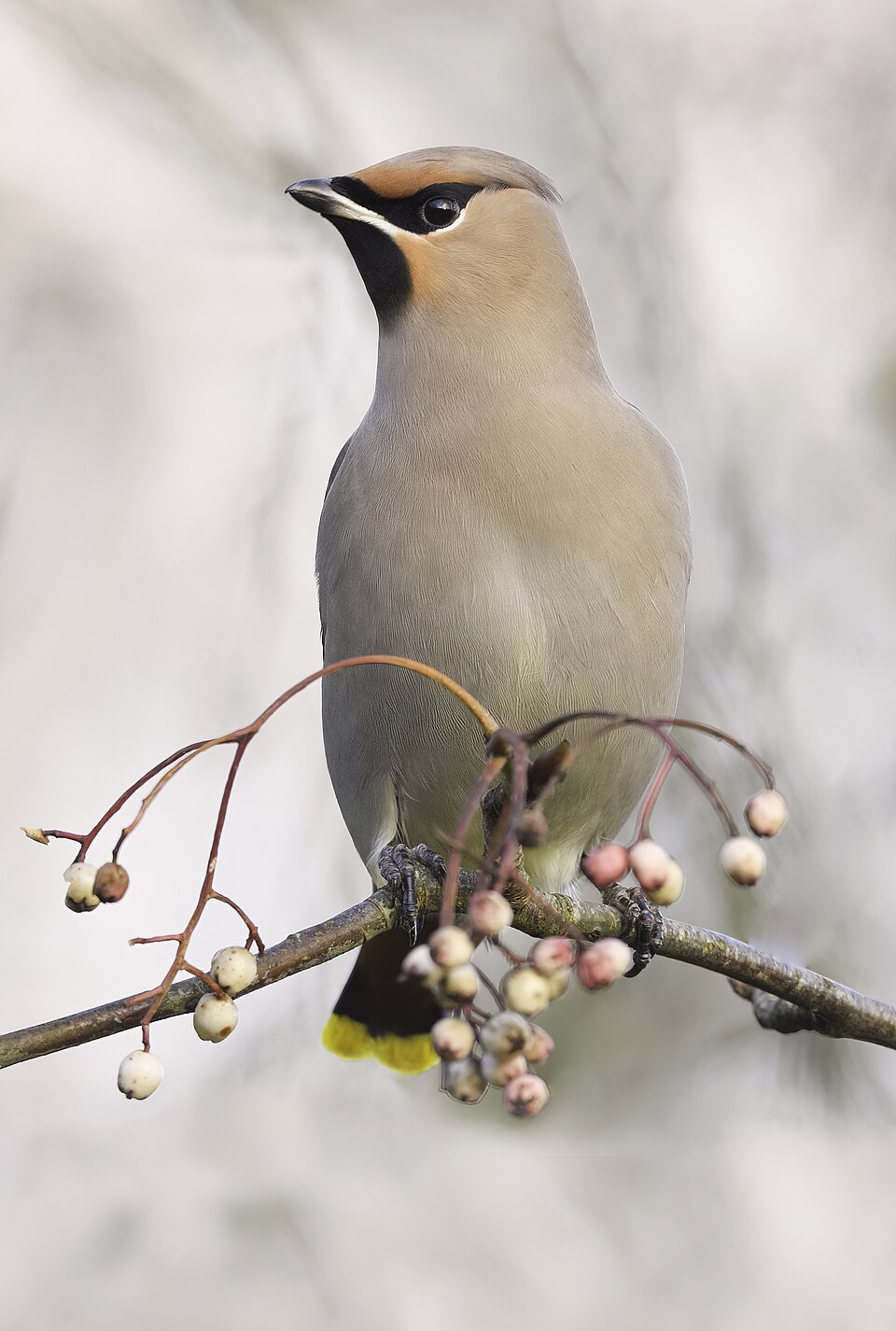 Ampelis Europeo
 Ampelis Japonés
En breve
La forma más confiable de separar el Ampelis Europeo y el Ampelis Japonés es por el color de la punta de la cola: el Ampelis Europeo muestra una punta de cola amarilla brillante, mientras que el Ampelis Japonés tiene una punta de cola roja con un borde negro. En vuelo o posados, los adultos del Ampelis Europeo exhiben marcados blancos y amarillos en las alas y múltiples puntas cerosas rojas en las secundarias (ambos sexos), mientras que el Ampelis Japonés tiene una barra alar marrón rojiza más difusa y puntas cerosas rojas solo en los machos. El Ampelis Europeo es ligeramente más grande y robusto, con tonos grisáceos, mientras que el Ampelis Japonés es marrón rosado con un centro de vientre amarillo pálido y una cola subcaudal de color óxido. Las aves inmaduras y las hembras son más difíciles de distinguir, pero la ausencia de amarillo en la cola y la presencia de una barra alar rojiza en el Ampelis Japonés son claves. Ambas especies pueden agruparse en invierno, por lo que se necesita prestar atención a estos detalles.
Consejos de identificación
- El color de la punta de la cola es la verificación más rápida: El Ampelis Europeo siempre muestra una amplia punta de cola amarilla brillante (adultos e inmaduros), mientras que el Ampelis Japonés tiene una punta de cola roja bordeada de negro. Esto es visible tanto posado como en vuelo.
- Patrón alar (adultos): Los adultos del Ampelis Europeo tienen una franja amarilla audaz en las primarias y marcas blancas en forma de 'gancho de pescado' en el ala cerrada. El Ampelis Japonés carece de estas; en su lugar, busca una barra marrón rojiza difusa a través de las cobertoras mayores.
- Puntas cerosas rojas: El Ampelis Europeo (ambos sexos) muestra múltiples puntas cerosas rojas en las secundarias (6–8 en machos, 5–7 en hembras), a menudo en forma de lágrima. El Ampelis Japonés solo muestra puntas rojas en machos, y estas son menos numerosas y menos prominentes; las hembras generalmente carecen de ellas por completo.
- Color del vientre: El Ampelis Europeo tiene un vientre inferior castaño rico, mientras que el Ampelis Japonés tiene un centro de vientre amarillo pálido. Esto puede ser sutil, pero es útil en vistas cercanas.
- Cobertoras subcaudales: El Ampelis Japonés tiene cobertoras subcaudales de color óxido, contrastando con el resto de las partes inferiores; el Ampelis Europeo no.
- Patrón facial: Ambos tienen una máscara negra y garganta, pero la máscara del Ampelis Europeo es más ancha y la mancha de la garganta está más definida (especialmente en machos). La máscara del Ampelis Japonés es más estrecha y el negro no se extiende tanto.
- Barra alar: Solo el Ampelis Japonés tiene una barra marrón rojiza difusa a través de las cobertoras mayores; el Ampelis Europeo carece de esta característica.
- Color del rabadilla: Ambos tienen rabadillas grises, pero esto no es un fuerte separador.
- Patrón alar juvenil/inmaduro: Las aves de primer invierno del Ampelis Europeo carecen de la blanca 'marca de verificación' en el borde de salida de las primarias y tienen un borde de entrada más pálido (blanco o amarillo pálido). Los inmaduros del Ampelis Japonés están menos bien descritos, pero la ausencia de amarillo en la cola y la barra alar rojiza siguen siendo pistas.
- Tamaño y estructura: El Ampelis Europeo es más grande y robusto, pero esto solo es obvio en comparación directa o en bandadas mixtas.
- Diferencias sexuales: En el Ampelis Japonés, solo los machos tienen puntas cerosas rojas en las secundarias; las hembras carecen de ellas. En el Ampelis Europeo, ambos sexos tienen puntas rojas, aunque las hembras tienen menos.
- Vuelo: Ambas especies tienen un vuelo rápido y directo con alas largas y colas cortas, pero el Ampelis Europeo puede parecer ligeramente más robusto.
- Contexto de hábitat: En el sur de Japón y Taiwán en invierno, es más probable ver el Ampelis Japonés, pero ambas especies pueden ocurrir juntas, especialmente en áreas ricas en bayas.
- Bandadas mixtas: Si ves aves con colas amarillas y rojas juntas, es probable que estés observando una bandada mixta; revisa cada ave cuidadosamente.
- Trampas: Los Ampelis Europeos inmaduros pueden mostrar menos amarillo y menos puntas rojas, haciéndolos parecerse al Ampelis Japonés, pero la punta de cola amarilla y la falta de barra alar rojiza siguen siendo confiables. Las hembras del Ampelis Japonés que carecen de puntas rojas pueden confundirse con el Ampelis Europeo, pero la cola y la barra alar aún los separan.
Tamaño
El Ampelis Europeo es el más grande de los dos, típicamente del tamaño de un estornino, con 19–23 cm de longitud y un peso de alrededor de 55 g (aunque algunas fuentes sugieren un poco más). El Ampelis Japonés es más pequeño, con 15–18 cm y 54–64 g. La diferencia es sutil en el campo, pero el Ampelis Europeo parece más robusto y con cola más larga, especialmente en bandadas mixtas. Ambos tienen una cresta puntiaguda y proporciones similares, por lo que el tamaño solo rara vez es diagnóstico a menos que las aves estén una al lado de la otra.
Plumaje
La edad y el sexo son cruciales para separar estas especies por plumaje:
-
Adultos: Los adultos del Ampelis Europeo tienen un cuerpo grisáceo, máscara facial negra y garganta, una amplia punta de cola amarilla, y alas con una striking franja amarilla y marcas blancas en forma de 'gancho de pescado' en las primarias. Ambos sexos tienen múltiples puntas cerosas rojas en las secundarias (6–8 en machos, 5–7 en hembras). Los adultos del Ampelis Japonés son marrón rosado con una máscara y garganta negras, una punta de cola roja bordeada de negro, y una barra marrón rojiza difusa a través de las cobertoras mayores. Solo los machos tienen puntas cerosas rojas en las secundarias, y estas son menos numerosas y carecen de la forma de 'lágrima' del Ampelis Europeo. El centro del vientre es amarillo pálido, y las cobertoras subcaudales son de color óxido.
-
Primer invierno/inmaduro: Las aves de primer invierno del Ampelis Europeo carecen de la audaz 'marca de verificación' blanca en el ala y tienen un borde de entrada más pálido (blanco o amarillo muy pálido) en las primarias. La punta de cola amarilla es más estrecha, y hay menos puntas cerosas rojas (machos: 4–6, hembras: 1–5 o ninguna). Los inmaduros del Ampelis Japonés están menos bien descritos, pero la ausencia de amarillo en la cola y la presencia de la barra alar rojiza siguen siendo útiles.
-
Juveniles: Los juveniles del Ampelis Europeo son más apagados, con partes inferiores más blancas y estriadas, menos negro en la garganta, y una máscara más pequeña. Los juveniles del Ampelis Japonés no están descritos en detalle, pero deberían carecer de los fuertes contrastes de los adultos.
-
En vuelo: El Ampelis Europeo muestra una audaz punta de cola amarilla y un fuerte patrón alar; el Ampelis Japonés muestra una punta de cola roja y un ala más atenuada con una barra rojiza.
Comportamiento
Ambas especies son altamente sociales, formando a menudo grandes bandadas, especialmente en invierno, y pueden encontrarse juntas en grupos mixtos. Su vuelo es rápido y directo, reminiscentes de los estorninos, con alas largas y colas cortas. El Ampelis Europeo es descrito como trepando fácilmente a través de árboles y arbustos, pero arrastrándose en el suelo. No se notan diferencias de comportamiento significativas que puedan separarlas de manera confiable en el campo.
Hábitat
El Ampelis Europeo cría en los bosques del norte del Paleártico y América del Norte, prefiriendo bosques de coníferas o mixtos. El Ampelis Japonés cría más al sur en densos bosques de coníferas del Lejano Oriente ruso y el noreste de China. En invierno, ambas especies se superponen extensamente en Asia Oriental, frecuentando bosques abiertos, tierras agrícolas, parques y jardines con abundantes bayas. El Ampelis Japonés es más numeroso en el sur de Japón en invierno, mientras que el Ampelis Europeo es más del norte, pero ambos pueden ocurrir juntos donde la comida es abundante.
Voz
El Ampelis Japonés emite un trino agudo pero carece de una verdadera canción. La voz del Ampelis Europeo no está descrita en las notas proporcionadas, por lo que las vocalizaciones no son un separador confiable en el campo basado en la información disponible.