

Motmot

ノドグロハイアメリカムシクイ 対 タウンゼンドアメリカムシクイ

Setophaga nigrescens 対 Setophaga townsendi

ノドグロハイアメリカムシクイとタウンゼンドアメリカムシクイのクイズ
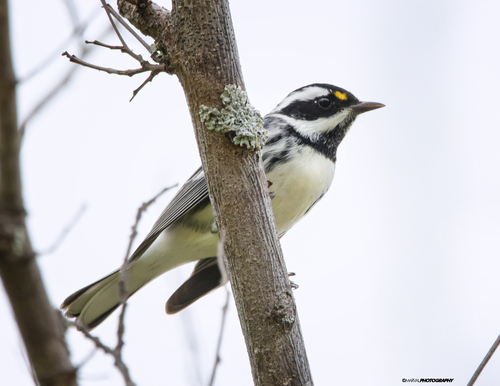
ノドグロハイアメリカムシクイ (Setophaga nigrescens) ノドグロハイアメリカムシクイ
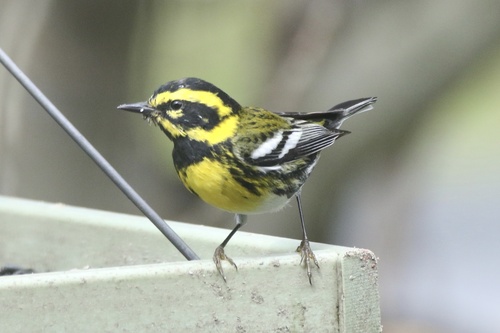
タウンゼンドアメリカムシクイ (Setophaga townsendi) タウンゼンドアメリカムシクイ

メディア

読み込み中…

要点

ノドグロハイアメリカムシクイとタウンゼンドアメリカムシクイの最も信頼できるフィールドマークは顔の模様です:ノドグロハイアメリカムシクイは目の前に小さな黄色の斑点があり、頭に太い黒と白のストライプがありますが、タウンゼンドは明るい黄色の顔に厚い黒の頬の斑点があります。両方のオスは黒い喉を持っていますが、メスと幼鳥は異なります:メスのノドグロハイアメリカムシクイは白い喉を持ち、メスのタウンゼンドは黄色い喉を持っています。すべての年齢において、タウンゼンドアメリカムシクイのオリーブ色の上面と顔と腹部のより広範な黄色を探してください。ノドグロハイアメリカムシクイは全体的に灰色と白の色合いです。これらの違いは、止まっている鳥や採餌している鳥の両方で見ることができますが、光が悪い場合や素早い視界では微妙な場合があります。

識別のコツ

  1. Face pattern is key: ノドグロハイアメリカムシクイは目の前に小さな黄色の斑点(ロレス)があり、頭に太い黒と白のストライプがあります。タウンゼンドアメリカムシクイは明るい黄色の顔に厚い黒の頬の斑点(耳の斑点)があり、目の後ろと下に伸びています。
  2. Throat color varies by sex: オスのノドグロハイアメリカムシクイとオスのタウンゼンドはどちらも黒い喉を持っていますが、メスのノドグロハイアメリカムシクイは白い喉を持ち、メスのタウンゼンドは黄色い喉を持っています。幼鳥のタウンゼンドも黄色い喉を示します。
  3. Cheek patch: タウンゼンドアメリカムシクイは常に強い黒(オス)または暗い(メス/幼鳥)の頬の斑点を持ち、ノドグロハイアメリカムシクイにはありません。
  4. Yellow on face and underparts: タウンゼンドアメリカムシクイははるかに明るく、顔から胸にかけて黄色が広がっています、特にオスでは。ノドグロハイアメリカムシクイはより muted で、黄色は目の前の小さな斑点に限られています。
  5. Upperparts color: ノドグロハイアメリカムシクイは上面が灰色で黒いストライプがありますが、タウンゼンドアメリカムシクイは上面がオリーブ色で黒いストライプがあります。
  6. Flank streaking: 両方とも側面に黒いストライプがありますが、ノドグロハイアメリカムシクイでは通常これらはより明確で、白い腹部に対して際立っています。タウンゼンドでは、ストライプは黄色に対して際立っています。
  7. Wing bars: 両種は2本の白い翼のバーを示すので、これは有用な区別ではありません。
  8. Bill shape and size: 両方とも典型的なムシクイの細く尖ったくちばしを持っています;くちばしの形は信頼できるフィールドマークではありません。
  9. Sex and age differences: 両種のメスと幼鳥はより duller ですが、顔の模様(タウンゼンドの黄色い顔と黒い頬、ノドグロハイアメリカムシクイの黄色い斑点とストライプの顔)が最良の区別となります。
  10. Habitat context: 密な成熟した針葉樹林で見られた場合、タウンゼンドの方が可能性が高いです;乾燥した開けた森林やチャパラルでは、ノドグロハイアメリカムシクイがより期待されますが、重複が多くあります。
  11. Foraging height: タウンゼンドはしばしば樹冠の高いところで採餌し、時にはホバリングします;ノドグロハイアメリカムシクイは中間の高さで採餌しているのが見られることが多いですが、これは診断的ではありません。
  12. Song: よく聞こえた場合、ノドグロハイアメリカムシクイの歌は一連のバズ音で、次の最後の音が高くなります;タウンゼンドはより複雑なバズのフレーズです。呼び声は信頼できるほど似ていることが多いです。
  13. Overall impression: タウンゼンドアメリカムシクイは明るく、より黄色く見え、太い黒の頬の斑点がありますが、ノドグロハイアメリカムシクイはより subdued な灰色と白の鳥で、小さな黄色の斑点とストライプの顔を持っています。
  14. Potential pitfalls: 素早いまたは逆光の視界は顔の模様と喉の色を隠すことがあります;常に顔と喉を明確に見るようにし、腹部の黄色に注意してください。
  15. When in doubt: 顔の模様(黄色の斑点対黄色の顔と黒の頬)、喉の色(メスの白対黄色)、全体の明るさの組み合わせに焦点を当ててください。

大きさ

両種は小さなムシクイで、サイズは非常に似ており、ノドグロハイアメリカムシクイは平均して約13 cm(5.1インチ)の長さで、約8.4 gの重さです。タウンゼンドアメリカムシクイも小さな歌鳥で、フィールドでの意味のあるサイズの違いはありません。翼と尾の長さは重なり合うため、サイズは信頼できる区別ではありません。

羽色

幼鳥と未成熟の羽毛はどちらの種についても詳細には説明されていませんが、成鳥とメスの違いは明確です。すべての年齢のノドグロハイアメリカムシクイは、黒いストライプのある灰色の上面、黒い側面のストライプのある白い腹部、そしてくちばしの基部に特徴的な小さな黄色の斑点を示します。オスは黒い冠、喉、目のストライプを持ち、目の上と顎の周りは白いです;メスはより淡い色で、白い喉と鈍い頭の模様を持っています。対照的に、タウンゼンドアメリカムシクイは明るい黄色の顔に太い黒の頬の斑点(耳の斑点)と2本の白い翼のバーを持っています。オスは黒い帽子と喉を持ち、黄色い下胸がありますが、メスは暗い帽子と黄色い喉を持っています。幼鳥はメスに似ていますが、緑がかった帽子と頬を持っています。タウンゼンドはまた、黒いストライプのあるオリーブ色の上面を持ち、顔と胸の黄色はノドグロハイアメリカムシクイよりもはるかに広範です。全体的な印象は、タウンゼンドがより明るく、より黄色い鳥であるのに対し、ノドグロハイアメリカムシクイはより muted で灰色がかっています。

行動

両種は活発な採餌者で、しばしば葉の間を素早く移動し、繁殖シーズン外では混合種の群れに参加することがあります。タウンゼンドアメリカムシクイは樹冠の高いところで採餌することで知られ、時にはホバリングしたり昆虫を捕まえたりしますが、ノドグロハイアメリカムシクイは枝や葉から採餌する傾向があります。これらの違いは微妙で、常に識別に信頼できるわけではありません。

生息環境

両種は北アメリカ西部の針葉樹林または混合林で繁殖しますが、ノドグロハイアメリカムシクイは乾燥した開けた森林やチャパラルに典型的で、タウンゼンドアメリカムシクイは特に大きな木のある成熟した密な針葉樹林を好みます。移動中や冬には、両方ともさまざまな森林の生息地で見られ、しばしば重複するため、生息地はわずかな手がかりに過ぎません。

声

両種は鋭い「タップ」という呼び声を出しますが、フィールドで信頼できるほど区別できません。歌は異なります:ノドグロハイアメリカムシクイの歌は一連のバズ音で、初めの音が二重になり、次の最後の音が高くなりますが、タウンゼンドアメリカムシクイの歌はバズの「ジー・ジー・ジー・ブズ・ジー」または「ウィージー・ウィージー・ウィージー・トゥエ」です。しかし、どちらも訓練されていない耳には似て聞こえることがあり、歌はよく知られていない限り、最良のフィールドの区別ではありません。

より良い説明を送る

比較と同じ項目を使ってください。文章はすぐに公開されます。

The most reliable field mark between Black-throated Gray Warbler and Townsend's Warbler is the face pattern: Black-throated Gray shows a small yellow spot in front of the eye and bold black-and-white striping on the head, while Townsend's has a bright yellow face with a thick black cheek patch. Both males have black throats, but females and immatures differ: female Black-throated Gray has a white throat, while female Townsend's has a yellow throat. In all ages, look for the Townsend's Warbler's olive upperparts and more extensive yellow on the face and underparts, versus the Black-throated Gray's overall gray-and-white coloration. These differences are visible both in perched and foraging birds, but can be subtle in poor light or with quick views.

  1. Face pattern is key: Black-throated Gray Warbler shows a small yellow spot in front of the eye (lores) and bold black-and-white striping on the head. Townsend's Warbler has a bright yellow face with a thick black cheek patch (ear patch) that extends behind and below the eye.
  2. Throat color varies by sex: Male Black-throated Gray and male Townsend's both have black throats, but female Black-throated Gray has a white throat, while female Townsend's has a yellow throat. Immature Townsend's also shows a yellow throat.
  3. Cheek patch: Townsend's Warbler always has a strong black (male) or dark (female/immature) cheek patch, which is absent in Black-throated Gray Warbler.
  4. Yellow on face and underparts: Townsend's Warbler is much brighter, with yellow extending from the face onto the breast, especially in males. Black-throated Gray is more muted, with yellow limited to a small spot in front of the eye.
  5. Upperparts color: Black-throated Gray Warbler is gray above with black streaks, while Townsend's Warbler is olive above with black streaks.
  6. Flank streaking: Both have black streaks on the flanks, but in Black-throated Gray these are usually more distinct and set against white underparts; in Townsend's, the streaks are set against yellow.
  7. Wing bars: Both species show two white wing bars, so this is not a useful separator.
  8. Bill shape and size: Both have thin, pointed bills typical of warblers; bill shape is not a reliable field mark.
  9. Sex and age differences: Females and immatures of both species are duller, but the face pattern (yellow face and black cheek in Townsend's, yellow spot and striped face in Black-throated Gray) remains the best separator.
  10. Habitat context: If seen in dense, mature coniferous forest, Townsend's is more likely; in drier, open woodland or chaparral, Black-throated Gray is more expected, but there is much overlap.
  11. Foraging height: Townsend's often forages higher in the canopy, sometimes hovering; Black-throated Gray is more likely to be seen gleaning at mid-levels, but this is not diagnostic.
  12. Song: If heard well, Black-throated Gray's song is a series of buzzy notes with a high next-to-last note; Townsend's is a more complex buzzy phrase. Calls are too similar to use reliably.
  13. Overall impression: Townsend's Warbler appears brighter and more yellow, with a bold black cheek patch, while Black-throated Gray is a more subdued gray-and-white bird with a small yellow spot and striped face.
  14. Potential pitfalls: Quick or backlit views can obscure face pattern and throat color; always try for a clear look at the face and throat, and note any yellow on the underparts.
  15. When in doubt: Focus on the combination of face pattern (yellow spot vs. yellow face and black cheek), throat color (white vs. yellow in females), and overall brightness.

Both species are small warblers and very similar in size, with Black-throated Gray Warbler averaging about 13 cm (5.1 in) in length and weighing around 8.4 g. Townsend's Warbler is also a small songbird, and no meaningful size difference is noted in the field. Wing and tail lengths overlap, so size is not a reliable separator.

Juvenile and immature plumages are not described in detail for either species, but adult and female differences are clear. Black-throated Gray Warbler of all ages shows gray upperparts with black streaks, white underparts with black flank streaks, and a distinctive small yellow spot at the base of the bill. Males have a black crown, throat, and eye-stripe, with white above the eye and around the chin; females are paler, with a white throat and duller head pattern. Townsend's Warbler, in contrast, has a bright yellow face with a bold black cheek patch (ear patch) and two white wing bars. Males have a black cap and throat with a yellow lower breast, while females have a dark cap and yellow throat. Immatures resemble females but with a greenish cap and cheeks. Townsend's also has olive upperparts with black streaks, and the yellow on the face and breast is much more extensive than in Black-throated Gray. The overall impression is that Townsend's is a brighter, more yellow bird, while Black-throated Gray is more muted and grayish.

Both species are active foragers, often moving quickly through foliage and sometimes joining mixed-species flocks outside the breeding season. Townsend's Warbler is noted for foraging higher in the canopy and sometimes hovering or sallying for insects, while Black-throated Gray tends to glean from branches and leaves. These differences are subtle and not always reliable for identification.

Both species breed in coniferous or mixed forests of western North America, but Black-throated Gray Warbler is more typical of drier, open woodlands and chaparral, while Townsend's Warbler prefers mature, dense coniferous forests, especially with large trees. In migration and winter, both can be found in a variety of wooded habitats, often overlapping, so habitat is only a minor clue.

Both species give a sharp 'tup' call, which is not reliably separable in the field. The songs are different: Black-throated Gray Warbler's song is a series of buzzy notes, with earlier notes doubled and a high next-to-last note, while Townsend's Warbler's song is a buzzy 'zee-zee-zee-bzz-zee' or 'weazy weazy weazy twea.' However, both can sound similar to the untrained ear, and song is not the best field separator unless well known.

変更を破棄しますか?

保存していない編集があります。今離れると失われます。

ノドグロハイアメリカムシクイ · タウンゼンドアメリカムシクイ · 苦手な鳥