

Black-throated Gray Warbler vs Townsend's Warbler
Setophaga nigrescens contro Setophaga townsendi
Fai un quiz con Black-throated Gray Warbler e Townsend's Warbler
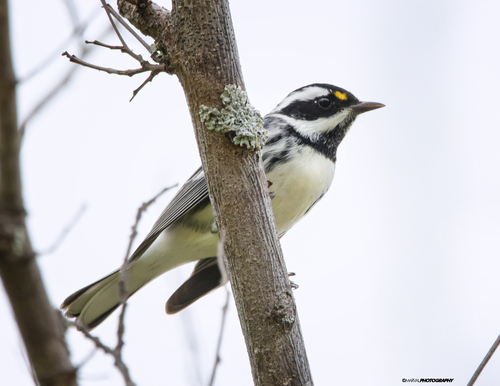 Black-throated Gray Warbler
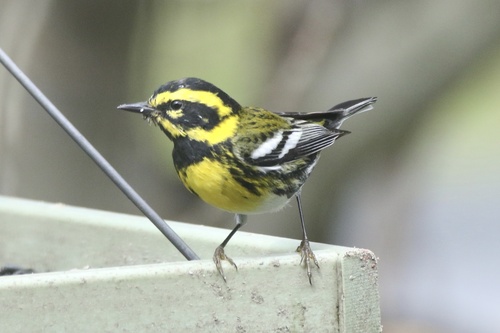 Townsend's Warbler
In breve
Il segno distintivo più affidabile tra il Black-throated Gray Warbler e il Townsend's Warbler è il motivo del viso: il Black-throated Gray mostra una piccola macchia gialla davanti all'occhio e strisce nere e bianche audaci sulla testa, mentre il Townsend's ha un viso giallo brillante con una spessa macchia nera sulla guancia. Entrambi i maschi hanno gole nere, ma le femmine e gli immaturi differiscono: la femmina del Black-throated Gray ha una gola bianca, mentre la femmina del Townsend's ha una gola gialla. In tutte le età, cerca le parti superiori olivastre del Townsend's Warbler e un giallo più esteso sul viso e sulle parti inferiori, rispetto alla colorazione grigia e bianca complessiva del Black-throated Gray. Queste differenze sono visibili sia negli uccelli posati che in quelli che cercano cibo, ma possono essere sottili in condizioni di scarsa illuminazione o con visioni rapide.
Consigli di identificazione
- Il motivo del viso è fondamentale: Il Black-throated Gray Warbler mostra una piccola macchia gialla davanti all'occhio (lore) e strisce nere e bianche audaci sulla testa. Il Townsend's Warbler ha un viso giallo brillante con una spessa macchia nera sulla guancia (macchia auricolare) che si estende dietro e sotto l'occhio.
- Il colore della gola varia in base al sesso: Il maschio del Black-throated Gray e il maschio del Townsend's hanno entrambi gole nere, ma la femmina del Black-throated Gray ha una gola bianca, mentre la femmina del Townsend's ha una gola gialla. Anche l'immaturo del Townsend's mostra una gola gialla.
- Macchia sulla guancia: Il Townsend's Warbler ha sempre una forte macchia nera (maschio) o scura (femmina/immaturo) sulla guancia, che è assente nel Black-throated Gray Warbler.
- Giallo sul viso e sulle parti inferiori: Il Townsend's Warbler è molto più luminoso, con il giallo che si estende dal viso sul petto, specialmente nei maschi. Il Black-throated Gray è più attenuato, con il giallo limitato a una piccola macchia davanti all'occhio.
- Colore delle parti superiori: Il Black-throated Gray Warbler è grigio sopra con strisce nere, mentre il Townsend's Warbler è olivastro sopra con strisce nere.
- Striature sui fianchi: Entrambi hanno strisce nere sui fianchi, ma nel Black-throated Gray queste sono solitamente più distinte e impostate su parti inferiori bianche; nel Townsend's, le strisce sono impostate su giallo.
- Bande alari: Entrambe le specie mostrano due bande alari bianche, quindi questo non è un separatore utile.
- Forma e dimensione del becco: Entrambi hanno becchi sottili e appuntiti tipici dei warbler; la forma del becco non è un segno distintivo affidabile.
- Differenze di sesso e età: Le femmine e gli immaturi di entrambe le specie sono più opachi, ma il motivo del viso (viso giallo e guancia nera nel Townsend's, macchia gialla e viso striato nel Black-throated Gray) rimane il miglior separatore.
- Contesto dell'habitat: Se visti in una foresta conifera densa e matura, è più probabile che si tratti di un Townsend's; in boschi aperti o chaparral più secchi, è più atteso il Black-throated Gray, ma c'è molta sovrapposizione.
- Altezza di foraggiamento: Il Townsend's spesso cerca cibo più in alto nella chioma, a volte sospendendosi; il Black-throated Gray è più probabile che venga visto mentre cerca cibo a livelli medi, ma questo non è diagnostico.
- Canto: Se ascoltato bene, il canto del Black-throated Gray è una serie di note ronzanti con una nota alta penultima; il Townsend's è una frase ronzante più complessa. Le chiamate sono troppo simili per essere utilizzate in modo affidabile.
- Impressione generale: Il Townsend's Warbler appare più luminoso e più giallo, con una spessa macchia nera sulla guancia, mentre il Black-throated Gray è un uccello più sobrio grigio e bianco con una piccola macchia gialla e un viso striato.
- Possibili insidie: Visioni rapide o retroilluminate possono offuscare il motivo del viso e il colore della gola; cerca sempre di avere una visione chiara del viso e della gola, e nota eventuali gialli sulle parti inferiori.
- Quando hai dubbi: Concentrati sulla combinazione di motivo del viso (macchia gialla vs. viso giallo e guancia nera), colore della gola (bianco vs. giallo nelle femmine) e luminosità generale.
Taglia
Entrambe le specie sono piccoli warbler e molto simili in dimensioni, con il Black-throated Gray Warbler che misura in media circa 13 cm (5,1 in) di lunghezza e pesa circa 8,4 g. Anche il Townsend's Warbler è un piccolo uccello canoro, e non si nota alcuna differenza di dimensioni significativa sul campo. Le lunghezze delle ali e della coda si sovrappongono, quindi la dimensione non è un separatore affidabile.
Piumaggio
Le piume giovanili e immature non sono descritte in dettaglio per entrambe le specie, ma le differenze tra adulti e femmine sono chiare. Il Black-throated Gray Warbler di tutte le età mostra parti superiori grigie con strisce nere, parti inferiori bianche con strisce nere sui fianchi e una piccola macchia gialla distintiva alla base del becco. I maschi hanno una corona nera, gola e striscia oculare, con bianco sopra l'occhio e intorno al mento; le femmine sono più chiare, con una gola bianca e un motivo della testa più opaco. Il Townsend's Warbler, al contrario, ha un viso giallo brillante con una spessa macchia nera sulla guancia (macchia auricolare) e due bande alari bianche. I maschi hanno una calotta nera e una gola nera con un petto giallo inferiore, mentre le femmine hanno una calotta scura e una gola gialla. Gli immaturi assomigliano alle femmine ma con una calotta e guance verdastre. Anche il Townsend's ha parti superiori olivastre con strisce nere, e il giallo sul viso e sul petto è molto più esteso rispetto al Black-throated Gray. L'impressione generale è che il Townsend's sia un uccello più luminoso e giallo, mentre il Black-throated Gray è più attenuato e grigiastro.
Comportamento
Entrambe le specie sono cercatori attivi, spesso muovendosi rapidamente attraverso il fogliame e talvolta unendosi a stormi misti di specie al di fuori della stagione riproduttiva. Il Townsend's Warbler è noto per cercare cibo più in alto nella chioma e a volte sospendersi o lanciarsi per gli insetti, mentre il Black-throated Gray tende a cercare cibo da rami e foglie. Queste differenze sono sottili e non sempre affidabili per l'identificazione.
Habitat
Entrambe le specie nidificano in foreste conifere o miste del nord-ovest dell'America, ma il Black-throated Gray Warbler è più tipico di boschi aperti e chaparral più secchi, mentre il Townsend's Warbler preferisce foreste conifere mature e dense, specialmente con alberi grandi. Durante la migrazione e l'inverno, entrambe possono essere trovate in una varietà di habitat boschivi, spesso sovrapponendosi, quindi l'habitat è solo un indizio minore.
Voce
Entrambe le specie emettono una chiamata acuta 'tup', che non è separabile in modo affidabile sul campo. I canti sono diversi: il canto del Black-throated Gray Warbler è una serie di note ronzanti, con note precedenti raddoppiate e una nota alta penultima, mentre il canto del Townsend's Warbler è un ronzio 'zee-zee-zee-bzz-zee' o 'weazy weazy weazy twea.' Tuttavia, entrambi possono suonare simili all'orecchio non allenato, e il canto non è il miglior separatore sul campo a meno che non sia ben conosciuto.
Black-throated Gray Warbler · Townsend's Warbler · I miei uccelli difficili