

Motmot

シマバラオニキバシリ 対 アカハシオニキバシリ

Hylexetastes stresemanni 対 Hylexetastes perrotii

シマバラオニキバシリとアカハシオニキバシリのクイズ

シマバラオニキバシリ (Hylexetastes stresemanni) シマバラオニキバシリ
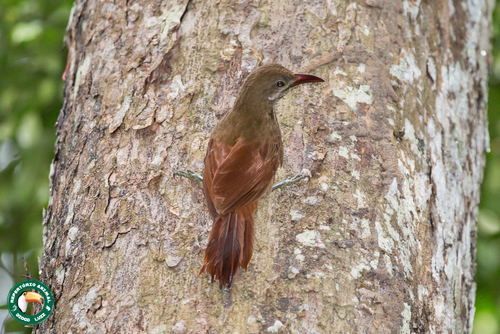
アカハシオニキバシリ (Hylexetastes perrotii) アカハシオニキバシリ

メディア

読み込み中…

要点

シマバラオニキバシリとアカハシオニキバシリを区別する最も信頼できるフィールドマークは、腹部のパターンです:シマバラオニキバシリは腹部と尾羽の覆いに細かい黒っぽいバーを示し(成鳥)、アカハシオニキバシリは下部が無地で、より均一なバフ色または茶色の腹部を持っています。両種の幼鳥と未成熟の鳥は、より多くのストリーキングとバリングを示すことがありますが、シマバラオニキバシリの幼鳥は下部にストリークとバーの混合を保持し、アカハシオニキバシリの幼鳥は下部がより重くバーレッドでルフェセントです。構造的には、両者は大きく、重い体を持つオニキバシリで、短くて大きなくちばしを持っていますが、くちばしの色と顔のパターンが役立ちます:アカハシオニキバシリは淡いワインレッドから茶色のくちばしと対照的な白い口ひげのストライプを持ち、シマバラオニキバシリのくちばしは暗く、顔はよりシンプルです。両種はサイズと形で重なりますが、分布はほとんどが異なるため、場所が助けになります。声はアカハシオニキバシリのみに記載されていますが、区別のための主要なフィールドマークではありません。

識別のコツ

  1. Belly barring (adults): シマバラオニキバシリはオリーブ色の腹部と尾羽の覆いに細かい黒っぽいバーを示し、アカハシオニキバシリは下部が無地で、より均一なバフ色または茶色の腹部を持っています。これは成鳥において最も信頼できるマークです。
  2. Juvenile underparts: 幼鳥のシマバラオニキバシリは喉と胸にストリークとバーの混合を持ち、アカハシオニキバシリの幼鳥は下部がより重くバーレッドでルフェセントで、弱い冠のストリークがあります。広範なバリングと下部のルフェセントの洗いが見られた場合、幼鳥のアカハシオニキバシリを疑ってください。
  3. Facial pattern: アカハシオニキバシリは明確な白い口ひげのストライプと白っぽいロアを持ち、より際立った顔を与えます。シマバラオニキバシリの顔は淡いロアを除いてはシンプルで、標準形では強い口ひげのストライプが欠けています(ただし、H. s. insignisは淡い口ひげのストライプを持つため、このマークはその亜種ではあまり信頼できません)。
  4. Bill color: シマバラオニキバシリのくちばしは暗い赤褐色から赤褐色で、アカハシオニキバシリのくちばしは淡いワインレッドから茶色です。幼鳥のアカハシオニキバシリは暗い灰色のくちばしを持ち、幼鳥のシマバラオニキバシリはより茶色がかっています。
  5. Throat and breast: シマバラオニキバシリは白っぽく、強くストリークのある喉とオリーブ色の上胸を持ち、淡い黒い境界のストリークがあります。アカハシオニキバシリの喉はオリーブ色の茶色で中心が淡く、胸は強いストリーキングのない灰色がかった茶色です。
  6. Upperparts: 両者は茶色からオリーブ色の茶色の頭部と背中を持っていますが、シマバラオニキバシリは亜種によってよりオリーブ色またはルフェセントになることがあります。アカハシオニキバシリの上部は煙のような茶色からオリーブ色の茶色です。
  7. Wings and tail: 両者はルフェセント栗色の翼と尾を持ち、初級羽の先端は暗くなっています。これは有用な区別マークではありません。
  8. Iris color: 両者は茶色から赤褐色の虹彩を示すことがありますが、幼鳥のアカハシオニキバシリは暗い灰色の目を持っています。
  9. Legs and feet: シマバラオニキバシリの足は灰色がかった緑から暗い色で、アカハシオニキバシリの足は緑またはオリーブ色で、いくつかの茶色と灰色があります。強いフィールドマークではありません。
  10. Structure: 両者は重い体を持ち、短めの尾と大きなくちばしを持っています。サイズは信頼できる区別要因ではなく、測定値が重なります。
  11. Range: 西アマゾニア(ボリビア、ペルー、エクアドル、西ブラジル、南コロンビア)で見られた場合、シマバラオニキバシリが期待されます。ギアナ、ベネズエラ、またはアマゾンの北のブラジルでは、アカハシオニキバシリが可能性のある種です。
  12. Habitat: 両者は成熟した湿った森林を好みますが、アカハシオニキバシリは干渉に対してより敏感で、サバンナではめったに見られません(スリナムのみ)。
  13. Behavior: アカハシオニキバシリはアリの群れを追うことで知られ、そうする際には森林の下部で見られることがあります。シマバラオニキバシリの採餌行動はあまり詳しく記載されていませんが、著しく異なることは知られていません。
  14. Vocalization: アカハシオニキバシリの歌と呼び声のみが記載されていますが、シマバラオニキバシリの声を知らない限り、これは安全な区別要因ではありません。
  15. Pitfalls: シマバラオニキバシリの亜種(H. s. insignis)は淡い口ひげのストライプを示すことがあり、アカハシオニキバシリの顔のパターンに似ています。常に下部のバリングと分布を確認してIDを確認してください。

大きさ

両種は最大のオニキバシリの中にあり、長さと質量にかなりの重なりがあります。シマバラオニキバシリは28–30 cmの長さで、オスは114–125 g、メスは約100 gです。アカハシオニキバシリは25–30 cmの長さで、オスは112–137.5 g、メスは110–145 gです。実際には、サイズだけでは診断できません。両者は重い体を持ち、短めの尾と大きなくちばしを持っています。シマバラオニキバシリは平均してわずかに長いかもしれませんが、これはフィールドでは信頼できません。

羽色

行動

両種は幹や枝を登ることで採餌し、しばしば混成種の群れに参加します。アカハシオニキバシリはアリの群れを追うことで知られ、時にはアリに付き添うときに森林の下部で見られます。シマバラオニキバシリに関しては特有の行動の違いは記載されていません。両者は通常、成熟した森林の内部で見られます。

生息環境

シマバラオニキバシリは西アマゾニア(ボリビア、ブラジル、コロンビア、エクアドル、ペルー)に生息し、湿った低地の森林に関連しています。アカハシオニキバシリは北東アマゾン盆地(アマゾンの北のブラジル、フランス領ギアナ、ガイアナ、スリナム、ベネズエラ)で見られ、湿ったテラフィルムの森林を好みますが、ギャラリー森林、バルゼア、時にはサバンナ(スリナムでのみ)も好みます。両者は原生林の内部を好みますが、アカハシオニキバシリは生息地の改変に対してより敏感で、一般的に稀で局所的です。

声

アカハシオニキバシリの鳴き声のみが記載されています:2–6のホイッスルの大きく、響く一連の音で、時には二音節で、'screee-wip'や'nyip, nyeek'などのさまざまな呼び声があります。シマバラオニキバシリの声は提供された情報源には記載されていないため、鳴き声は区別のための信頼できるフィールドマークではありません。

より良い説明を送る

比較と同じ項目を使ってください。文章はすぐに公開されます。

The most reliable field mark to separate Bar-bellied and Red-billed Woodcreepers is the underpart pattern: Bar-bellied shows fine blackish bars on the belly and undertail coverts (adults), while Red-billed is unbarred below, with a more uniform buffy or brown belly. Juvenile and immature birds of both species can show more streaking and barring, but Bar-bellied juveniles retain a mix of streaks and bars on the underparts, whereas Red-billed juveniles are more heavily barred and rufescent below. Structurally, both are large, heavy-bodied woodcreepers with short, massive bills, but the bill color and facial pattern are useful: Red-billed has a paler, wine-red to brownish bill and a contrasting white moustachial stripe, while Bar-bellied's bill is darker and its face is plainer. Both species overlap in size and shape, but their ranges are mostly allopatric, so location can help. Voice is only described for Red-billed, but is not a primary field mark for separation.

  1. Belly barring (adults): Bar-bellied Woodcreeper shows fine blackish bars on the olive belly and undertail coverts; Red-billed is unbarred below, with a more uniform buffy or brown belly. This is the most reliable mark in adults.
  2. Juvenile underparts: Juvenile Bar-bellied has a mix of streaks and bars on the throat and breast, while Red-billed juveniles are more heavily barred and rufescent below, with weak crown streaks. If you see extensive barring and a rufous wash below, suspect juvenile Red-billed.
  3. Facial pattern: Red-billed Woodcreeper has a distinct white moustachial stripe and whitish lores, giving a more marked face. Bar-bellied's face is plain except for paler lores, lacking a strong moustachial stripe in the nominate form (but note that H. s. insignis has a pale moustachial stripe, so this mark is less reliable in that subspecies).
  4. Bill color: Bar-bellied's bill is dark reddish to reddish brown; Red-billed's is paler, wine-red to brownish. Juvenile Red-billed has a dusky to blackish bill, while juvenile Bar-bellied's is more brownish.
  5. Throat and breast: Bar-bellied has a whitish, heavily streaked throat and an olive upper breast with pale, black-bordered streaks. Red-billed's throat is olive-brown with a paler center, and the breast is grayish brown without strong streaking.
  6. Upperparts: Both have brown to olive-brown heads and backs, but Bar-bellied can be more olive or rufous depending on subspecies. Red-billed's upperparts are smoky brown to olive-brown.
  7. Wings and tail: Both have rufous-chestnut wings and tail, with darker tips on the primaries. This is not a useful separation mark.
  8. Iris color: Both can show brown to reddish brown irises, but juvenile Red-billed has dark gray eyes.
  9. Legs and feet: Bar-bellied's are grayish green to dusky; Red-billed's are green or olive with some brown and gray. Not a strong field mark.
  10. Structure: Both are heavy-bodied with shortish tails and massive bills. Size is not a reliable separator, as measurements overlap.
  11. Range: If seen in western Amazonia (Bolivia, Peru, Ecuador, western Brazil, southern Colombia), Bar-bellied is expected. In the Guianas, Venezuela, or northern Brazil north of the Amazon, Red-billed is the likely species.
  12. Habitat: Both favor mature humid forest, but Red-billed is more sensitive to disturbance and rarely found in savanna (in Suriname only).
  13. Behavior: Red-billed is known to follow army ant swarms and can be seen lower in the forest when doing so. Bar-bellied's foraging behavior is less well described but is not known to differ markedly.
  14. Vocalization: Only Red-billed's song and calls are described, but unless you know Bar-bellied's voice, this is not a safe separator.
  15. Pitfalls: Subspecies of Bar-bellied (H. s. insignis) can show a pale moustachial stripe, resembling Red-billed's facial pattern. Always check underpart barring and range to confirm ID.

Both species are among the largest woodcreepers, with considerable overlap in length and mass. Bar-bellied Woodcreeper is 28–30 cm long, males weighing 114–125 g and females about 100 g. Red-billed Woodcreeper is 25–30 cm long, with males 112–137.5 g and females 110–145 g. In practice, size alone is not diagnostic, as both are heavy-bodied with shortish tails and massive bills. Bar-bellied may average slightly longer, but this is not reliable in the field.

  • Juvenile/immature birds: Both species show more streaking and barring below than adults, but Bar-bellied juveniles have a mix of streaks and bars on the throat and breast, a more rufous back, and a brownish bill. Red-billed juveniles have weak crown streaks, are more heavily barred and rufescent below, and have a dusky to blackish bill and dark gray eyes.
  • Adults: Bar-bellied Woodcreeper adults have brown to olive-brown upperparts, a plain face with only paler lores, and a whitish, heavily streaked throat. The upper breast is olive with pale, black-bordered streaks, the lower breast is plain olive, and the belly/undertail coverts are olive with thin blackish bars (the 'bar-bellied' mark). Red-billed adults have smoky brown to olive-brown upperparts, but with a distinct white moustachial stripe and whitish lores, an olive-brown throat with a paler center, grayish-brown breast, buffy brown belly, and undertail coverts brown with a rufescent cast—no barring below. Both have rufous-chestnut wings and tail, but Bar-bellied's are slightly darker-tipped. Bill color differs: Bar-bellied's is dark reddish to reddish brown, Red-billed's is wine-red to brownish.

Both species forage by climbing trunks and branches, often joining mixed-species flocks. Red-billed Woodcreeper is noted for following army ant swarms and foraging singly or in pairs, sometimes lower in the forest when attending ants. No unique behavioral differences are described for Bar-bellied. Both are typically seen in the interior of mature forests.

Bar-bellied Woodcreeper occurs in western Amazonia (Bolivia, Brazil, Colombia, Ecuador, Peru) and is associated with humid lowland forests. Red-billed Woodcreeper is found in the northeastern Amazon Basin (Brazil north of the Amazon, French Guiana, Guyana, Suriname, Venezuela), favoring humid terra firme forest, but also gallery forest, várzea, and occasionally savanna (in Suriname). Both prefer primary forest interiors, but Red-billed is more sensitive to habitat modification and is generally rarer and more localized.

Only Red-billed Woodcreeper's vocalizations are described: a loud, ringing series of 2–6 whistles, sometimes disyllabic, and a variety of calls including 'screee-wip' and 'nyip, nyeek.' Bar-bellied's voice is not described in the sources provided, so vocalization is not a reliable field mark for separation.

変更を破棄しますか?

保存していない編集があります。今離れると失われます。

シマバラオニキバシリ · アカハシオニキバシリ · 苦手な鳥