

Bar-bellied Woodcreeper vs Red-billed Woodcreeper
Hylexetastes stresemanni contro Hylexetastes perrotii
Fai un quiz con Bar-bellied Woodcreeper e Red-billed Woodcreeper
 Bar-bellied Woodcreeper
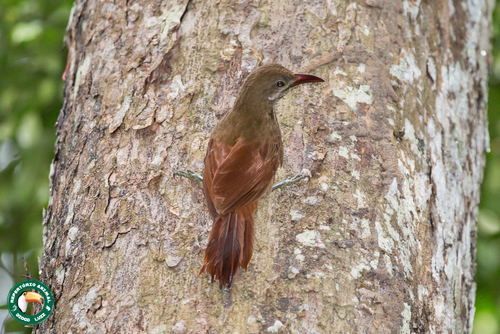 Red-billed Woodcreeper
In breve
Il segno di campo più affidabile per separare il Bar-bellied Woodcreeper e il Red-billed Woodcreeper è il modello delle parti inferiori: il Bar-bellied mostra sottili barre nere sul ventre e sulle copritrici della coda (adulti), mentre il Red-billed è privo di barre sotto, con un ventre più uniforme di color buffo o marrone. Gli uccelli giovanili e immaturi di entrambe le specie possono mostrare più striature e barre, ma i giovani Bar-bellied mantengono un mix di striature e barre sulle parti inferiori, mentre i giovani Red-billed sono più pesantemente barrati e rufescenti sotto. Strutturalmente, entrambi sono grandi, con corpo pesante, con becchi corti e massicci, ma il colore del becco e il modello facciale sono utili: il Red-billed ha un becco più chiaro, di color rosso vino a marrone, e una striscia moustachiale bianca a contrasto, mentre il becco del Bar-bellied è più scuro e il suo volto è più semplice. Entrambe le specie si sovrappongono in dimensioni e forma, ma i loro areali sono per lo più allopatrici, quindi la posizione può aiutare. La voce è descritta solo per il Red-billed, ma non è un segno di campo primario per la separazione.
Consigli di identificazione
- Barre sul ventre (adulti): Il Bar-bellied Woodcreeper mostra sottili barre nere sul ventre oliva e sulle copritrici della coda; il Red-billed è privo di barre sotto, con un ventre più uniforme di color buffo o marrone. Questo è il segno più affidabile negli adulti.
- Parti inferiori giovanili: Il giovane Bar-bellied ha un mix di striature e barre sulla gola e sul petto, mentre i giovani Red-billed sono più pesantemente barrati e rufescenti sotto, con deboli striature sulla corona. Se vedi barre estese e un lavaggio rufesco sotto, sospetta un giovane Red-billed.
- Modello facciale: Il Red-billed Woodcreeper ha una distintiva striscia moustachiale bianca e lore bianche, dando un volto più marcato. Il volto del Bar-bellied è semplice, tranne che per le lore più chiare, privo di una forte striscia moustachiale nella forma nominativa (ma nota che H. s. insignis ha una striscia moustachiale chiara, quindi questo segno è meno affidabile in quella sottospecie).
- Colore del becco: Il becco del Bar-bellied è di un rosso scuro a marrone rossastro; il Red-billed è più chiaro, di color rosso vino a marrone. Il giovane Red-billed ha un becco scuro a nerastro, mentre il becco del giovane Bar-bellied è più marrone.
- Gola e petto: Il Bar-bellied ha una gola biancastra, pesantemente striata, e un petto superiore oliva con striature chiare e bordate di nero. La gola del Red-billed è marrone oliva con un centro più chiaro, e il petto è marrone grigiastro senza forti striature.
- Parti superiori: Entrambi hanno teste e schiene marrone a marrone oliva, ma il Bar-bellied può essere più oliva o rufesco a seconda della sottospecie. Le parti superiori del Red-billed sono marrone fumoso a marrone oliva.
- Ali e coda: Entrambi hanno ali e coda color rufous-castagna, con punte più scure sulle primarie. Questo non è un segno utile per la separazione.
- Colore dell'iride: Entrambi possono mostrare iridi marroni a marrone rossastro, ma il giovane Red-billed ha occhi grigio scuro.
- Zampe e piedi: Le zampe del Bar-bellied sono verde grigiastro a scuro; quelle del Red-billed sono verdi o olive con un po' di marrone e grigio. Non è un segno di campo forte.
- Struttura: Entrambi hanno un corpo pesante con code corte e becchi massicci. La dimensione non è un separatore affidabile, poiché le misure si sovrappongono.
- Areale: Se visto nell'Amazzonia occidentale (Bolivia, Perù, Ecuador, Brasile occidentale, Colombia meridionale), ci si aspetta il Bar-bellied. Nelle Guiane, in Venezuela o nel Brasile settentrionale a nord dell'Amazzonia, il Red-billed è la specie probabile.
- Habitat: Entrambi preferiscono foreste umide mature, ma il Red-billed è più sensibile alle perturbazioni e raramente si trova nella savana (solo in Suriname).
- Comportamento: Il Red-billed è noto per seguire gli sciami di formiche soldato e può essere visto più in basso nella foresta quando lo fa. Il comportamento di foraggiamento del Bar-bellied è meno ben descritto ma non è noto per differire in modo marcato.
- Vocalizzazione: Solo il canto e i richiami del Red-billed sono descritti, ma a meno che tu non conosca la voce del Bar-bellied, questo non è un separatore sicuro.
- Trappole: Le sottospecie del Bar-bellied (H. s. insignis) possono mostrare una striscia moustachiale chiara, somigliando al modello facciale del Red-billed. Controlla sempre le barre delle parti inferiori e l'areale per confermare l'identificazione.
Taglia
Entrambe le specie sono tra i più grandi woodcreepers, con una considerevole sovrapposizione in lunghezza e massa. Il Bar-bellied Woodcreeper è lungo 28–30 cm, i maschi pesano 114–125 g e le femmine circa 100 g. Il Red-billed Woodcreeper è lungo 25–30 cm, con maschi di 112–137,5 g e femmine di 110–145 g. In pratica, la dimensione da sola non è diagnostica, poiché entrambi hanno un corpo pesante con code corte e becchi massicci. Il Bar-bellied può essere leggermente più lungo in media, ma questo non è affidabile sul campo.
Piumaggio
- Uccelli giovanili/immaturi: Entrambe le specie mostrano più striature e barre sotto rispetto agli adulti, ma i giovani Bar-bellied hanno un mix di striature e barre sulla gola e sul petto, una schiena più rufescenti e un becco marrone. I giovani Red-billed hanno deboli striature sulla corona, sono più pesantemente barrati e rufescenti sotto, e hanno un becco scuro a nerastro e occhi grigio scuro.
- Adulti: Gli adulti del Bar-bellied Woodcreeper hanno parti superiori marrone a marrone oliva, un volto semplice con solo lore più chiare, e una gola biancastra, pesantemente striata. Il petto superiore è oliva con striature chiare e bordate di nero, il petto inferiore è semplice oliva, e il ventre/copritrici della coda sono olive con sottili barre nere (il segno 'bar-bellied'). Gli adulti del Red-billed hanno parti superiori marrone fumoso a marrone oliva, ma con una distintiva striscia moustachiale bianca e lore bianche, una gola marrone oliva con un centro più chiaro, un petto marrone grigiastro, un ventre marrone buffo, e copritrici della coda marroni con una sfumatura rufescenti—nessuna barra sotto. Entrambi hanno ali e coda color rufous-castagna, ma quelle del Bar-bellied sono leggermente più scure alle punte. Il colore del becco differisce: quello del Bar-bellied è di un rosso scuro a marrone rossastro, quello del Red-billed è di color rosso vino a marrone.
Comportamento
Entrambe le specie foraggiano arrampicandosi su tronchi e rami, spesso unendosi a stormi di specie miste. Il Red-billed Woodcreeper è noto per seguire gli sciami di formiche soldato e per foraggiare singolarmente o in coppie, a volte più in basso nella foresta quando assiste le formiche. Non sono descritti differenze comportamentali uniche per il Bar-bellied. Entrambi sono tipicamente visti nell'interno di foreste mature.
Habitat
Il Bar-bellied Woodcreeper si trova nell'Amazzonia occidentale (Bolivia, Brasile, Colombia, Ecuador, Perù) ed è associato a foreste umide di pianura. Il Red-billed Woodcreeper si trova nel bacino amazzonico nordorientale (Brasile a nord dell'Amazzonia, Guiana francese, Guyana, Suriname, Venezuela), preferendo foreste umide di terraferma, ma anche foreste galleria, várzea e occasionalmente savana (in Suriname). Entrambi preferiscono gli interni delle foreste primarie, ma il Red-billed è più sensibile alla modifica dell'habitat ed è generalmente più raro e localizzato.
Voce
Solo le vocalizzazioni del Red-billed Woodcreeper sono descritte: una serie forte e squillante di 2–6 fischi, a volte disillabici, e una varietà di richiami tra cui 'screee-wip' e 'nyip, nyeek.' La voce del Bar-bellied non è descritta nelle fonti fornite, quindi la vocalizzazione non è un segno di campo affidabile per la separazione.
Bar-bellied Woodcreeper · Red-billed Woodcreeper · I miei uccelli difficili