

Motmot

クロコシジロウミツバメ 対 クロウミツバメ

Hydrobates castro 対 Hydrobates matsudairae

クロコシジロウミツバメとクロウミツバメのクイズ
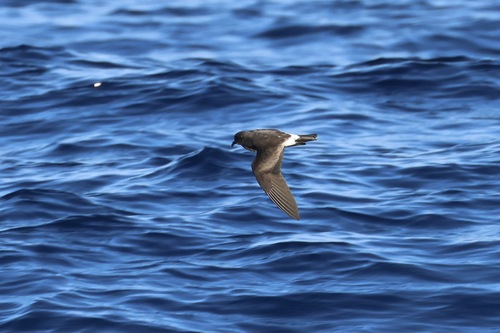
クロコシジロウミツバメ (Hydrobates castro) クロコシジロウミツバメ
クロウミツバメ (Hydrobates matsudairae) クロウミツバメ

メディア

読み込み中…

要点

バンドランプド・ストームペトレルとマツダイラ・ストームペトレルを区別する最も信頼できるフィールドマークは、バンドランプドに広範囲な白い尾羽があることであり、マツダイラは全体が暗い外観で、白い尾羽がなく、代わりに黒っぽいアリュラの羽と一次羽の白い基部を示します。マツダイラはまた、長く深く分かれた尾と著しくフック状のくちばしで際立っており、バンドランプドは短く、あまり深く分かれていない尾とより典型的なストームペトレルのくちばしを持っています。飛行中、バンドランプドは「シアーウォーターのように」見える傾向がありますが、マツダイラは長い分かれた尾と特徴的な翼のパターンを示します。これらのマークはすべての羽色で見ることができますが、特に幼鳥や飛行中の鳥にとって重要です。

識別のコツ

  1. 白い尾羽(バンドランプド)対全体が暗い(マツダイラ): バンドランプド・ストームペトレルは常に広く、きれいな白い尾羽の斑点を示し、すべての年齢で見ることができ、特に飛行中に明らかです。マツダイラは完全に暗く、どの年齢でも白い尾羽はありません。
  2. 上翼のパターン: マツダイラは黒っぽいアリュラの羽と一次羽の白い基部を持ち、上翼に微妙な淡いパネルを作り、良い光の下で最もよく見えます。バンドランプドはこのコントラストがなく、白い尾羽を除いて、上部はより均一に暗く見えます。
  3. 尾の形: マツダイラ・ストームペトレルは長く深く分かれた尾を持ち、より「ツバメのような」または「トンビのような」シルエットを与えます。バンドランプドの尾は短く、あまり深く分かれておらず、より四角く見えたり、わずかに切り取られたように見えます。
  4. くちばしの形: マツダイラは先端に顕著なフックがある明らかに長いくちばしを持ち、近距離または良い写真で見ることができます。バンドランプドのくちばしは短く、あまり強くフックされておらず、ストームペトレルに典型的です。
  5. 飛行スタイル: バンドランプドは安定した、直接的な「シアーウォーターのような」動作で飛ぶ傾向がありますが、マツダイラは長い尾のためにより浮遊感や細長く見えることがありますが、詳細な違いは海上では微妙です。
  6. 全体の色の印象: バンドランプドは茶色がかった黒で白い尾羽を持ち、マツダイラは上部と尾が特に均一に黒っぽいです。
  7. 年齢特有の混乱なし: 両種はすべての羽色で主要なフィールドマーク(白い尾羽対全体が暗い)を保持しており、上翼や尾羽のパターンにおいて幼鳥や未熟な特有の違いは記載されていません。
  8. 地理的文脈: 大西洋で見られた場合、バンドランプドははるかに可能性が高いです。マツダイラはNW太平洋とインド洋に制限されています。範囲外の記録は両方にとって非常に稀です。
  9. 繁殖文脈: バンドランプドはコロニーで厳密に夜行性です。マツダイラの繁殖行動は詳細には記載されていませんが、遠隔の島に限られています。
  10. 水面での外観: 両種は水面に低く座りますが、マツダイラの長い尾は休んでいるときにさらに後ろに突き出ることがあります。
  11. 音声の手がかりなし: これらの2種に対してフィールドで識別可能な音声の違いは記載されていません。
  12. 季節的または性別に基づく混乱なし: どちらの種も性差がなく、これらの主要なフィールドマークに影響を与える季節的変化を示しません。
  13. 落とし穴: 照明が悪い場合や遠くからの視界では、バンドランプドの白い尾羽が見逃されることがあり、マツダイラの微妙な翼のパネルが見えないことがあります。常に尾羽の色と尾の形の組み合わせを探してください。
  14. くちばしと尾の組み合わせ: 長くフック状のくちばしと深く分かれた尾の組み合わせは、これらの2種の中でマツダイラに特有であり、バンドランプドは両方の特徴を欠いています。
  15. コシジロウミツバメと混同しないでください: 両種はコシジロウミツバメと混同されることがありますが、コシジロウミツバメはバンドランプドよりも深く分かれた尾を持ち、異なる尾羽の形状を持っています。マツダイラはさらに深く分かれており、白い尾羽は完全に欠けています。

大きさ

バンドランプド・ストームペトレルは長さ19〜21 cm、翼幅43〜46 cm、体重44〜49 gです [wikipedia]。マツダイラ・ストームペトレルは全体的なサイズは似ていますが、直接比較のための正確な測定値は提供されていません。構造的には、マツダイラは深く分かれた尾と長いくちばしのために尾が長く、より細長く見えることがあり、体のサイズが似ていても飛行中にわずかに大きく見えたり、より細長く見えることがあります。

羽色

すべての年齢において、バンドランプド・ストームペトレルはそれ以外の茶色がかった黒い羽毛と対照的な顕著な白い尾羽を示します。この白い尾羽は広く、側面に巻きついており、飛行中やしばしば上からまたは後ろから見ることができます。対照的に、マツダイラ・ストームペトレルは完全に暗く、白い尾羽はありません。代わりに、黒っぽいアリュラの羽と一次羽の白い基部を持ち、特に良い光の下で上翼に微妙な淡いパネルを作ることがあります。マツダイラの尾は長く深く分かれており、暗くエレガントな外観を強調しています。これらの違いはすべての年齢で一貫しており、どちらの種においても上翼や尾羽のパターンに年齢特有の変動を示す記載はありません。

行動

バンドランプド・ストームペトレルは通常、より「シアーウォーターのような」飛行を示し、安定した直接的な動きとあまり不規則なフラッタリングがありません。マツダイラ・ストームペトレルは長く深く分かれた尾を持ち、より浮遊感やトンビのように見えることがありますが、これらの一般的な印象を超えた飛行スタイルの詳細な比較は記載されていません。陸上では、両方とも繁殖コロニーの近くでしか見られず、バンドランプドは捕食を避けるために厳密に夜行性です。

生息環境

バンドランプド・ストームペトレルは、アゾレス、マデイラ、カナリア諸島、セントヘレナ、太平洋の一部(日本、ハワイ、ガラパゴス)を含む、温暖な大西洋と太平洋の島々で繁殖します。マツダイラ・ストームペトレルは、火山諸島(NW太平洋)でのみ繁殖し、インド洋で冬を越します。したがって、バンドランプドは大西洋または東太平洋でより可能性が高く、マツダイラはNW太平洋/インド洋の特産です。重複は非常に稀で、珍しい迷い鳥としてのみ見られます。

より良い説明を送る

比較と同じ項目を使ってください。文章はすぐに公開されます。

The most reliable field mark to separate Band-rumped Storm-Petrel from Matsudaira's Storm-Petrel is the presence of an extensive white rump on Band-rumped, versus the all-dark appearance of Matsudaira's, which lacks a white rump and instead shows blackish alula feathers and white bases to the primaries. Matsudaira's also stands out with a longer, deeply forked tail and a notably hooked bill, while Band-rumped has a shorter, less deeply forked tail and a more typical storm-petrel bill. In flight, Band-rumped tends to look more 'shearwater-like,' while Matsudaira's shows a long, forked tail and distinctive wing pattern. These marks are visible in all plumages, but especially important for immatures and birds seen in flight.

  1. White rump (Band-rumped) vs. all-dark (Matsudaira's): Band-rumped Storm-Petrel always shows a broad, clean white rump patch, visible in all ages and especially obvious in flight. Matsudaira's is entirely dark with no white rump at any age.
  2. Upperwing pattern: Matsudaira's has blackish alula feathers and white bases to the primaries, creating a subtle pale panel on the upperwing, best seen in good light. Band-rumped lacks this contrast and appears more uniformly dark above, aside from the white rump.
  3. Tail shape: Matsudaira's Storm-Petrel has a long, deeply forked tail, giving a more 'swallow-like' or 'tern-like' silhouette. Band-rumped's tail is shorter and less deeply forked, appearing more squared-off or only slightly notched.
  4. Bill shape: Matsudaira's has a noticeably long bill with a pronounced hook at the tip, which can be seen at close range or in good photos. Band-rumped's bill is shorter and less strongly hooked, typical for storm-petrels.
  5. Flight style: Band-rumped tends to fly with a steady, direct, 'shearwater-like' action, while Matsudaira's may look more buoyant or elongated due to its long tail, though detailed differences are subtle at sea.
  6. Overall color impression: Band-rumped is brownish-black with a white rump; Matsudaira's is more uniformly blackish, especially on the upperparts and tail.
  7. No age-specific confusion: Both species retain their key field marks (white rump vs. all-dark) throughout all plumages; there are no noted juvenile or immature-specific differences in upperwing or rump pattern.
  8. Geographic context: If seen in the Atlantic, Band-rumped is vastly more likely; Matsudaira's is restricted to the NW Pacific and Indian Ocean. Out-of-range records are extremely rare for both.
  9. Breeding context: Band-rumped is strictly nocturnal at colonies; Matsudaira's breeding behavior is not detailed but is limited to remote islands.
  10. On-water appearance: Both species sit low on the water, but Matsudaira's longer tail may project further behind when at rest.
  11. No vocalization cues: There are no field-identifiable vocal differences noted for these two species.
  12. No seasonal or sex-based confusion: Neither species is sexually dimorphic or shows seasonal changes that would affect these key field marks.
  13. Pitfalls: In poor light or distant views, the white rump of Band-rumped may be missed, and Matsudaira's subtle wing panel may not be visible. Always look for the combination of rump color and tail shape.
  14. Bill and tail combination: The combination of a long, hooked bill and deeply forked tail is unique to Matsudaira's among these two; Band-rumped lacks both features.
  15. Do not confuse with Leach's Storm-Petrel: Both species can be confused with Leach's, but Leach's has a more deeply forked tail than Band-rumped and a different rump shape; Matsudaira's is even more deeply forked and lacks the white rump entirely.

Band-rumped Storm-Petrel is 19–21 cm in length with a 43–46 cm wingspan and weighs 44–49 g [wikipedia]. Matsudaira's Storm-Petrel is similar in overall size, but the notes do not provide precise measurements for direct comparison. Structurally, Matsudaira's appears longer-tailed and more elongated due to its deeply forked tail and long bill, which can make it look slightly larger or more attenuated in flight, even if body size is similar.

For all ages, Band-rumped Storm-Petrel shows a prominent white rump contrasting with otherwise brownish-black plumage. This white rump is broad and wraps onto the sides, visible in flight and often from above or behind. Matsudaira's Storm-Petrel, in contrast, is entirely dark with no white rump. Instead, it has blackish alula feathers and white bases to the primaries, which may create a subtle pale panel on the upperwing, especially in good light. The tail of Matsudaira's is long and deeply forked, accentuating the dark, elegant look. These differences are consistent across ages; there are no notes indicating age-specific variation in upperwing or rump pattern for either species.

Band-rumped Storm-Petrel typically exhibits a more 'shearwater-like' flight, with steady, direct movements and less erratic fluttering. Matsudaira's Storm-Petrel, with its long, deeply forked tail, may appear more buoyant or tern-like, but the notes do not provide a detailed comparison of flight style beyond these general impressions. On land, both are rarely seen except near breeding colonies, where Band-rumped is strictly nocturnal to avoid predation.

Band-rumped Storm-Petrel breeds on islands in the warmer Atlantic and Pacific, including the Azores, Madeira, Canary Islands, Saint Helena, and parts of the Pacific (Japan, Hawaii, Galápagos). Matsudaira's Storm-Petrel breeds only in the Volcano Islands (NW Pacific) and winters in the Indian Ocean. Thus, Band-rumped is more likely in the Atlantic or eastern Pacific, while Matsudaira's is a NW Pacific/Indian Ocean specialty. Overlap is extremely unlikely except as rare vagrants.

変更を破棄しますか?

保存していない編集があります。今離れると失われます。

クロコシジロウミツバメ · クロウミツバメ · 苦手な鳥