

Band-rumped Storm-Petrel vs Matsudaira's Storm-Petrel
Hydrobates castro contro Hydrobates matsudairae
Fai un quiz con Band-rumped Storm-Petrel e Matsudaira's Storm-Petrel
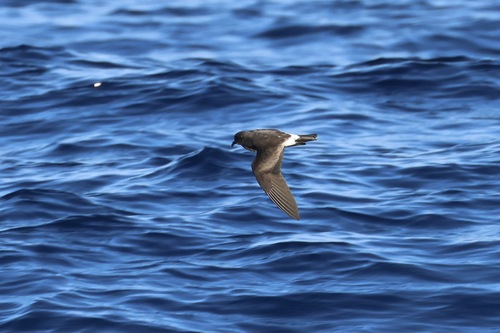 Band-rumped Storm-Petrel
 Matsudaira's Storm-Petrel
In breve
Il segno di campo più affidabile per separare il Band-rumped Storm-Petrel dal Matsudaira's Storm-Petrel è la presenza di un ampio sopracciglio bianco sul Band-rumped, rispetto all'aspetto completamente scuro del Matsudaira's, che manca di un sopracciglio bianco e mostra invece piume alula nerastre e basi bianche per le primarie. Il Matsudaira's si distingue anche per una coda più lunga e profondamente biforcuta e un becco notevolmente ricurvo, mentre il Band-rumped ha una coda più corta e meno profondamente biforcuta e un becco più tipico da uccello delle tempeste. In volo, il Band-rumped tende a sembrare più 'simile a un procellario', mentre il Matsudaira's mostra una lunga coda biforcuta e un modello distintivo delle ali. Questi segni sono visibili in tutte le livree, ma sono particolarmente importanti per gli immaturi e gli uccelli visti in volo.
Consigli di identificazione
- Sopracciglio bianco (Band-rumped) vs. completamente scuro (Matsudaira's): Il Band-rumped Storm-Petrel mostra sempre una ampia macchia bianca pulita sul sopracciglio, visibile in tutte le età e particolarmente evidente in volo. Il Matsudaira's è completamente scuro senza sopracciglio bianco a nessuna età.
- Modello dell'ala superiore: Il Matsudaira's ha piume alula nerastre e basi bianche per le primarie, creando un sottile pannello chiaro sull'ala superiore, meglio visibile in buona luce. Il Band-rumped manca di questo contrasto e appare più uniformemente scuro sopra, a parte il sopracciglio bianco.
- Forma della coda: Il Matsudaira's Storm-Petrel ha una coda lunga e profondamente biforcuta, dando una silhouette più 'simile a una rondine' o 'simile a una sterna'. La coda del Band-rumped è più corta e meno profondamente biforcuta, apparendo più squadrata o solo leggermente incisa.
- Forma del becco: Il Matsudaira's ha un becco notevolmente lungo con un gancio pronunciato all'estremità, che può essere visto da vicino o in buone foto. Il becco del Band-rumped è più corto e meno fortemente ricurvo, tipico degli uccelli delle tempeste.
- Stile di volo: Il Band-rumped tende a volare con un'azione costante e diretta, 'simile a un procellario', mentre il Matsudaira's può apparire più galleggiante o allungato a causa della sua lunga coda, anche se le differenze dettagliate sono sottili in mare.
- Impressione di colore generale: Il Band-rumped è di colore bruno-nerastro con un sopracciglio bianco; il Matsudaira's è più uniformemente nerastro, specialmente nelle parti superiori e nella coda.
- Nessuna confusione specifica per età: Entrambe le specie mantengono i loro segni di campo chiave (sopracciglio bianco vs. completamente scuro) in tutte le livree; non ci sono note specifiche per giovani o immaturi nel modello dell'ala superiore o del sopracciglio.
- Contesto geografico: Se visto nell'Atlantico, il Band-rumped è di gran lunga più probabile; il Matsudaira's è limitato al NW Pacific e all'Oceano Indiano. I record fuori dal raggio sono estremamente rari per entrambi.
- Contesto riproduttivo: Il Band-rumped è rigorosamente notturno nelle colonie; il comportamento riproduttivo del Matsudaira's non è dettagliato ma è limitato a isole remote.
- Aspetto sull'acqua: Entrambe le specie si trovano basse sull'acqua, ma la coda più lunga del Matsudaira's può proiettarsi ulteriormente dietro quando è a riposo.
- Nessun segnale di vocalizzazione: Non ci sono differenze vocali identificabili sul campo notate per queste due specie.
- Nessuna confusione stagionale o basata sul sesso: Nessuna delle due specie è sessualmente dimorfica o mostra cambiamenti stagionali che influenzerebbero questi segni di campo chiave.
- Trappole: In scarsa luce o visioni distanti, il sopracciglio bianco del Band-rumped potrebbe essere perso, e il sottile pannello dell'ala del Matsudaira's potrebbe non essere visibile. Cerca sempre la combinazione di colore del sopracciglio e forma della coda.
- Combinazione di becco e coda: La combinazione di un becco lungo e ricurvo e una coda profondamente biforcuta è unica per il Matsudaira's tra queste due; il Band-rumped manca di entrambe le caratteristiche.
- Non confondere con il Uccello delle tempeste codaforcuta: Entrambe le specie possono essere confuse con il Leach's, ma il Leach's ha una coda più profondamente biforcuta rispetto al Band-rumped e una forma del sopracciglio diversa; il Matsudaira's è ancora più profondamente biforcuto e manca completamente del sopracciglio bianco.
Taglia
Il Band-rumped Storm-Petrel è lungo 19–21 cm con un'apertura alare di 43–46 cm e pesa 44–49 g [wikipedia]. Il Matsudaira's Storm-Petrel è simile in dimensioni complessive, ma le note non forniscono misurazioni precise per un confronto diretto. Strutturalmente, il Matsudaira's appare con una coda più lunga e più allungata a causa della sua coda profondamente biforcuta e del lungo becco, il che può farlo sembrare leggermente più grande o più attenuato in volo, anche se la dimensione del corpo è simile.
Piumaggio
Per tutte le età, il Band-rumped Storm-Petrel mostra un sopracciglio bianco prominente che contrasta con una livrea altrimenti bruno-nerastra. Questo sopracciglio bianco è ampio e si avvolge sui lati, visibile in volo e spesso dall'alto o da dietro. Il Matsudaira's Storm-Petrel, al contrario, è completamente scuro senza sopracciglio bianco. Invece, ha piume alula nerastre e basi bianche per le primarie, che possono creare un sottile pannello chiaro sull'ala superiore, specialmente in buona luce. La coda del Matsudaira's è lunga e profondamente biforcuta, accentuando l'aspetto scuro ed elegante. Queste differenze sono coerenti in tutte le età; non ci sono note che indicano variazioni specifiche per età nel modello dell'ala superiore o del sopracciglio per entrambe le specie.
Comportamento
Il Band-rumped Storm-Petrel tipicamente mostra un volo più 'simile a un procellario', con movimenti costanti e diretti e meno fluttuazioni erratiche. Il Matsudaira's Storm-Petrel, con la sua coda lunga e profondamente biforcuta, può apparire più galleggiante o simile a una sterna, ma le note non forniscono un confronto dettagliato dello stile di volo oltre queste impressioni generali. A terra, entrambi sono raramente visti tranne che vicino alle colonie di nidificazione, dove il Band-rumped è rigorosamente notturno per evitare la predazione.
Habitat
Il Band-rumped Storm-Petrel nidifica su isole nell'Atlantico e nel Pacifico più caldi, comprese le Azzorre, Madeira, Isole Canarie, Sant'Elena e parti del Pacifico (Giappone, Hawaii, Galápagos). Il Matsudaira's Storm-Petrel nidifica solo nelle Isole Volcano (NW Pacific) e sverna nell'Oceano Indiano. Pertanto, il Band-rumped è più probabile nell'Atlantico o nel Pacifico orientale, mentre il Matsudaira's è una specialità del NW Pacific/Oceano Indiano. La sovrapposizione è estremamente improbabile tranne che come rari vagabondi.
Band-rumped Storm-Petrel · Matsudaira's Storm-Petrel · I miei uccelli difficili