

White-tailed Hawk vs White Hawk
Geranoaetus albicaudatus contro Pseudastur albicollis
Fai un quiz con White-tailed Hawk e White Hawk
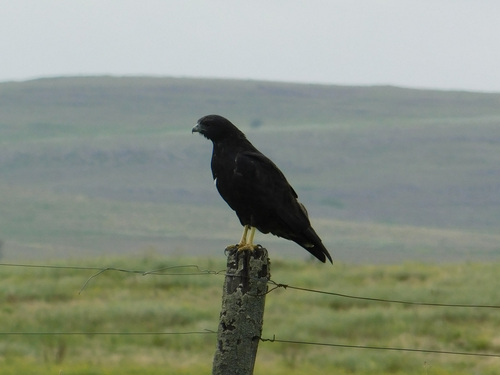 White-tailed Hawk
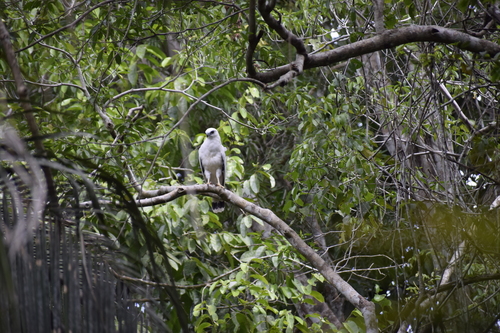 White Hawk
In breve
Il segno distintivo più affidabile è il motivo della coda in volo: l'adulto White-tailed Hawk mostra una coda bianca con una stretta banda nera vicino alla punta, mentre l'adulto White Hawk ha una coda nera con una larga banda bianca. I giovani White-tailed Hawks sono molto più scuri nel complesso, con parti superiori nerastre e evidenti rivestimenti delle ali macchiati di bianco e nero, mentre i giovani White Hawks sono per lo più bianchi sotto ma hanno ampie macchie nere sopra e parti inferiori striate scure. Strutturalmente, il White-tailed Hawk è più grande e robusto, con ali più lunghe e una macchia spalla rugginosa negli adulti, mentre il White Hawk ha una coda più corta, ali più larghe e non presenta ruggine. Entrambi possono planare, ma il White Hawk è più strettamente un uccello di foresta e appare sorprendentemente bianco dal basso.
Consigli di identificazione
- Motivo della coda in volo (adulti): Il White-tailed Hawk ha una coda bianca con una stretta banda nera vicino alla punta; il White Hawk ha una coda nera con una larga banda bianca. Questo è solitamente visibile negli uccelli in volo e rappresenta il segno più affidabile per gli adulti.
- Motivo della coda (giovani): Il giovane White-tailed Hawk ha una coda marrone con diverse barre scure, diventando più grigia con una banda scura sfumata man mano che matura. Il giovane White Hawk mostra già la coda nera con una larga banda bianca.
- Scurità complessiva (giovani): I giovani White-tailed Hawks possono apparire quasi neri sopra e sotto in scarsa illuminazione, specialmente se le parti inferiori bianche sono limitate. I giovani White Hawks sono per lo più bianchi sotto, con macchie nere sopra e parti inferiori striate, non apparendo mai complessivamente nerastre.
- Rivestimento delle ali (giovani): I giovani White-tailed Hawks hanno rivestimenti delle ali macchiati di bianco e nero, visibili in volo. I giovani White Hawks non mostrano questo motivo; le loro ali inferiori sono per lo più bianche.
- Macchia spalla rugginosa: L'adulto White-tailed Hawk mostra una macchia spalla rosso ruggine quando è posato con le ali chiuse, assente in tutte le età del White Hawk.
- Colore delle ali superiori (adulti): Le ali superiori del White-tailed Hawk sono scure con grigio vicino alla base delle primarie nerastre; le ali superiori del White Hawk sono per lo più nere, con del bianco a seconda della sottospecie.
- Motivo delle ali inferiori: Entrambe le specie sono bianche sotto, ma il White-tailed Hawk ha barre marroni indistinte sulle copritrici delle ali inferiori, mentre le ali inferiori del White Hawk sono bianche pulite.
- Colore della testa e del corpo: L'adulto White Hawk è completamente bianco su testa e corpo; il White-tailed Hawk è bianco sotto ma grigio sopra.
- Becco e zampe: Entrambi hanno becchi neri e zampe gialle, quindi questo non è diagnostico.
- Colore degli occhi: Il White-tailed Hawk ha un'iride nocciola; il colore degli occhi del White Hawk varia a seconda della sottospecie (giallo o marrone), ma questo è raramente visibile sul campo.
- Struttura e jizz: Il White-tailed Hawk è più robusto e ha ali più lunghe, con una coda più lunga; il White Hawk è più compatto, con ali molto larghe e una coda notevolmente corta. In volo, il White Hawk appare più 'robusto' e sorprendentemente bianco dal basso.
- Habitat: Il White-tailed Hawk si trova in campagna aperta; il White Hawk è uno specialista della foresta. Il contesto può essere un forte indizio se il piumaggio è ambiguo.
- Comportamento: Il White-tailed Hawk spesso plana e scivola su aree aperte; il White Hawk si posa in foresta e plana sopra la chioma, a volte associandosi a scimmie o coati.
- Vocalizzazione: Se senti un lamento 'kerwee', è il White Hawk. Il White-tailed Hawk non è noto per un richiamo distintivo in queste fonti.
- Variazione delle sottospecie (White Hawk): Alcune sottospecie di White Hawk hanno più nero sulle ali e sulla coda, ma tutte sono principalmente bianche da sotto. Se vedi un uccello per lo più bianco con una banda nera sulla coda in foresta, controlla questi dettagli.
Taglia
Il White-tailed Hawk è la specie più grande e pesante, con una lunghezza di 44–60 cm e un'apertura alare di 118–143 cm, e una massa corporea che varia da 865–1.240 g a seconda della sottospecie [wikipedia]. Il White Hawk è leggermente più piccolo, con una lunghezza di 46–56 cm, ma è notevolmente più leggero: i maschi pesano in media 650 g e le femmine 840 g [wikipedia]. Il White-tailed Hawk è più robusto e massiccio, mentre il White Hawk è più compatto con ali molto larghe e una coda più corta. Sul campo, il White-tailed Hawk apparirà più robusto e con ali più lunghe, specialmente quando plana.
Piumaggio
-
Giovani/giovanili: I giovani White-tailed Hawks sono molto più scuri nel complesso, a volte apparendo quasi neri in scarsa luce, specialmente se le parti inferiori non sono visibili. I loro rivestimenti delle ali sono macchiati di bianco e nero, e mancano della macchia spalla rugginosa degli adulti. La coda è marrone con diverse barre scure, diventando gradualmente più grigia con una banda scura sfumata man mano che l'uccello matura. Al contrario, i giovani White Hawks sono per lo più bianchi sotto ma hanno ampie macchie nere sulle parti superiori e parti inferiori striate di bianco scuro. La loro coda è già nera con una larga banda bianca, simile agli adulti.
-
Adulti: L'adulto White-tailed Hawk è grigio sopra, bianco sotto, e ha una coda corta e bianca con una stretta banda nera vicino alla punta. Le ali superiori sono scure con grigio vicino alla base delle primarie nerastre, e l'ala inferiore è biancastra con barre marroni indistinte. La macchia spalla rosso ruggine è un segno chiave quando è posato. L'adulto White Hawk è quasi completamente bianco sotto e sulla testa, con ali superiori nere e una coda nera molto corta con una larga banda bianca. Le ali inferiori sono bianche, e le ali superiori sono nere (con alcune variazioni a seconda della sottospecie nella quantità di nero e bianco). Non è presente ruggine.
-
Variazione delle sottospecie (White Hawk): Alcune sottospecie hanno più nero sulle ali e sulla coda, ma tutte appaiono principalmente bianche sotto. Il colore degli occhi varia da giallo a marrone a seconda della sottospecie.
Comportamento
Il White-tailed Hawk di solito caccia planando e scandagliando aree aperte, poi scivola su un altro posatoio se non trova nulla. È spesso visto planare su campagna aperta. Il White Hawk, d'altra parte, è più spesso visto planare sopra o all'interno delle chiome forestali ed è noto per i suoi spettacolari display aerei di corteggiamento. Caccia principalmente lanciandosi da un posatoio all'interno o al margine della foresta, a volte associandosi a gruppi di scimmie o coati per catturare le prede che spaventano. Entrambe le specie possono planare, ma il White Hawk è più strettamente legato agli habitat forestali e spesso appare come una forma bianca sorprendente contro la chioma.
Habitat
Il White-tailed Hawk è un uccello di ambienti tropicali e subtropicali aperti, comprese praterie, savane e cerrado aperto, e raramente si trova in foreste dense. Il White Hawk è uno specialista della foresta e del bosco di pianura, che va dal sud del Messico attraverso il bacino amazzonico e nella Foresta Atlantica, ed è raramente visto lontano dalle aree forestali. Se vedi un grande falco bianco planare su campagna aperta, è più probabile che sia un White-tailed Hawk; in o sopra la foresta, specialmente in foresta profonda, il White Hawk è il default.
Voce
Il White Hawk emette un richiamo lamentoso 'kerwee'. Nessuna vocalizzazione distintiva è descritta per il White-tailed Hawk nelle note fornite, quindi la voce è utile solo se senti il richiamo del White Hawk.