

Red-crowned Woodpecker vs Crimson-crested Woodpecker
Melanerpes rubricapillus contro Campephilus melanoleucos
Fai un quiz con Red-crowned Woodpecker e Crimson-crested Woodpecker
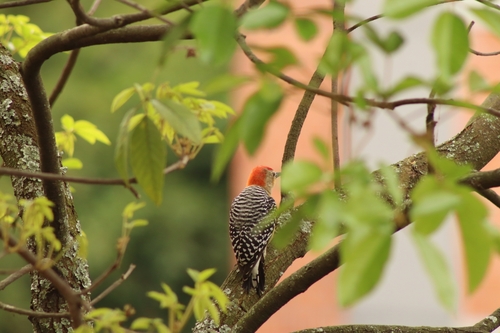 Red-crowned Woodpecker
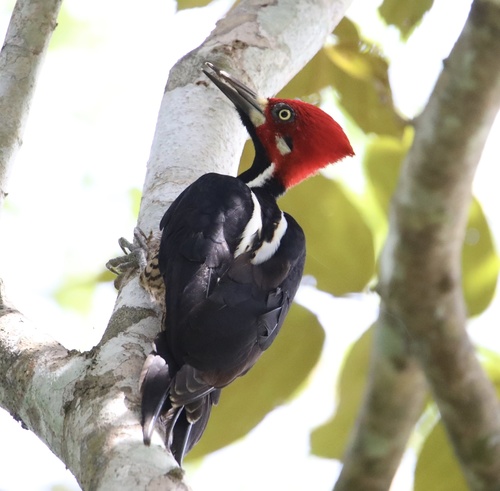 Crimson-crested Woodpecker
In breve
Il segno distintivo più affidabile per separare il Picchio coronato di rosso dal Picchio crestato cremisi è la dimensione e la struttura complessiva: il Picchio crestato è drammaticamente più grande, con un pesante becco d'avorio e audaci strisce bianche sul collo, mentre il Picchio coronato è molto più piccolo e compatto, con un dorso barrato e senza strisce sul collo. In volo o posato, il Picchio crestato mostra una parte superiore per lo più nera con un sorprendente 'V' bianco lungo la schiena, mentre il Picchio coronato è barrato in bianco e nero sopra. I giovani Picchi coronati di rosso sono più opachi e marroni, ma mostrano ancora le barre, mentre i giovani Picchi crestati assomigliano a femmine adulte ma hanno un rosso più chiaro sulla testa. Anche il motivo della testa è fondamentale: il maschio del Picchio coronato ha una corona e un nuca rossi, ma i maschi del Picchio crestato hanno una testa completamente rossa con una macchia chiara alla base del becco. Queste differenze sono visibili in tutte le età e stagioni.
Consigli di identificazione
- La dimensione è il primo controllo: Il Picchio crestato è più lungo di oltre il doppio e quattro o cinque volte più pesante del Picchio coronato. Se l'uccello sembra delle dimensioni di un corvo o più grande di un picchio, è un Picchio crestato; se è piccolo e compatto, è un Picchio coronato. Questo vale per tutte le età e i sessi.
- Struttura del becco: Il Picchio crestato ha un becco a scalpello massiccio, lungo e d'avorio (grigio in alcune sottospecie), mentre il becco del Picchio coronato è molto più fine, proporzionalmente più corto e nerastro. Il colore e il volume del becco sono visibili anche a distanza.
- Motivo della parte superiore in volo o posato: Il Picchio coronato mostra audaci barre in bianco e nero lungo il dorso e le ali; il Picchio crestato è per lo più nero sopra con un sorprendente 'V' bianco formato dalle strisce del collo che si incontrano sulla schiena. Nessuna barra sul dorso del Picchio crestato.
- Strisce del collo: Il Picchio crestato ha audaci strisce bianche verticali sui lati del collo che continuano sulla schiena, formando una 'V'. Il Picchio coronato non ha affatto queste strisce.
- Motivo della testa (maschi): Il maschio del Picchio coronato ha una fronte chiara, una corona rossa e una nuca arancio-rossa; il maschio del Picchio crestato ha una testa completamente rossa con una macchia chiara alla base del becco. Il rosso è molto più esteso e vivido nel Picchio crestato.
- Motivo della testa (femmine): La femmina del Picchio coronato ha una corona chiara e una nuca rossastra; la femmina del Picchio crestato ha il nero attorno all'occhio e davanti alla cresta, con una larga striscia bianca dal becco alle copritrici auricolari e lungo il collo. Questa striscia facciale bianca è unica per il Picchio crestato.
- Confusione giovanile: I giovani Picchi coronati sono più opachi e marroni ma mostrano ancora le barre sulla parte superiore; i giovani Picchi crestati assomigliano a femmine adulte ma con un rosso più chiaro sulla testa e hanno ancora il caratteristico motivo in bianco e nero e le audaci strisce sul collo.
- Parte inferiore: Il Picchio coronato è grigio-bruno a grigio-buffo sotto con un lavaggio olivastro/giallastro e una macchia ventrale rossastra/arancio-rossa; il Picchio crestato è di un buffo cannella pallido a bruno con ampie barre nere e copritrici della coda di un pallido giallastro. La macchia ventrale è unica per il Picchio coronato.
- Motivo della coda: La coda del Picchio coronato è nera con barre bianche sulle piume centrali e le più esterne; la coda del Picchio crestato è bruno-nera, meno patternizzata.
- Colore dell'iride: Il Picchio coronato ha un'iride rossa a marrone; l'iride del Picchio crestato è bianca a gialla. Questo è sottile ma può aiutare a distanza ravvicinata.
- Colore delle gambe: Il Picchio coronato ha gambe grigie; le gambe del Picchio crestato sono grigie variabili.
- Vocalizzazioni: Il Picchio crestato emette richiami profondi, cavi e scoppiettanti e un forte tamburo; i richiami del Picchio coronato sono più acuti e meno potenti.
- Contesto dell'habitat: In foreste mature o dense, specialmente in Sud America, è più probabile trovare il Picchio crestato. In boschi aperti, bordi o parchi urbani, specialmente in America Centrale o Tobago, è più probabile trovare il Picchio coronato.
- Comportamento: Il Picchio crestato è lento, potente e spesso cerca cibo in coppie su tronchi grandi; il Picchio coronato è veloce, agile e spesso utilizza rami più piccoli.
- Variazione delle sottospecie: Alcune sottospecie del Picchio crestato hanno un becco grigio e più rosso attorno agli occhi, ma le differenze complessive di dimensione e motivo rimangono diagnostiche.
Taglia
Il Picchio crestato è in una classe di dimensione completamente diversa: con una lunghezza di 33–36 cm e un peso di 225–281 g, è più del doppio della lunghezza e quattro o cinque volte la massa del Picchio coronato (16–18,5 cm, 40–65 g) [wikidata]. Il Picchio crestato ha un becco a scalpello massiccio, lungo e di colore avorio, mentre il becco del Picchio coronato è lungo ma molto più fine e nerastro. Anche a distanza, il Picchio crestato appare grande, con una testa pesante e un collo lungo, mentre il Picchio coronato è compatto e con un becco piccolo.
Piumaggio
-
Giovani: I giovani del Picchio coronato sono più opachi e marroni rispetto agli adulti, con una nuca/retro del collo più chiara, barre sulla parte superiore meno contrastanti, parti inferiori leggermente striate e una macchia ventrale più chiara e maculata. Mostrano ancora il caratteristico barrato in bianco e nero sopra. I giovani del Picchio crestato assomigliano a femmine adulte ma hanno un rosso più chiaro sulla testa; entrambi i sessi mancano del rosso vivido degli adulti, ma il motivo complessivo (per lo più nero sopra, strisce bianche sul collo, parti inferiori di un pallido buffo cannella con ampie barre nere) è già presente.
-
Adulti: I maschi del Picchio coronato hanno una fronte giallo chiara/biancastra, una corona rossa brillante, una nuca arancio-rossa e un dorso barrato in bianco e nero. Le femmine hanno una corona grigio-buffa e meno rosso sulla nuca. Entrambi i sessi hanno una macchia ventrale rossastra o arancio-rossa. I maschi del Picchio crestato hanno una testa completamente rossa con una macchia chiara alla base del becco; le femmine hanno il nero attorno all'occhio e davanti alla cresta, con una larga striscia bianca dal becco alle copritrici auricolari e lungo il collo. Entrambi i sessi hanno una parte superiore nera con un audace 'V' bianco sulla schiena, gola nera e parte superiore del petto, e parti inferiori di un pallido buffo cannella con ampie barre nere. Il loro becco è d'avorio (grigio in alcune sottospecie) e la loro iride è bianca a gialla. Il Picchio coronato ha un'iride rossa a marrone e gambe grigie; le gambe del Picchio crestato sono grigie variabili.
Comportamento
Il Picchio crestato spesso cerca cibo in coppia, preferendo i livelli medi della foresta, ed è visto a picchiettare, sondare e scalare la corteccia su tronchi e rami più grandi. È potente e deliberato nei movimenti, adatto alla sua dimensione. Il Picchio coronato è più probabile che venga visto su rami e tronchi più piccoli, spesso in habitat più aperti o ai bordi, ed è più agile e attivo. La ricerca di cibo del Picchio crestato è più lenta e più forzata, mentre il Picchio coronato è veloce e agile.
Habitat
Entrambe le specie possono sovrapporsi in Panama e nel nord del Sud America, ma il Picchio crestato si trova in una gamma più ampia di tipi di foresta, inclusa la foresta matura, ed è assente in Costa Rica e Tobago. Il Picchio coronato si trova più spesso in boschi aperti, bordi e persino parchi urbani, specialmente in America Centrale e nei Caraibi. Se l'habitat è una foresta densa e matura, è più probabile trovare il Picchio crestato; in aree aperte o disturbate, è più probabile trovare il Picchio coronato.
Voce
Il Picchio crestato non è molto vocale ma emette una serie di note cave e scoppiettanti ('tkep-tkep-tkep'), chiacchiere rapide e un forte tamburo risonante seguito da un rotolo tremolante ('DA-drrr'). I suoi richiami sono più profondi e più potenti di quelli del Picchio coronato, che non sono descritti in dettaglio qui ma sono generalmente più acuti e meno risonanti. In volo, le ali del Picchio crestato producono un suono pesante, che non è notato per il Picchio coronato.
Red-crowned Woodpecker · Crimson-crested Woodpecker · I miei uccelli difficili