

Javan Pond-Heron vs Airone bianco maggiore
Ardeola speciosa contro Ardea alba
Fai un quiz con Javan Pond-Heron e Airone bianco maggiore
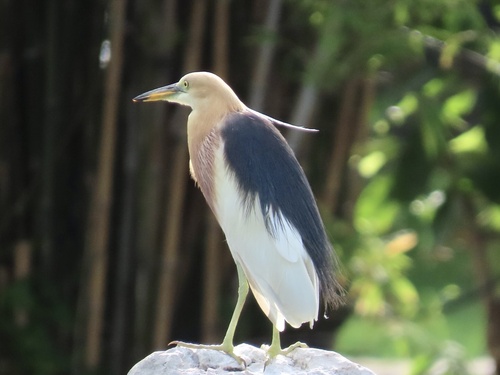 Javan Pond-Heron
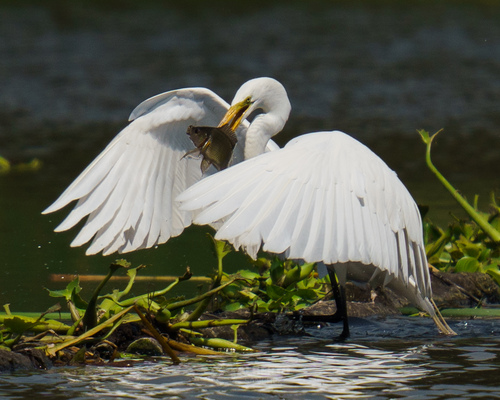 Airone bianco maggiore
In breve
Il segno distintivo più affidabile tra Javan Pond-Heron e Airone bianco maggiore è la dimensione e la struttura complessiva: l'Airone bianco maggiore è molto più grande, con un lungo collo e gambe, mentre il Javan Pond-Heron è compatto e con collo corto. In volo, entrambi mostrano ali bianche, ma l'airone è notevolmente grande e completamente bianco, mentre il Javan Pond-Heron è molto più piccolo e mostra solo ali completamente bianche (corpo e testa sono colorati durante la stagione di riproduzione). I Javan Pond-Heron non in riproduzione sono particolarmente difficili, poiché il loro corpo striato di marrone può assomigliare ad altri aironi da stagno, ma non corrisponde mai al bianco puro dell'airone. Anche il colore del becco e delle gambe aiuta: il Javan Pond-Heron ha un becco giallo con una punta nera e gambe gialle, mentre l'Airone bianco maggiore ha un becco giallo e gambe nere. Gli aironi da stagno giovanili e non in riproduzione sono la maggiore insidia, poiché i loro colori più opachi possono causare confusione.
Consigli di identificazione
- La dimensione è il separatore più chiaro: L'Airone bianco maggiore è quasi il doppio della lunghezza del Javan Pond-Heron e molto più massiccio. Se vedi un grande e maestoso airone bianco, è quasi certamente un Airone bianco maggiore.
- Lunghezza del collo e delle gambe: L'Airone bianco maggiore ha un collo lungo e snodato (spesso tenuto in forma di S in volo) e lunghe gambe nere. Il Javan Pond-Heron ha un collo corto e gambe corte in confronto, con gambe gialle.
- Colore del becco: Il Javan Pond-Heron ha un becco giallo con una punta nera; il becco dell'Airone bianco maggiore è completamente giallo (può scurirsi leggermente in stagione di riproduzione, ma non ha mai una punta nera).
- Colore delle gambe: Il Javan Pond-Heron mostra gambe gialle, mentre l'Airone bianco maggiore ha gambe e piedi neri (le gambe inferiori possono diventare più chiare in stagione di riproduzione, ma mai gialle).
- Piumaggio in volo: Entrambi mostrano ali bianche, ma l'Airone bianco maggiore è completamente bianco, mentre il Javan Pond-Heron (soprattutto in riproduzione) mostra un corpo e una testa colorati (arancione/ardesia) o striati di marrone in contrasto con ali bianche.
- Piumaggio di riproduzione: Il Javan Pond-Heron sviluppa colori arancioni brillanti e tonalità ardesia sul corpo e sulla testa, ma le ali rimangono bianche. L'Airone bianco maggiore rimane completamente bianco ma sviluppa lunghe piume ornamentali sulla schiena.
- Confusione non in riproduzione/giovanile: Il Javan Pond-Heron non in riproduzione è marrone e striato, ma le ali sono sempre bianche in volo. L'Airone bianco maggiore è sempre di un bianco puro, indipendentemente dall'età o dalla stagione.
- Jizz e postura: L'Airone bianco maggiore sta in piedi alto e dritto, spesso in acque aperte. Il Javan Pond-Heron è curvo, spesso accovacciato al bordo dell'acqua o tra le canne.
- Stile di volo: L'Airone bianco maggiore vola con battiti d'ali lenti e profondi e un collo retratto; il Javan Pond-Heron è più veloce, più diretto e appare compatto in volo.
- Contesto dell'habitat: Se l'uccello si trova in un grande umido aperto o visibile da lontano, è più probabile che sia un Airone bianco maggiore. Se si nasconde al bordo o tra la vegetazione, considera il Javan Pond-Heron.
- Colore della testa e del corpo durante la stagione di riproduzione: Solo il Javan Pond-Heron mostra tonalità arancioni/ardesia sulla testa e sul corpo; l'Airone bianco maggiore non lo fa mai.
- Nessun piccolo airone da stagno completamente bianco: Se vedi un piccolo airone con corpo, testa e ali completamente bianchi, non è un Javan Pond-Heron (a meno che non sia un raro individuo leucistico).
- La voce non è utile: Entrambi sono per lo più silenziosi; l'Airone bianco maggiore può emettere grida in colonie, ma questo è raramente diagnostico sul campo.
- Insidia: Il Javan Pond-Heron non in riproduzione può apparire molto opaco e marrone, ma non corrisponde mai al bianco puro dell'airone, tranne che per le ali in volo.
- Quando hai dubbi, controlla più segni: Usa dimensione, lunghezza del collo/gambe e colore del becco/gambe insieme, specialmente quando il piumaggio è ambiguo (ad es., airone da stagno non in riproduzione).
Taglia
L'Airone bianco maggiore è notevolmente più grande: gli adulti misurano 80–104 cm di lunghezza con un'apertura alare di 131–170 cm e pesano in media circa 1.000 g [wikipedia][avonet]. Il Javan Pond-Heron è molto più piccolo, circa 45 cm di lunghezza [wikipedia]. L'airone è quasi il doppio dell'altezza e molto più massiccio, con un collo e gambe più lunghi. Sul campo, la dimensione dell'airone è ovvia quando entrambi sono visti insieme, ma anche singolarmente, il jizz lungo e snodato dell'airone è distintivo rispetto al compatto e tozzo Javan Pond-Heron.
Piumaggio
- Giovanile/Non in riproduzione: Il Javan Pond-Heron in piumaggio non in riproduzione o immaturo è marrone e striato con macchie bianche, ma mostra sempre ali completamente bianche in volo. Il corpo e la testa rimangono marroni, mai completamente bianchi. L'Airone bianco maggiore, sia adulto che giovanile, è completamente bianco in tutte le stagioni e età [wikipedia].
- Adulto in riproduzione: Il Javan Pond-Heron sviluppa tonalità ricche di arancione, ardesia e bianco sul corpo e sulla testa, ma le ali rimangono bianche. L'Airone bianco maggiore sviluppa piume ornamentali sulla schiena ma rimane completamente bianco.
- In volo: Entrambi mostrano ali bianche, ma l'airone è completamente bianco, mentre il Javan Pond-Heron può mostrare un corpo e una testa colorati (riproduzione) o tonalità marroni (non in riproduzione) in contrasto con ali bianche. Le ali dell'airone sono molto più larghe e lunghe proporzionalmente.
Comportamento
L'Airone bianco maggiore si muove con passi lenti e deliberati, con il collo esteso quando cammina e retratto in volo. Il suo volo è lento e grazioso, con lunghe gambe che si estendono ben oltre la coda e un lungo collo ripiegato in forma di S. Il Javan Pond-Heron è più compatto, spesso accovacciato o curvo, con un collo e gambe più corti. In volo, il Javan Pond-Heron appare tozzo e veloce, con battiti d'ali rapidi rispetto ai battiti lenti e profondi dell'airone. L'airone spesso si trova in acque aperte o paludi, mentre il Javan Pond-Heron è più propenso a nascondersi al bordo dell'acqua o tra la vegetazione.
Habitat
Entrambe le specie si trovano in ambienti umidi, ma l'Airone bianco maggiore è presente in una gamma più ampia di habitat aperti, tra cui grandi laghi, paludi, estuari e persino aree costiere su più continenti. Il Javan Pond-Heron è limitato all'Asia sudorientale e preferisce ambienti umidi freschi e salmastri poco profondi, spesso con più copertura. Dove gli areali si sovrappongono, l'airone è più probabile che venga visto in acque aperte o in luoghi conspicui, mentre il Javan Pond-Heron si tiene ai bordi e ai margini vegetati.
Voce
L'Airone bianco maggiore è generalmente silenzioso ma può emettere un grido basso e rauco o un forte 'cuk cuk cuk' in colonie o quando disturbato. Il Javan Pond-Heron non è descritto come vocale nelle fonti, quindi la voce non è un separatore affidabile sul campo.
Javan Pond-Heron · Airone bianco maggiore · I miei uccelli difficili