

Gray-headed Albatross vs Buller's Albatross
Thalassarche chrysostoma contro Thalassarche bulleri
Fai un quiz con Gray-headed Albatross e Buller's Albatross
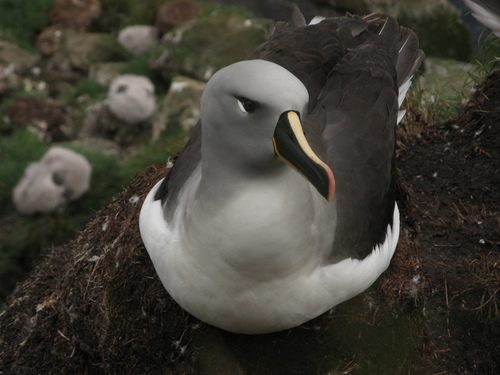 Gray-headed Albatross
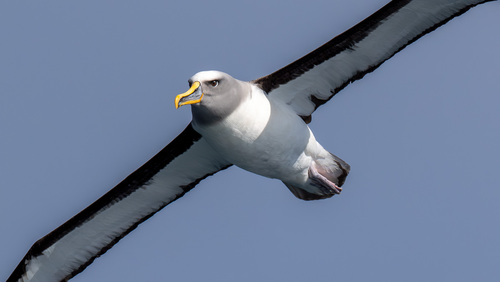 Buller's Albatross
In breve
Il segno di campo più affidabile tra il Gray-headed Albatross e il Buller's Albatross è l'estensione e il modello di nero sulla parte inferiore dell'ala: il Gray-headed (soprattutto i giovani) mostra una parte inferiore dell'ala molto più scura nel complesso, con pesante nero su entrambi i bordi anteriore e posteriore, mentre il Buller's ha un bordo anteriore e una punta nera netti e ampi, ma molto più bianco nel complesso. Gli adulti di entrambe le specie hanno teste grigie, ma quella del Gray-headed è più scura e più estesa, coprendo la gola e la parte superiore del collo, mentre quella del Buller's è più chiara con una fronte argentata e una distintiva macchia scura attorno all'occhio. Anche il colore del becco è utile: il Gray-headed ha un becco per lo più nero con creste gialle brillanti e una punta rosata, mentre il becco del Buller's è nero con giallo solo sulla cresta e sulla punta superiore. I giovani di entrambe le specie sono più scuri, ma i giovani Gray-headed hanno una testa particolarmente scura e un becco nero. Queste differenze sono meglio visibili in buona luce e a distanza ravvicinata, ma il modello della parte inferiore dell'ala è spesso visibile in volo a distanza.
Consigli di identificazione
- Modello della parte inferiore dell'ala in volo (tutte le età): Il Gray-headed Albatross, soprattutto i giovani, mostra una parte inferiore dell'ala molto più scura nel complesso, con pesante nero su entrambi i bordi anteriore e posteriore; il Buller's ha un ampio bordo anteriore nero ben definito e una punta, ma il resto della parte inferiore dell'ala è bianco. Questo è spesso visibile anche a distanza.
- Testa e becco del giovane: Il giovane Gray-headed ha un becco nero e una testa e nuca molto scure, con una crescenta oculare indistinta; il giovane Buller's ha un becco marrone e una testa scura, ma di solito mostra una crescenta bianca più definita dietro/sotto l'occhio.
- Colore della testa dell'adulto: L'adulto Gray-headed ha una testa, gola e parte superiore del collo grigio cenere uniforme, in contrasto con le parti inferiori bianche e il sopracciglio; l'adulto Buller's ha una fronte grigio argentato più chiara, una testa e gola grigie, una macchia nera attorno all'occhio e una crescenta bianca dietro e sotto l'occhio.
- Colore del becco (adulti): Il becco del Gray-headed è nero con creste gialle brillanti e una punta rosata; il Buller's è nero con giallo solo sulla cresta e sulla punta superiore. Il giallo sul Gray-headed è più esteso e più brillante.
- Parte superiore dell'ala e dorso: La parte superiore dell'ala, il mantello e la coda del Gray-headed sono quasi neri; quelli del Buller's sono grigio scuro, non neri, e il contrasto con il sopracciglio bianco è meno netto.
- Dimensioni e struttura: Il Gray-headed è leggermente più grande e più robusto, con un'apertura alare più lunga, ma questo è sottile a meno che entrambe le specie non siano insieme.
- Crescenta oculare: Entrambe le specie hanno una crescenta bianca dietro l'occhio, ma è più nettamente definita nel Buller's, soprattutto negli adulti.
- Sopracciglio e parti inferiori: Entrambi hanno sopraccigli e parti inferiori bianche, ma il contrasto è più forte nel Gray-headed a causa delle parti superiori più scure.
- Habitat e distribuzione: Se visto vicino alla Nuova Zelanda o nel Pacifico meridionale (soprattutto a nord di 50°S), è più probabile che sia il Buller's; in acque più fredde e meridionali o vicino a isole subantartiche, è più probabile che sia il Gray-headed, ma è possibile una sovrapposizione di distribuzione.
- Viste in perching: A terra, cerca l'estensione del grigio sulla testa e sul collo (più estesa e scura nel Gray-headed), e dettagli sul colore del becco.
- Volo jizz: Il Gray-headed può apparire più robusto e potente in volo, ma questo è sottile.
- Confusione giovanile: Entrambi i giovani sono più scuri degli adulti, ma la parte inferiore dell'ala completamente scura e il becco nero del Gray-headed sono distintivi.
- Macchia oculare: Il Buller's ha una distintiva macchia nera attorno all'occhio, assente nel Gray-headed.
- Bordo posteriore della parte inferiore dell'ala: Il Gray-headed mostra spesso più nero lungo il bordo posteriore della parte inferiore dell'ala, soprattutto negli immaturi; il Buller's ha un bordo posteriore bianco più pulito.
- Quando hai dubbi: Concentrati sul modello della parte inferiore dell'ala e sul colore del becco, poiché questi sono i segni più affidabili e costanti tra le età e le condizioni.
Taglia
Il Gray-headed Albatross è leggermente più grande, con una lunghezza media di 81 cm e un'apertura alare di 2,2 m, con una massa media di 3,65 kg. Il Buller's Albatross è più piccolo, con una lunghezza di circa 79 cm; non sono forniti dati sull'apertura alare o sulla massa nelle note, ma è descritto come un 'piccolo mollymawk.' In campo, questa differenza di dimensioni è sottile e potrebbe non essere ovvia a meno che gli uccelli non siano affiancati, ma il Gray-headed appare tipicamente più robusto e con ali più lunghe.
Piumaggio
Gli uccelli giovani e immaturi sono i più probabili da confondere. Il giovane Gray-headed Albatross ha una testa e una nuca molto scure, una crescenta oculare indistinta e una parte inferiore dell'ala quasi completamente scura. Il suo becco è nero. Il giovane Buller's è anche più scuro rispetto all'adulto, ma il becco è marrone anziché nero, e la parte inferiore dell'ala mantiene un ampio bordo anteriore nero ben definito e una punta, con più bianco altrove. Negli adulti, la testa, la gola e la parte superiore del collo del Gray-headed sono grigio cenere, in netto contrasto con le parti inferiori bianche e il sopracciglio, e la parte superiore dell'ala è quasi nera. L'adulto Buller's ha una fronte grigio argentato più chiara, una testa e gola grigie, una macchia nera attorno all'occhio e una crescenta bianca dietro e sotto l'occhio. La sua parte superiore dell'ala e il dorso sono grigio scuro, non neri, e la parte inferiore dell'ala è bianca con un ampio bordo anteriore nero e una punta, ma meno nero altrove rispetto al Gray-headed. Il colore del becco è un forte segno distintivo negli adulti: quello del Gray-headed è nero con creste gialle brillanti e una punta rosa-arancio, mentre quello del Buller's è nero con giallo solo sulla cresta e sulla punta superiore.
Comportamento
Entrambe le specie sono classici mollymawks, planando basse sul mare con ali rigide e curve bancarie. Il Gray-headed può apparire leggermente più potente e robusto in volo a causa delle sue dimensioni maggiori e delle ali più lunghe. Entrambe le specie nidificano in colonie su isole remote e trascorrono gran parte della loro vita in mare. Non ci sono differenze comportamentali fortemente diagnostiche sul campo.
Habitat
Il Gray-headed Albatross nidifica su isole subantartiche sparse nell'Oceano Meridionale e si nutre più a sud di qualsiasi altro mollymawk, spesso all'interno o a sud della Zona Frontale Polare Antartica. Il Buller's Albatross è endemico della Nuova Zelanda, nidificando su isole vicino alla Nuova Zelanda e nutrendosi principalmente tra 40°S e 50°S, inclusi il Mare di Tasmania e il Pacifico Meridionale. Sebbene entrambi possano disperdersi ampiamente, il Buller's è molto più probabile vicino alla Nuova Zelanda e al Pacifico Meridionale, mentre il Gray-headed è più probabile in acque più fredde e a latitudini più elevate. Tuttavia, i vagabondi di entrambe le specie possono verificarsi al di fuori di queste aree principali.
Gray-headed Albatross · Buller's Albatross · I miei uccelli difficili