

Gru coronata orientale vs Red-crowned Crane
Balearica regulorum contro Grus japonensis
Fai un quiz con Gru coronata orientale e Red-crowned Crane
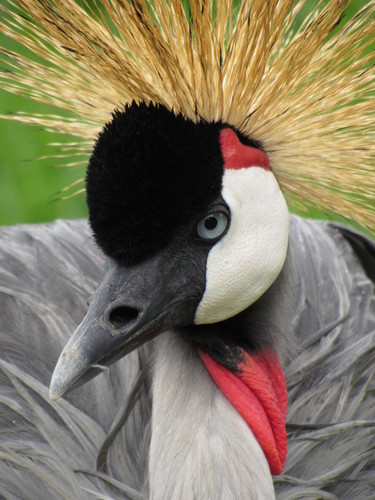 Gru coronata orientale
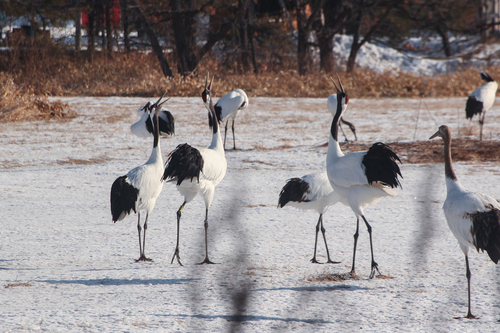 Red-crowned Crane
In breve
Il segno distintivo più affidabile tra Gru coronata orientale e Red-crowned Crane è la testa: la Gru coronata orientale mostra una sorprendente corona dorata di piume rigide e una sacca gorgogliante rossa brillante, mentre il Red-crowned Crane ha una macchia rossa nuda sulla corona e un volto per lo più bianco. In volo o a riposo, la Gru coronata orientale appare principalmente grigia con una colorazione complessa delle ali e una macchia dorata, mentre il Red-crowned Crane è bianco come la neve con secondarie nere che possono sembrare una coda nera. Le piume giovanili sono anche distinte: la giovane Gru coronata orientale è complessivamente più grigia con un volto color sabbia, mentre il giovane Red-crowned Crane è bianco con toni fulvi e grigi e manca della corona rossa dell'adulto. La dimensione è un forte indizio: il Red-crowned Crane è molto più grande e pesante. L'habitat e il comportamento forniscono ulteriori differenze: la Gru coronata orientale è spesso vista nelle savane africane e può posarsi sugli alberi, mentre il Red-crowned Crane è uno specialista delle zone umide del Nord-est asiatico.
Consigli di identificazione
- Corona di piume dorate vs. corona rossa nuda: La Gru coronata orientale mostra sempre una corona dorata di piume rigide, mentre il Red-crowned Crane ha una macchia rossa nuda di pelle sulla corona (solo negli adulti). Questo è il segno più affidabile a qualsiasi età.
- Sacca gorgogliante rossa: La Gru coronata orientale ha una sacca gorgogliante rossa brillante sotto il becco, evidente in mostra e a riposo; il Red-crowned Crane manca di questa caratteristica.
- Colore delle guance e del volto: La Gru coronata orientale ha guance bianche e un volto per lo più scuro, mentre il volto del Red-crowned Crane è per lo più bianco con una corona rossa e (nei maschi) nero sulle guance, sulla gola e sul collo; le femmine hanno queste aree di un grigio perlaceo.
- Schema della testa giovanile: La giovane Gru coronata orientale è più grigia nel complesso con un volto piumato color sabbia, priva della corona dorata; il giovane Red-crowned Crane è bianco con toni fulvi e grigi, un collare al collo grigio-caffè e nessuna pelle rossa nuda.
- Colore del corpo adulto: La Gru coronata orientale è principalmente di corpo grigio con bianco, grigio scuro, rosso scuro e giallo dorato nelle ali; il Red-crowned Crane è bianco come la neve con secondarie nere e una coda bianca.
- Schema delle ali in volo: Il Red-crowned Crane mostra secondarie nere che contrastano con primarie bianche e corpo; la Gru coronata orientale ha un'ala più complessa e colorata con giallo dorato, bianco e toni scuri ma non il netto contrasto bianco e nero.
- Apparente 'coda nera': Quando è in piedi, le secondarie nere del Red-crowned Crane possono sembrare una coda nera, ma la vera coda è bianca; la Gru coronata orientale non mostra questo effetto.
- Colore del becco e delle gambe: La Gru coronata orientale ha un becco grigio corto e gambe nere; il Red-crowned Crane ha un becco più lungo di colore verde oliva a corno e gambe grigio scuro a nere.
- Dimensione: Il Red-crowned Crane è molto più grande e pesante (fino a 1,5 m di altezza e 8–10 kg) rispetto alla Gru coronata orientale (1 m di altezza, 3,5 kg). Utilizzare questo solo con un chiaro riferimento.
- Comportamento di posarsi: Solo la Gru coronata orientale si posa sugli alberi, grazie al suo lungo dito posteriore; il Red-crowned Crane non lo fa mai.
- Habitat: La Gru coronata orientale si trova nelle savane africane, nelle paludi e nelle terre coltivate; il Red-crowned Crane è limitato alle zone umide e ai prati fluviali del Nord-est asiatico.
- Mostra e formazione di gruppi: La Gru coronata orientale danza spesso energicamente e forma grandi gruppi; il Red-crowned Crane è più spesso visto in coppie o piccoli gruppi familiari, tranne durante la migrazione/inverno.
- Vocalizzazione: La Gru coronata orientale emette un richiamo potente/ronzante, molto diverso dal classico bugling del Red-crowned Crane.
- Schema delle ali giovanile: Il giovane Red-crowned Crane mostra secondarie nere e marroni opache e primarie bianche con punte nere; i giovani della Gru coronata orientale sono più uniformemente grigi.
- Contesto: Se visto in Africa, è la Gru coronata orientale; se nel Nord-est asiatico, è il Red-crowned Crane. Queste specie non si sovrappongono in natura.
Taglia
Il Red-crowned Crane è sostanzialmente più grande e pesante della Gru coronata orientale. Il Red-crowned Crane misura 150–158 cm di altezza (quasi 5 piedi), con un'apertura alare di 220–250 cm (oltre 7–8 piedi), e pesa in media 8–10 kg, rendendolo la specie di gru più pesante [wikipedia][avonet]. Al contrario, la Gru coronata orientale è alta circa 1 m (3 piedi e 3 pollici), con un'apertura alare di 2 m (6 piedi e 7 pollici), e pesa circa 3,5 kg [wikipedia][avonet]. Questa differenza di dimensione è ovvia in un confronto diretto, ma meno evidente a distanza o senza un riferimento.
Piumaggio
Gli uccelli giovanili e immaturi sono più facilmente separabili per il modello della testa e delle ali. La giovane Gru coronata orientale è complessivamente più grigia degli adulti, con un volto piumato color sabbia, priva della corona dorata e della sacca gorgogliante rossa degli adulti. Il giovane Red-crowned Crane è per lo più bianco con toni fulvi, cannella e grigi, un collare al collo grigio-caffè e una corona/fronte coperta di piume grigie e fulve—nessuna pelle rossa nuda. Il modello delle ali nel giovane Red-crowned Crane include secondarie nere e marroni opache e primarie bianche con punte nere, mentre i giovani della Gru coronata orientale hanno meno contrasto e un grigio più uniforme.
Negli adulti, la Gru coronata orientale ha una corona dorata di piume rigide, guance bianche, una sacca gorgogliante rossa brillante, piumaggio del corpo principalmente grigio e ali che sono bianche, grigio scuro, rosso scuro e giallo dorato. Gli adulti del Red-crowned Crane sono complessivamente bianchi come la neve, con secondarie nere (che appaiono come una 'coda' nera quando in piedi), una corona rossa nuda e (nei maschi) nero sulle guance, sulla gola e sul collo (le femmine hanno queste aree di un grigio perlaceo). La vera coda è bianca nel Red-crowned Crane. Il colore del becco e delle gambe differisce: la Gru coronata orientale ha un becco grigio corto e gambe nere, mentre il Red-crowned Crane ha un becco di colore verde oliva a corno e gambe grigio scuro a nere.
Comportamento
La Gru coronata orientale è unica tra le gru per la sua capacità di posarsi sugli alberi, grazie a un lungo dito posteriore, ed è spesso vista danzare, inchinarsi e saltare come parte della sua mostra. I gruppi di 30–150 non sono rari. Il Red-crowned Crane non si posa sugli alberi ed è più strettamente associato alle zone umide. Entrambe le specie sono note per elaborate danze di corteggiamento, ma la mostra della Gru coronata orientale è particolarmente energica e può avvenire tutto l'anno. La Gru coronata orientale spesso si associa a mammiferi erbivori per far saltare gli insetti, mentre il Red-crowned Crane è più solitario o in coppie/gruppi familiari al di fuori delle migrazioni e dei gruppi invernali.
Habitat
La Gru coronata orientale si trova nell'Africa sub-sahariana, principalmente nelle savane secche ma anche in paludi, terre coltivate e pianure erbose vicino all'acqua. È adattabile e può essere vista in una gamma di habitat aperti, spesso vicino a fiumi e laghi. Il Red-crowned Crane è nativo del Nord-est asiatico, nidificando in zone umide, paludi e prati fluviali, e svernando in habitat simili in Corea, Cina e Giappone. Le due specie non si sovrappongono mai in natura, e le loro preferenze di habitat sono piuttosto distinte: la Gru coronata orientale è un generalista delle savane e delle zone umide, mentre il Red-crowned Crane è uno specialista delle zone umide.
Voce
La Gru coronata orientale emette un richiamo potente che coinvolge l'inflazione della sacca gorgogliante rossa, così come un suono di ronzio che è molto diverso dal trombettare di altre gru. Le vocalizzazioni del Red-crowned Crane non sono descritte in dettaglio nelle note, ma sono generalmente note per essere forti, trombe bugolanti tipiche delle grandi gru. Sul campo, il richiamo della Gru coronata orientale è meno risonante e più ronzante/potente, mentre quello del Red-crowned Crane è un classico bugle di gru.
Gru coronata orientale · Red-crowned Crane · I miei uccelli difficili