

Eufonia Matorralera vs Eufonia Gorjiamarilla
Euphonia affinis frente a Euphonia hirundinacea
Juega un quiz con Eufonia Matorralera y Eufonia Gorjiamarilla
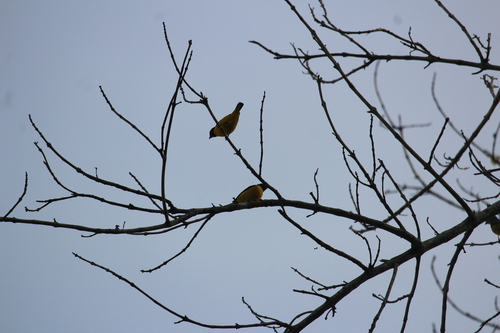 Eufonia Matorralera
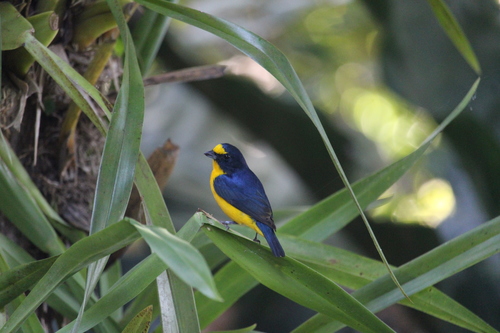 Eufonia Gorjiamarilla
En breve
La marca de campo más confiable para separar la Eufonia Matorralera y la Eufonia Gorjiamarilla es el color y la extensión de la garganta y las partes inferiores en ambos sexos, especialmente en la hembra: la hembra de la Eufonia Gorjiamarilla muestra una garganta y un vientre blanquecinos a gris pálido, mientras que la hembra de la Eufonia Matorralera es de color oliva-amarillo en toda la parte inferior. Los machos adultos son más complicados, pero el amarillo en la frente de la Eufonia Matorralera es más pequeño y no llega más allá del ojo, mientras que en la Eufonia Gorjiamarilla se extiende hasta aproximadamente la mitad del ojo. En vuelo, ambas especies muestran blanco en la cola, pero la Eufonia Gorjiamarilla tiene un óvalo blanco más obvio en la parte inferior del ala. El tamaño también es una pista: la Gorjiamarilla es notablemente más pesada y ligeramente más larga. Las aves inmaduras se separan mejor por el color de la garganta y el vientre, con la Gorjiamarilla mostrando partes inferiores centrales más pálidas tan pronto como aparece el amarillo.
Consejos de identificación
- Partes inferiores de la hembra: La hembra de la Eufonia Gorjiamarilla tiene una garganta y un vientre blanquecinos a gris pálido, en un fuerte contraste con los flancos amarillento-oliva; la hembra de la Eufonia Matorralera es de color oliva-amarillo en toda la parte inferior. Esta es la marca más confiable para separar hembras e inmaduros.
- Parche en la frente del macho: El parche amarillo en la frente del macho de la Eufonia Matorralera es pequeño y no llega más allá del ojo; en la Eufonia Gorjiamarilla se extiende hasta aproximadamente la mitad del ojo. Usa esta marca con buena luz y vistas cercanas.
- Cubiertas de la cola del macho: El macho adulto de la Eufonia Matorralera tiene cubiertas de la cola amarillas; el macho de la Eufonia Gorjiamarilla tiene cubiertas de la cola de un gris apagado. Esto es sutil y puede ser difícil de ver a menos que el pájaro esté posado y erguido.
- Patrón de la parte inferior del ala en vuelo: La Eufonia Gorjiamarilla muestra un área grande, blanca y ovalada en la parte inferior del ala desde las membranas internas de las plumas de la cola exterior y cubiertas de la parte inferior del ala blancas; la Eufonia Matorralera tiene blanco solo en las membranas internas de las dos plumas de la cola exterior, menos extensa y menos obvia en vuelo. Esto se ve mejor en aves volando por encima o cuando se acicalan.
- Machos inmaduros/juveniles: El macho inmaduro de la Eufonia Gorjiamarilla desarrolla una garganta y un vientre pálidos (blanquecinos) antes de que aparezca la máscara negra y las partes superiores azul-negro, mientras que los inmaduros de la Eufonia Matorralera permanecen de color oliva-amarillo en la parte inferior. Si ves un pájaro joven con una garganta y un vientre pálidos, es la Gorjiamarilla.
- Pico y estructura: Ambas especies tienen picos cortos y robustos, pero la Eufonia Gorjiamarilla es ligeramente más grande y pesada en general. Esta es una marca de apoyo más que una primaria.
- Tamaño: La Eufonia Gorjiamarilla es más pesada (14 g vs. 10 g) y ligeramente más larga (10–12 cm vs. 10 cm), pero esto solo es obvio en comparación directa o con experiencia.
- Partes superiores del macho: Ambos machos adultos tienen partes superiores azul-negro brillantes, pero esto no es útil para la separación; enfócate en el parche de la frente y las cubiertas de la cola en su lugar.
- Partes superiores de la hembra: La hembra de la Eufonia Gorjiamarilla tiene un leve brillo metálico en las partes superiores de color verde oliva; la hembra de la Eufonia Matorralera es más uniformemente oliva con un tono gris en la espalda. Esto es sutil y no siempre confiable.
- Vocalizaciones: Los llamados y canciones son similares—agudos, delgados y trinos—pero los llamados de la Gorjiamarilla son más variados y a veces ásperos o harinosos. Usa la voz solo como una pista de apoyo a menos que estés muy familiarizado con ambas especies.
- Hábitat: Ambas especies se superponen ampliamente en hábitat y rango, así que no confíes solo en la ubicación para la identificación.
- Patrón de la cola en vuelo: Ambas especies muestran blanco en las plumas de la cola exterior, pero el de la Gorjiamarilla es más extenso y forma un área blanca más grande en la parte inferior del ala; la Eufonia Matorralera tiene un patrón más limitado.
- Contexto con otras eufonias: La hembra de la Eufonia Gorjiamarilla es única en la región por su garganta y vientre pálidos; otras eufonias locales, incluida la hembra de la Eufonia Matorralera, son amarillas o oliva-amarillas en la parte inferior. Si ves una eufonia hembra con un vientre pálido, es la Gorjiamarilla.
- Estacionalidad: No se notan diferencias fuertes en el plumaje estacional para ninguna de las especies; todas las marcas clave se aplican durante todo el año.
- Trampas: Ten cuidado con los machos inmaduros de la Eufonia Gorjiamarilla, que pueden parecer hembras pero mostrarán una garganta y un vientre pálidos a medida que maduran. Los inmaduros de la Eufonia Matorralera nunca muestran esta parte inferior central pálida.
Tamaño
La Eufonia Gorjiamarilla es claramente más grande y pesada, promediando alrededor de 14 g frente a 10 g para la Eufonia Matorralera. Ambas son de cola corta y compactas, pero la Gorjiamarilla es ligeramente más larga (10–12 cm vs. 10 cm) y tiene un aspecto más pesado y robusto, especialmente en comparación directa. Esta diferencia es sutil en el campo a menos que ambas especies estén una al lado de la otra, pero puede ser útil si tienes una buena vista de las proporciones o las ves juntas en un árbol frutal.
Plumaje
- Hembras: La hembra de la Eufonia Gorjiamarilla es única entre las eufonias locales al tener una garganta, centro del pecho y vientre blanquecinos a gris pálido, con flancos amarillento-oliva. La hembra de la Eufonia Matorralera es de color oliva-amarillo en toda la parte inferior, careciendo de cualquier área pálida o blanquecina en la parte inferior.
- Machos adultos: Ambos tienen partes superiores azul-negro brillantes y una frente amarilla, pero el parche amarillo en la Eufonia Matorralera es más pequeño, no llegando más allá del ojo, mientras que en la Eufonia Gorjiamarilla se extiende hasta aproximadamente la mitad del ojo. Las partes inferiores son amarillas en ambas, pero las cubiertas de la cola de la Eufonia Matorralera son amarillas, mientras que las de la Eufonia Gorjiamarilla son de un gris apagado. Las cubiertas de la parte inferior del ala son blancas en la Eufonia Gorjiamarilla, y la parte inferior en vuelo muestra un gran óvalo blanco desde las membranas internas de las plumas de la cola exterior; la Eufonia Matorralera también tiene blanco en la cola, pero el patrón de la parte inferior del ala es menos extenso.
- Inmaduros/Juveniles: Ambas comienzan pareciendo hembras, pero a medida que los machos de la Eufonia Gorjiamarilla maduran, desarrollan una garganta y un vientre pálidos (blanquecinos) antes de que aparezca la máscara negra y las partes superiores azul-negro. Los inmaduros de la Eufonia Matorralera permanecen de color oliva-amarillo en la parte inferior. Esto hace que la garganta y el vientre pálidos sean una marca fuerte para la Gorjiamarilla a todas las edades, excepto el macho adulto de la Eufonia Matorralera, que nunca lo muestra.
Comportamiento
Ambas especies son arbóreas, a menudo forrajeando en parejas o pequeños grupos, y se pueden ver en los bordes del bosque, plantaciones y bosques abiertos. No se notan diferencias de comportamiento fuertes en las fuentes que sean confiables para la separación en el campo. Ambas especies tienden a ser activas y pueden ser confiadas, a menudo alimentándose de bayas de muérdago y otras frutas pequeñas.
Hábitat
Ambas especies se superponen en gran parte de su rango desde México hasta América Central, y ambas utilizan una variedad de hábitats, incluyendo bordes de bosque, bosques abiertos y plantaciones sombreadas. La Eufonia Gorjiamarilla se encuentra desde el sureste de México hasta el oeste de Panamá, mientras que la Eufonia Matorralera abarca desde México hasta Costa Rica. Hay una superposición considerable, por lo que el hábitat por sí solo no es diagnóstico, pero la Eufonia Matorralera puede ser más común en hábitats más secos y abiertos, y la Gorjiamarilla se encuentra a menudo en regiones tanto húmedas como secas.
Voz
Ambas especies tienen llamados agudos y delgados y canciones débiles y trinos. La Eufonia Matorralera emite de 1 a 3 silbidos puros ("dee-dee-dee"), a veces seguidos de más notas, y una débil mezcla de trinos. Los llamados de la Eufonia Gorjiamarilla son más variados y se describen como cortos, explosivos y a veces ásperos o harinosos, con frases como "pidgel-eece" y "chi-bib-bib-bib-bib." La canción de la Gorjiamarilla es entrecortada y puede incluir notas imitadas, pero su repertorio es más pequeño que el de algunos parientes. En la práctica, las diferencias son sutiles y no siempre confiables para la separación en el campo a menos que estés muy familiarizado con ambas especies.
Eufonia Matorralera · Eufonia Gorjiamarilla · Mis aves difíciles