
Pinzón Vulgar vs Picogordo Común
Fringilla coelebs frente a Coccothraustes coccothraustes
Juega un quiz con Pinzón Vulgar y Picogordo Común
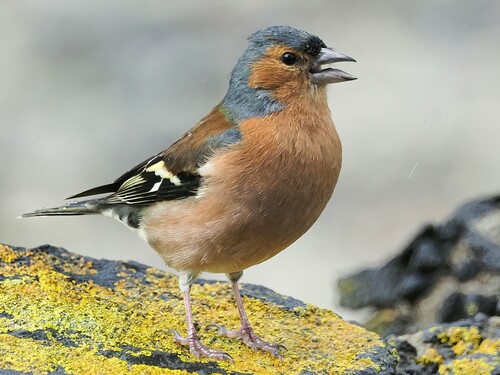 Pinzón Vulgar
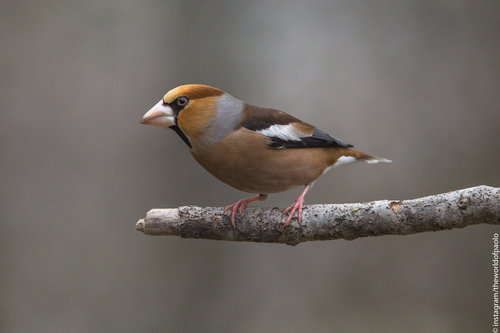 Picogordo Común
En breve
La marca de campo más fiable entre el Pinzón Vulgar y el Picogordo Común es el pico: el Picogordo Común tiene un pico masivo, con forma de cabeza de toro y cónico, mientras que el pico del Pinzón Vulgar es mucho más delgado y más típico de los pequeños pinzones. En vuelo, el Picogordo Común parece tener una cola muy corta y es voluminoso, con llamativas barras alares blancas y una punta de cola blanca, mientras que el Pinzón Vulgar muestra dos barras alares blancas nítidas y lados de cola blancos, pero es más esbelto y tiene una cola más larga. Los machos adultos de Pinzón Vulgar son de colores brillantes con una gorra azul-gris y partes inferiores oxidadas, pero las hembras y los juveniles son mucho más apagados y pueden confundirse con el Picogordo Común a distancia. Ambas especies tienen blanco en las alas, pero el patrón y la estructura son bastante diferentes. Prestar atención cuidadosa al tamaño del pico, la forma de la cabeza y la silueta en vuelo resolverá la mayoría de las confusiones, especialmente en aves con plumaje apagado o inmaduras.
Consejos de identificación
- Bill size and shape: Picogordo Común has a massive, bull-headed, conical bill, much larger and thicker than Chaffinch’s slender finch bill. This is the single most reliable structural difference at any distance or angle.
- Head and neck structure: Picogordo Común appears bull-necked and big-headed, with a steep forehead and thick neck; Chaffinch is more streamlined and small-headed.
- Tail shape and length: In flight, Picogordo Común looks very short-tailed and compact, while Chaffinch has a longer, more tapered tail with obvious white sides.
- Wing pattern in flight: Chaffinch (all ages) shows two crisp white wing bars and white tail sides; Picogordo Común has a single broad white wing patch and a white tail tip, with less obvious tail sides.
- Adult male plumage: Chaffinch males are unmistakable with blue-grey cap, black forehead, and rich rust-red underparts; Picogordo Común is more uniform brown with orange head and black bib/eye-stripe.
- Female and juvenile confusion: Both can be dull brown, but Chaffinch still shows two neat white wing bars and a slimmer bill; Picogordo Común’s bill is always thick, and the wing patch is blockier.
- Flight silhouette: Picogordo Común is heavy, short-tailed, and bull-headed in flight; Chaffinch is slimmer, longer-tailed, and more agile.
- Leg color: Picogordo Común has short, pinkish legs; Chaffinch’s legs are grey-brown, but this is rarely diagnostic in the field.
- Bill color by season: Picogordo Común’s bill is black in summer, paler in winter; Chaffinch’s bill is pale grey in winter, bluish-grey in spring, but bill size is a much better separator.
- Habitat context: In gardens, farmland, or open country, expect Chaffinch; Picogordo Común is almost always in mature woodland or large parks with big trees.
- Behavior: Chaffinch is more active and often on the ground; Picogordo Común is more secretive, often high in trees or perched quietly.
- Vocalizations: Chaffinch gives a sharp 'pink' call and cheerful song; Picogordo Común’s call is a hard 'chick', and its song is quiet and rarely heard.
- Relative abundance: Chaffinch is common and widespread; Picogordo Común is scarce and local in most areas, so default to Chaffinch unless you have strong evidence for Picogordo Común.
- Mixed flocks: If you see a group, especially on the ground, they are almost certainly Chaffinches; Hawfinches rarely form large flocks and are more solitary.
- When in doubt: Focus on bill size and head shape first, then check wing and tail patterns in flight. If the bird looks bull-headed and massive-billed, it’s a Picogordo Común; if it’s slim-billed and shows two white wing bars, it’s a Chaffinch.
Tamaño
El Picogordo Común es sustancialmente más grande y pesado que el Pinzón Vulgar. El Pinzón Vulgar promedia 22 g de masa y mide aproximadamente 14.5 cm de largo con una envergadura de 24.5–28.5 cm. El Picogordo Común es mucho más robusto, pesando entre 46–70 g, con una longitud de 16.5–18 cm y una envergadura de 29–33 cm. En el campo, el Picogordo Común se ve notablemente más voluminoso, con un cuello grueso y una cabeza grande, mientras que el Pinzón Vulgar es más delicado y esbelto. La diferencia de tamaño es especialmente obvia si ambas especies se ven juntas, pero puede subestimarse a distancia o sin comparación directa.
Plumaje
- Juveniles y hembras: Ambas especies tienen plumaje más apagado y marrón, pero los juveniles y hembras de Pinzón Vulgar muestran dos barras alares blancas claras y lados de cola blancos, mientras que el Picogordo Común tiene una sola mancha alar blanca fuerte y una punta de cola blanca. Las barras alares del Pinzón Vulgar son más lineales y nítidas, mientras que la mancha alar del Picogordo Común es más amplia y más cuadrada.
- Machos adultos: Los machos de Pinzón Vulgar son de colores brillantes con una gorra azul-gris, frente negra y partes inferiores de un rico color óxido, mientras que el Picogordo Común de ambos sexos es de un marrón claro en general con cabeza marrón-naranja, babero negro y raya ocular, y una nuca gris. Las alas del Picogordo Común son de un negro profundo arriba con rayas blancas, marrones y azules, pero el efecto general es más apagado que los brillantes contrastes del Pinzón Vulgar.
- Vistas en vuelo: El Pinzón Vulgar muestra un perfil más esbelto y de cola más larga con dos barras alares blancas y lados de cola blancos; el Picogordo Común aparece corto de cola y con cabeza de toro, con una amplia mancha alar blanca y una punta de cola blanca. Ambos tienen blanco en las alas, pero la forma y la colocación son diferentes.
- Cambios estacionales: Los machos de Pinzón Vulgar se vuelven más brillantes en primavera a medida que se desgastan las puntas de las plumas, mientras que el color del pico del Picogordo Común cambia de pálido en invierno a negro en verano, pero el plumaje corporal general es similar durante todo el año.
Comportamiento
El Pinzón Vulgar es un ave activa y ágil, a menudo vista alimentándose en el suelo o revoloteando entre árboles y arbustos, a veces en bandadas mixtas. El Picogordo Común es más reservado y generalmente se ve solo o en pequeños grupos, a menudo alto en el dosel o posado en silencio. En vuelo, el Pinzón Vulgar es rebotante y directo, mientras que el Picogordo Común se ve pesado, con aleteos lentos y poderosos y una cola notablemente corta. Los movimientos del Picogordo Común son más deliberados y menos inquietos que los del Pinzón Vulgar.
Hábitat
Ambas especies pueden ocurrir en bosques y parques, pero el Pinzón Vulgar es mucho más ampliamente distribuido y adaptable, encontrado en una amplia gama de hábitats incluyendo jardines, setos y campo abierto. El Picogordo Común es más especializado, favoreciendo bosques caducifolios o mixtos maduros con árboles grandes, especialmente carpes, y es menos probable que se vea en áreas abiertas o urbanas. Si estás en un jardín o tierras agrícolas, es mucho más probable que veas un Pinzón Vulgar; el Picogordo Común suele estar restringido a áreas bien arboladas.
Voz
El Pinzón Vulgar tiene una canción familiar y alegre y un agudo llamado metálico 'pink'. El llamado del Picogordo Común es un duro y explosivo 'chick', y su canción es silenciosa y murmurada, a menudo pasa desapercibida. En bandadas mixtas o cuando las aves están ocultas, la diferencia en las notas de llamada puede ser útil: el llamado del Pinzón Vulgar es más agudo y resonante, mientras que el del Picogordo Común es más bajo, más duro y más abrupto.