
Yellow-olive Flatbill vs Yellow-winged Flatbill
Tolmomyias sulphurescens versus Tolmomyias flavotectus
Play a quiz with Yellow-olive Flatbill and Yellow-winged Flatbill
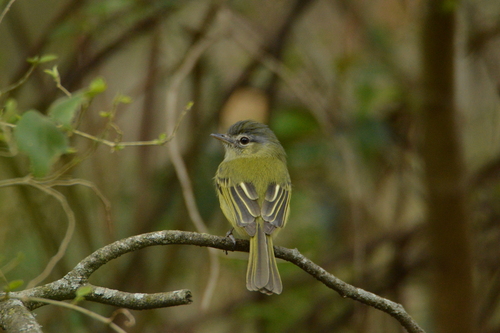 Yellow-olive Flatbill
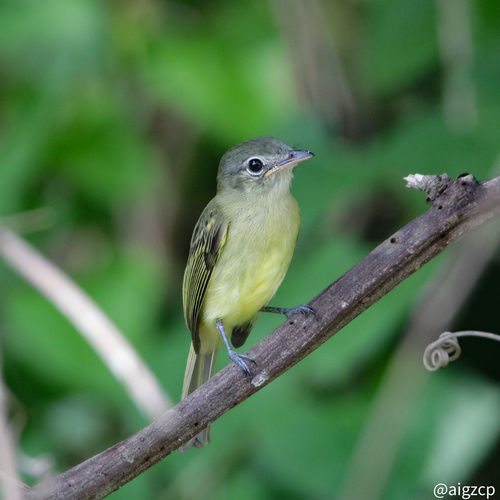 Yellow-winged Flatbill
In short
The most reliable field mark between Yellow-olive Flatbill and Yellow-winged Flatbill is the wing pattern: adult Yellow-winged Flatbill shows broad, bright yellow edges on the wing feathers, creating a distinctly yellow-winged look, while Yellow-olive Flatbill has narrower yellow-olive edging and less contrast. Head color is also key: Yellow-winged Flatbill has a dark gray head with a crisp white eye-ring, whereas Yellow-olive Flatbill is olive-crowned with a thinner, less obvious eye-ring. Juveniles of both species are duller, but Yellow-winged Flatbill juveniles lack the strong gray head and have less distinct yellow on the wings. Both species are similar in size and structure, but their ranges only overlap in parts of Central and northwestern South America. Use wing and head pattern first, especially in perched birds, and be cautious with juveniles, which can be confusing.
Identification tips
- Wing pattern (adults): Look for broad, bright yellow edges on the wing feathers of Yellow-winged Flatbill, creating a strong yellow-winged effect. Yellow-olive Flatbill has narrower, duller yellow-olive edging, forming two wing bars but lacking the overall yellow glow.
- Head color: Yellow-winged Flatbill has a dark gray head with a crisp white eye-ring, while Yellow-olive Flatbill has an olive crown and nape with a thinner, less distinct white eye-ring and sometimes a thin white supercilium.
- Juvenile confusion: Juvenile Yellow-winged Flatbill lacks the strong gray head and has less distinct yellow on the wings, making it more similar to Yellow-olive Flatbill juveniles, which have paler underparts, a broken eye-ring, and a dark iris. In juveniles, wing and head pattern are less reliable, so use caution.
- Underparts: Both species have yellow bellies and undertail coverts, but Yellow-winged Flatbill's throat and breast are pale gray with a yellowish wash, while Yellow-olive Flatbill's are more greenish-olive to grayish.
- Facial marks: Yellow-olive Flatbill may show a thin white band above the lores and a thin white eye-ring; Yellow-winged Flatbill's white eye-ring is more prominent and complete.
- Tail: Both species have olive-green to brownish tails with pale edges, not a strong separator.
- Bill: Both have a broad, flat bill with a black maxilla and pale mandible; bill color and shape are not reliable for separation.
- Iris color: Yellow-olive Flatbill's iris is variable (pale brown to pale gray, sometimes dark in some subspecies/juveniles); Yellow-winged Flatbill's is olive to dark brown. This is subtle and not always visible in the field.
- Size and structure: Both are similar in size and proportions; do not rely on size or jizz for separation.
- Range: If you are outside Colombia, Costa Rica, Panama, or northwest Ecuador, you almost certainly have Yellow-olive Flatbill. In overlap zones, use plumage marks.
- Habitat: In overlap areas, Yellow-winged Flatbill is more likely in wet forest interiors and mature secondary forest; Yellow-olive Flatbill is more generalist.
- Flight views: In flight, look for the strong yellow in the wings of Yellow-winged Flatbill (adults); Yellow-olive Flatbill's wings are less striking.
- Subspecies confusion: Yellow-olive Flatbill is highly variable across its range, but none of its forms show the broad, bright yellow wing edges of Yellow-winged Flatbill.
- Voice: Not described in the provided notes; do not use as a separator here.
- Season/sex: Both species are sexually monomorphic and do not show strong seasonal changes in plumage.
Size
Both species are very similar in size: Yellow-olive Flatbill is 12.5–14 cm long and weighs 14.5–15.2 g, while Yellow-winged Flatbill is 13–13.5 cm and about 15 g. In the field, size is not a useful separator, as both are small, flat-billed flycatchers with similar proportions. Bill width and length are comparable, and both have a broad, flat bill typical of Tolmomyias, so structural differences are subtle and not reliable for separation.
Plumage
-
Juveniles: Both species have duller, less contrasting plumage than adults. Juvenile Yellow-olive Flatbill shows paler underparts, a broken eye-ring, and a dark iris. Juvenile Yellow-winged Flatbill lacks the strong gray head and has less distinct yellow edges on the wings, making the yellow 'winged' effect weaker than in adults.
-
Adults (all seasons):
- Yellow-winged Flatbill: Dark gray head with a crisp white eye-ring, olive-green back and tail, and broad, bright yellow edges on the wing feathers (especially coverts and remiges), making the wings look distinctly yellow-margined even at a distance. Throat and breast are pale gray with a yellowish wash, belly and undertail coverts are yellow.
-
Yellow-olive Flatbill: Olive crown and nape, thin white band above the lores, thin white eye-ring, and olive-green upperparts. Wings are dusky or blackish with yellowish-olive edges on the coverts (forming two wing bars) and yellowish edges on the remiges, but these are narrower and less vibrant than in Yellow-winged Flatbill. Throat is pale greenish gray, breast and flanks are grayish greenish olive, and belly/undertail coverts are bright yellow. Tail is brownish to dusky with buffy edges.
-
Subspecies variation: Yellow-olive Flatbill has many subspecies with subtle differences in crown color, facial marks, and belly shade, but none show the broad yellow wing edges of Yellow-winged Flatbill.
Behaviour
Both species forage in the mid-story to canopy, often joining mixed-species flocks. They are typically seen singly or in pairs, rarely in groups. Foraging behavior is similar: sallying for insects from perches and gleaning from foliage. Neither species is particularly conspicuous in movement or flight, and both can be overlooked in dense foliage. Nesting behavior is not a useful field mark, as both build suspended bag nests, though Yellow-winged Flatbill's nest is described as pear-shaped with a sloping tunnel entrance.
Habitat
Yellow-olive Flatbill has a much broader range, found from Mexico through Central America, Trinidad, and nearly all of South America except Chile. It occupies a wide variety of forest types, including edges and secondary growth. Yellow-winged Flatbill is restricted to humid forests of the Caribbean slope from Costa Rica through Panama and western Colombia to northern Ecuador, and is absent from eastern South America and most of Central America. Where ranges overlap (Costa Rica, Panama, western Colombia, northwest Ecuador), habitat preferences may converge, but Yellow-winged Flatbill is more tied to wet forest interiors and mature secondary growth, while Yellow-olive Flatbill can be found in a broader range of wooded habitats.
Yellow-olive Flatbill · Yellow-winged Flatbill · My Tricky Birds