

Motmot

Yellow-bellied Bulbul vs Fluffy-backed Tit-Babbler

Alophoixus phaeocephalus versus Macronus ptilosus

Play a quiz with Yellow-bellied Bulbul and Fluffy-backed Tit-Babbler
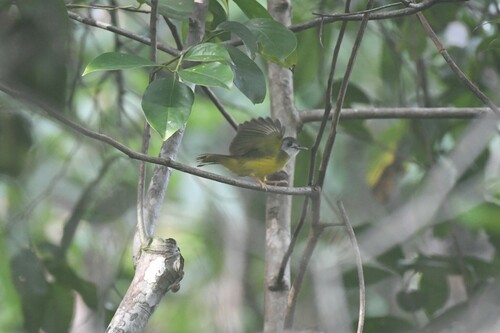
Yellow-bellied Bulbul (Alophoixus phaeocephalus) Yellow-bellied Bulbul
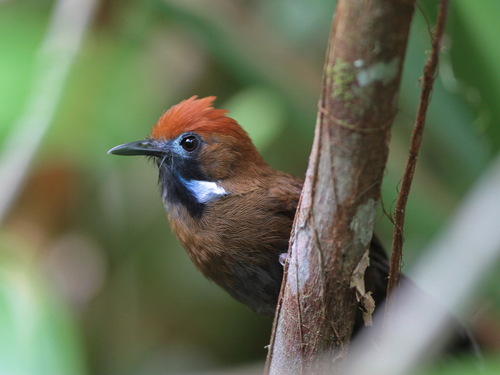
Fluffy-backed Tit-Babbler (Macronus ptilosus) Fluffy-backed Tit-Babbler

Media

Loading…

In short

The most reliable way to separate Yellow-bellied Bulbul from Fluffy-backed Tit-Babbler is by overall structure and plumage: the bulbul is a more robust, upright bird with a clean yellow belly and greyish head, while the tit-babbler is smaller, more active, and shows a distinctive fluffy or loose appearance on its back. Both species share similar lowland forest habitats in the Malay Peninsula and Borneo region, but their posture, head pattern, and feather texture are key in the field. Juvenile and immature-specific wing patterns are not described for either species, so focus on adult structure and plumage. Beware of confusing alternate names for the bulbul, as these overlap with other species.

Identification tips

  1. Check for a yellow belly and greyish head: Only the Yellow-bellied Bulbul has a clean yellow belly and a contrasting grey or grey-capped head with a white throat. The tit-babbler is more uniformly brownish and lacks these sharp contrasts.
  2. Look for the fluffy back: The Fluffy-backed Tit-Babbler is named for its loose, fluffy upperparts, which can look scruffy or tousled, especially when the bird is active. The bulbul's plumage is smooth and neat.
  3. Assess overall structure: The bulbul is more robust and upright, often perching in a conspicuous spot. The tit-babbler is smaller, more compact, and often appears hunched or horizontal when moving through foliage.
  4. Behavioral cues: Tit-babblers are very active, often seen in small groups, and move quickly through undergrowth or low branches. Bulbuls are more likely to be solitary or in pairs and spend more time perched.
  5. Head and throat pattern: The bulbul's grey head and white throat are distinctive. The tit-babbler lacks these features and has a less defined head pattern.
  6. No crest in bulbul: Despite some alternate names, the Yellow-bellied Bulbul is crestless, which helps separate it from other bulbuls but not from the tit-babbler.
  7. Ignore alternate names: Be aware that 'yellow-bellied bulbul' and 'white-throated bulbul' are used for other species; always check the actual field marks, not just names.
  8. No diagnostic wing pattern in flight: Neither species is described as having unique juvenile or immature wing markings, so do not rely on flight views for separation.
  9. Habitat overlap: Both can be found in similar forest types, so do not use habitat as a primary separator unless in swampland, which slightly favors the tit-babbler.
  10. No reliable size difference in the field: While the tit-babbler's mass is documented, both are small songbirds; use structure and plumage, not size, for separation.
  11. Voice not described: If you hear a song or call, do not use it for separation based on these notes.
  12. Watch for posture: Bulbuls perch upright and may sing from exposed branches; tit-babblers are more likely to be seen moving rapidly through dense cover.
  13. Group size: Tit-babblers are often in small, noisy groups, while bulbuls are more often alone or in pairs.
  14. Context of confusion: If you are unsure due to alternate names or ambiguous plumage, focus on the yellow belly and grey head (bulbul) versus the fluffy back and brownish tones (tit-babbler).

Size

Only the Fluffy-backed Tit-Babbler has a documented mass (26g [wikidata]), but both species are broadly similar in size, typical of small forest songbirds. The bulbul may appear slightly bulkier and more upright, while the tit-babbler is likely more delicate and compact. Without direct measurements for the bulbul, rely on jizz and posture rather than absolute size.

Plumage

No age-specific wing or flight patterns are described for either species, so focus on adult plumage. The Yellow-bellied Bulbul shows a clean yellow belly, a greyish or grey-capped head, and a white throat, with no crest. Its plumage is generally smooth and neat. In contrast, the Fluffy-backed Tit-Babbler is named for its loose, fluffy back feathers, giving it a scruffy or tousled look, especially on the upperparts. The tit-babbler lacks the bulbul's clear yellow belly and instead has a more muted, brownish overall coloration. Head pattern is less distinct in the tit-babbler, lacking the bulbul's contrasting grey head and white throat.

Behaviour

The bulbul tends to perch upright and can appear more stationary, often singing from a visible perch. The tit-babbler is more active, frequently moving through undergrowth or low branches, and often appears in small groups. Its foraging is more restless and mouse-like, sometimes flicking its wings or tail. The loose, fluffy back feathers of the tit-babbler may be more obvious when it is actively foraging.

Habitat

Both species inhabit subtropical or tropical moist lowland forests in the Malay Peninsula, Sumatra, Borneo, and adjacent areas. The tit-babbler's range extends slightly farther north into Thailand and includes swampland as well as forest. In the field, both can occur in similar forest types, so habitat alone is not a strong separator.

Submit a better description

Use the same sections as the comparison. Your text is published immediately.

The most reliable way to separate Yellow-bellied Bulbul from Fluffy-backed Tit-Babbler is by overall structure and plumage: the bulbul is a more robust, upright bird with a clean yellow belly and greyish head, while the tit-babbler is smaller, more active, and shows a distinctive fluffy or loose appearance on its back. Both species share similar lowland forest habitats in the Malay Peninsula and Borneo region, but their posture, head pattern, and feather texture are key in the field. Juvenile and immature-specific wing patterns are not described for either species, so focus on adult structure and plumage. Beware of confusing alternate names for the bulbul, as these overlap with other species.

  1. Check for a yellow belly and greyish head: Only the Yellow-bellied Bulbul has a clean yellow belly and a contrasting grey or grey-capped head with a white throat. The tit-babbler is more uniformly brownish and lacks these sharp contrasts.
  2. Look for the fluffy back: The Fluffy-backed Tit-Babbler is named for its loose, fluffy upperparts, which can look scruffy or tousled, especially when the bird is active. The bulbul's plumage is smooth and neat.
  3. Assess overall structure: The bulbul is more robust and upright, often perching in a conspicuous spot. The tit-babbler is smaller, more compact, and often appears hunched or horizontal when moving through foliage.
  4. Behavioral cues: Tit-babblers are very active, often seen in small groups, and move quickly through undergrowth or low branches. Bulbuls are more likely to be solitary or in pairs and spend more time perched.
  5. Head and throat pattern: The bulbul's grey head and white throat are distinctive. The tit-babbler lacks these features and has a less defined head pattern.
  6. No crest in bulbul: Despite some alternate names, the Yellow-bellied Bulbul is crestless, which helps separate it from other bulbuls but not from the tit-babbler.
  7. Ignore alternate names: Be aware that 'yellow-bellied bulbul' and 'white-throated bulbul' are used for other species; always check the actual field marks, not just names.
  8. No diagnostic wing pattern in flight: Neither species is described as having unique juvenile or immature wing markings, so do not rely on flight views for separation.
  9. Habitat overlap: Both can be found in similar forest types, so do not use habitat as a primary separator unless in swampland, which slightly favors the tit-babbler.
  10. No reliable size difference in the field: While the tit-babbler's mass is documented, both are small songbirds; use structure and plumage, not size, for separation.
  11. Voice not described: If you hear a song or call, do not use it for separation based on these notes.
  12. Watch for posture: Bulbuls perch upright and may sing from exposed branches; tit-babblers are more likely to be seen moving rapidly through dense cover.
  13. Group size: Tit-babblers are often in small, noisy groups, while bulbuls are more often alone or in pairs.
  14. Context of confusion: If you are unsure due to alternate names or ambiguous plumage, focus on the yellow belly and grey head (bulbul) versus the fluffy back and brownish tones (tit-babbler).

Only the Fluffy-backed Tit-Babbler has a documented mass (26g [wikidata]), but both species are broadly similar in size, typical of small forest songbirds. The bulbul may appear slightly bulkier and more upright, while the tit-babbler is likely more delicate and compact. Without direct measurements for the bulbul, rely on jizz and posture rather than absolute size.

No age-specific wing or flight patterns are described for either species, so focus on adult plumage. The Yellow-bellied Bulbul shows a clean yellow belly, a greyish or grey-capped head, and a white throat, with no crest. Its plumage is generally smooth and neat. In contrast, the Fluffy-backed Tit-Babbler is named for its loose, fluffy back feathers, giving it a scruffy or tousled look, especially on the upperparts. The tit-babbler lacks the bulbul's clear yellow belly and instead has a more muted, brownish overall coloration. Head pattern is less distinct in the tit-babbler, lacking the bulbul's contrasting grey head and white throat.

The bulbul tends to perch upright and can appear more stationary, often singing from a visible perch. The tit-babbler is more active, frequently moving through undergrowth or low branches, and often appears in small groups. Its foraging is more restless and mouse-like, sometimes flicking its wings or tail. The loose, fluffy back feathers of the tit-babbler may be more obvious when it is actively foraging.

Both species inhabit subtropical or tropical moist lowland forests in the Malay Peninsula, Sumatra, Borneo, and adjacent areas. The tit-babbler's range extends slightly farther north into Thailand and includes swampland as well as forest. In the field, both can occur in similar forest types, so habitat alone is not a strong separator.

Discard your changes?

You have unsaved edits. If you leave now, those changes will be lost.

Yellow-bellied Bulbul · Fluffy-backed Tit-Babbler · My Tricky Birds