

Motmot

Yellow-backed Oriole vs White-edged Oriole

Icterus chrysater versus Icterus graceannae

Play a quiz with Yellow-backed Oriole and White-edged Oriole
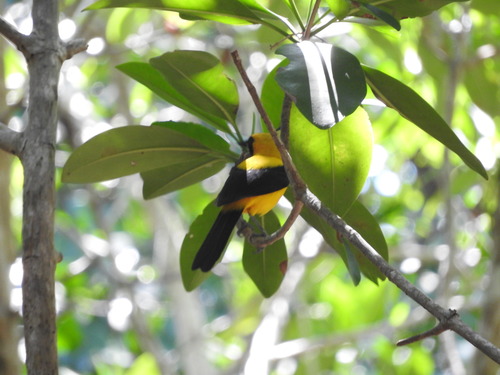
Yellow-backed Oriole (Icterus chrysater) Yellow-backed Oriole
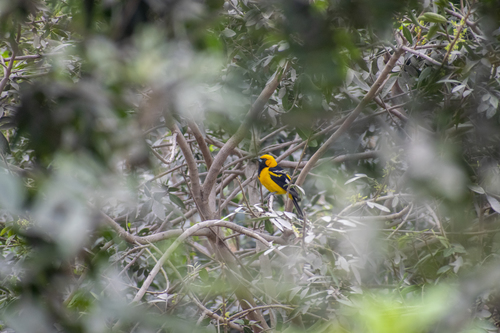
White-edged Oriole (Icterus graceannae) White-edged Oriole

Media

Loading…

In short

The most reliable field mark to separate Yellow-backed Oriole from White-edged Oriole is the color and pattern of the back and wing in adults: Yellow-backed Oriole shows a strikingly bright yellow back and underparts with solid black wings and tail, while White-edged Oriole has a black back and wings with distinctive white edging on the wing feathers and tail. Immatures of both species are duller, but White-edged Oriole juveniles show obvious white on the wing and tail, lacking in Yellow-backed. Both species have black faces and throats, but only White-edged Oriole has a black back. Size is similar, but Yellow-backed averages slightly larger. In the field, focus on the back color and white in the wing for fast separation.

Identification tips

  1. Back color is key in adults: Yellow-backed Oriole has a bright yellow back; White-edged Oriole has a solid black back. This is the fastest way to separate adults at rest.
  2. White in the wing and tail: Only White-edged Oriole shows broad white edges on the innermost secondaries and tertials (large white patch on closed wing) and white edges on the outer tail feathers. Yellow-backed Oriole never shows white in the wing or tail at any age.
  3. Immature/juvenile confusion: Immature Yellow-backed Orioles are greenish with olive eye-lines and dark brown flight feathers, lacking any white in the wing or tail. Juvenile White-edged Orioles, though duller, always show yellow-tipped coverts and white in the wing and tail.
  4. Underparts color: Yellow-backed Oriole is extremely bright yellow below; White-edged Oriole is more orange-yellow.
  5. Face and throat: Both species have black faces and throats, but only White-edged Oriole extends the black onto the back.
  6. Sexual dimorphism: Both species are sexually monomorphic in the field; female Yellow-backed Orioles are slightly greener, but this is subtle and unreliable for separation.
  7. Bill and bare parts: Both have black bills (with a grayish base to the mandible in White-edged), and bluish or grayish legs and feet; not a strong separation point.
  8. Size: Yellow-backed Oriole is slightly larger (21.5 cm vs. 19–20 cm), but this is not a reliable field mark unless both are seen together.
  9. Habitat and range: If seen in dry forests or arid scrublands along the Pacific coast of Ecuador and Peru, especially below 400 m, White-edged Oriole is likely. Yellow-backed Oriole is not expected in this restricted range.
  10. Flight views: In flight, look for the white patch in the wing (White-edged) versus solid black wings (Yellow-backed). This is especially useful for immatures and distant birds.
  11. Tail pattern: White-edged Oriole has white edges on the outer tail feathers, sometimes with white tips on the next three pairs inward; Yellow-backed Oriole's tail is solid black.
  12. Eye color: White-edged Oriole has a dark brown iris; Yellow-backed Oriole's eye color is not specified as diagnostic.
  13. Plumage pitfalls: Both species' immatures are duller and greener, but only White-edged Oriole shows any white in the wing or tail at any age.
  14. Shoulder color: Yellow-backed Oriole has black shoulders; White-edged Oriole's shoulder is not described as contrasting.
  15. Contextual clues: If you see a bird with a yellow back and no white in the wing or tail, it's Yellow-backed. If the back is black and the wing shows a white patch, it's White-edged.

Size

Yellow-backed Oriole is slightly larger, averaging about 21.5 cm in length, while White-edged Oriole measures 19–20 cm. Mass data is only available for White-edged Oriole (average 41.5 g), but both species are medium-sized orioles. The difference in size is subtle and not likely to be diagnostic in the field unless seen side by side.

Plumage

Immature and juvenile birds are often confused. Immature Yellow-backed Orioles are greenish overall, with olive eye-lines and dark brown (not black) flight feathers; they lack any white in the wing or tail. In contrast, juvenile White-edged Orioles are duller and greener than adults, but always show pale yellow tips to the coverts and, crucially, broad white edges at the base of the innermost secondaries and tertials, forming a large white patch on the closed wing. Adults are easier: Yellow-backed Oriole is bright yellow below and on the back, with a solid black wing, tail, face, throat, and shoulders; there is no white in the wings or tail. White-edged Oriole adults are orange-yellow below, with a black back, black wings with white-edged inner secondaries and tertials (showing as a white patch), and a mostly black tail with white edges on the outer feathers. Both sexes are similar in each species, but Yellow-backed females are slightly greener in the yellow areas. The black back of White-edged Oriole and the yellow back of Yellow-backed Oriole are the quickest adult separation points.

Habitat

Yellow-backed Oriole is not described here for habitat, but White-edged Oriole is restricted to dry deciduous forest and arid scrublands along the Pacific coast of Ecuador and Peru, sometimes reaching subtropical zones in southern Ecuador. If you are in this narrow region and habitat, White-edged is more likely; outside this area, especially in Central America, Yellow-backed is expected.

Submit a better description

Use the same sections as the comparison. Your text is published immediately.

The most reliable field mark to separate Yellow-backed Oriole from White-edged Oriole is the color and pattern of the back and wing in adults: Yellow-backed Oriole shows a strikingly bright yellow back and underparts with solid black wings and tail, while White-edged Oriole has a black back and wings with distinctive white edging on the wing feathers and tail. Immatures of both species are duller, but White-edged Oriole juveniles show obvious white on the wing and tail, lacking in Yellow-backed. Both species have black faces and throats, but only White-edged Oriole has a black back. Size is similar, but Yellow-backed averages slightly larger. In the field, focus on the back color and white in the wing for fast separation.

  1. Back color is key in adults: Yellow-backed Oriole has a bright yellow back; White-edged Oriole has a solid black back. This is the fastest way to separate adults at rest.
  2. White in the wing and tail: Only White-edged Oriole shows broad white edges on the innermost secondaries and tertials (large white patch on closed wing) and white edges on the outer tail feathers. Yellow-backed Oriole never shows white in the wing or tail at any age.
  3. Immature/juvenile confusion: Immature Yellow-backed Orioles are greenish with olive eye-lines and dark brown flight feathers, lacking any white in the wing or tail. Juvenile White-edged Orioles, though duller, always show yellow-tipped coverts and white in the wing and tail.
  4. Underparts color: Yellow-backed Oriole is extremely bright yellow below; White-edged Oriole is more orange-yellow.
  5. Face and throat: Both species have black faces and throats, but only White-edged Oriole extends the black onto the back.
  6. Sexual dimorphism: Both species are sexually monomorphic in the field; female Yellow-backed Orioles are slightly greener, but this is subtle and unreliable for separation.
  7. Bill and bare parts: Both have black bills (with a grayish base to the mandible in White-edged), and bluish or grayish legs and feet; not a strong separation point.
  8. Size: Yellow-backed Oriole is slightly larger (21.5 cm vs. 19–20 cm), but this is not a reliable field mark unless both are seen together.
  9. Habitat and range: If seen in dry forests or arid scrublands along the Pacific coast of Ecuador and Peru, especially below 400 m, White-edged Oriole is likely. Yellow-backed Oriole is not expected in this restricted range.
  10. Flight views: In flight, look for the white patch in the wing (White-edged) versus solid black wings (Yellow-backed). This is especially useful for immatures and distant birds.
  11. Tail pattern: White-edged Oriole has white edges on the outer tail feathers, sometimes with white tips on the next three pairs inward; Yellow-backed Oriole's tail is solid black.
  12. Eye color: White-edged Oriole has a dark brown iris; Yellow-backed Oriole's eye color is not specified as diagnostic.
  13. Plumage pitfalls: Both species' immatures are duller and greener, but only White-edged Oriole shows any white in the wing or tail at any age.
  14. Shoulder color: Yellow-backed Oriole has black shoulders; White-edged Oriole's shoulder is not described as contrasting.
  15. Contextual clues: If you see a bird with a yellow back and no white in the wing or tail, it's Yellow-backed. If the back is black and the wing shows a white patch, it's White-edged.

Yellow-backed Oriole is slightly larger, averaging about 21.5 cm in length, while White-edged Oriole measures 19–20 cm. Mass data is only available for White-edged Oriole (average 41.5 g), but both species are medium-sized orioles. The difference in size is subtle and not likely to be diagnostic in the field unless seen side by side.

Immature and juvenile birds are often confused. Immature Yellow-backed Orioles are greenish overall, with olive eye-lines and dark brown (not black) flight feathers; they lack any white in the wing or tail. In contrast, juvenile White-edged Orioles are duller and greener than adults, but always show pale yellow tips to the coverts and, crucially, broad white edges at the base of the innermost secondaries and tertials, forming a large white patch on the closed wing. Adults are easier: Yellow-backed Oriole is bright yellow below and on the back, with a solid black wing, tail, face, throat, and shoulders; there is no white in the wings or tail. White-edged Oriole adults are orange-yellow below, with a black back, black wings with white-edged inner secondaries and tertials (showing as a white patch), and a mostly black tail with white edges on the outer feathers. Both sexes are similar in each species, but Yellow-backed females are slightly greener in the yellow areas. The black back of White-edged Oriole and the yellow back of Yellow-backed Oriole are the quickest adult separation points.

Yellow-backed Oriole is not described here for habitat, but White-edged Oriole is restricted to dry deciduous forest and arid scrublands along the Pacific coast of Ecuador and Peru, sometimes reaching subtropical zones in southern Ecuador. If you are in this narrow region and habitat, White-edged is more likely; outside this area, especially in Central America, Yellow-backed is expected.

Discard your changes?

You have unsaved edits. If you leave now, those changes will be lost.

Yellow-backed Oriole · White-edged Oriole · My Tricky Birds