

Wood Sandpiper vs Common Redshank
Tringa glareola versus Tringa totanus
Play a quiz with Wood Sandpiper and Common Redshank
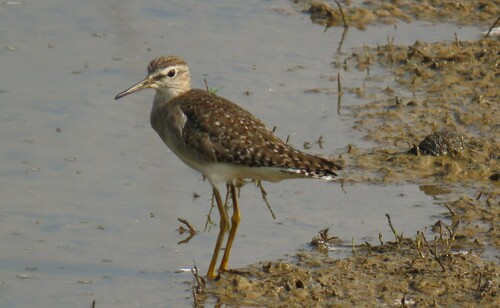 Wood Sandpiper
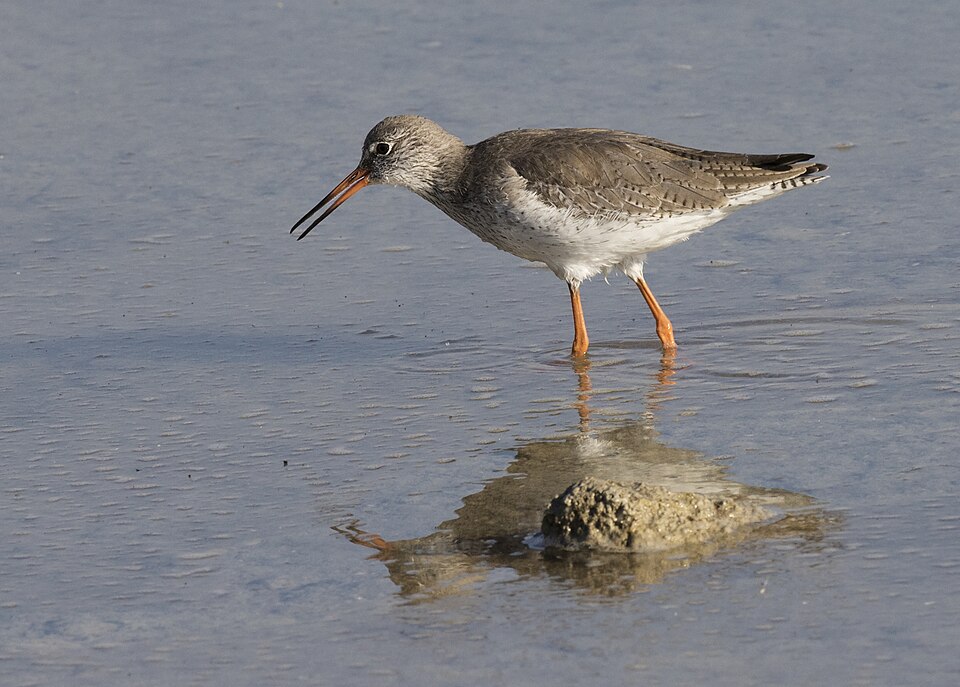 Common Redshank
In short
The most reliable way to separate Wood Sandpiper from Common Redshank is by their size and leg color: Wood Sandpiper is distinctly smaller and has yellowish legs, while Common Redshank is nearly twice as heavy and shows vivid red legs. In flight, Common Redshank flashes bold white up the back and on the wings, whereas Wood Sandpiper’s rump patch is smaller and less contrasting. Bill color and structure also differ: Wood Sandpiper’s bill is shorter and finer, while Redshank’s is longer, with a red base and black tip. Both species can show similar brownish upperparts in breeding plumage, so focus on structure, leg color, and flight pattern for confident separation.
Identification tips
- Leg color is a key field mark: Wood Sandpiper always shows yellowish legs, while Common Redshank’s are bright red. This is visible both at rest and in flight, and works for all ages and seasons.
- Size and build: Wood Sandpiper is much smaller and more delicate than the robust, heavier Redshank. If you see both together, the difference is obvious; singly, note the Wood Sandpiper’s finer proportions and longer legs relative to its body.
- Bill shape and color: Wood Sandpiper has a shorter, finer bill; Redshank’s bill is longer, with a red base and black tip. Bill color is especially helpful in close views.
- Flight pattern: In flight, Common Redshank shows a bold white wedge up the back and white on the wings, making it very striking. Wood Sandpiper’s white rump patch is smaller and less contrasting, so the upperparts look browner and less flashy in flight.
- Plumage details in breeding season: Both are brown above with some mottling, but Wood Sandpiper is lighter and more finely marked, while Redshank is marbled brown and slightly lighter below. This is subtle and not always reliable at a distance.
- Non-breeding plumage: Redshank becomes plainer and greyer above, but leg and bill color remain diagnostic. Wood Sandpiper’s winter plumage is not as well described but stays paler and less contrasting.
- Habitat context: Wood Sandpiper is rarely found on the coast; if you’re in a freshwater marsh or pond, especially inland, it’s more likely. Redshank is common in coastal and estuarine habitats but can also be found inland.
- Behavior: Wood Sandpiper often appears more active and buoyant, feeding in shallower water, while Redshank is steadier and more assertive.
- Jizz in flight: Wood Sandpiper looks lighter and more graceful in the air; Redshank’s flight is more direct and powerful.
- No strong age-specific flight marks: Neither species has a unique juvenile or immature upperwing pattern described in the sources, so rely on structure and leg color for young birds.
- Plumage pitfalls: Both can look similar at a distance in dull light, especially in non-breeding plumage, so do not rely solely on overall color.
- Voice: Not described in the sources, so do not use vocalizations for separation here.
- Sex differences: Not described as significant for field separation in these species.
- When in doubt: If you see a small, fine-billed shank with yellowish legs and only a small white rump in flight, it’s Wood Sandpiper; if the bird is bulkier, with red legs and a bold white wedge up the back in flight, it’s Common Redshank.
Size
Wood Sandpiper is much lighter (67.5g) than Common Redshank (129g) [wikidata], making it the smallest of the shanks. In the field, Wood Sandpiper appears more delicate and lightly built, with longer legs relative to its body size, while Common Redshank is noticeably bulkier and more robust overall. This size difference is often apparent when both species are seen together, but even singly, Redshank’s heavier, stockier profile stands out.
Plumage
- Juvenile/immature plumage and flight: No age-specific upperwing or flight pattern marks are described for Wood Sandpiper or Common Redshank in the sources, but in all ages, Common Redshank shows a strong white wedge up the back and white on the wings in flight, while Wood Sandpiper’s white rump patch is smaller and less contrasting [wikipedia].
- Breeding plumage: Both species are subdued brown above with darker mottling and have diffuse brownish spots on the breast and neck. Wood Sandpiper is lighter and more finely marked, while Redshank is marbled brown and slightly lighter below.
- Non-breeding (winter) plumage: Common Redshank becomes plainer, with greyish-brown upperparts and whitish underparts; Wood Sandpiper’s non-breeding plumage is not described in detail, but it remains generally paler and less contrasting than Redshank.
- Leg color: Wood Sandpiper has yellowish legs; Common Redshank has bright red legs in all plumages.
- Bill: Wood Sandpiper’s bill is shorter and finer; Redshank’s is longer, with a red base and black tip.
Behaviour
Both species forage by probing in shallow water or mud for invertebrates, but Wood Sandpiper is more likely to be seen actively feeding in smaller, quieter freshwater habitats, often appearing more delicate and agile. Common Redshank, being larger and heavier, moves with a steadier gait and may dominate feeding areas. Both species are alert and will flush readily if disturbed, but Redshank’s flight is more powerful and direct, while Wood Sandpiper appears lighter and more buoyant in the air.
Habitat
Wood Sandpiper prefers freshwater and wetland environments—such as lakeshores, riverbanks, and marshes—often away from the coast. Common Redshank is more versatile but is frequently found in maritime or coastal habitats, as well as inland wetlands. If you find a small shank in a strictly freshwater setting, especially away from tidal influence, Wood Sandpiper is more likely; on saltmarshes, mudflats, or estuaries, Redshank dominates.