

Motmot

White-throated Sparrow vs Song Sparrow

Zonotrichia albicollis versus Melospiza melodia

Play a quiz with White-throated Sparrow and Song Sparrow
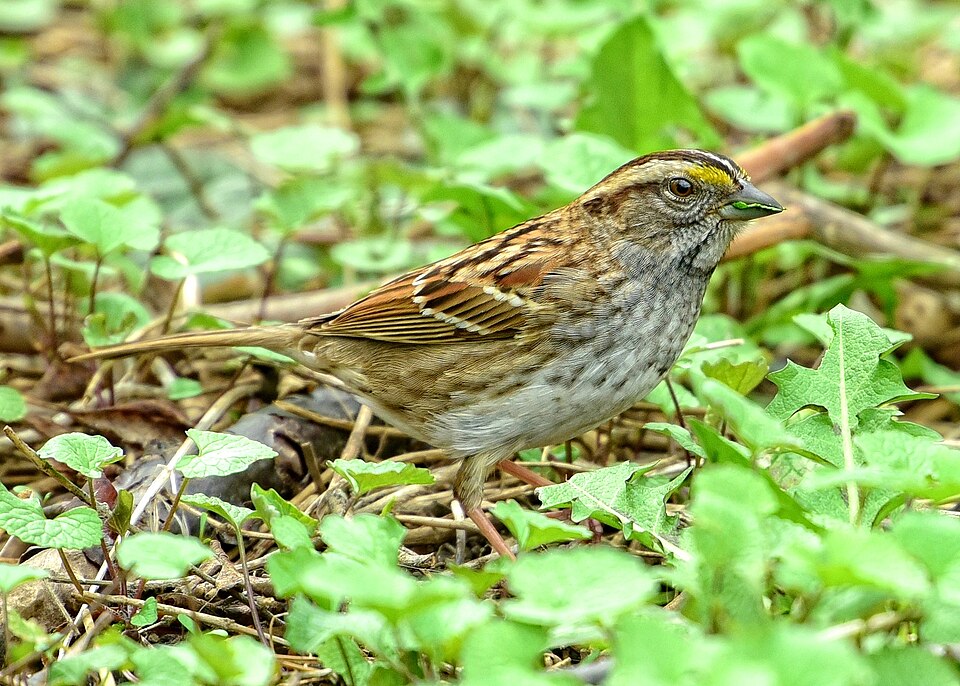
White-throated Sparrow (Zonotrichia albicollis) White-throated Sparrow
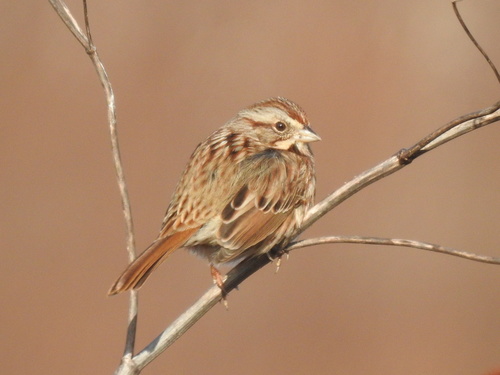
Song Sparrow (Melospiza melodia) Song Sparrow

Media

Loading…

In short

The most reliable field mark to separate White-throated Sparrow from Song Sparrow is the presence of a crisp white throat patch bordered by dark lines and bright yellow lores on the White-throated Sparrow, features never shown by Song Sparrow. Both species are similar in size and overall shape, but Song Sparrow is much more variable in plumage and always lacks the sharply defined white throat and yellow lores. In the field, White-throated Sparrows show bold head stripes (white or tan morphs), while Song Sparrows have a more uniformly streaked, brown-and-gray face and breast. Both can be streaky below, but the Song Sparrow's streaks are heavier and often converge into a central breast spot. Careful attention to head pattern and throat is key, especially in winter or among immatures.

Identification tips

  1. White throat patch (White-throated Sparrow only): Look for a crisp, triangular white patch on the throat, sharply bordered by dark lateral stripes. Song Sparrow's throat is streaky and blends into the breast, never sharply defined.
  2. Yellow lores (White-throated Sparrow only): Bright yellow spots in front of the eyes (lores) are diagnostic for White-throated Sparrow. Song Sparrow never shows yellow here.
  3. Head stripes (White-throated Sparrow): Bold black-and-white or brown-and-tan stripes on the crown and supercilium; Song Sparrow has a more uniform, streaky brown-and-gray head with no sharp stripes.
  4. Breast streaking: Song Sparrow has heavy, blurry brown streaks on the breast that often converge into a central spot. White-throated Sparrow has finer, sparser streaks that do not form a central spot, and the belly is usually paler.
  5. Wing bars: White-throated Sparrow shows two distinct white wing bars; Song Sparrow's wings are plain or show only faint pale edging.
  6. Bill color: White-throated Sparrow's bill is gray; Song Sparrow's bill is typically brownish or horn-colored, but this is subtle.
  7. Face pattern: White-throated Sparrow's face is crisply patterned with a contrasting supercilium and dark auricular border; Song Sparrow's face is more diffusely streaked and lacks strong contrast.
  8. Tail shape: Song Sparrow's tail is often longer and more rounded, and it is frequently pumped or flicked; White-throated Sparrow's tail is shorter and less expressive.
  9. Overall color: Song Sparrow is generally browner and more variable, with some subspecies showing rufous or gray tones; White-throated Sparrow is grayer with cleaner, more contrasting markings.
  10. Habitat context: If in dense brush, marsh, or open urban areas, Song Sparrow is more likely; White-throated Sparrow prefers woodland edges and is less common in open habitats.
  11. Seasonal occurrence: In southern US in winter, both may occur together, but White-throated Sparrow is absent in summer; Song Sparrow is resident or migratory in most regions.
  12. Song: White-throated Sparrow sings a clear, whistled, repetitive song; Song Sparrow's song is more complex and variable, with trills and buzzes.
  13. Juvenile/immature birds: No distinctive wing or flight pattern differences are described for immatures, so rely on head and throat pattern even in young birds.
  14. Flock behavior: White-throated Sparrows often join mixed flocks in winter, sometimes with Song Sparrows; careful checking of each bird is necessary.
  15. Pitfalls: Beware of dull or worn White-throated Sparrows that may have faded head stripes, and of pale Song Sparrows that may seem to have a paler throat; always check for yellow lores and sharp white throat patch.

Size

Both species are nearly identical in size and mass, with White-throated Sparrow averaging 25 g and Song Sparrow 24 g [wikidata]. Length and wingspan overlap, so size alone is not a reliable separator in the field. Both have similar proportions, though Song Sparrow may appear slightly longer-tailed and slimmer, but this is subtle and not consistently diagnostic.

Plumage

For all ages, White-throated Sparrow stands out with a sharply defined white throat patch bordered by dark lateral stripes, and bright yellow lores at the base of the bill. The head is boldly striped, either with white and black (white-striped morph) or tan and brown (tan-striped morph), always with a contrasting supercilium. Song Sparrow, regardless of age or subspecies, lacks yellow lores and a sharply defined white throat; instead, it shows a streaky gray-brown face and a throat that blends into the heavily streaked breast. Song Sparrow's underparts are marked with thick brown streaks that often form a central spot on the breast, while White-throated Sparrow's streaking is finer and generally does not form a central spot. Both have rufous in the wings, but White-throated Sparrow shows two distinct white wing bars, which Song Sparrow lacks. Juvenile and immature wing patterns are not described as distinctive for either species in the sources provided.

Behaviour

Both species forage on the ground and in low vegetation, often in mixed flocks during migration and winter. White-throated Sparrows may appear more deliberate and less nervous than Song Sparrows, which often pump their tails and skulk in dense cover. Song Sparrows are more likely to be seen singing from exposed perches, especially in breeding season. However, these behavioral differences are subtle and not always reliable for identification.

Habitat

White-throated Sparrow breeds in northern forests and winters in the southern US, often found in woodlands, forest edges, and shrubby areas. Song Sparrow is much more adaptable and widespread, found in a variety of habitats including marshes, brushy fields, gardens, and urban parks across North America. Overlap occurs in migration and winter, but Song Sparrow is generally more abundant and less tied to forested habitats.

Voice

The two species have distinct songs, but both can be variable and are not always diagnostic to the casual observer. White-throated Sparrow's song is a clear, whistled 'Oh-sweet-Canada-Canada' or 'Old-Sam-Peabody-Peabody,' with a series of repeated notes. Song Sparrow's song is more complex and variable, usually starting with clear notes and followed by a jumble of trills and buzzes. Calls differ as well, but in mixed flocks or poor conditions, voice alone can be tricky.

Submit a better description

Use the same sections as the comparison. Your text is published immediately.

The most reliable field mark to separate White-throated Sparrow from Song Sparrow is the presence of a crisp white throat patch bordered by dark lines and bright yellow lores on the White-throated Sparrow, features never shown by Song Sparrow. Both species are similar in size and overall shape, but Song Sparrow is much more variable in plumage and always lacks the sharply defined white throat and yellow lores. In the field, White-throated Sparrows show bold head stripes (white or tan morphs), while Song Sparrows have a more uniformly streaked, brown-and-gray face and breast. Both can be streaky below, but the Song Sparrow's streaks are heavier and often converge into a central breast spot. Careful attention to head pattern and throat is key, especially in winter or among immatures.

  1. White throat patch (White-throated Sparrow only): Look for a crisp, triangular white patch on the throat, sharply bordered by dark lateral stripes. Song Sparrow's throat is streaky and blends into the breast, never sharply defined.
  2. Yellow lores (White-throated Sparrow only): Bright yellow spots in front of the eyes (lores) are diagnostic for White-throated Sparrow. Song Sparrow never shows yellow here.
  3. Head stripes (White-throated Sparrow): Bold black-and-white or brown-and-tan stripes on the crown and supercilium; Song Sparrow has a more uniform, streaky brown-and-gray head with no sharp stripes.
  4. Breast streaking: Song Sparrow has heavy, blurry brown streaks on the breast that often converge into a central spot. White-throated Sparrow has finer, sparser streaks that do not form a central spot, and the belly is usually paler.
  5. Wing bars: White-throated Sparrow shows two distinct white wing bars; Song Sparrow's wings are plain or show only faint pale edging.
  6. Bill color: White-throated Sparrow's bill is gray; Song Sparrow's bill is typically brownish or horn-colored, but this is subtle.
  7. Face pattern: White-throated Sparrow's face is crisply patterned with a contrasting supercilium and dark auricular border; Song Sparrow's face is more diffusely streaked and lacks strong contrast.
  8. Tail shape: Song Sparrow's tail is often longer and more rounded, and it is frequently pumped or flicked; White-throated Sparrow's tail is shorter and less expressive.
  9. Overall color: Song Sparrow is generally browner and more variable, with some subspecies showing rufous or gray tones; White-throated Sparrow is grayer with cleaner, more contrasting markings.
  10. Habitat context: If in dense brush, marsh, or open urban areas, Song Sparrow is more likely; White-throated Sparrow prefers woodland edges and is less common in open habitats.
  11. Seasonal occurrence: In southern US in winter, both may occur together, but White-throated Sparrow is absent in summer; Song Sparrow is resident or migratory in most regions.
  12. Song: White-throated Sparrow sings a clear, whistled, repetitive song; Song Sparrow's song is more complex and variable, with trills and buzzes.
  13. Juvenile/immature birds: No distinctive wing or flight pattern differences are described for immatures, so rely on head and throat pattern even in young birds.
  14. Flock behavior: White-throated Sparrows often join mixed flocks in winter, sometimes with Song Sparrows; careful checking of each bird is necessary.
  15. Pitfalls: Beware of dull or worn White-throated Sparrows that may have faded head stripes, and of pale Song Sparrows that may seem to have a paler throat; always check for yellow lores and sharp white throat patch.

Both species are nearly identical in size and mass, with White-throated Sparrow averaging 25 g and Song Sparrow 24 g [wikidata]. Length and wingspan overlap, so size alone is not a reliable separator in the field. Both have similar proportions, though Song Sparrow may appear slightly longer-tailed and slimmer, but this is subtle and not consistently diagnostic.

For all ages, White-throated Sparrow stands out with a sharply defined white throat patch bordered by dark lateral stripes, and bright yellow lores at the base of the bill. The head is boldly striped, either with white and black (white-striped morph) or tan and brown (tan-striped morph), always with a contrasting supercilium. Song Sparrow, regardless of age or subspecies, lacks yellow lores and a sharply defined white throat; instead, it shows a streaky gray-brown face and a throat that blends into the heavily streaked breast. Song Sparrow's underparts are marked with thick brown streaks that often form a central spot on the breast, while White-throated Sparrow's streaking is finer and generally does not form a central spot. Both have rufous in the wings, but White-throated Sparrow shows two distinct white wing bars, which Song Sparrow lacks. Juvenile and immature wing patterns are not described as distinctive for either species in the sources provided.

Both species forage on the ground and in low vegetation, often in mixed flocks during migration and winter. White-throated Sparrows may appear more deliberate and less nervous than Song Sparrows, which often pump their tails and skulk in dense cover. Song Sparrows are more likely to be seen singing from exposed perches, especially in breeding season. However, these behavioral differences are subtle and not always reliable for identification.

White-throated Sparrow breeds in northern forests and winters in the southern US, often found in woodlands, forest edges, and shrubby areas. Song Sparrow is much more adaptable and widespread, found in a variety of habitats including marshes, brushy fields, gardens, and urban parks across North America. Overlap occurs in migration and winter, but Song Sparrow is generally more abundant and less tied to forested habitats.

The two species have distinct songs, but both can be variable and are not always diagnostic to the casual observer. White-throated Sparrow's song is a clear, whistled 'Oh-sweet-Canada-Canada' or 'Old-Sam-Peabody-Peabody,' with a series of repeated notes. Song Sparrow's song is more complex and variable, usually starting with clear notes and followed by a jumble of trills and buzzes. Calls differ as well, but in mixed flocks or poor conditions, voice alone can be tricky.

Discard your changes?

You have unsaved edits. If you leave now, those changes will be lost.

White-throated Sparrow · Song Sparrow · My Tricky Birds