

Motmot

ノドジロシトド 対 ウタスズメ

Zonotrichia albicollis 対 Melospiza melodia

ノドジロシトドとウタスズメのクイズ
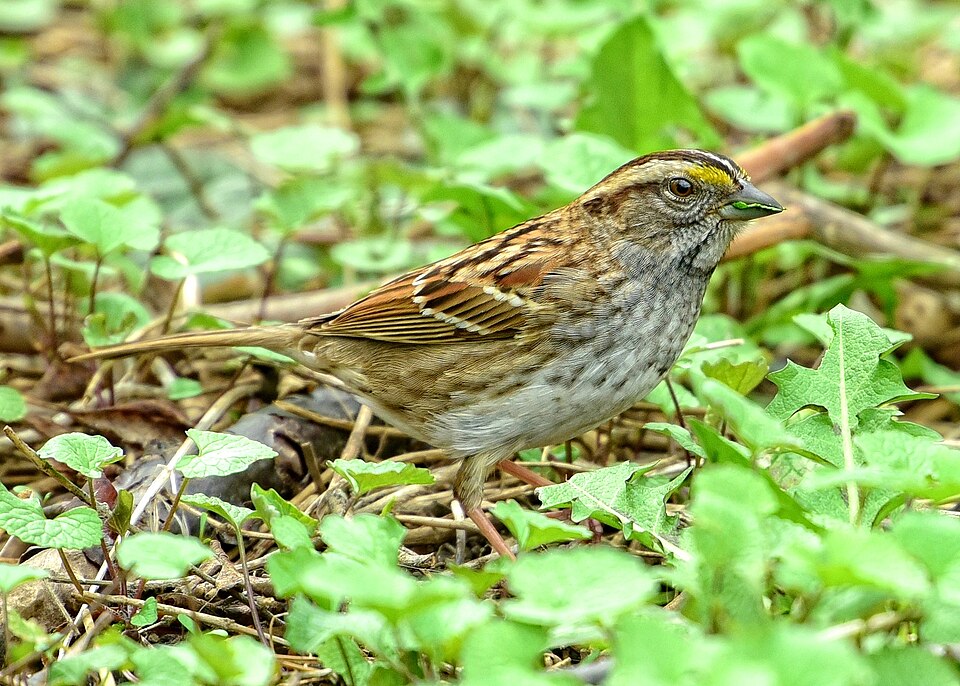
ノドジロシトド (Zonotrichia albicollis) ノドジロシトド
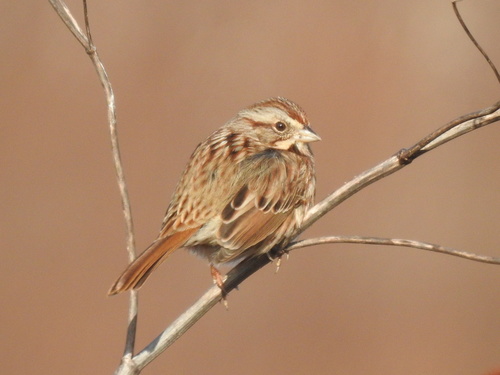
ウタスズメ (Melospiza melodia) ウタスズメ

メディア

読み込み中…

要点

ウタスズメとノドジロシトドを区別する最も信頼できるフィールドマークは、ノドジロシトドに見られる、暗い線と明るい黄色のロアに囲まれた鮮明な白い喉の斑点の存在です。ウタスズメにはこの特徴はありません。両種はサイズと全体的な形状が似ていますが、ウタスズメは羽毛の変異が大きく、常に鋭く定義された白い喉と黄色のロアを欠いています。フィールドでは、ノドジロシトドは大胆な頭のストライプ(白または茶色の変種)を示し、ウタスズメはより均一に縞模様のある茶色と灰色の顔と胸を持っています。両者は下部に縞模様が見られることがありますが、ウタスズメの縞模様はより重く、しばしば中央の胸の斑点に収束します。特に冬や幼鳥の中では、頭の模様と喉に注意を払うことが重要です。

識別のコツ

  1. 白い喉の斑点(ノドジロシトドのみ): 鮮明で三角形の白い斑点を喉に探してください。暗い側面のストライプで鋭く囲まれています。ウタスズメの喉は縞模様で、胸に溶け込んでおり、決して鋭く定義されていません。
  2. 黄色のロア(ノドジロシトドのみ): 目の前にある明るい黄色の斑点(ロア)はノドジロシトドの診断的な特徴です。ウタスズメはここに黄色を示しません。
  3. 頭のストライプ(ノドジロシトド): 冠と眉に大胆な黒と白または茶色とタンのストライプがあります。ウタスズメは鋭いストライプがない、より均一で縞模様のある茶色と灰色の頭を持っています。
  4. 胸の縞模様: ウタスズメは胸に重くぼやけた茶色の縞模様があり、しばしば中央の斑点に収束します。ノドジロシトドはより細かく、まばらな縞模様を持ち、中央の斑点を形成せず、腹部は通常より淡いです。
  5. 翼のバー: ノドジロシトドは2つの明確な白い翼のバーを示します。ウタスズメの翼は無地またはわずかに淡い縁取りしか示しません。
  6. くちばしの色: ノドジロシトドのくちばしは灰色です。ウタスズメのくちばしは通常茶色がかっているか角のような色ですが、これは微妙です。
  7. 顔の模様: ノドジロシトドの顔は対照的な眉と暗い耳の境界で鮮明に模様が付けられています。ウタスズメの顔はより拡散した縞模様で、強いコントラストが欠けています。
  8. 尾の形: ウタスズメの尾はしばしば長くて丸みを帯びており、頻繁に上下に動かしたり、ひらひらさせたりします。ノドジロシトドの尾は短く、あまり表現力がありません。
  9. 全体の色: ウタスズメは一般的により茶色く、変異が大きく、一部の亜種は赤褐色または灰色のトーンを示します。ノドジロシトドはより灰色で、よりクリーンでコントラストのあるマーキングがあります。
  10. 生息地の文脈: 密な茂み、湿地、または開けた都市部にいる場合、ウタスズメの可能性が高いです。ノドジロシトドは森林の端を好み、開けた生息地ではあまり見られません。
  11. 季節的な出現: 南部アメリカでは冬に両者が一緒に見られることがありますが、ノドジロシトドは夏には存在しません。ウタスズメはほとんどの地域で定住または移動します。
  12. 歌: ノドジロシトドは明確で笛のような繰り返しの歌を歌います。ウタスズメの歌はより複雑で変異があり、トリルやブザーが含まれます。
  13. 幼鳥/未成熟な鳥: 幼鳥に対する特有の翼や飛行パターンの違いは記載されていないため、若い鳥でも頭と喉のパターンに頼る必要があります。
  14. 群れの行動: ノドジロシトドは冬にウタスズメと混合群れに参加することが多く、各鳥を注意深く確認する必要があります。
  15. 落とし穴: 褪せた頭のストライプを持つ鈍いまたは擦り切れたノドジロシトドや、より淡い喉を持つように見える淡いウタスズメに注意してください。常に黄色のロアと鋭い白い喉の斑点を確認してください。

大きさ

両種はサイズと質量がほぼ同じで、ノドジロシトドは平均25g、ウタスズメは24gです [wikidata]。長さと翼幅は重なっているため、サイズだけではフィールドでの信頼できる区別にはなりません。両者は似たような比率を持っていますが、ウタスズメはわずかに尾が長く、スリムに見えることがありますが、これは微妙で一貫して診断的ではありません。

羽色

すべての年齢において、ノドジロシトドは暗い側面のストライプで囲まれた鮮明に定義された白い喉の斑点と、くちばしの根元に明るい黄色のロアを持って際立っています。頭は白と黒(白ストライプの変種)またはタンと茶色(タンストライプの変種)で大胆にストライプが付けられ、常に対照的な眉があります。ウタスズメは年齢や亜種に関係なく、黄色のロアと鋭く定義された白い喉を欠いています。代わりに、縞模様のある灰色と茶色の顔と、重く縞模様のある胸に溶け込む喉を示します。ウタスズメの下部は厚い茶色の縞模様でマークされ、しばしば胸の中央の斑点を形成しますが、ノドジロシトドの縞模様はより細かく、一般的に中央の斑点を形成しません。両者は翼に赤褐色を持っていますが、ノドジロシトドは2つの明確な白い翼のバーを示し、ウタスズメはこれを欠いています。幼鳥と未成熟の翼のパターンは、提供された情報源ではどちらの種にも特有のものとして記載されていません。

行動

両種は地面や低い植生で採餌し、移動や冬の間に混合群れで見られることが多いです。ノドジロシトドはウタスズメよりも慎重で神経質でないように見えることがありますが、ウタスズメはしばしば尾を上下に動かし、密なカバーの中で隠れます。ウタスズメは繁殖期に特に露出した止まり木から歌っているのが見られることが多いです。しかし、これらの行動の違いは微妙で、常に識別のために信頼できるわけではありません。

生息環境

ノドジロシトドは北部の森林で繁殖し、南部アメリカで冬を越し、森林、森林の端、茂みのある地域で見られることが多いです。ウタスズメははるかに適応性が高く、広範囲に分布し、湿地、茂みのある野原、庭、北アメリカの都市公園など、さまざまな生息地で見られます。移動や冬に重なりがありますが、ウタスズメは一般的により豊富で、森林生息地にあまり依存しません。

声

この2種は異なる歌を持っていますが、両者とも変異があり、カジュアルな観察者には常に診断的ではありません。ノドジロシトドの歌は明確で笛のような「オー・スウィート・カナダ・カナダ」または「オールド・サム・ピーボディ・ピーボディ」で、繰り返される音のシリーズがあります。ウタスズメの歌はより複雑で変異があり、通常は明確な音から始まり、その後トリルやブザーの混乱が続きます。呼び声も異なりますが、混合群れや悪条件では、声だけでの識別は難しいことがあります。

より良い説明を送る

比較と同じ項目を使ってください。文章はすぐに公開されます。

The most reliable field mark to separate White-throated Sparrow from Song Sparrow is the presence of a crisp white throat patch bordered by dark lines and bright yellow lores on the White-throated Sparrow, features never shown by Song Sparrow. Both species are similar in size and overall shape, but Song Sparrow is much more variable in plumage and always lacks the sharply defined white throat and yellow lores. In the field, White-throated Sparrows show bold head stripes (white or tan morphs), while Song Sparrows have a more uniformly streaked, brown-and-gray face and breast. Both can be streaky below, but the Song Sparrow's streaks are heavier and often converge into a central breast spot. Careful attention to head pattern and throat is key, especially in winter or among immatures.

  1. White throat patch (White-throated Sparrow only): Look for a crisp, triangular white patch on the throat, sharply bordered by dark lateral stripes. Song Sparrow's throat is streaky and blends into the breast, never sharply defined.
  2. Yellow lores (White-throated Sparrow only): Bright yellow spots in front of the eyes (lores) are diagnostic for White-throated Sparrow. Song Sparrow never shows yellow here.
  3. Head stripes (White-throated Sparrow): Bold black-and-white or brown-and-tan stripes on the crown and supercilium; Song Sparrow has a more uniform, streaky brown-and-gray head with no sharp stripes.
  4. Breast streaking: Song Sparrow has heavy, blurry brown streaks on the breast that often converge into a central spot. White-throated Sparrow has finer, sparser streaks that do not form a central spot, and the belly is usually paler.
  5. Wing bars: White-throated Sparrow shows two distinct white wing bars; Song Sparrow's wings are plain or show only faint pale edging.
  6. Bill color: White-throated Sparrow's bill is gray; Song Sparrow's bill is typically brownish or horn-colored, but this is subtle.
  7. Face pattern: White-throated Sparrow's face is crisply patterned with a contrasting supercilium and dark auricular border; Song Sparrow's face is more diffusely streaked and lacks strong contrast.
  8. Tail shape: Song Sparrow's tail is often longer and more rounded, and it is frequently pumped or flicked; White-throated Sparrow's tail is shorter and less expressive.
  9. Overall color: Song Sparrow is generally browner and more variable, with some subspecies showing rufous or gray tones; White-throated Sparrow is grayer with cleaner, more contrasting markings.
  10. Habitat context: If in dense brush, marsh, or open urban areas, Song Sparrow is more likely; White-throated Sparrow prefers woodland edges and is less common in open habitats.
  11. Seasonal occurrence: In southern US in winter, both may occur together, but White-throated Sparrow is absent in summer; Song Sparrow is resident or migratory in most regions.
  12. Song: White-throated Sparrow sings a clear, whistled, repetitive song; Song Sparrow's song is more complex and variable, with trills and buzzes.
  13. Juvenile/immature birds: No distinctive wing or flight pattern differences are described for immatures, so rely on head and throat pattern even in young birds.
  14. Flock behavior: White-throated Sparrows often join mixed flocks in winter, sometimes with Song Sparrows; careful checking of each bird is necessary.
  15. Pitfalls: Beware of dull or worn White-throated Sparrows that may have faded head stripes, and of pale Song Sparrows that may seem to have a paler throat; always check for yellow lores and sharp white throat patch.

Both species are nearly identical in size and mass, with White-throated Sparrow averaging 25 g and Song Sparrow 24 g [wikidata]. Length and wingspan overlap, so size alone is not a reliable separator in the field. Both have similar proportions, though Song Sparrow may appear slightly longer-tailed and slimmer, but this is subtle and not consistently diagnostic.

For all ages, White-throated Sparrow stands out with a sharply defined white throat patch bordered by dark lateral stripes, and bright yellow lores at the base of the bill. The head is boldly striped, either with white and black (white-striped morph) or tan and brown (tan-striped morph), always with a contrasting supercilium. Song Sparrow, regardless of age or subspecies, lacks yellow lores and a sharply defined white throat; instead, it shows a streaky gray-brown face and a throat that blends into the heavily streaked breast. Song Sparrow's underparts are marked with thick brown streaks that often form a central spot on the breast, while White-throated Sparrow's streaking is finer and generally does not form a central spot. Both have rufous in the wings, but White-throated Sparrow shows two distinct white wing bars, which Song Sparrow lacks. Juvenile and immature wing patterns are not described as distinctive for either species in the sources provided.

Both species forage on the ground and in low vegetation, often in mixed flocks during migration and winter. White-throated Sparrows may appear more deliberate and less nervous than Song Sparrows, which often pump their tails and skulk in dense cover. Song Sparrows are more likely to be seen singing from exposed perches, especially in breeding season. However, these behavioral differences are subtle and not always reliable for identification.

White-throated Sparrow breeds in northern forests and winters in the southern US, often found in woodlands, forest edges, and shrubby areas. Song Sparrow is much more adaptable and widespread, found in a variety of habitats including marshes, brushy fields, gardens, and urban parks across North America. Overlap occurs in migration and winter, but Song Sparrow is generally more abundant and less tied to forested habitats.

The two species have distinct songs, but both can be variable and are not always diagnostic to the casual observer. White-throated Sparrow's song is a clear, whistled 'Oh-sweet-Canada-Canada' or 'Old-Sam-Peabody-Peabody,' with a series of repeated notes. Song Sparrow's song is more complex and variable, usually starting with clear notes and followed by a jumble of trills and buzzes. Calls differ as well, but in mixed flocks or poor conditions, voice alone can be tricky.

変更を破棄しますか?

保存していない編集があります。今離れると失われます。

ノドジロシトド · ウタスズメ · 苦手な鳥