

White-throated Sparrow vs Black-and-white Warbler
Zonotrichia albicollis versus Mniotilta varia
Play a quiz with White-throated Sparrow and Black-and-white Warbler
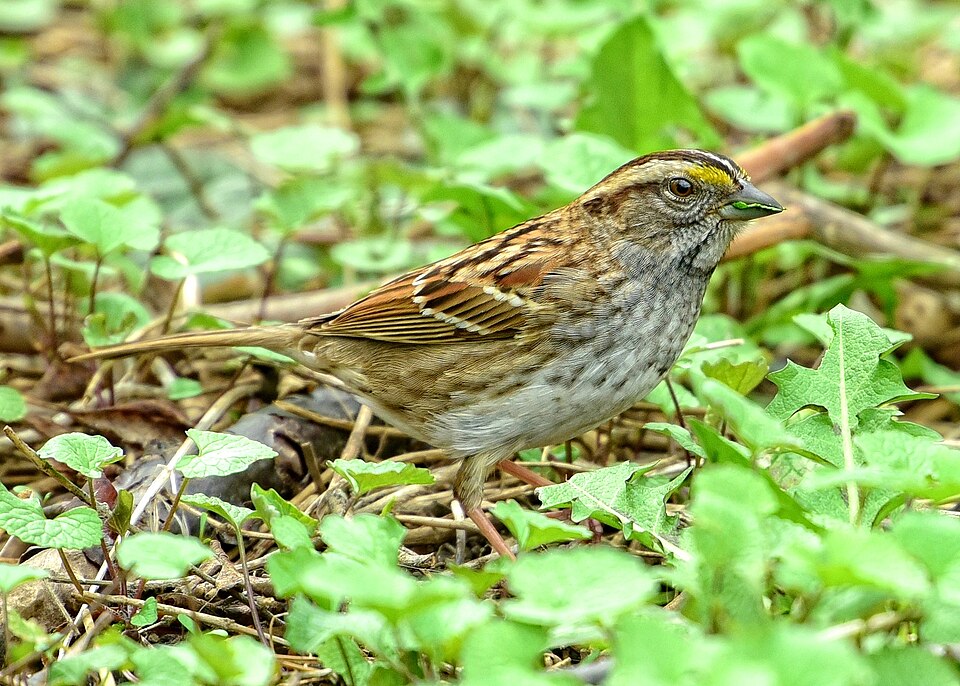 White-throated Sparrow
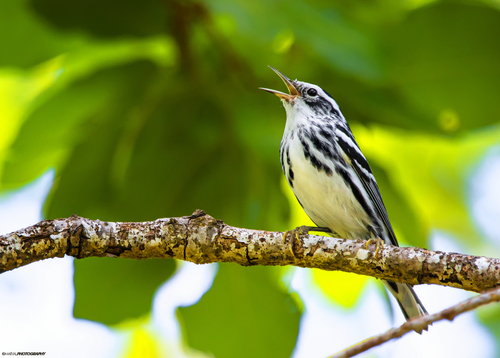 Black-and-white Warbler
In short
The most reliable field mark to separate White-throated Sparrow from Black-and-white Warbler is the White-throated Sparrow’s clean white throat patch bordered by dark lateral stripes, combined with yellow lores and a chunky, conical bill—features never shown by Black-and-white Warbler. In contrast, Black-and-white Warbler is boldly streaked black-and-white all over, with a slender, slightly decurved bill and no yellow on the face. Juvenile and female Black-and-white Warblers are duller but still show extensive streaking and lack the sparrow’s face pattern. Size and structure also differ: White-throated Sparrow is bulkier and longer, while Black-and-white Warbler is smaller, slimmer, and more active, often creeping along trunks and branches. If you see a boldly streaked black-and-white bird with a white throat and yellow lores, it’s a sparrow; if it’s streaked everywhere, slim, and moving like a nuthatch, it’s a warbler.
Identification tips
- White throat patch with yellow lores (sparrow only): White-throated Sparrow always shows a bright white throat bordered by dark stripes and a yellow spot in front of the eye (lores), regardless of age or morph. Black-and-white Warbler never shows this pattern.
- Overall streaking (warbler only): Black-and-white Warbler is boldly streaked black-and-white above and below in all plumages, even juveniles and females (though duller). White-throated Sparrow is mostly plain below the breast and never as heavily streaked overall.
- Bill shape: White-throated Sparrow has a thick, conical, seed-eater’s bill; Black-and-white Warbler has a thin, pointed, slightly decurved bill for insect gleaning. Bill shape is often visible even at a distance.
- Face pattern: White-throated Sparrow shows a strong face pattern with a white or tan supercilium and crown stripe, yellow lores, and contrasting auriculars. Black-and-white Warbler has a white eyebrow but lacks yellow and has a more uniform black-and-white face, with males showing a black cheek and females a gray cheek.
- Wing bars: Both species have two white wing bars, but the warbler’s are set in a blacker wing and are usually more contrasting. The sparrow’s wings are rufous-brown with less contrast.
- Breast and belly: White-throated Sparrow has streaks on the breast and flanks but a mostly plain light gray belly. Black-and-white Warbler is streaked all the way down the underparts.
- Juvenile/immature plumage: Young Black-and-white Warblers are duller but still streaked and never show a white throat or yellow lores. Young White-throated Sparrows look like adults in face pattern.
- Size and structure: White-throated Sparrow is larger, bulkier, and rounder, with a thick neck and robust body. Black-and-white Warbler is smaller, slimmer, and more delicate.
- Behavior: Sparrows forage on the ground or low in brush, moving slowly and often in flocks. Black-and-white Warblers climb trunks and branches, moving quickly and often alone or in mixed warbler flocks.
- Flight style: White-throated Sparrow flies with a heavier, more direct flight; Black-and-white Warbler is lighter and more fluttery.
- Habitat: Sparrows favor brushy, weedy, or forest-edge habitats; warblers are found in mature woods, especially on tree trunks and branches.
- Song: White-throated Sparrow sings a clear, whistled song; Black-and-white Warbler sings a high, buzzy, repetitive song. Calls also differ: sparrow gives a sharp 'tseep,' warbler a high 'tick.'
- Sex/age differences: Both species show some sexual dimorphism, but the key marks above (throat, lores, streaking, bill) are reliable in all ages and sexes.
- Season: Both species migrate, but White-throated Sparrow is more likely in brushy winter flocks, while Black-and-white Warbler is more often seen singly or in mixed warbler groups during migration.
- Common pitfalls: Do not confuse the sparrow’s face pattern for streaking; do not mistake the warbler’s overall streaking for a sparrow’s breast streaks. Bill shape and behavior are often the quickest checks if plumage is obscured.
Size
White-throated Sparrow is significantly larger and heavier (body mass ~25 g, length 15–19 cm) than Black-and-white Warbler (mass 8–15 g, length 11–13 cm). The sparrow has a noticeably chunkier body, thicker neck, and a larger, conical bill, while the warbler is slim, with a fine, pointed bill. Wingspan also favors the sparrow (23 cm vs. 18–22 cm), but in the field, overall bulk and bill shape are more obvious than wingspan. A perched White-throated Sparrow looks round and robust; Black-and-white Warbler appears delicate and agile.
Plumage
Juvenile and first-fall Black-and-white Warblers are duller than adults but always show some black-and-white streaking above and below, with a streaked back, wings, and underparts, plus two white wing bars. Juveniles may show more spotting, but never the clean white throat and yellow lores of White-throated Sparrow. Adult male Black-and-white Warblers are boldly streaked everywhere, including the throat and cheeks (black in males, gray in females). White-throated Sparrow, in all ages and morphs, shows a bright white throat bordered by dark stripes, yellow lores, and a contrasting face pattern (either white or tan supercilium and crown stripe, depending on morph). The sparrow’s wings are rufous with two white wing bars, but the rest of the body is mostly gray/tan with streaks on the breast and flanks, not the bold overall streaking of the warbler. Both species have wing bars, but the warbler’s are set in a blacker wing and are usually more contrasting. The sparrow’s underparts are mostly unstreaked below the breast, while the warbler’s are streaked throughout.
Behaviour
White-throated Sparrow typically forages on or near the ground, scratching in leaf litter or perching low in shrubs, often in flocks. It moves with a hopping gait and is relatively slow and deliberate. Black-and-white Warbler is highly active, creeping along trunks and branches in a nuthatch-like manner, often seen climbing up and down bark, and rarely foraging on the ground. Its movements are quick, agile, and distinctive among warblers. In flight, the sparrow is heavier and more direct, while the warbler is lighter and more fluttery.
Habitat
White-throated Sparrow is found in brushy edges, thickets, and forest undergrowth, especially during migration and winter, often in mixed flocks with other sparrows. It breeds in northern forests and winters in the southern U.S. Black-and-white Warbler prefers mature forests, especially with large trees, and is often seen on trunks and branches rather than in dense brush or on the ground. During migration, it can turn up in a wider range of wooded habitats but is rarely seen in open or brushy areas favored by sparrows.
Voice
White-throated Sparrow has a distinctive, clear, whistled song often transcribed as 'Oh sweet Canada, Canada, Canada' or 'Old Sam Peabody, Peabody, Peabody,' and frequently gives sharp 'tseep' calls. Black-and-white Warbler’s song is a high, thin, repetitive 'wee-see, wee-see, wee-see,' and its call is a high, sharp 'tick.' The sparrow’s song is much more musical and whistled, while the warbler’s is buzzy and less melodious.
White-throated Sparrow · Black-and-white Warbler · My Tricky Birds