

White-rumped Sirystes vs Sibilant Sirystes
Sirystes albocinereus versus Sirystes sibilator
Play a quiz with White-rumped Sirystes and Sibilant Sirystes
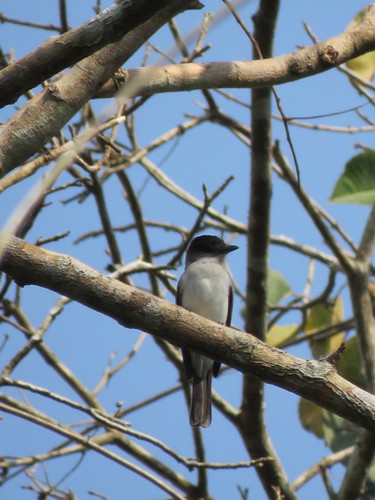 White-rumped Sirystes
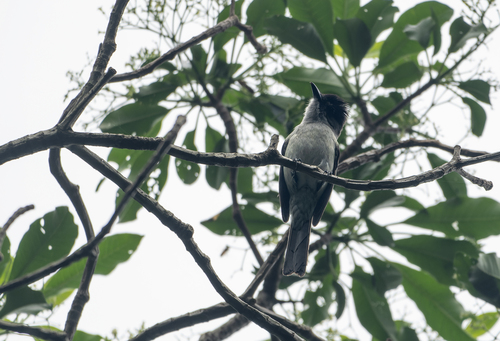 Sibilant Sirystes
In short
The most reliable field mark between White-rumped Sirystes and Sibilant Sirystes is the color and extent of the rump patch: White-rumped Sirystes shows a large, clean white rump patch, while Sibilant Sirystes has a grayish rump, sometimes with white tips only in the north of its range. Both species are similar in size and overall structure, with subtle differences in back color and wing edging. Juveniles of both are similar to adults, but Sibilant Sirystes juveniles may show a faint buffy wash. Habitat and range overlap in Bolivia and Brazil, but Sibilant Sirystes extends further south and east. Separation in the field relies on careful scrutiny of the rump and subtle upperpart hues, especially when birds are in flight or perched with the rump visible.
Identification tips
- Rump patch (all ages): White-rumped Sirystes always shows a large, bright white rump patch, especially obvious in flight or when the bird flicks its tail. Sibilant Sirystes has a grayish rump, sometimes with limited white tips (mainly in the north), never as extensive or bright as White-rumped.
- Back color: Sibilant Sirystes often has an olive-gray (olivaceous) cast to the back, while White-rumped Sirystes is more uniformly gray. This is subtle and best seen in good light.
- Wing edging: Both have blackish wings with pale or gray edges, but Sibilant Sirystes shows wide gray edges on coverts and inner flight feathers, while White-rumped has pale gray edges on coverts and white edges on inner flight feathers. The difference is slight and not always visible.
- Underparts: White-rumped Sirystes has a pale gray throat and breast, becoming white on the belly. Sibilant Sirystes is gray on the throat and breast, becoming grayish white below. Subspecies S. s. atimastus can be paler below, but this is not usually diagnostic.
- Juvenile plumage: Juvenile Sibilant Sirystes may show a faint buffy wash overall, but otherwise resembles adults. No distinctive juvenile marks are described for White-rumped Sirystes.
- Crown and face: Both species have a blackish crown with a slight crest and a slate gray face; this is not a useful separator.
- Tail: Both have a long, blackish, square-tipped tail. Tail shape and color are not diagnostic.
- Iris color: White-rumped Sirystes has a coffee-brown iris, Sibilant Sirystes a dark reddish brown iris. This is subtle and rarely visible in field conditions.
- Bill and legs: Both have a black bill and blackish legs and feet; not a separator.
- Size and structure: Both are virtually identical in size and proportions; do not use size for ID.
- Habitat and range: If in western Amazonia (Peru, Ecuador, Colombia, western Brazil, Venezuela), White-rumped is expected. In southern or eastern Brazil, Paraguay, or Argentina, Sibilant is more likely. In Bolivia and central Brazil, both may occur; use plumage.
- Subspecies variation: Sibilant Sirystes S. s. atimastus (Mato Grosso) has yellowish rump tips and paler underparts, but this is clinal and not always reliable.
- Context: Both species are canopy specialists, so look for rump color when birds are sallying or flicking their tails.
- Voice: No vocal differences are provided in the notes; do not rely on voice for separation here.
- Pitfalls: Beware of lighting that can obscure the white rump of White-rumped Sirystes or make the gray rump of Sibilant appear paler. Always try for a clear view of the rump and back.
Size
Both species are nearly identical in size: White-rumped Sirystes measures 18–19 cm and weighs 24–32 g, while Sibilant Sirystes is 18–18.5 cm and 26–28 g. These differences are negligible in the field, and structure (bill, tail, wing) is not a reliable separator.
Plumage
The key plumage difference is the rump: White-rumped Sirystes (all ages) has a prominent, large white rump patch that stands out against the gray back, especially in flight or when the bird flicks its tail. Sibilant Sirystes has a grayish rump, sometimes with white tips in the northern part of its range, but never the extensive white of White-rumped. On the back, Sibilant Sirystes often shows an olivaceous (olive-gray) cast, while White-rumped is more uniformly gray. Both have a blackish crown with a slight crest, slate gray face, and blackish wings with pale or wide gray edges on the coverts and inner flight feathers. The underparts are pale gray to white in White-rumped, and gray to grayish white in Sibilant. Juveniles of Sibilant Sirystes may show a faint buffy wash, but otherwise resemble adults. Tail shape (long, square-tipped, blackish) is similar in both.
Behaviour
Both species are canopy-dwelling flycatchers, often perching high and sallying for insects. There is no strong behavioral distinction in the notes. Both may be difficult to observe closely due to their preference for the upper levels of forest.
Habitat
White-rumped Sirystes occurs in Bolivia, Brazil, Colombia, Ecuador, Peru, and Venezuela, favoring Amazonian and adjacent forests. Sibilant Sirystes is found in Argentina, Bolivia, Brazil, and Paraguay, with a range extending further south and east, including the Atlantic Forest and Cerradão. Habitat overlap occurs in Bolivia and Brazil, but Sibilant Sirystes is more likely in southern and eastern forests, and White-rumped in western Amazonia. Both prefer mature or primary forest, but Sibilant Sirystes also uses mature secondary woodland and some drier forest types.