

Motmot

Whiskered Auklet vs Kittlitz's Murrelet

Aethia pygmaea versus Brachyramphus brevirostris

Play a quiz with Whiskered Auklet and Kittlitz's Murrelet
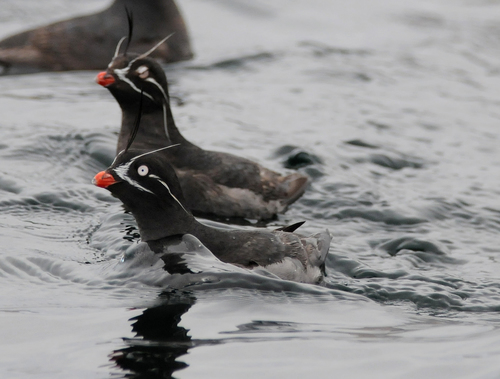
Whiskered Auklet (Aethia pygmaea) Whiskered Auklet
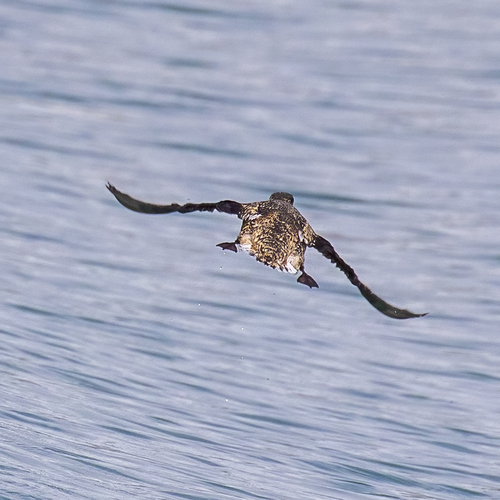
Kittlitz's Murrelet (Brachyramphus brevirostris) Kittlitz's Murrelet

Media

Loading…

In short

The most reliable field mark to separate Whiskered Auklet from Kittlitz's Murrelet is the presence of long white facial 'whiskers' on the Whiskered Auklet during the breeding season—Kittlitz's Murrelet never shows these. In flight or at rest, Whiskered Auklet is a tiny, compact alcid with a short bill and a dark, uniform appearance, while Kittlitz's Murrelet is slightly larger, with a more cryptic, mottled brownish-grey breeding plumage and a smaller, more delicate bill. Juvenile and non-breeding plumages are not well described for Whiskered Auklet, but Kittlitz's Murrelet shows a striking black-and-white non-breeding plumage. Habitat and behavior also differ: Whiskered Auklet is strictly coastal and often seen near breeding islands, whereas Kittlitz's Murrelet is more likely to be found near tidewater glaciers or breeding far inland above the tree line. Size is not a strong field mark in the field, but Whiskered Auklet is among the smallest alcids.

Identification tips

  1. Facial whiskers: Only Whiskered Auklet shows long, white facial plumes ('whiskers') in breeding plumage. If you see these, it is diagnostic for Whiskered Auklet. Kittlitz's Murrelet never shows facial plumes at any age or season.
  2. Overall coloration in breeding season: Whiskered Auklet is dark, almost blackish overall, with a uniform head and body. Kittlitz's Murrelet is mottled grey-brown above and paler below, blending with rocky, snowy terrain.
  3. Non-breeding (winter) plumage: Kittlitz's Murrelet becomes sharply black-and-white, with a white face and underparts and dark upperparts. Whiskered Auklet remains more uniformly dark, though details are less well known—absence of sharp black-and-white contrast suggests Whiskered Auklet.
  4. Bill shape and size: Whiskered Auklet has a short, stubby bill; Kittlitz's Murrelet's bill is even shorter and more delicate, but this is subtle in the field.
  5. Size and jizz: Whiskered Auklet is noticeably smaller and more compact, with a short tail and rounded body. Kittlitz's Murrelet is longer and more slender, but this is only obvious with direct comparison.
  6. Behavior at sea: Whiskered Auklet is often seen in tight flocks near breeding islands, sometimes with other auklets. Kittlitz's Murrelet is solitary or in pairs, rarely in flocks.
  7. Habitat context: Whiskered Auklet is almost always close to Aleutian or Commander Islands; Kittlitz's Murrelet is found near tidewater glaciers or in remote, glacially influenced coastal waters, and breeds far inland above the tree line.
  8. Roosting behavior: Whiskered Auklet is unique among alcids in regularly roosting on land year-round. Kittlitz's Murrelet does not do this.
  9. Attraction to lights: Whiskered Auklet may be attracted to ship lights at night; Kittlitz's Murrelet is not known for this behavior.
  10. Facial pattern in non-breeding season: Kittlitz's Murrelet shows a white face in winter, while Whiskered Auklet does not.
  11. No distinctive wing or tail pattern: Neither species has a unique upperwing or tail pattern in flight that is described as diagnostic for any age or season.
  12. Plumage scent: Whiskered Auklet reportedly has a citrus-like scent to its plumage (shared with Crested Auklet), but this is not a field mark for birders.
  13. Colonial vs. solitary breeding: Whiskered Auklet breeds in loose colonies; Kittlitz's Murrelet nests singly and far from other alcids.
  14. Range: If you are outside the Aleutians or Commander Islands, Whiskered Auklet is extremely unlikely. If you are not near tidewater glaciers or high mountain slopes, Kittlitz's Murrelet is unlikely.
  15. Juvenile/immature confusion: No age-specific upperwing or tail pattern is described for either species, so separation relies on facial and body plumage and context.

Size

Whiskered Auklet is one of the smallest alcids, only slightly larger than the Least Auklet and noticeably smaller than Kittlitz's Murrelet. Kittlitz's Murrelet is a small auk but is longer (about 25 cm) and more robust than Whiskered Auklet. In hand or with direct comparison, Whiskered Auklet appears more diminutive and compact, but in the field, size alone is rarely diagnostic due to overlap and lack of direct comparison.

Plumage

No distinctive juvenile or immature upperwing pattern is described for either species, so separation relies on facial and body plumage. In breeding plumage, Whiskered Auklet is dark overall with a uniform blackish head and body, but its standout feature is the long white facial whiskers (elongated plumes) that project from the face—these are unique among North Pacific alcids. Kittlitz's Murrelet in breeding plumage is mottled greyish-brown above and paler below, matching its cryptic nesting habitat; it lacks any facial plumes or whiskers. In non-breeding (winter) plumage, Kittlitz's Murrelet becomes sharply black-and-white, with a white face and underparts and dark upperparts, while Whiskered Auklet remains more uniformly dark, though details of its non-breeding plumage are less well documented. Bill color and size also differ: Whiskered Auklet has a short, stubby bill, while Kittlitz's Murrelet's bill is even shorter and finer. No age-specific upperwing or tail pattern is described for either species.

Behaviour

Whiskered Auklet is highly coastal, rarely straying far from breeding islands, and is unusual among alcids for roosting on land year-round. It often forages inshore, close to land, and is sometimes attracted to lights at night. Kittlitz's Murrelet is solitary or in pairs (not colonial), breeds far inland on mountain slopes near snowfields, and is most often seen at sea near tidewater glaciers or in remote coastal waters. Its behavior is more secretive, and it is rarely seen near human habitation. Whiskered Auklet may be seen in mixed flocks with other auklets, while Kittlitz's Murrelet is almost always alone or with a mate.

Habitat

Whiskered Auklet is restricted to the Aleutian and nearby islands, always close to land, and breeds in rocky crevices on these islands. It is rarely encountered away from its breeding grounds. Kittlitz's Murrelet breeds on isolated mountain slopes above the tree line, often near glaciers, and is found at sea in cold, glacially influenced waters off Alaska and eastern Siberia. If you are far from the Aleutians or not near tidewater glaciers or mountainous terrain, it is unlikely you are seeing Kittlitz's Murrelet. Whiskered Auklet is much more range-restricted and coastal.

Submit a better description

Use the same sections as the comparison. Your text is published immediately.

The most reliable field mark to separate Whiskered Auklet from Kittlitz's Murrelet is the presence of long white facial 'whiskers' on the Whiskered Auklet during the breeding season—Kittlitz's Murrelet never shows these. In flight or at rest, Whiskered Auklet is a tiny, compact alcid with a short bill and a dark, uniform appearance, while Kittlitz's Murrelet is slightly larger, with a more cryptic, mottled brownish-grey breeding plumage and a smaller, more delicate bill. Juvenile and non-breeding plumages are not well described for Whiskered Auklet, but Kittlitz's Murrelet shows a striking black-and-white non-breeding plumage. Habitat and behavior also differ: Whiskered Auklet is strictly coastal and often seen near breeding islands, whereas Kittlitz's Murrelet is more likely to be found near tidewater glaciers or breeding far inland above the tree line. Size is not a strong field mark in the field, but Whiskered Auklet is among the smallest alcids.

  1. Facial whiskers: Only Whiskered Auklet shows long, white facial plumes ('whiskers') in breeding plumage. If you see these, it is diagnostic for Whiskered Auklet. Kittlitz's Murrelet never shows facial plumes at any age or season.
  2. Overall coloration in breeding season: Whiskered Auklet is dark, almost blackish overall, with a uniform head and body. Kittlitz's Murrelet is mottled grey-brown above and paler below, blending with rocky, snowy terrain.
  3. Non-breeding (winter) plumage: Kittlitz's Murrelet becomes sharply black-and-white, with a white face and underparts and dark upperparts. Whiskered Auklet remains more uniformly dark, though details are less well known—absence of sharp black-and-white contrast suggests Whiskered Auklet.
  4. Bill shape and size: Whiskered Auklet has a short, stubby bill; Kittlitz's Murrelet's bill is even shorter and more delicate, but this is subtle in the field.
  5. Size and jizz: Whiskered Auklet is noticeably smaller and more compact, with a short tail and rounded body. Kittlitz's Murrelet is longer and more slender, but this is only obvious with direct comparison.
  6. Behavior at sea: Whiskered Auklet is often seen in tight flocks near breeding islands, sometimes with other auklets. Kittlitz's Murrelet is solitary or in pairs, rarely in flocks.
  7. Habitat context: Whiskered Auklet is almost always close to Aleutian or Commander Islands; Kittlitz's Murrelet is found near tidewater glaciers or in remote, glacially influenced coastal waters, and breeds far inland above the tree line.
  8. Roosting behavior: Whiskered Auklet is unique among alcids in regularly roosting on land year-round. Kittlitz's Murrelet does not do this.
  9. Attraction to lights: Whiskered Auklet may be attracted to ship lights at night; Kittlitz's Murrelet is not known for this behavior.
  10. Facial pattern in non-breeding season: Kittlitz's Murrelet shows a white face in winter, while Whiskered Auklet does not.
  11. No distinctive wing or tail pattern: Neither species has a unique upperwing or tail pattern in flight that is described as diagnostic for any age or season.
  12. Plumage scent: Whiskered Auklet reportedly has a citrus-like scent to its plumage (shared with Crested Auklet), but this is not a field mark for birders.
  13. Colonial vs. solitary breeding: Whiskered Auklet breeds in loose colonies; Kittlitz's Murrelet nests singly and far from other alcids.
  14. Range: If you are outside the Aleutians or Commander Islands, Whiskered Auklet is extremely unlikely. If you are not near tidewater glaciers or high mountain slopes, Kittlitz's Murrelet is unlikely.
  15. Juvenile/immature confusion: No age-specific upperwing or tail pattern is described for either species, so separation relies on facial and body plumage and context.

Whiskered Auklet is one of the smallest alcids, only slightly larger than the Least Auklet and noticeably smaller than Kittlitz's Murrelet. Kittlitz's Murrelet is a small auk but is longer (about 25 cm) and more robust than Whiskered Auklet. In hand or with direct comparison, Whiskered Auklet appears more diminutive and compact, but in the field, size alone is rarely diagnostic due to overlap and lack of direct comparison.

No distinctive juvenile or immature upperwing pattern is described for either species, so separation relies on facial and body plumage. In breeding plumage, Whiskered Auklet is dark overall with a uniform blackish head and body, but its standout feature is the long white facial whiskers (elongated plumes) that project from the face—these are unique among North Pacific alcids. Kittlitz's Murrelet in breeding plumage is mottled greyish-brown above and paler below, matching its cryptic nesting habitat; it lacks any facial plumes or whiskers. In non-breeding (winter) plumage, Kittlitz's Murrelet becomes sharply black-and-white, with a white face and underparts and dark upperparts, while Whiskered Auklet remains more uniformly dark, though details of its non-breeding plumage are less well documented. Bill color and size also differ: Whiskered Auklet has a short, stubby bill, while Kittlitz's Murrelet's bill is even shorter and finer. No age-specific upperwing or tail pattern is described for either species.

Whiskered Auklet is highly coastal, rarely straying far from breeding islands, and is unusual among alcids for roosting on land year-round. It often forages inshore, close to land, and is sometimes attracted to lights at night. Kittlitz's Murrelet is solitary or in pairs (not colonial), breeds far inland on mountain slopes near snowfields, and is most often seen at sea near tidewater glaciers or in remote coastal waters. Its behavior is more secretive, and it is rarely seen near human habitation. Whiskered Auklet may be seen in mixed flocks with other auklets, while Kittlitz's Murrelet is almost always alone or with a mate.

Whiskered Auklet is restricted to the Aleutian and nearby islands, always close to land, and breeds in rocky crevices on these islands. It is rarely encountered away from its breeding grounds. Kittlitz's Murrelet breeds on isolated mountain slopes above the tree line, often near glaciers, and is found at sea in cold, glacially influenced waters off Alaska and eastern Siberia. If you are far from the Aleutians or not near tidewater glaciers or mountainous terrain, it is unlikely you are seeing Kittlitz's Murrelet. Whiskered Auklet is much more range-restricted and coastal.

Discard your changes?

You have unsaved edits. If you leave now, those changes will be lost.

Whiskered Auklet · Kittlitz's Murrelet · My Tricky Birds