

whiskered auklet vs kittlitz's murrelet
Aethia pygmaea versus Brachyramphus brevirostris
Jogue um quiz com whiskered auklet e kittlitz's murrelet
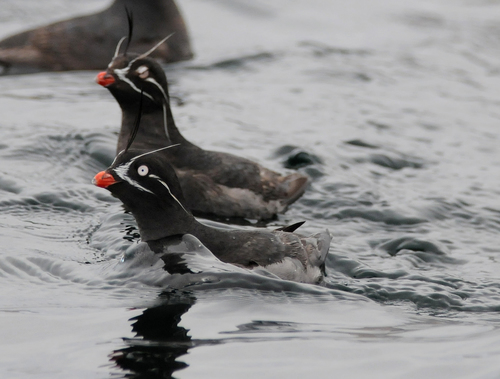 whiskered auklet
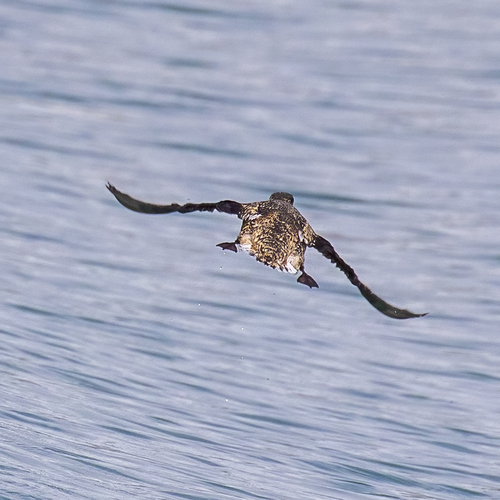 kittlitz's murrelet
Em resumo
A marca de campo mais confiável para separar o whiskered auklet do kittlitz's murrelet é a presença de longas 'barbas' faciais brancas no whiskered auklet durante a temporada de reprodução—o kittlitz's murrelet nunca apresenta essas. Em voo ou em repouso, o whiskered auklet é um alcídeo pequeno e compacto com um bico curto e uma aparência escura e uniforme, enquanto o kittlitz's murrelet é ligeiramente maior, com uma plumagem de reprodução marrom-acinzentada mais críptica e manchada e um bico menor e mais delicado. As plumagens juvenis e não reprodutivas não são bem descritas para o whiskered auklet, mas o kittlitz's murrelet apresenta uma plumagem não reprodutiva preta e branca impressionante. O habitat e o comportamento também diferem: o whiskered auklet é estritamente costeiro e frequentemente visto perto de ilhas de reprodução, enquanto o kittlitz's murrelet é mais provável de ser encontrado perto de geleiras de maré ou se reproduzindo longe em áreas interiores acima da linha das árvores. O tamanho não é uma marca de campo forte, mas o whiskered auklet está entre os menores alcídeos.
Dicas de identificação
- Barbas faciais: Apenas o whiskered auklet apresenta longas plumas faciais brancas ('barbas') na plumagem de reprodução. Se você vê isso, é diagnóstico para o whiskered auklet. O kittlitz's murrelet nunca apresenta plumas faciais em qualquer idade ou estação.
- Coloração geral na temporada de reprodução: O whiskered auklet é escuro, quase negro, com uma cabeça e corpo uniformes. O kittlitz's murrelet é manchado de cinza-marrom acima e mais claro abaixo, misturando-se com terrenos rochosos e nevados.
- Plumagem não reprodutiva (inverno): O kittlitz's murrelet torna-se nitidamente preto e branco, com um rosto e partes inferiores brancas e partes superiores escuras. O whiskered auklet permanece mais uniformemente escuro, embora os detalhes sejam menos conhecidos— a ausência de contraste nítido preto e branco sugere whiskered auklet.
- Forma e tamanho do bico: O whiskered auklet tem um bico curto e grosso; o bico do kittlitz's murrelet é ainda mais curto e delicado, mas isso é sutil no campo.
- Tamanho e aparência: O whiskered auklet é visivelmente menor e mais compacto, com uma cauda curta e corpo arredondado. O kittlitz's murrelet é mais longo e mais esbelto, mas isso só é óbvio com comparação direta.
- Comportamento no mar: O whiskered auklet é frequentemente visto em bandos apertados perto de ilhas de reprodução, às vezes com outros alcídeos. O kittlitz's murrelet é solitário ou em pares, raramente em bandos.
- Contexto do habitat: O whiskered auklet está quase sempre perto das Ilhas Aleutas ou Ilhas Comandante; o kittlitz's murrelet é encontrado perto de geleiras de maré ou em águas costeiras remotas influenciadas por geleiras, e se reproduz longe em áreas interiores acima da linha das árvores.
- Comportamento de pouso: O whiskered auklet é único entre os alcídeos por pousar regularmente em terra durante todo o ano. O kittlitz's murrelet não faz isso.
- Atração por luzes: O whiskered auklet pode ser atraído por luzes de navios à noite; o kittlitz's murrelet não é conhecido por esse comportamento.
- Padrão facial na temporada não reprodutiva: O kittlitz's murrelet apresenta um rosto branco no inverno, enquanto o whiskered auklet não.
- Sem padrão distinto de asa ou cauda: Nenhuma das espécies tem um padrão único de asa ou cauda em voo que seja descrito como diagnóstico para qualquer idade ou estação.
- Cheiro da plumagem: O whiskered auklet supostamente tem um cheiro semelhante a cítricos em sua plumagem (compartilhado com a torda-de-penacho), mas isso não é uma marca de campo para observadores de aves.
- Reprodução colonial vs. solitária: O whiskered auklet se reproduz em colônias soltas; o kittlitz's murrelet faz ninhos individualmente e longe de outros alcídeos.
- Distribuição: Se você estiver fora das Ilhas Aleutas ou Ilhas Comandante, é extremamente improvável que veja o whiskered auklet. Se você não estiver perto de geleiras de maré ou encostas de montanhas altas, é improvável que veja o kittlitz's murrelet.
- Confusão juvenil/imatura: Nenhum padrão específico de asa ou cauda é descrito para qualquer uma das espécies, portanto, a separação depende da plumagem facial e corporal e do contexto.
Tamanho
O whiskered auklet é um dos menores alcídeos, apenas ligeiramente maior que o least auklet e visivelmente menor que o kittlitz's murrelet. O kittlitz's murrelet é um alcídeo pequeno, mas é mais longo (cerca de 25 cm) e mais robusto que o whiskered auklet. Em mãos ou com comparação direta, o whiskered auklet parece mais diminuto e compacto, mas no campo, o tamanho sozinho raramente é diagnóstico devido à sobreposição e falta de comparação direta.
Plumagem
Nenhum padrão distinto de asa juvenil ou imaturo é descrito para qualquer uma das espécies, portanto, a separação depende da plumagem facial e corporal. Na plumagem de reprodução, o whiskered auklet é escuro no geral com uma cabeça e corpo uniformemente negro, mas sua característica marcante são as longas barbas faciais brancas (plumas alongadas) que projetam do rosto—essas são únicas entre os alcídeos do Pacífico Norte. O kittlitz's murrelet na plumagem de reprodução é manchado de marrom-acinzentado acima e mais claro abaixo, combinando com seu habitat de nidificação críptico; ele não possui plumas ou barbas faciais. Na plumagem não reprodutiva (inverno), o kittlitz's murrelet torna-se nitidamente preto e branco, com um rosto e partes inferiores brancas e partes superiores escuras, enquanto o whiskered auklet permanece mais uniformemente escuro, embora os detalhes de sua plumagem não reprodutiva sejam menos bem documentados. A cor e o tamanho do bico também diferem: o whiskered auklet tem um bico curto e grosso, enquanto o bico do kittlitz's murrelet é ainda mais curto e fino. Nenhum padrão específico de asa ou cauda é descrito para qualquer uma das espécies.
Comportamento
O whiskered auklet é altamente costeiro, raramente se afastando muito das ilhas de reprodução, e é incomum entre os alcídeos por pousar em terra durante todo o ano. Ele frequentemente forrageia em águas rasas, perto da terra, e às vezes é atraído por luzes à noite. O kittlitz's murrelet é solitário ou em pares (não colonial), se reproduz longe em áreas interiores em encostas de montanhas perto de campos de neve, e é mais frequentemente visto no mar perto de geleiras de maré ou em águas costeiras remotas. Seu comportamento é mais secreto, e ele raramente é visto perto de habitações humanas. O whiskered auklet pode ser visto em bandos mistos com outros alcídeos, enquanto o kittlitz's murrelet está quase sempre sozinho ou com um parceiro.
Habitat
O whiskered auklet é restrito às Ilhas Aleutas e ilhas próximas, sempre perto da terra, e se reproduz em fendas rochosas nessas ilhas. Ele raramente é encontrado longe de seus locais de reprodução. O kittlitz's murrelet se reproduz em encostas de montanhas isoladas acima da linha das árvores, frequentemente perto de geleiras, e é encontrado no mar em águas frias influenciadas por geleiras ao largo do Alasca e da Sibéria oriental. Se você estiver longe das Ilhas Aleutas ou não estiver perto de geleiras de maré ou terrenos montanhosos, é improvável que esteja vendo o kittlitz's murrelet. O whiskered auklet é muito mais restrito em sua distribuição e costeiro.
whiskered auklet · kittlitz's murrelet · Minhas aves difíceis