

Motmot

シラヒゲウミスズメ 対 コバシウミスズメ

Aethia pygmaea 対 Brachyramphus brevirostris

シラヒゲウミスズメとコバシウミスズメのクイズ
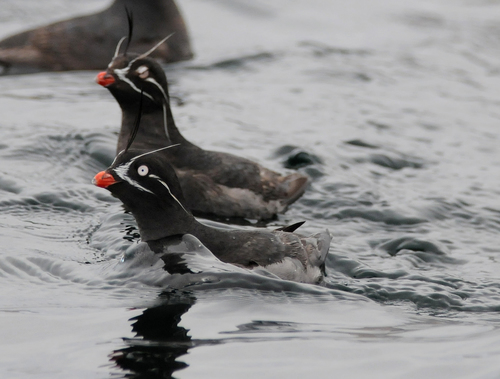
シラヒゲウミスズメ (Aethia pygmaea) シラヒゲウミスズメ
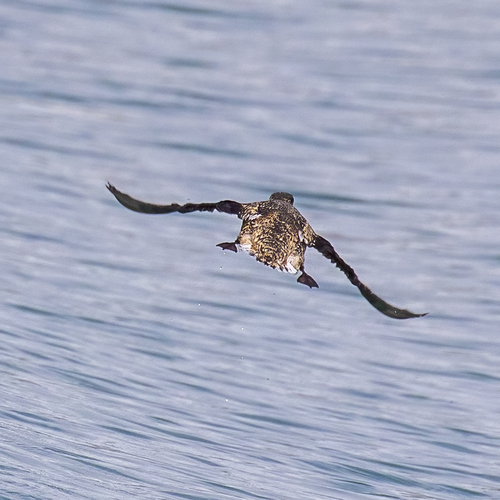
コバシウミスズメ (Brachyramphus brevirostris) コバシウミスズメ

メディア

読み込み中…

要点

ウミスズメとコバシウミスズメを区別する最も信頼できるフィールドマークは、繁殖期のウミスズメに見られる長い白い顔の「ひげ」の存在です—コバシウミスズメはこれを決して示しません。飛行中または静止時に、ウミスズメは小さく、コンパクトなアルキッドで、短いくちばしと暗く均一な外観を持っていますが、コバシウミスズメはわずかに大きく、より隠れた斑点のある茶色がかった灰色の繁殖羽毛と、より小さく繊細なくちばしを持っています。ウミスズメの幼鳥や非繁殖羽毛はよく記述されていませんが、コバシウミスズメは目を引く黒と白の非繁殖羽毛を示します。生息地と行動も異なります:ウミスズメは厳密に沿岸性で、繁殖島の近くでよく見られますが、コバシウミスズメは潮水氷河の近くや、樹木限界を超えた内陸の繁殖地で見つかる可能性が高いです。サイズはフィールドでの強いフィールドマークではありませんが、ウミスズメは最も小さなアルキッドの一つです。

識別のコツ

  1. 顔のひげ: ウミスズメだけが繁殖羽毛で長い白い顔の羽毛(「ひげ」)を示します。これを見た場合、ウミスズメであることが診断できます。コバシウミスズメはどの年齢や季節でも顔の羽毛を示しません。
  2. 繁殖期の全体的な色合い: ウミスズメは全体的に暗く、ほぼ黒っぽい外観で、頭と体が均一です。コバシウミスズメは上面が斑点のある灰色がかった茶色で、下面はより淡い色合いで、岩や雪のある地形に溶け込んでいます。
  3. 非繁殖(冬)羽毛: コバシウミスズメは鮮やかな黒と白になり、白い顔と腹部、暗い上面を持ちます。ウミスズメはより均一に暗いままで、詳細はあまり知られていませんが、鮮明な黒と白のコントラストがないことがウミスズメを示唆します。
  4. くちばしの形とサイズ: ウミスズメは短くて太いくちばしを持っています。コバシウミスズメのくちばしはさらに短く、より繊細ですが、これはフィールドでは微妙です。
  5. サイズと印象: ウミスズメは明らかに小さく、コンパクトで、短い尾と丸い体を持っています。コバシウミスズメは長くて細身ですが、これは直接比較しないと明らかではありません。
  6. 海での行動: ウミスズメは繁殖島の近くで密集した群れでよく見られ、時には他のウミスズメと一緒にいます。コバシウミスズメは孤独またはペアで、群れで見られることは稀です。
  7. 生息地の文脈: ウミスズメはほぼ常にアリューシャン諸島またはコマンダー諸島の近くにいます。コバシウミスズメは潮水氷河の近くや、遠隔の氷河の影響を受けた沿岸水域で見られ、樹木限界を超えた内陸で繁殖します。
  8. 休息行動: ウミスズメはアルキッドの中で年中陸上で休息することが定期的に行われる唯一の種です。コバシウミスズメはこれを行いません。
  9. 光への引き寄せ: ウミスズメは夜間に船の光に引き寄せられることがありますが、コバシウミスズメはこの行動で知られていません。
  10. 非繁殖期の顔の模様: コバシウミスズメは冬に白い顔を示しますが、ウミスズメは示しません。
  11. 特徴的な翼や尾の模様はなし: どちらの種も、年齢や季節に関して診断的とされる独自の上翼や尾の模様はありません。
  12. 羽毛の香り: ウミスズメは羽毛に柑橘系の香りがあると報告されています(エトロフウミスズメと共有)、しかしこれはバーダーにとってのフィールドマークではありません。
  13. コロニー繁殖と孤立繁殖: ウミスズメは緩いコロニーで繁殖しますが、コバシウミスズメは単独で巣を作り、他のアルキッドから遠く離れています。
  14. 分布: アリューシャン諸島やコマンダー諸島の外にいる場合、ウミスズメは極めてあり得ません。潮水氷河や高山の斜面の近くにいない場合、コバシウミスズメはあり得ません。
  15. 幼鳥/未成熟の混乱: どちらの種にも年齢特有の上翼や尾の模様は記述されていないため、区別は顔や体の羽毛と文脈に依存します。

大きさ

ウミスズメは最も小さなアルキッドの一つで、コウミスズメよりわずかに大きく、コバシウミスズメより明らかに小さいです。コバシウミスズメは小さなウミスズメですが、長さ(約25 cm)があり、ウミスズメよりも頑丈です。手に持ったり直接比較したりすると、ウミスズメはより小さくコンパクトに見えますが、フィールドではサイズだけでは重なりや直接比較の欠如のため、診断的であることは稀です。

羽色

どちらの種にも特徴的な幼鳥や未成熟の上翼の模様は記述されていないため、区別は顔や体の羽毛に依存します。繁殖羽毛では、ウミスズメは全体的に暗く、均一な黒っぽい頭と体を持っていますが、その際立った特徴は顔から突き出た長い白い顔のひげ(伸びた羽毛)です—これは北太平洋のアルキッドの中で独特です。繁殖羽毛のコバシウミスズメは上面が斑点のある灰色がかった茶色で、下面はより淡い色合いで、隠れた巣作りの生息地にマッチしています;顔の羽毛やひげはありません。非繁殖(冬)羽毛では、コバシウミスズメは鮮やかな黒と白になり、白い顔と腹部、暗い上面を持ちますが、ウミスズメはより均一に暗いままで、非繁殖羽毛の詳細はあまり文書化されていません。くちばしの色とサイズも異なります:ウミスズメは短くて太いくちばしを持ち、コバシウミスズメのくちばしはさらに短くて細いです。どちらの種にも年齢特有の上翼や尾の模様は記述されていません。

行動

ウミスズメは非常に沿岸性で、繁殖島から遠く離れることは稀で、アルキッドの中で年中陸上で休息することが異常です。しばしば陸に近い沿岸で採餌し、時には夜間に光に引き寄せられることがあります。コバシウミスズメは孤独またはペアで(コロニーではなく)、雪原の近くの山の斜面で内陸で繁殖し、最もよく潮水氷河の近くや遠隔の沿岸水域で見られます。その行動はより秘密主義的で、人間の居住地の近くで見られることは稀です。ウミスズメは他のウミスズメと混合した群れで見られることがありますが、コバシウミスズメはほぼ常に一人または伴侶と一緒にいます。

生息環境

ウミスズメはアリューシャン諸島とその近くの島々に制限され、常に陸に近く、これらの島の岩の隙間で繁殖します。繁殖地から離れて遭遇することは稀です。コバシウミスズメは樹木限界を超えた孤立した山の斜面で繁殖し、しばしば氷河の近くで、アラスカや東シベリアの寒冷な氷河の影響を受けた水域で海で見られます。アリューシャン諸島から遠く離れている場合や潮水氷河や山岳地帯の近くでない場合、コバシウミスズメを見ている可能性は低いです。ウミスズメははるかに範囲が制限されており、沿岸性です。

より良い説明を送る

比較と同じ項目を使ってください。文章はすぐに公開されます。

The most reliable field mark to separate Whiskered Auklet from Kittlitz's Murrelet is the presence of long white facial 'whiskers' on the Whiskered Auklet during the breeding season—Kittlitz's Murrelet never shows these. In flight or at rest, Whiskered Auklet is a tiny, compact alcid with a short bill and a dark, uniform appearance, while Kittlitz's Murrelet is slightly larger, with a more cryptic, mottled brownish-grey breeding plumage and a smaller, more delicate bill. Juvenile and non-breeding plumages are not well described for Whiskered Auklet, but Kittlitz's Murrelet shows a striking black-and-white non-breeding plumage. Habitat and behavior also differ: Whiskered Auklet is strictly coastal and often seen near breeding islands, whereas Kittlitz's Murrelet is more likely to be found near tidewater glaciers or breeding far inland above the tree line. Size is not a strong field mark in the field, but Whiskered Auklet is among the smallest alcids.

  1. Facial whiskers: Only Whiskered Auklet shows long, white facial plumes ('whiskers') in breeding plumage. If you see these, it is diagnostic for Whiskered Auklet. Kittlitz's Murrelet never shows facial plumes at any age or season.
  2. Overall coloration in breeding season: Whiskered Auklet is dark, almost blackish overall, with a uniform head and body. Kittlitz's Murrelet is mottled grey-brown above and paler below, blending with rocky, snowy terrain.
  3. Non-breeding (winter) plumage: Kittlitz's Murrelet becomes sharply black-and-white, with a white face and underparts and dark upperparts. Whiskered Auklet remains more uniformly dark, though details are less well known—absence of sharp black-and-white contrast suggests Whiskered Auklet.
  4. Bill shape and size: Whiskered Auklet has a short, stubby bill; Kittlitz's Murrelet's bill is even shorter and more delicate, but this is subtle in the field.
  5. Size and jizz: Whiskered Auklet is noticeably smaller and more compact, with a short tail and rounded body. Kittlitz's Murrelet is longer and more slender, but this is only obvious with direct comparison.
  6. Behavior at sea: Whiskered Auklet is often seen in tight flocks near breeding islands, sometimes with other auklets. Kittlitz's Murrelet is solitary or in pairs, rarely in flocks.
  7. Habitat context: Whiskered Auklet is almost always close to Aleutian or Commander Islands; Kittlitz's Murrelet is found near tidewater glaciers or in remote, glacially influenced coastal waters, and breeds far inland above the tree line.
  8. Roosting behavior: Whiskered Auklet is unique among alcids in regularly roosting on land year-round. Kittlitz's Murrelet does not do this.
  9. Attraction to lights: Whiskered Auklet may be attracted to ship lights at night; Kittlitz's Murrelet is not known for this behavior.
  10. Facial pattern in non-breeding season: Kittlitz's Murrelet shows a white face in winter, while Whiskered Auklet does not.
  11. No distinctive wing or tail pattern: Neither species has a unique upperwing or tail pattern in flight that is described as diagnostic for any age or season.
  12. Plumage scent: Whiskered Auklet reportedly has a citrus-like scent to its plumage (shared with Crested Auklet), but this is not a field mark for birders.
  13. Colonial vs. solitary breeding: Whiskered Auklet breeds in loose colonies; Kittlitz's Murrelet nests singly and far from other alcids.
  14. Range: If you are outside the Aleutians or Commander Islands, Whiskered Auklet is extremely unlikely. If you are not near tidewater glaciers or high mountain slopes, Kittlitz's Murrelet is unlikely.
  15. Juvenile/immature confusion: No age-specific upperwing or tail pattern is described for either species, so separation relies on facial and body plumage and context.

Whiskered Auklet is one of the smallest alcids, only slightly larger than the Least Auklet and noticeably smaller than Kittlitz's Murrelet. Kittlitz's Murrelet is a small auk but is longer (about 25 cm) and more robust than Whiskered Auklet. In hand or with direct comparison, Whiskered Auklet appears more diminutive and compact, but in the field, size alone is rarely diagnostic due to overlap and lack of direct comparison.

No distinctive juvenile or immature upperwing pattern is described for either species, so separation relies on facial and body plumage. In breeding plumage, Whiskered Auklet is dark overall with a uniform blackish head and body, but its standout feature is the long white facial whiskers (elongated plumes) that project from the face—these are unique among North Pacific alcids. Kittlitz's Murrelet in breeding plumage is mottled greyish-brown above and paler below, matching its cryptic nesting habitat; it lacks any facial plumes or whiskers. In non-breeding (winter) plumage, Kittlitz's Murrelet becomes sharply black-and-white, with a white face and underparts and dark upperparts, while Whiskered Auklet remains more uniformly dark, though details of its non-breeding plumage are less well documented. Bill color and size also differ: Whiskered Auklet has a short, stubby bill, while Kittlitz's Murrelet's bill is even shorter and finer. No age-specific upperwing or tail pattern is described for either species.

Whiskered Auklet is highly coastal, rarely straying far from breeding islands, and is unusual among alcids for roosting on land year-round. It often forages inshore, close to land, and is sometimes attracted to lights at night. Kittlitz's Murrelet is solitary or in pairs (not colonial), breeds far inland on mountain slopes near snowfields, and is most often seen at sea near tidewater glaciers or in remote coastal waters. Its behavior is more secretive, and it is rarely seen near human habitation. Whiskered Auklet may be seen in mixed flocks with other auklets, while Kittlitz's Murrelet is almost always alone or with a mate.

Whiskered Auklet is restricted to the Aleutian and nearby islands, always close to land, and breeds in rocky crevices on these islands. It is rarely encountered away from its breeding grounds. Kittlitz's Murrelet breeds on isolated mountain slopes above the tree line, often near glaciers, and is found at sea in cold, glacially influenced waters off Alaska and eastern Siberia. If you are far from the Aleutians or not near tidewater glaciers or mountainous terrain, it is unlikely you are seeing Kittlitz's Murrelet. Whiskered Auklet is much more range-restricted and coastal.

変更を破棄しますか?

保存していない編集があります。今離れると失われます。

シラヒゲウミスズメ · コバシウミスズメ · 苦手な鳥