

Western Marsh Harrier vs Northern Harrier
Circus aeruginosus versus Circus hudsonius
Play a quiz with Western Marsh Harrier and Northern Harrier
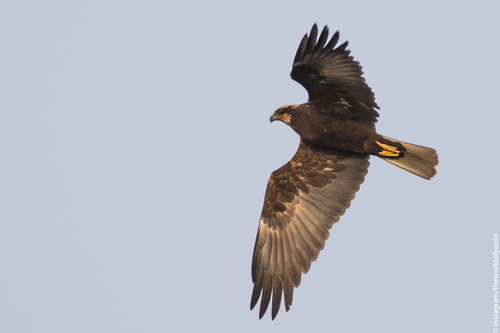 Western Marsh Harrier
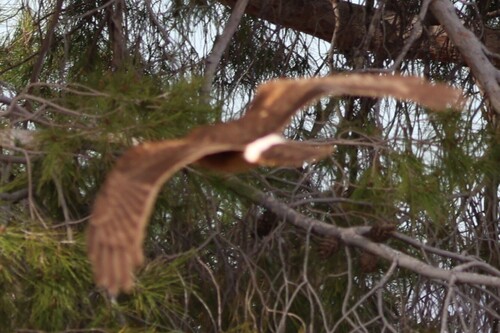 Northern Harrier
In short
The most reliable field mark to separate Western Marsh Harrier from Northern Harrier is overall structure and size: Western Marsh Harrier is distinctly bulkier, with broader wings and a heavier build, while Northern Harrier is slimmer, longer-tailed, and more buoyant in flight. Adult males differ in plumage: Western Marsh Harrier males show a three-tone pattern (brown forewing, grey secondaries/tail, black wingtips), while Northern Harrier males are a uniform pale grey above with contrasting black wingtips and a white rump. Females and juveniles of both are brown, but Western Marsh Harrier females and young are darker, with a sharply contrasting pale head and shoulders, while Northern Harrier females/immatures have a less contrasting, streaked appearance and a distinctive white rump patch visible in flight. Both species hunt low over open ground with wings in a shallow V, but Western Marsh Harrier appears heavier and less agile. Vocalizations are not typically diagnostic in the field.
Identification tips
- White rump patch (Northern Harrier only): All ages and sexes of Northern Harrier show a bright white rump in flight, visible from above and below. Western Marsh Harrier never shows this feature.
- Overall size and structure: Western Marsh Harrier is bulkier, with broader wings and a heavier build; Northern Harrier is slimmer, longer-tailed, and more graceful in flight. This is apparent both perched and in flight.
- Adult male plumage: Western Marsh Harrier males are three-toned (brown forewing, grey secondaries/tail, black wingtips), while Northern Harrier males are uniform pale grey above with black wingtips and a white rump.
- Juvenile/female head pattern: Western Marsh Harrier females and juveniles have a sharply contrasting pale yellowish head and shoulders with a dark eye area; Northern Harrier females/immatures have a less contrasting, streaked brown head with a facial disc and no sharply pale crown/shoulder.
- Underwing and upperwing pattern: Western Marsh Harrier males show a three-color pattern on the wing (brown, grey, black), while Northern Harrier males have uniform grey with black wingtips. Females/juveniles of both are brown, but Northern Harrier shows more streaking and the white rump.
- Flight style: Western Marsh Harrier is heavier, steadier, and slower in flight, with less tilting and banking. Northern Harrier is buoyant, elastic, and often tilts side-to-side as it quarters fields.
- Facial disc (Northern Harrier): Northern Harrier shows an owl-like facial disc, especially in females and juveniles, giving a rounder-headed look. Western Marsh Harrier lacks this feature.
- Perched posture: Western Marsh Harrier appears heavier and more robust when perched; Northern Harrier is slimmer and longer-tailed.
- Sexual dimorphism: Both species are sexually dimorphic, but Western Marsh Harrier males are more colorful (three-toned), while Northern Harrier males are ghostly pale grey.
- Rare dark morphs: Hypermelanic Western Marsh Harriers (rare, mostly eastern range) can appear all dark, potentially confusing with dark Northern Harrier, but still lack a white rump and are bulkier.
- Habitat and range: Western Marsh Harrier is Eurasian/African; Northern Harrier is North American. In the field, consider location and expected range.
- Vocalizations: Not reliable for separation; both are generally silent, but Northern Harrier may give 'kek' calls in breeding season.
- Leg color: Western Marsh Harrier has yellow legs and cere; this is not a strong field mark at distance, but may help if seen well.
- Eye color: Both have yellow irides as adults, but Western Marsh Harrier females have a dark eye area making the pale eye stand out; not always visible at distance.
- Feeding behavior: Both hunt low over open ground, but Northern Harrier may be more likely to hunt by sound, using its facial disc.
Size
Western Marsh Harrier is significantly larger and heavier: males measure 48–56 cm long with a 115–130 cm wingspan and weigh 400–650 g (females up to 800 g). Northern Harrier is smaller and more lightly built: 41–52 cm long, 97–122 cm wingspan, with males averaging 350 g and females 530 g. In direct comparison, Western Marsh Harrier is bulkier, with broader wings and a more robust body, while Northern Harrier is more slender and long-tailed for its size. This difference is apparent both perched and in flight.
Plumage
-
Juveniles and immatures: Western Marsh Harrier juveniles are very dark brown overall, with a sharply contrasting pale yellowish head and shoulders (sometimes less distinct in worn birds), and lack a white rump. Rare hypermelanic morphs can appear almost entirely black. Northern Harrier juveniles and females are brown above and streaked below, but always show a prominent white rump patch in flight, and their head is less contrasting, often with a facial disc giving an owl-like look.
-
Adult males: Western Marsh Harrier males are three-toned: reddish-brown forewing, pale grey secondaries and tail, and black wingtips. Their head is pale but not sharply contrasting. Northern Harrier males are uniform pale grey above with black wingtips and a striking white rump; the underparts are paler and less streaked than Western Marsh Harrier males.
-
Adult females: Western Marsh Harrier females are chocolate brown with a sharply paler yellowish head and shoulders, and a dark eye area. Northern Harrier females are darker and more rufous than Hen Harrier, but compared to Western Marsh Harrier, they are less contrasting, with a streaked brown appearance and always a white rump.
-
Key in flight: The white rump of Northern Harrier (all ages/sexes) is a strong field mark absent in Western Marsh Harrier. Western Marsh Harrier shows a heavier, more uniform brown or three-tone pattern (male) without a white rump.
Behaviour
Both species hunt low over open ground with wings held in a shallow V, often with dangling legs. Western Marsh Harrier appears heavier and less agile, gliding with broader wings and a slower, steadier flight. Northern Harrier is more buoyant, with a lighter, more elastic flight style, often tilting and banking as it quarters fields. Northern Harrier also uses its facial disc to hunt by sound, and may appear more owl-like in behavior and head shape.
Habitat
Western Marsh Harrier is found in temperate and subtropical wetlands, marshes, and reedbeds across western Eurasia and adjacent Africa. Northern Harrier breeds in open habitats—marshes, grasslands, and fields—across northern North America, migrating south in winter. In areas of overlap (e.g., western Palearctic), habitat use is similar, but context and range can help: Western Marsh Harrier is Eurasian/African, Northern Harrier is North American.
Voice
Vocalizations are not typically diagnostic in the field. Northern Harrier is mostly silent but gives fast 'kek' notes and, in the breeding season, females may scream. Western Marsh Harrier is not described as vocal in the sources, and calls are not a reliable separation point.