

Falco di palude vs Northern Harrier
Circus aeruginosus contro Circus hudsonius
Fai un quiz con Falco di palude e Northern Harrier
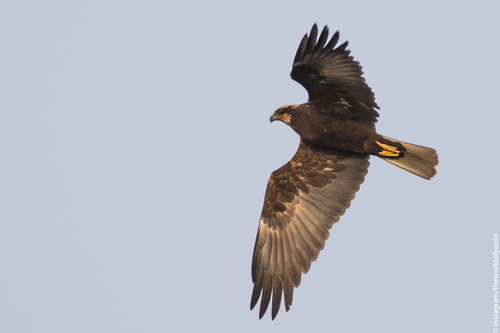 Falco di palude
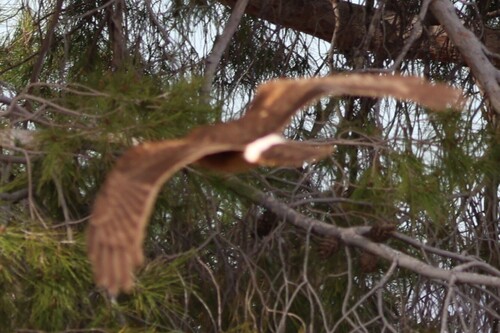 Northern Harrier
In breve
Il segno distintivo più affidabile per separare il Falco di palude dal Northern Harrier è la struttura e la dimensione complessiva: il Falco di palude è decisamente più robusto, con ali più larghe e una corporatura più pesante, mentre il Northern Harrier è più snello, con una coda più lunga e più galleggiante in volo. I maschi adulti differiscono nel piumaggio: i maschi del Falco di palude mostrano un motivo a tre tonalità (ala anteriore marrone, secondarie/coda grigie, punte delle ali nere), mentre i maschi del Northern Harrier sono di un grigio chiaro uniforme sopra con punte delle ali nere e un sottocoda bianco. Le femmine e i giovani di entrambi sono marroni, ma le femmine e i giovani del Falco di palude sono più scuri, con una testa e spalle di un colore chiaro a forte contrasto, mentre le femmine/immaturi del Northern Harrier hanno un aspetto meno contrastante e striato e una distintiva macchia bianca sul sottocoda visibile in volo. Entrambe le specie cacciano basse su terreni aperti con le ali in una V poco profonda, ma il Falco di palude appare più pesante e meno agile. Le vocalizzazioni non sono tipicamente diagnostiche sul campo.
Consigli di identificazione
- Macchia bianca sul sottocoda (solo Northern Harrier): Tutte le età e i sessi del Northern Harrier mostrano un sottocoda bianco brillante in volo, visibile dall'alto e dal basso. Il Falco di palude non mostra mai questa caratteristica.
- Dimensione e struttura complessive: Il Falco di palude è più robusto, con ali più larghe e una corporatura più pesante; il Northern Harrier è più snello, con una coda più lunga e più aggraziato in volo. Questo è evidente sia in perching che in volo.
- Piumaggio del maschio adulto: I maschi del Falco di palude sono a tre tonalità (ala anteriore marrone, secondarie/coda grigie, punte delle ali nere), mentre i maschi del Northern Harrier sono di un grigio chiaro uniforme sopra con punte delle ali nere e un sottocoda bianco.
- Motivo della testa di giovani/femmine: Le femmine e i giovani del Falco di palude hanno una testa e spalle di un colore chiaro a forte contrasto con un'area oculare scura; le femmine/immaturi del Northern Harrier hanno una testa marrone striata meno contrastante con un disco facciale e senza una corona/spalla chiaramente pallida.
- Motivo delle ali inferiori e superiori: I maschi del Falco di palude mostrano un motivo a tre colori sull'ala (marrone, grigio, nero), mentre i maschi del Northern Harrier hanno un grigio uniforme con punte delle ali nere. Le femmine/giovani di entrambi sono marroni, ma il Northern Harrier mostra più striature e il sottocoda bianco.
- Stile di volo: Il Falco di palude è più pesante, più stabile e più lento in volo, con meno inclinazioni e curve. Il Northern Harrier è galleggiante, elastico e spesso inclina da un lato all'altro mentre attraversa i campi.
- Disco facciale (Northern Harrier): Il Northern Harrier mostra un disco facciale simile a un gufo, specialmente nelle femmine e nei giovani, dando un aspetto con una testa più rotonda. Il Falco di palude non ha questa caratteristica.
- Postura in perching: Il Falco di palude appare più pesante e robusto quando è in perching; il Northern Harrier è più snello e con una coda più lunga.
- Dimorfismo sessuale: Entrambe le specie sono dimorfiche sessualmente, ma i maschi del Falco di palude sono più colorati (a tre tonalità), mentre i maschi del Northern Harrier sono di un grigio chiaro spettrale.
- Rari morfi scuri: I Falchi di palude ipermelanici (rari, per lo più nella gamma orientale) possono apparire completamente scuri, potenzialmente confondendosi con il Northern Harrier scuro, ma mancano comunque di un sottocoda bianco e sono più robusti.
- Habitat e distribuzione: Il Falco di palude è eurasiatico/africano; il Northern Harrier è nordamericano. Sul campo, considera la posizione e la gamma prevista.
- Vocalizzazioni: Non affidabili per la separazione; entrambi sono generalmente silenziosi, ma il Northern Harrier può emettere richiami 'kek' durante la stagione di nidificazione.
- Colore delle gambe: Il Falco di palude ha gambe e cere gialle; questo non è un segno distintivo forte a distanza, ma può aiutare se visto bene.
- Colore degli occhi: Entrambi hanno iridi gialle da adulti, ma le femmine del Falco di palude hanno un'area oculare scura che fa risaltare l'occhio chiaro; non sempre visibile a distanza.
- Comportamento alimentare: Entrambi cacciano basse su terreni aperti, ma il Northern Harrier potrebbe essere più propenso a cacciare per suono, usando il suo disco facciale.
Taglia
Il Falco di palude è significativamente più grande e pesante: i maschi misurano 48–56 cm di lunghezza con un'apertura alare di 115–130 cm e pesano 400–650 g (femmine fino a 800 g). Il Northern Harrier è più piccolo e più leggero: 41–52 cm di lunghezza, apertura alare di 97–122 cm, con i maschi che pesano in media 350 g e le femmine 530 g. In un confronto diretto, il Falco di palude è più robusto, con ali più larghe e un corpo più robusto, mentre il Northern Harrier è più snello e con una coda più lunga per la sua dimensione. Questa differenza è evidente sia in perching che in volo.
Piumaggio
-
Giovani e immaturi: I giovani del Falco di palude sono di un marrone molto scuro complessivamente, con una testa e spalle di un colore chiaro a forte contrasto (a volte meno distinti in uccelli usurati), e mancano di un sottocoda bianco. Rari morfi ipermelanici possono apparire quasi completamente neri. I giovani e le femmine del Northern Harrier sono marroni sopra e striati sotto, ma mostrano sempre una prominente macchia bianca sul sottocoda in volo, e la loro testa è meno contrastante, spesso con un disco facciale che dà un aspetto simile a un gufo.
-
Maschi adulti: I maschi del Falco di palude sono a tre tonalità: ala anteriore marrone rossiccio, secondarie e coda grigie chiare, e punte delle ali nere. La loro testa è chiara ma non a forte contrasto. I maschi del Northern Harrier sono di un grigio chiaro uniforme sopra con punte delle ali nere e un sottocoda bianco sorprendente; le parti inferiori sono più chiare e meno striate rispetto ai maschi del Falco di palude.
-
Femmine adulte: Le femmine del Falco di palude sono di un marrone cioccolato con una testa e spalle di un colore chiaro a forte contrasto, e un'area oculare scura. Le femmine del Northern Harrier sono più scure e più rufose rispetto all'Albanella reale, ma rispetto al Falco di palude, sono meno contrastanti, con un aspetto marrone striato e hanno sempre un sottocoda bianco.
-
Chiave in volo: Il sottocoda bianco del Northern Harrier (tutte le età/sessi) è un forte segno distintivo assente nel Falco di palude. Il Falco di palude mostra un motivo marrone più pesante e uniforme o a tre tonalità (maschio) senza un sottocoda bianco.
Comportamento
Entrambe le specie cacciano basse su terreni aperti con le ali tenute in una V poco profonda, spesso con le gambe penzoloni. Il Falco di palude appare più pesante e meno agile, planando con ali più larghe e un volo più lento e stabile. Il Northern Harrier è più galleggiante, con uno stile di volo più leggero ed elastico, spesso inclinando e curvando mentre attraversa i campi. Il Northern Harrier utilizza anche il suo disco facciale per cacciare per suono e può apparire più simile a un gufo nel comportamento e nella forma della testa.
Habitat
Il Falco di palude si trova in zone umide temperate e subtropicali, paludi e canneti in tutta l'Eurasia occidentale e nell'Africa adiacente. Il Northern Harrier nidifica in habitat aperti—paludi, praterie e campi—in tutta l'America del Nord settentrionale, migrando a sud in inverno. Nelle aree di sovrapposizione (ad es., Palearctico occidentale), l'uso dell'habitat è simile, ma il contesto e la gamma possono aiutare: il Falco di palude è eurasiatico/africano, il Northern Harrier è nordamericano.
Voce
Le vocalizzazioni non sono tipicamente diagnostiche sul campo. Il Northern Harrier è per lo più silenzioso ma emette note 'kek' veloci e, durante la stagione di nidificazione, le femmine possono urlare. Il Falco di palude non è descritto come vocale nelle fonti, e i richiami non sono un punto di separazione affidabile.
Falco di palude · Northern Harrier · I miei uccelli difficili