

Western House Martin vs Red-rumped Swallow
Delichon urbicum versus Cecropis daurica
Play a quiz with Western House Martin and Red-rumped Swallow
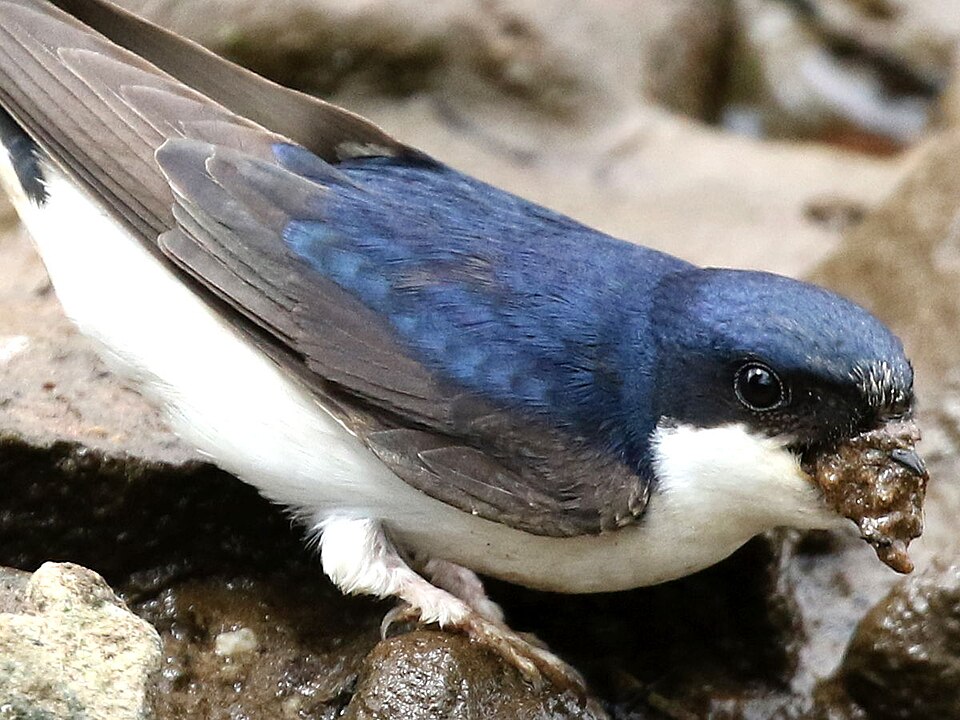 Western House Martin
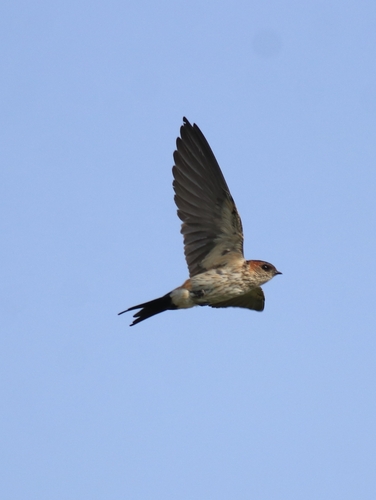 Red-rumped Swallow
In short
The most reliable way to separate Western House Martin from Red-rumped Swallow is by the color and extent of the rump and the pattern of the underparts: House Martin shows a bright white rump and pure white, unstreaked underparts, while Red-rumped Swallow has a chestnut or streaked rump and heavily streaked underparts. In flight, House Martin’s white rump flashes distinctly, contrasting with its blue-black upperparts and short, shallowly forked tail; Red-rumped Swallow shows a chestnut rump, a longer, deeply forked tail, and more extensive dark streaking below. Juvenile House Martins can appear duller and sootier but still lack the strong underpart streaking of any age Red-rumped Swallow. Both species are aerial insectivores, but their structure and flight style differ noticeably when seen well.
Identification tips
- Rump color: House Martin always shows a bright white rump, which is conspicuous in flight and at rest; Red-rumped Swallow has a chestnut or streaked rump, never white. This is the single most reliable field mark in all ages and seasons.
- Underparts: House Martin has pure white, unstreaked underparts and underwings; Red-rumped Swallow has white underparts heavily streaked with dark lines, visible even at a distance. Juvenile House Martins are duller but still lack streaking.
- Tail shape: House Martin has a short, shallowly forked tail; Red-rumped Swallow has a longer, deeply forked tail, which is especially noticeable in adults. Juvenile Red-rumped Swallows have a shorter tail but still longer than House Martin.
- Upperparts: Both species are blue above, but House Martin’s blue is brighter and more contrasting with the white rump; Red-rumped Swallow’s blue is offset by the chestnut rump and sometimes a reddish collar.
- Face pattern: Red-rumped Swallow often shows a reddish collar and a pale face, while House Martin’s face is plain and blue-black.
- Legs and feet: House Martin’s legs and toes are feathered white and appear pale if seen well; Red-rumped Swallow’s legs are not feathered and are less conspicuous.
- Flight style: House Martin is compact, with rapid, fluttery wingbeats and a short tail; Red-rumped Swallow is more elongated, with a gliding, graceful flight and long tail streamers.
- Perched jizz: House Martin looks compact and short-tailed when perched, often in tight groups; Red-rumped Swallow appears longer, sleeker, and usually perches singly or in loose groups.
- Juvenile confusion: Juvenile House Martins are sooty with some white tips on wings but always lack underpart streaking; juvenile Red-rumped Swallows are browner, with a paler rump and streaked underparts.
- Habitat context: House Martins are common around buildings and urban areas; Red-rumped Swallows prefer open, rural, or hilly areas, rarely nesting in dense urban settings.
- Colony size: House Martins often breed in large colonies, sometimes with dozens of nests together; Red-rumped Swallows are less colonial.
- Tail patches: Red-rumped Swallow may show pale patches on the inner webs of the outer tail feathers, but these are often indistinct and not a primary field mark.
- Seasonal overlap: Both species may occur together in migration, especially in southern Europe and Asia; always check rump and underpart pattern first.
- Sex differences: Both species are sexually monomorphic—males and females look alike, so all field marks apply to both sexes.
- Size impression: House Martin is distinctly smaller and more compact than Red-rumped Swallow, though this is best judged with direct comparison or experience.
Size
Western House Martin is notably smaller, at about 13 cm in length with a wingspan of 26–29 cm and an average weight of 18.3 g [wikipedia]. Red-rumped Swallow is larger, around 19 cm long, and has a longer, more deeply forked tail, contributing to a more elongated appearance in flight. This size difference is subtle at a distance but can be apparent when both species are seen together or compared to other swallows.
Plumage
Juvenile and adult Western House Martins are blue-black above with a bright white rump and pure white underparts, including the underwings. Juveniles are duller and sooty, with some white tips on wing coverts and quills, but still show the white rump and lack any underpart streaking. Red-rumped Swallows of all ages have a chestnut or streaked rump (sometimes uniform, sometimes with dark shaft streaks depending on subspecies), blue upperparts, and white underparts heavily streaked with dark lines. Their face often shows a reddish collar, and the tail is longer and more deeply forked, with pale patches sometimes visible on the tail feathers. Juvenile Red-rumped Swallows are duller and browner, with a paler rump and shorter tail, but always show some streaking below and lack the house martin’s clean white look.
Behaviour
Both species are aerial insectivores, catching insects on the wing. Western House Martins often breed colonially, sometimes with nests in direct contact, and are frequently seen near human habitation. Their flight is fast and agile, with a higher wingbeat frequency than Barn Swallow. Red-rumped Swallows are more likely to be seen singly or in loose groups, often in open or hilly country, and their flight is more graceful and gliding, aided by their longer tail. Perched, House Martins often look compact and short-tailed, while Red-rumped Swallows appear longer and sleeker.
Habitat
Western House Martin is common in open country and near human settlements across Europe, North Africa, and western/central Asia, often nesting on buildings. Red-rumped Swallow prefers open, often hilly areas with clearings and cultivation, and is more typical of rural or less urbanized settings in its Asian and southern European range. Overlap is possible in migration or in southern Europe, but House Martin is much more likely in towns and cities.